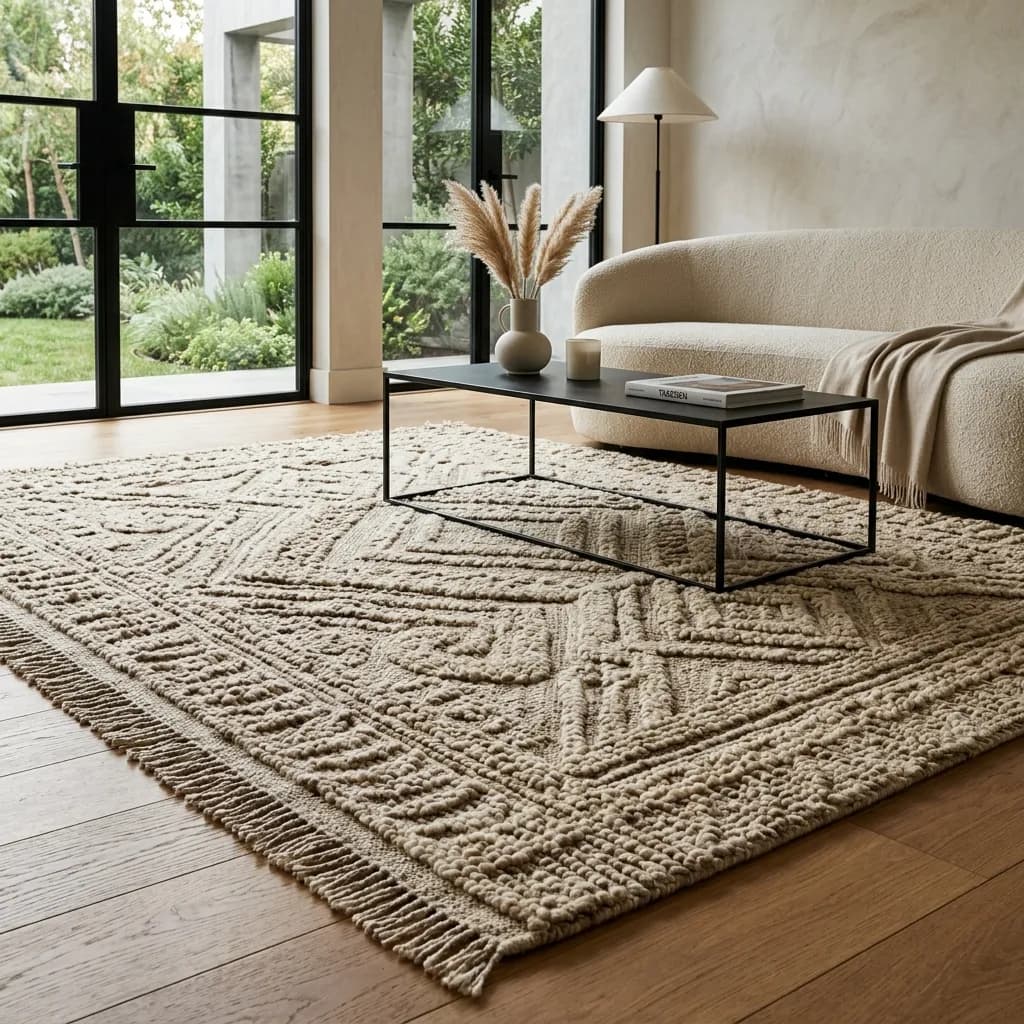
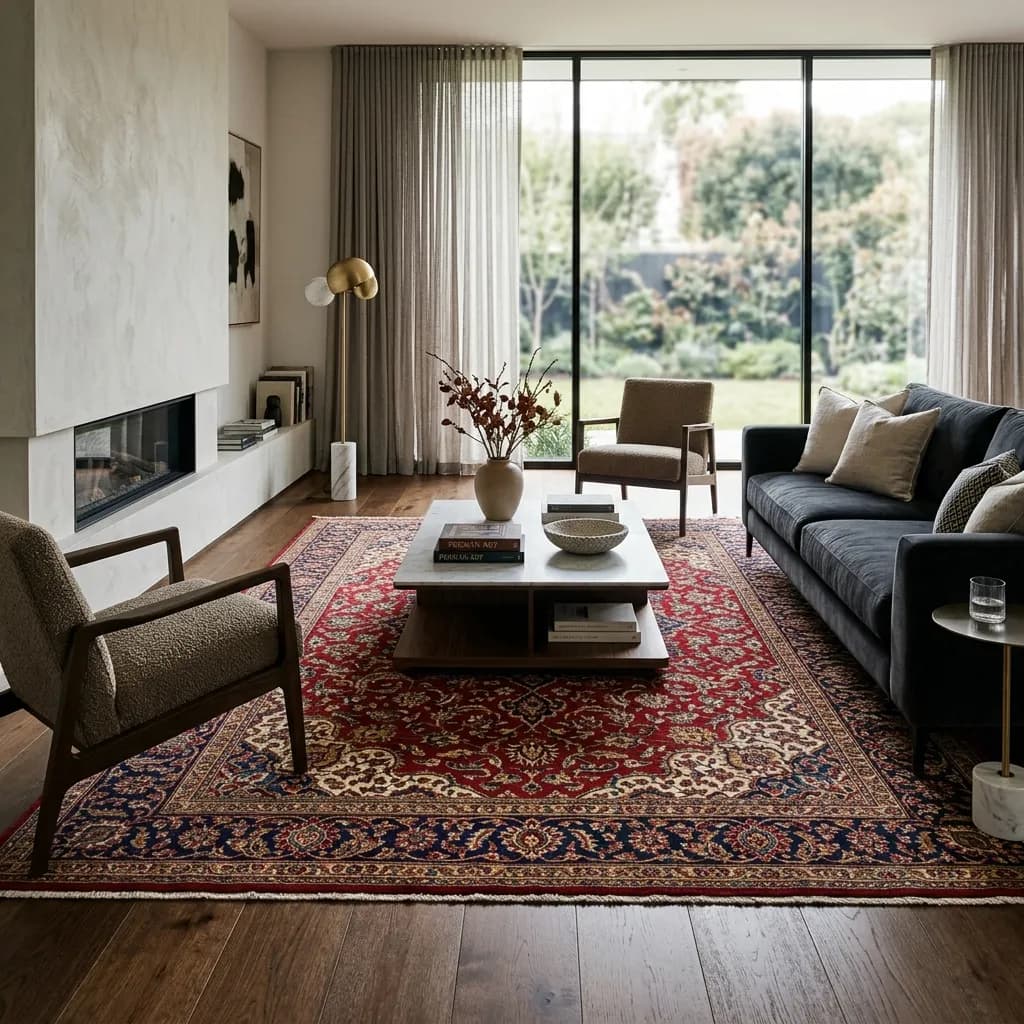
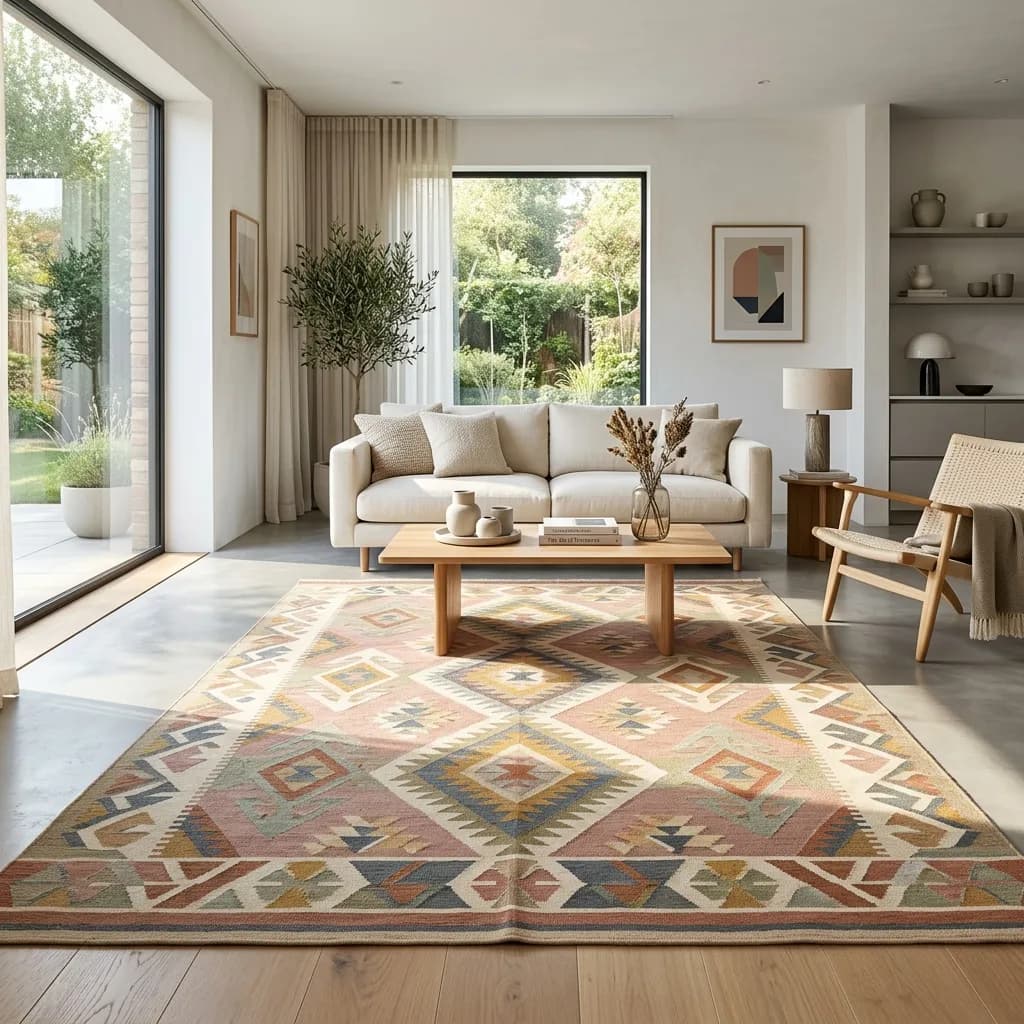
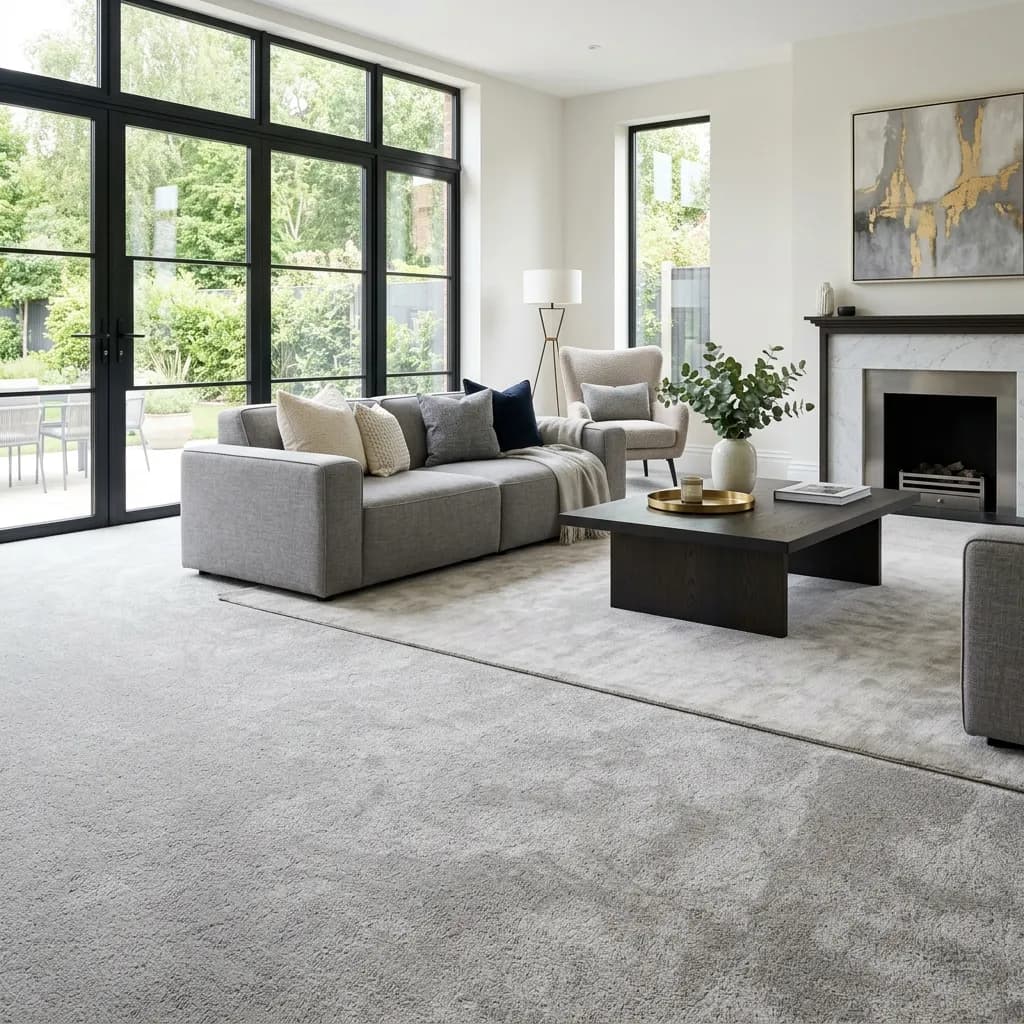
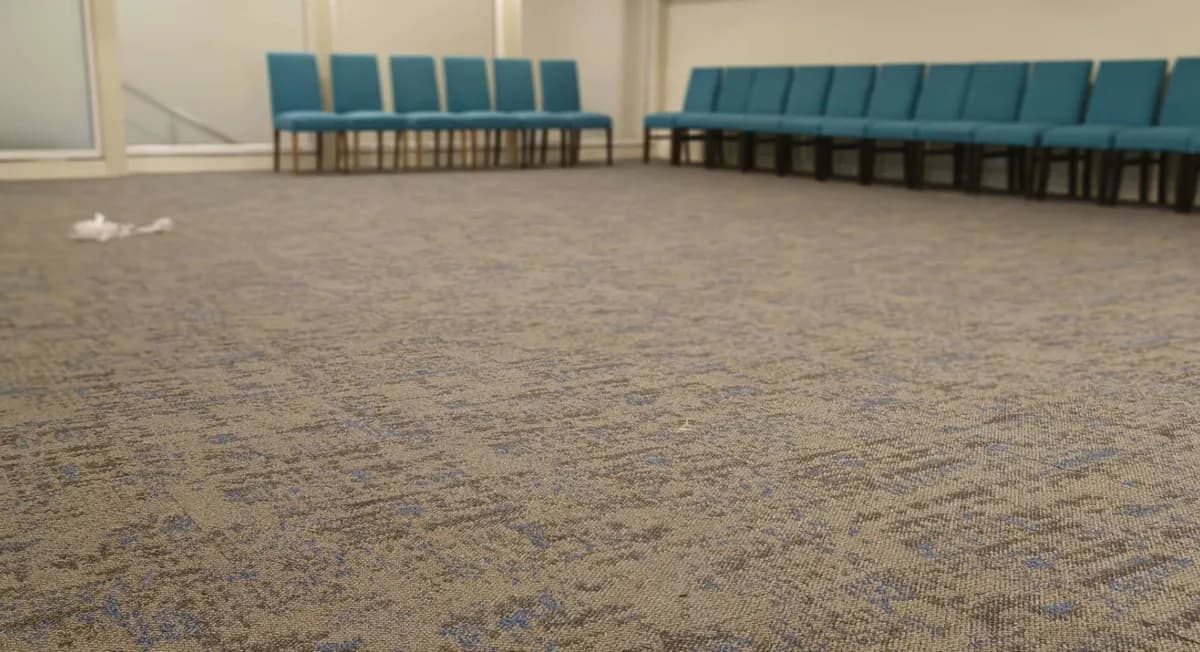
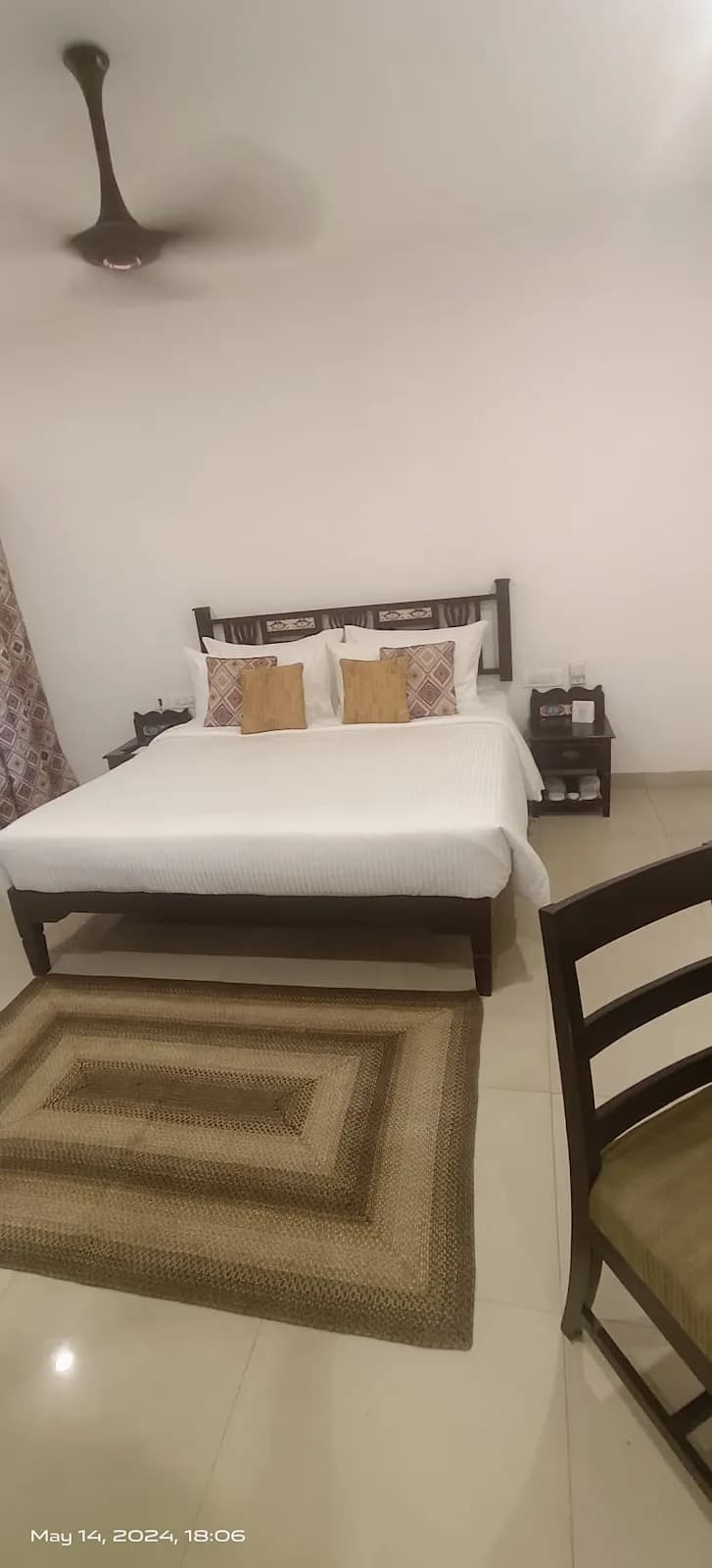
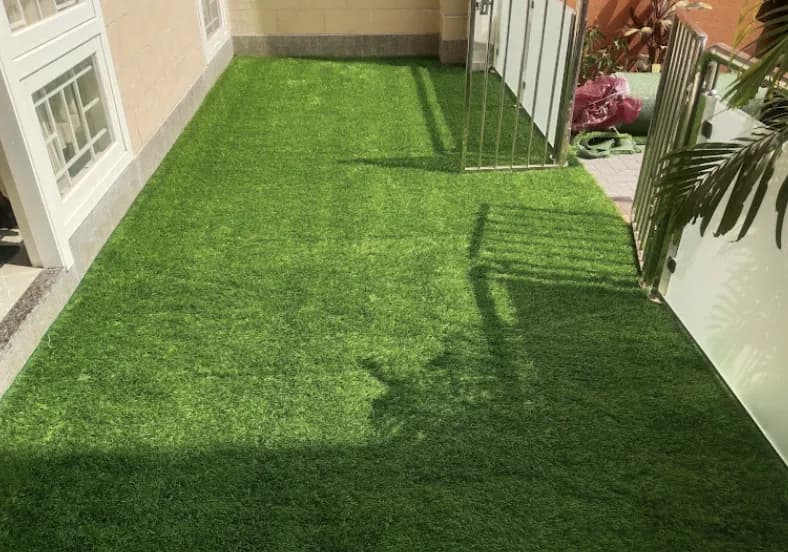
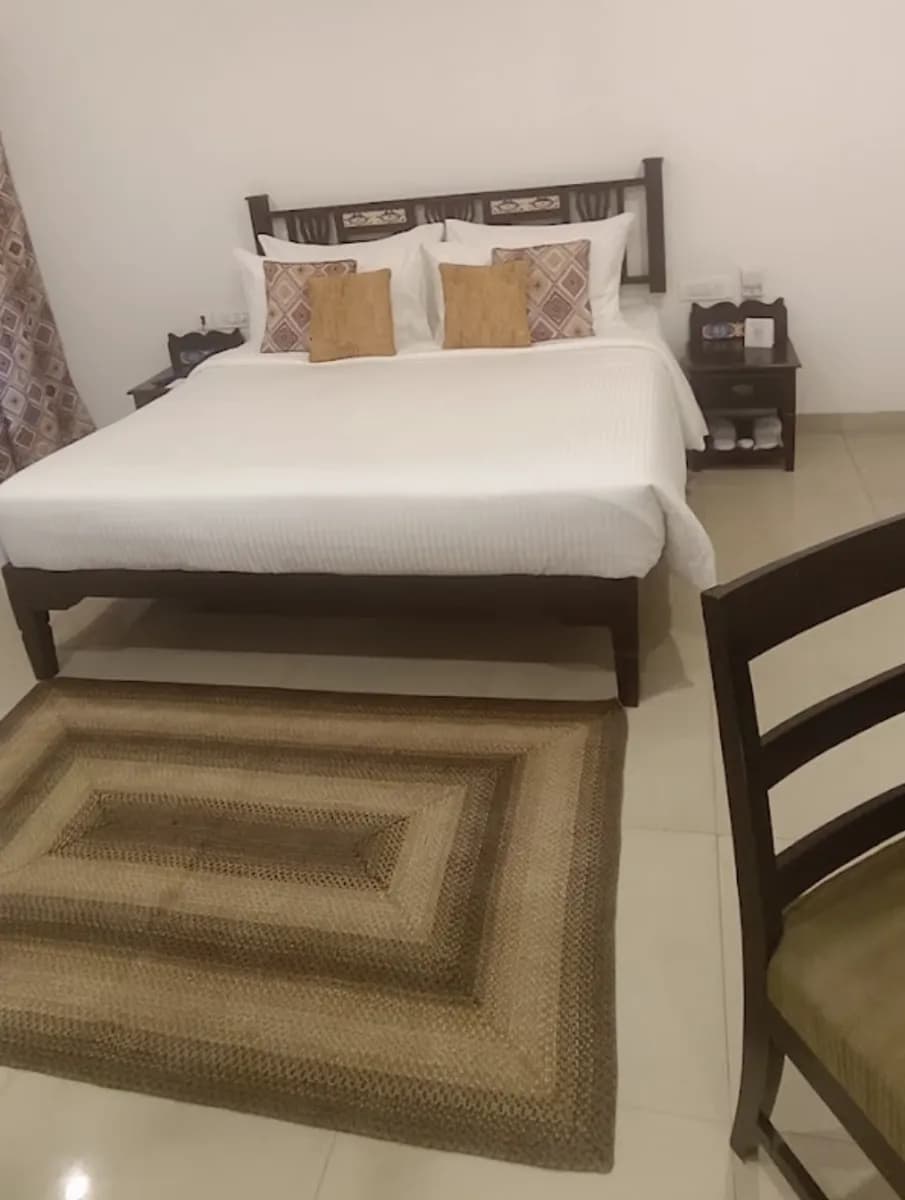
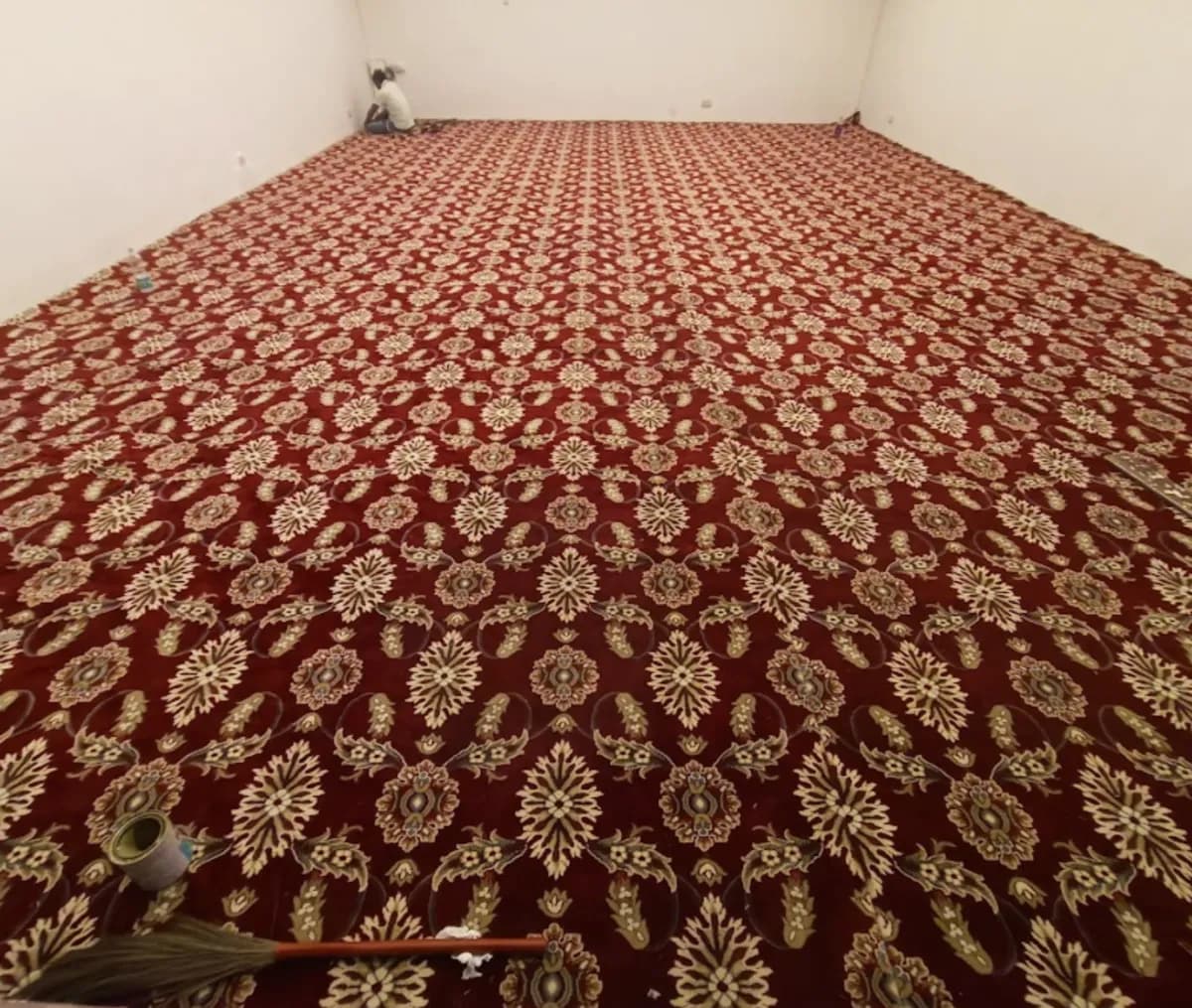
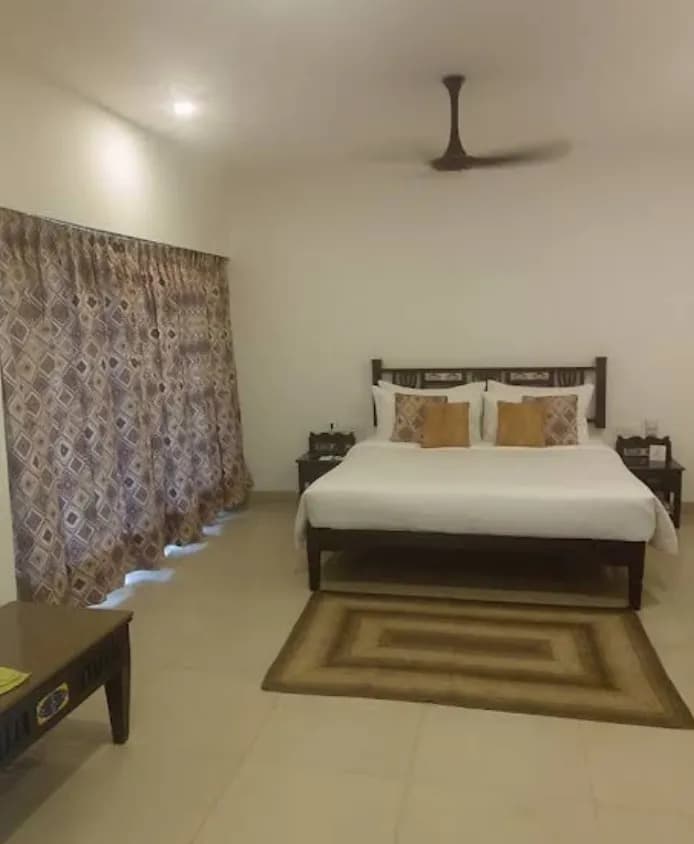
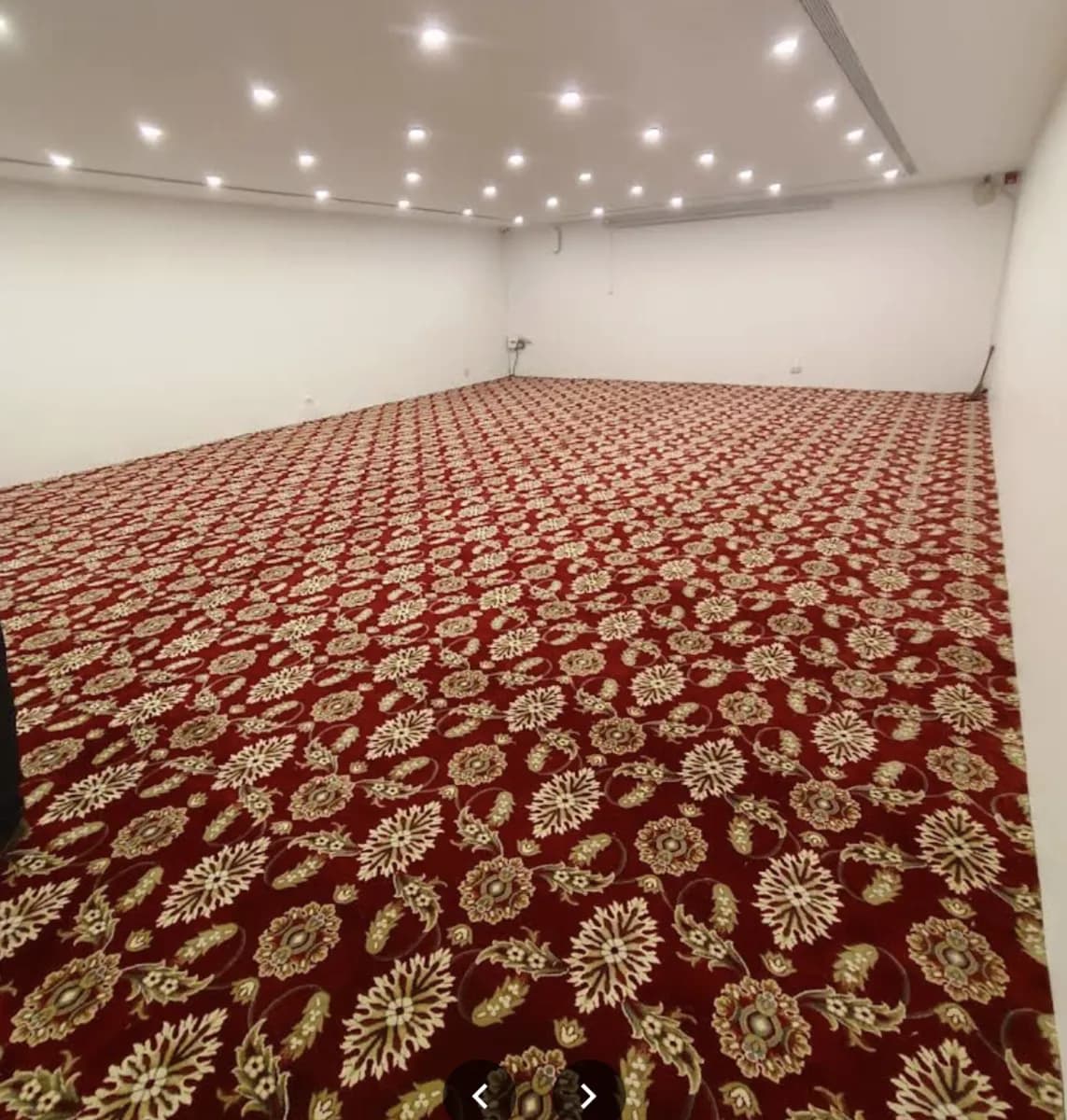
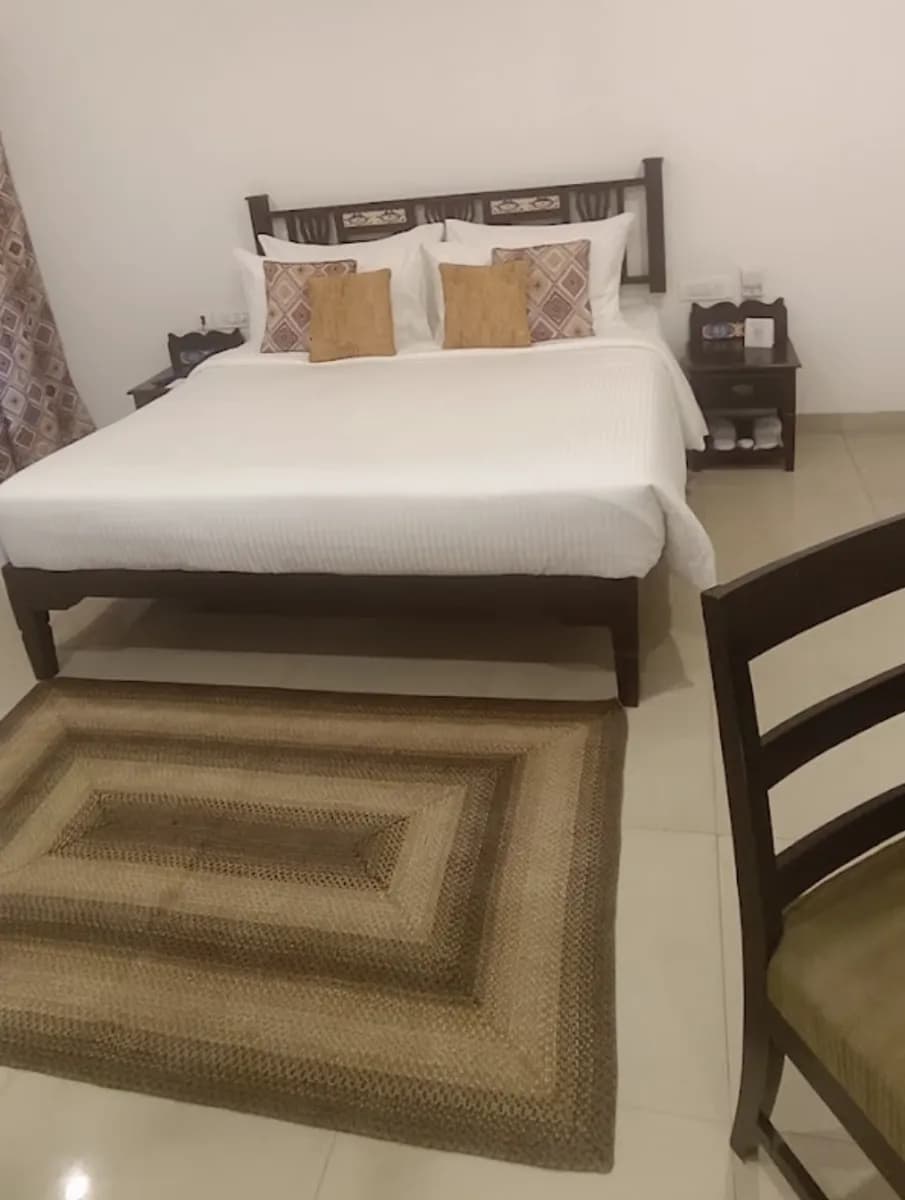
Floors in Old Goa call for rugs that are free to move. At river level the ground floor is damp underfoot for the whole monsoon, and anything fitted or rubber-backed traps that moisture against the tiles; a loose rug can be rolled, aired and laid again. Synthetic and cotton flat-weaves dry fastest. In the older houses the floor is often patterned tile or stone that deserves to be seen, so keep the rug to the seating area, on a grip underlay, and let the rest show. New buildings are drier from the first floor up, where even wool will manage given an airing. Fitted carpet is for an upstairs room with air conditioning, nowhere lower.
- Ground-floor rooms on low ground: light polypropylene or cotton rugs with a woven back, hung out to dry whenever the floor sweats.
- Halls of old houses: a Persian-style rug or dhurrie over a grip underlay, with a broad margin of old tile left in view.
- Upper-floor apartments: a larger wool-blend rug in the living room, turned and aired once the rains are over.
Old Goa was the capital of Portuguese India, and its great churches, including the Basilica of Bom Jesus and the Se Cathedral, are a World Heritage Site. Today it is a small town on the Mandovi, east of Panjim, with residential colonies and villages spreading around the monuments.
People live in housing colonies, new apartment buildings along the highway and older houses in the surrounding wards. The area is quiet and has drawn families who work in Panjim but want more space.
Old Goa lies beside the river and is humid, with low ground that stays wet in the monsoon. It is inland enough that salt is not a concern.
Old Goan houses
Old tiled and stone floors are part of the house, so use rugs, not fitted carpet. A dhurrie or a Persian-style rug suits the furniture, with an underlay so it does not slip on polished tiles.
Riverside and backwater homes
Ground floors near water are damp underfoot in the monsoon. Use rugs that can be lifted and dried, not fitted carpet, and avoid rubber-backed rugs that trap moisture against the floor.