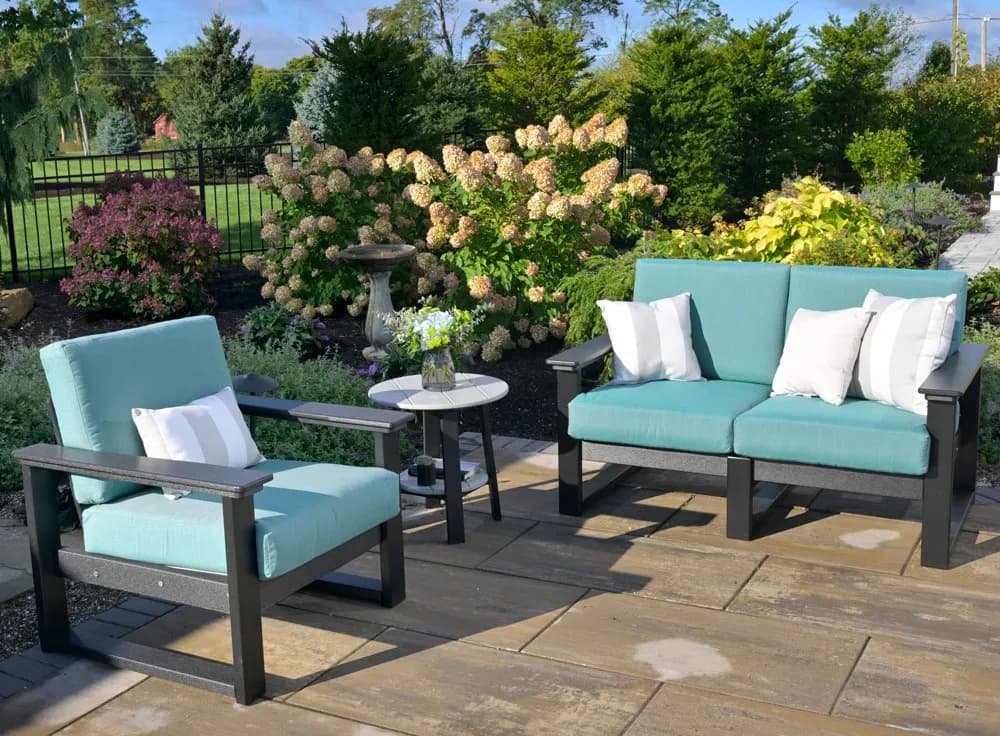
Verandas and balcões in the older houses around Old Goa are lived in daily, and their cushions sit in air that seldom dries out. Cotton covers there turn spotted and musty over a monsoon. Sunbrella acrylic resists mould, dries fast and is water-repellent, yet a cover is only half a cushion: what is inside must let water through. Open-cell foam that drains, with mesh sewn into the underside, does that, and propping each cushion upright after rain helps. With no salt this far inland, the fabric's work is against damp and sun. Quiet colours, or a narrow stripe, sit well on old benches and easy chairs. In the newer flats, balcony cushions can simply stay out.
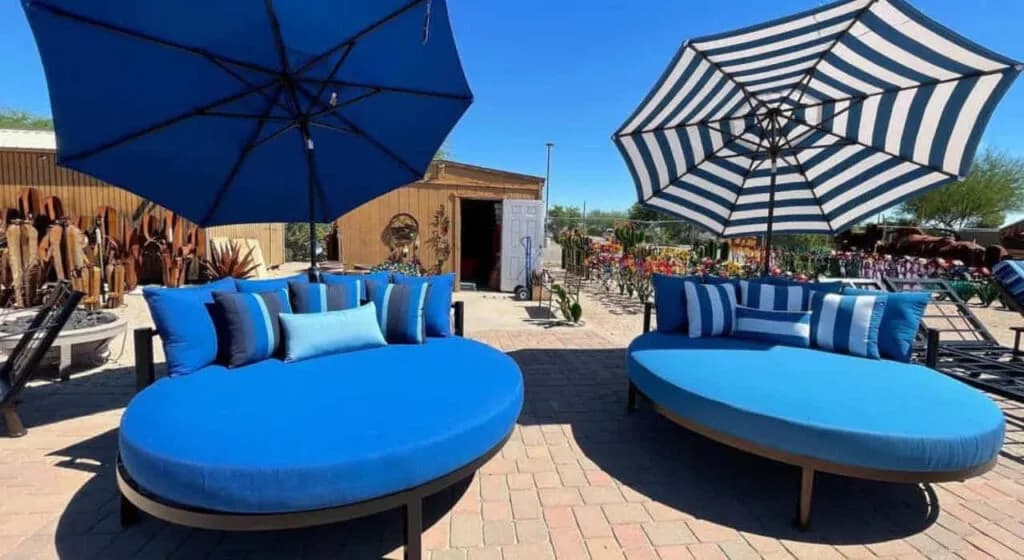
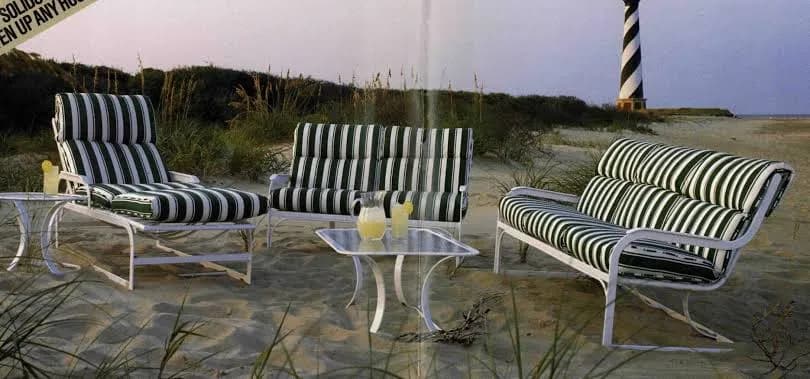
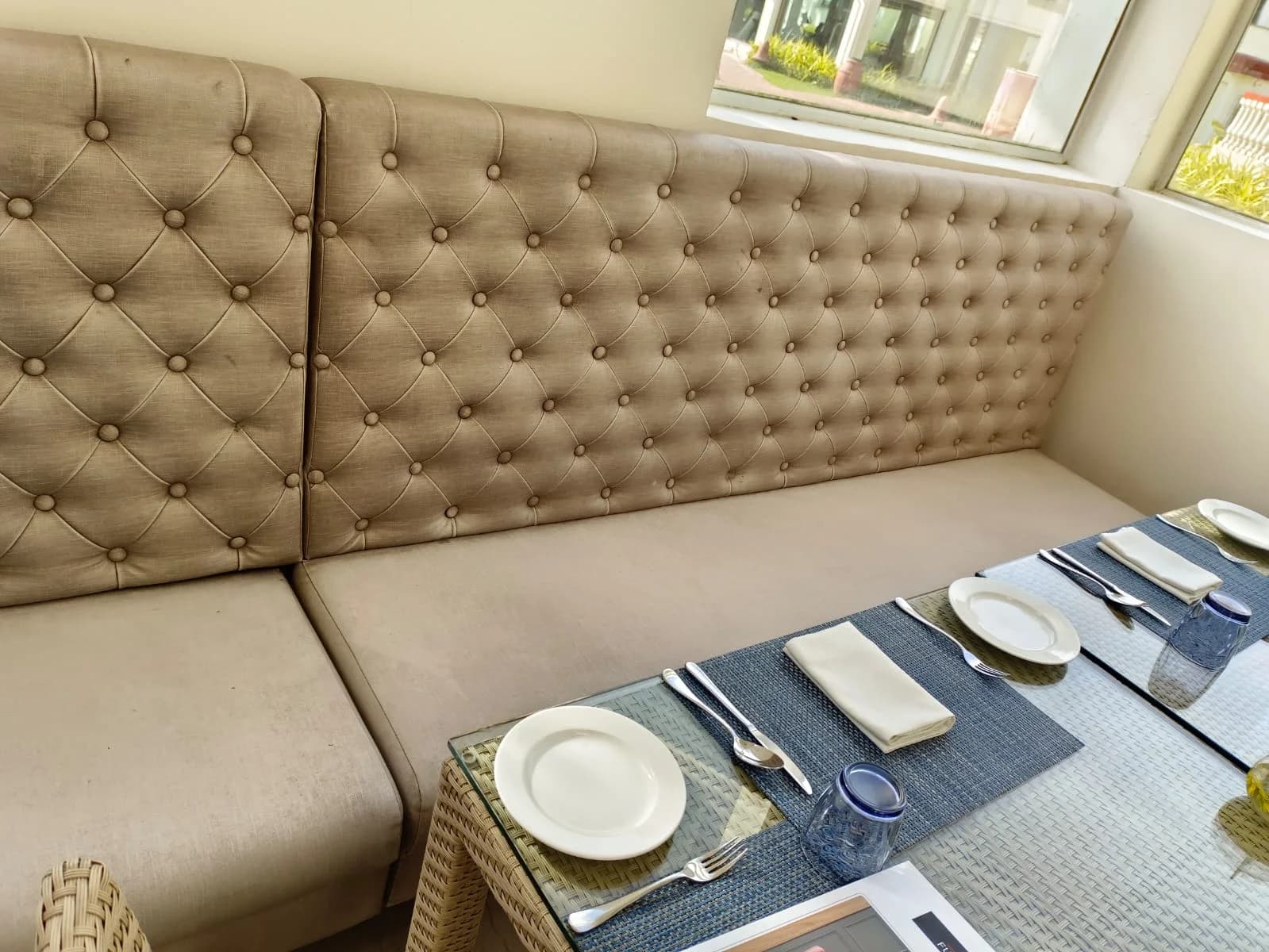
- Old-house balcões in the wards: bench cushions cut to the seat, in one quiet colour or a narrow stripe, with mesh below so they drain.
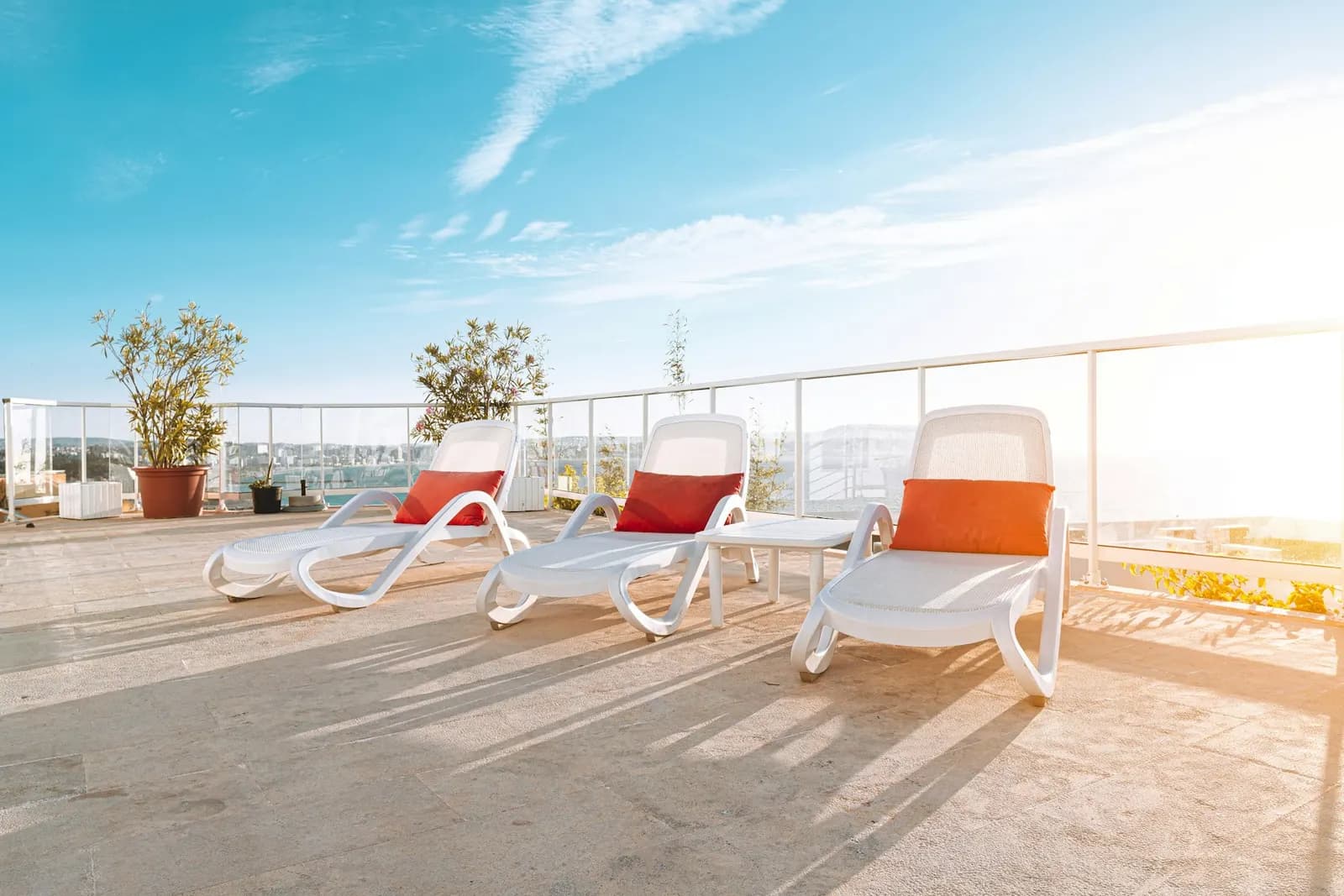
- Balconies of highway apartments: chair pads that stay outside through the dry months and are usable again soon after a shower.
- Garden seating in the colonies: outdoor sofa cushions propped upright once rain has passed, so river damp does not linger in them.
Old Goa was the capital of Portuguese India, and its great churches, including the Basilica of Bom Jesus and the Se Cathedral, are a World Heritage Site. Today it is a small town on the Mandovi, east of Panjim, with residential colonies and villages spreading around the monuments.
People live in housing colonies, new apartment buildings along the highway and older houses in the surrounding wards. The area is quiet and has drawn families who work in Panjim but want more space.
Old Goa lies beside the river and is humid, with low ground that stays wet in the monsoon. It is inland enough that salt is not a concern.
Old Goan houses
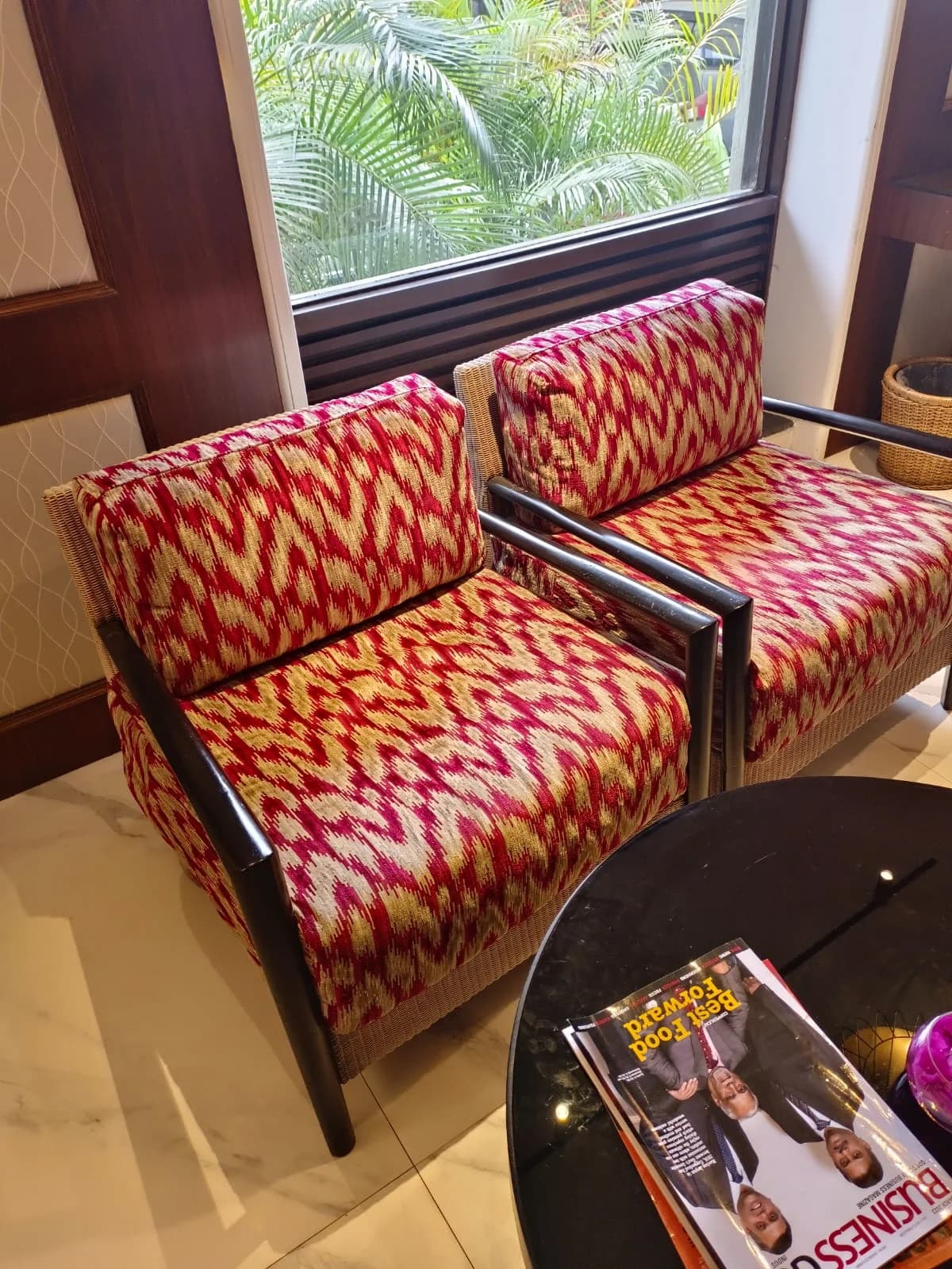
The deep verandas and balcões of old houses are used every day. Bench and chair cushions in outdoor fabric suit them, in plain or striped designs that sit well with old furniture.
Riverside and backwater homes
By the water, cushions stay damp unless they can drain. Use quick-dry foam with a mesh base panel, and stand cushions on edge after rain.