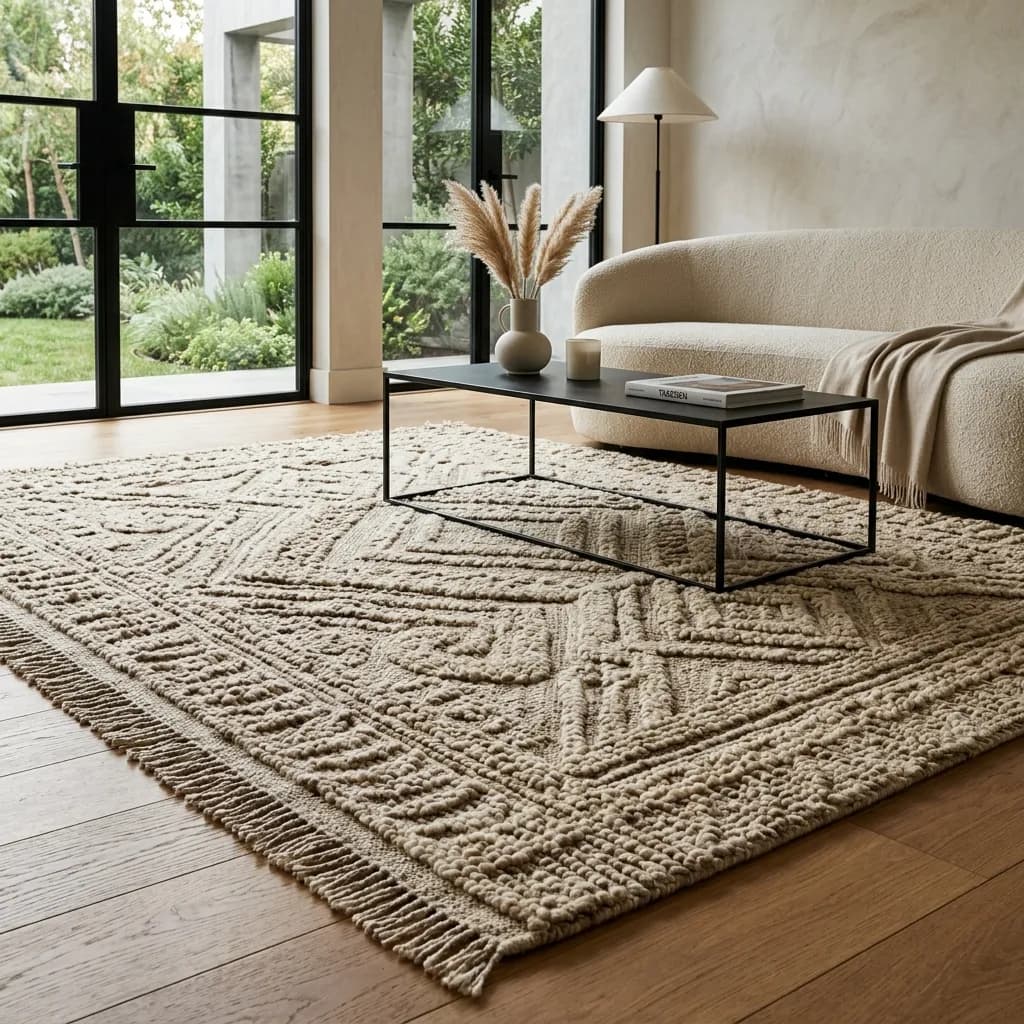
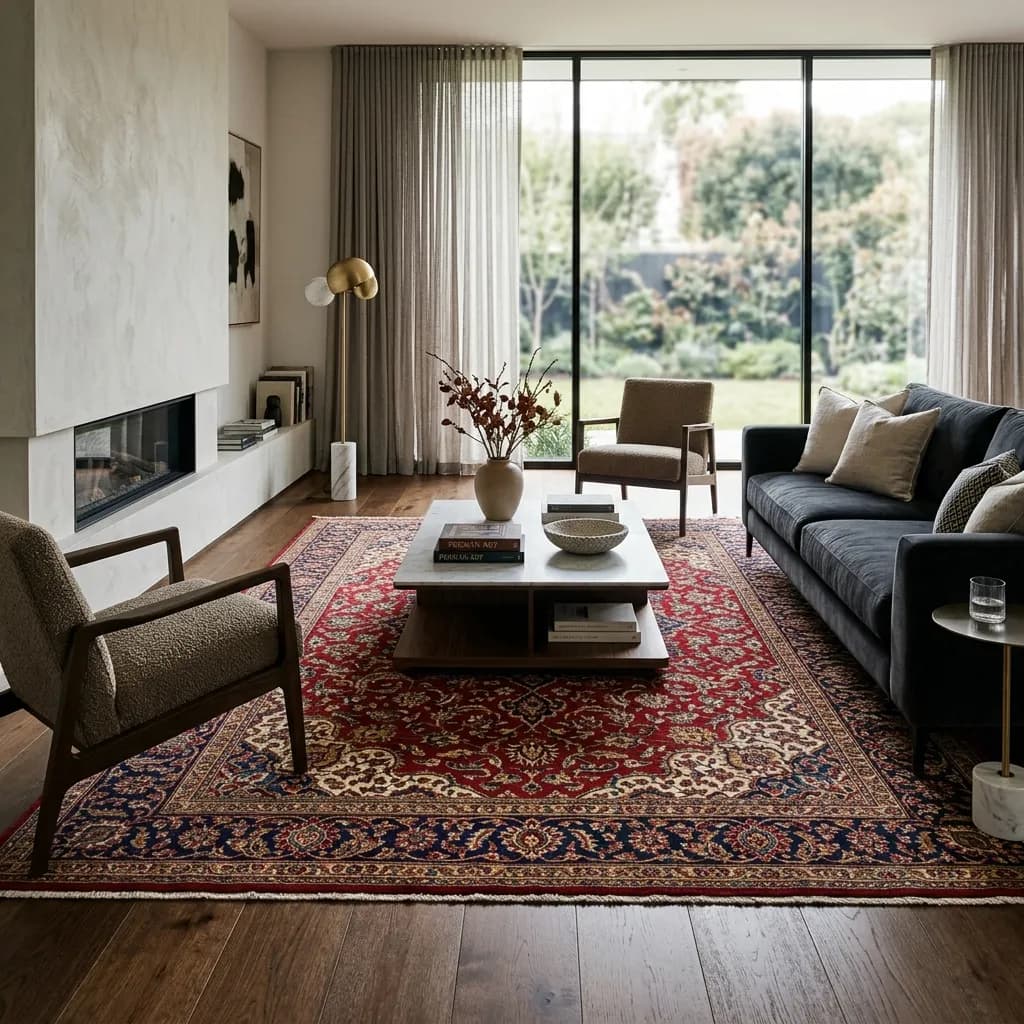
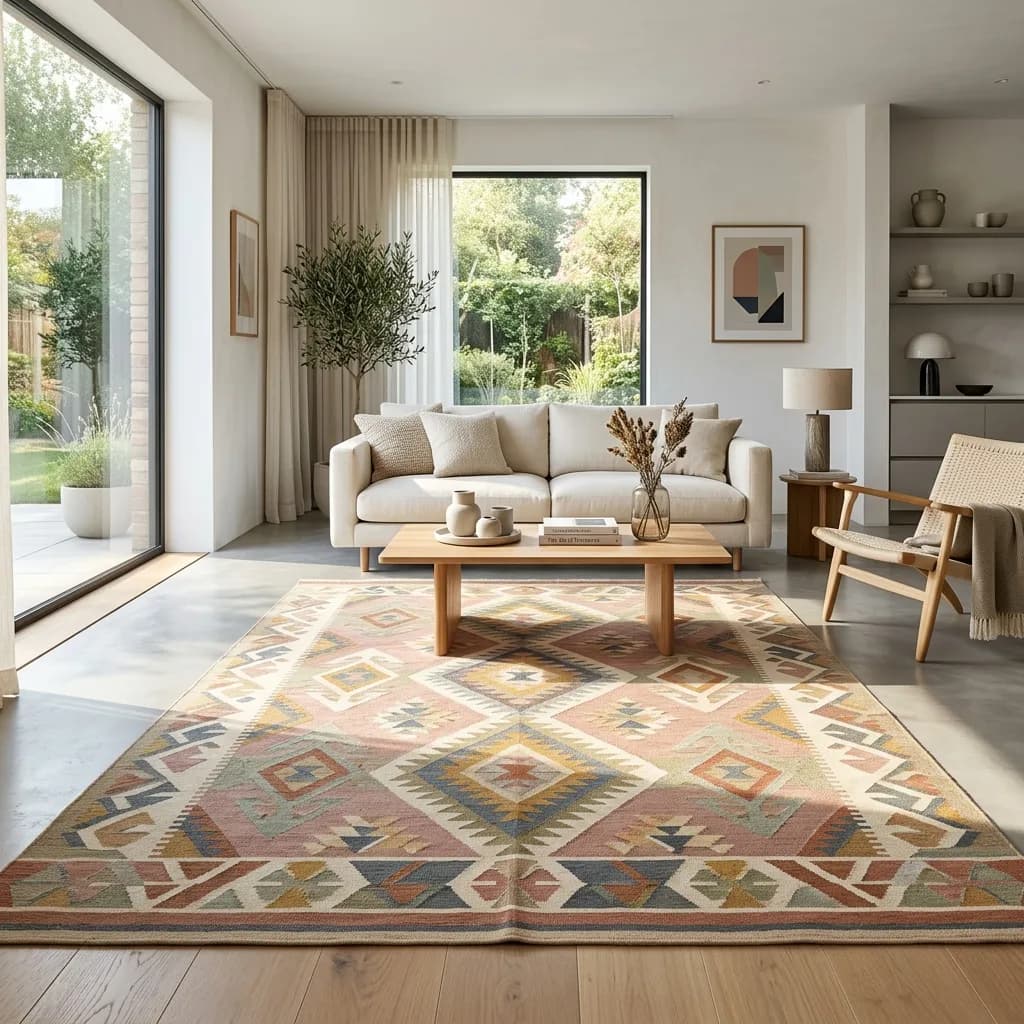
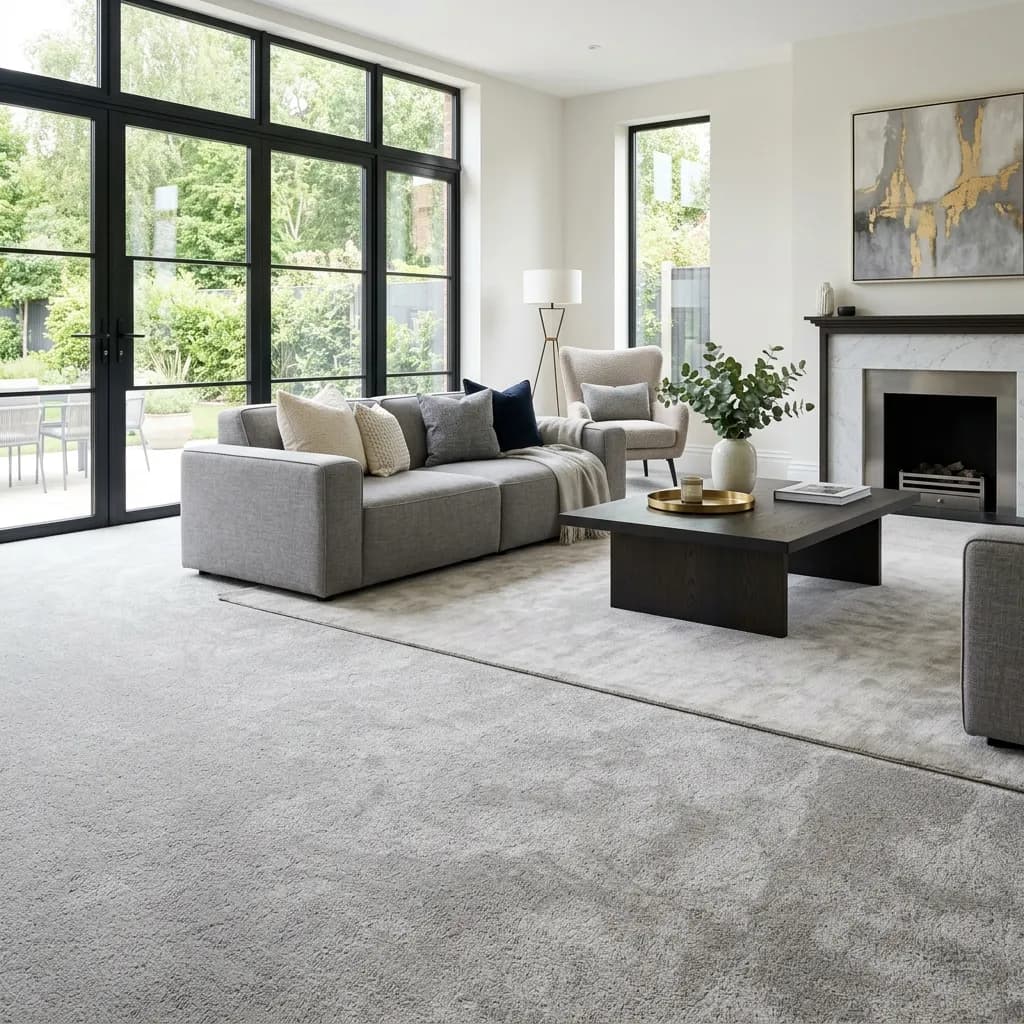
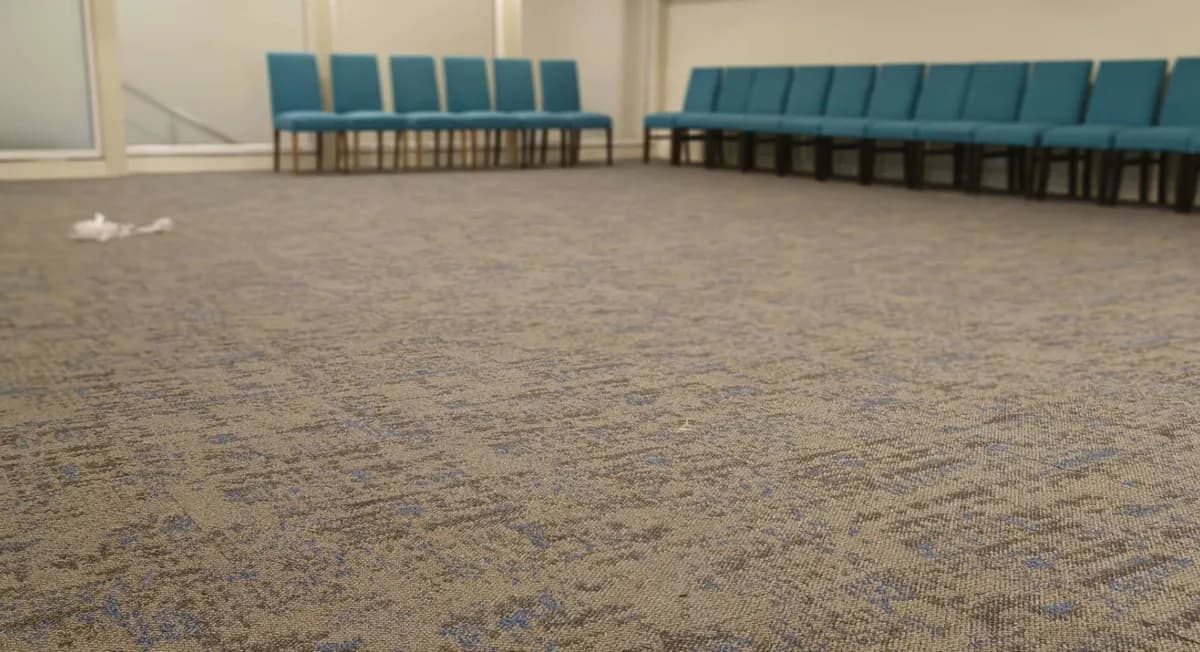
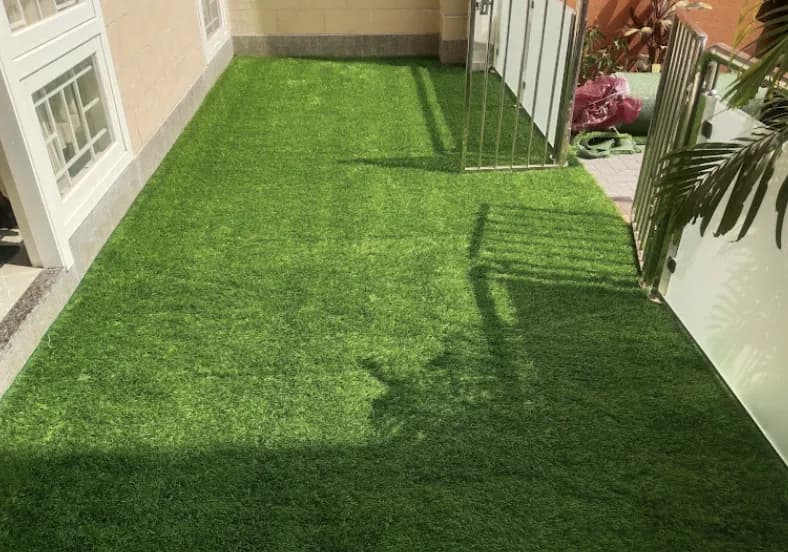
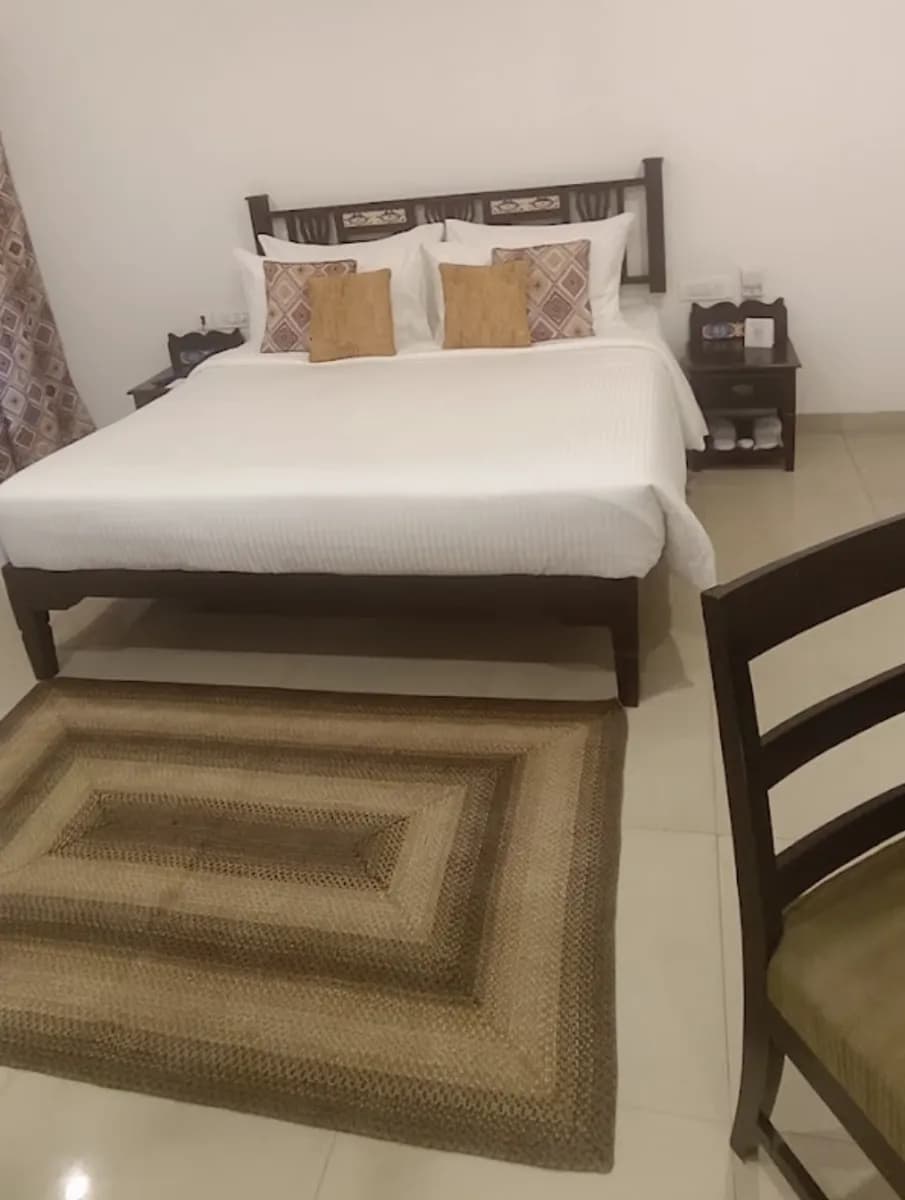
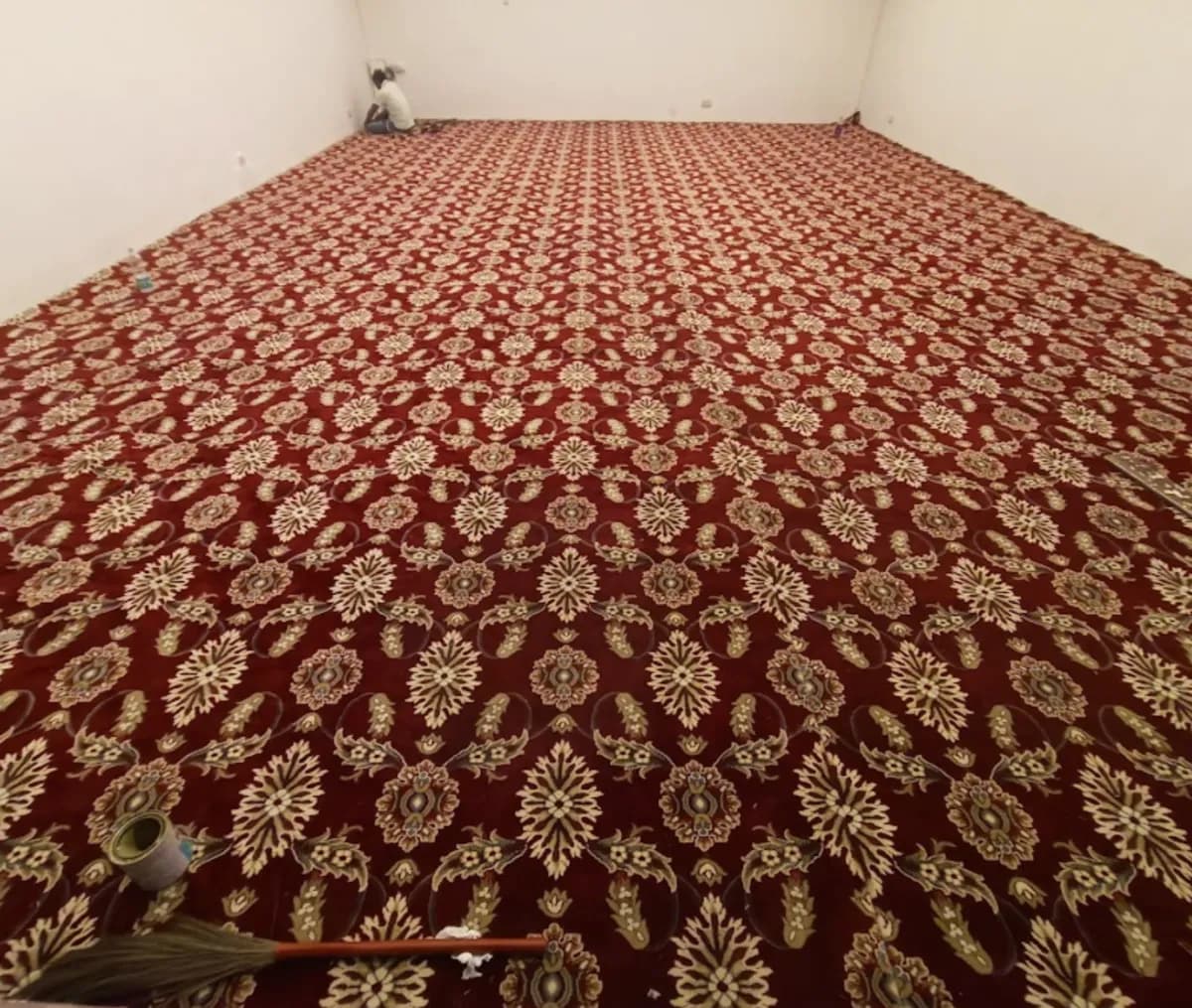
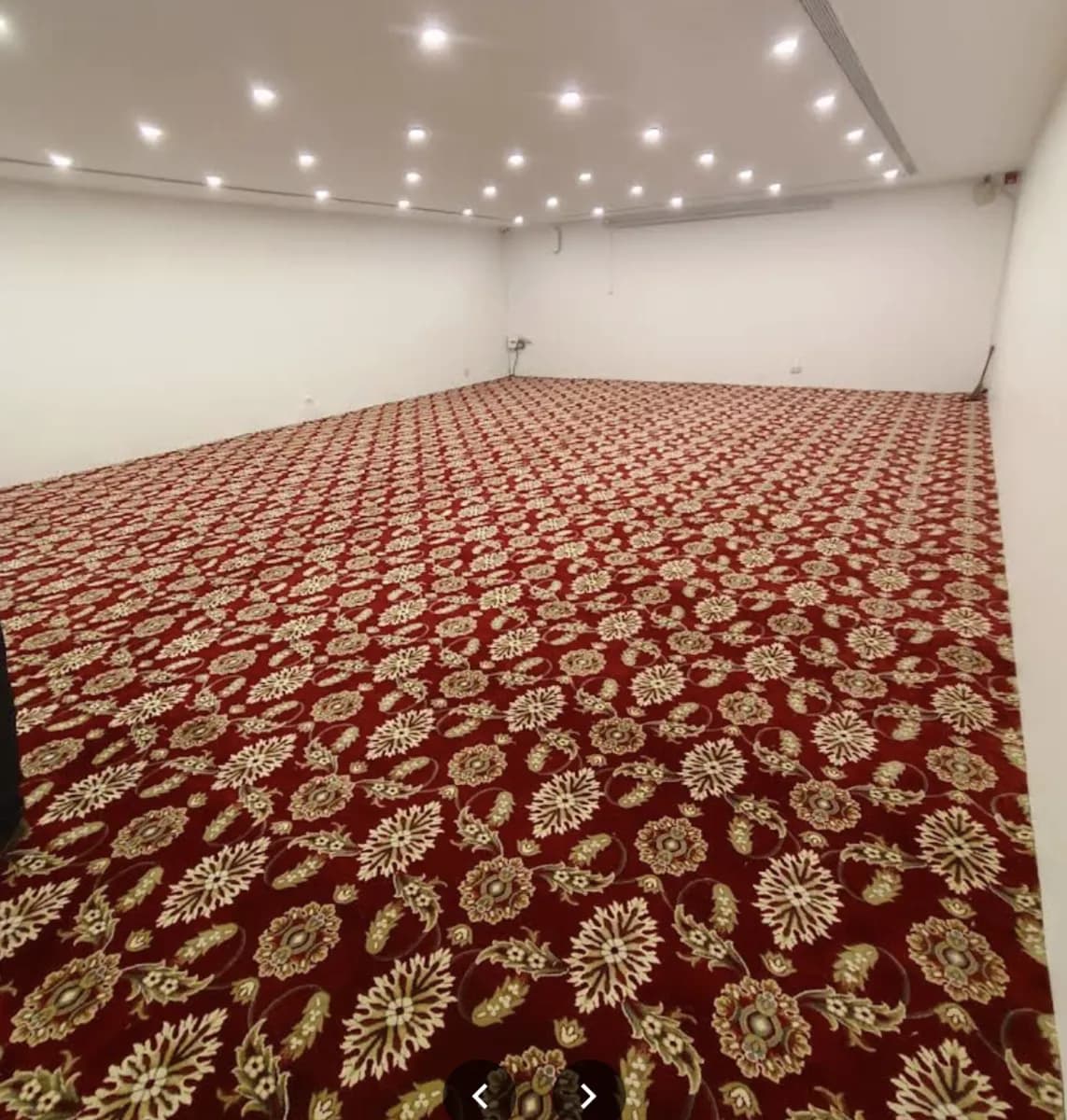
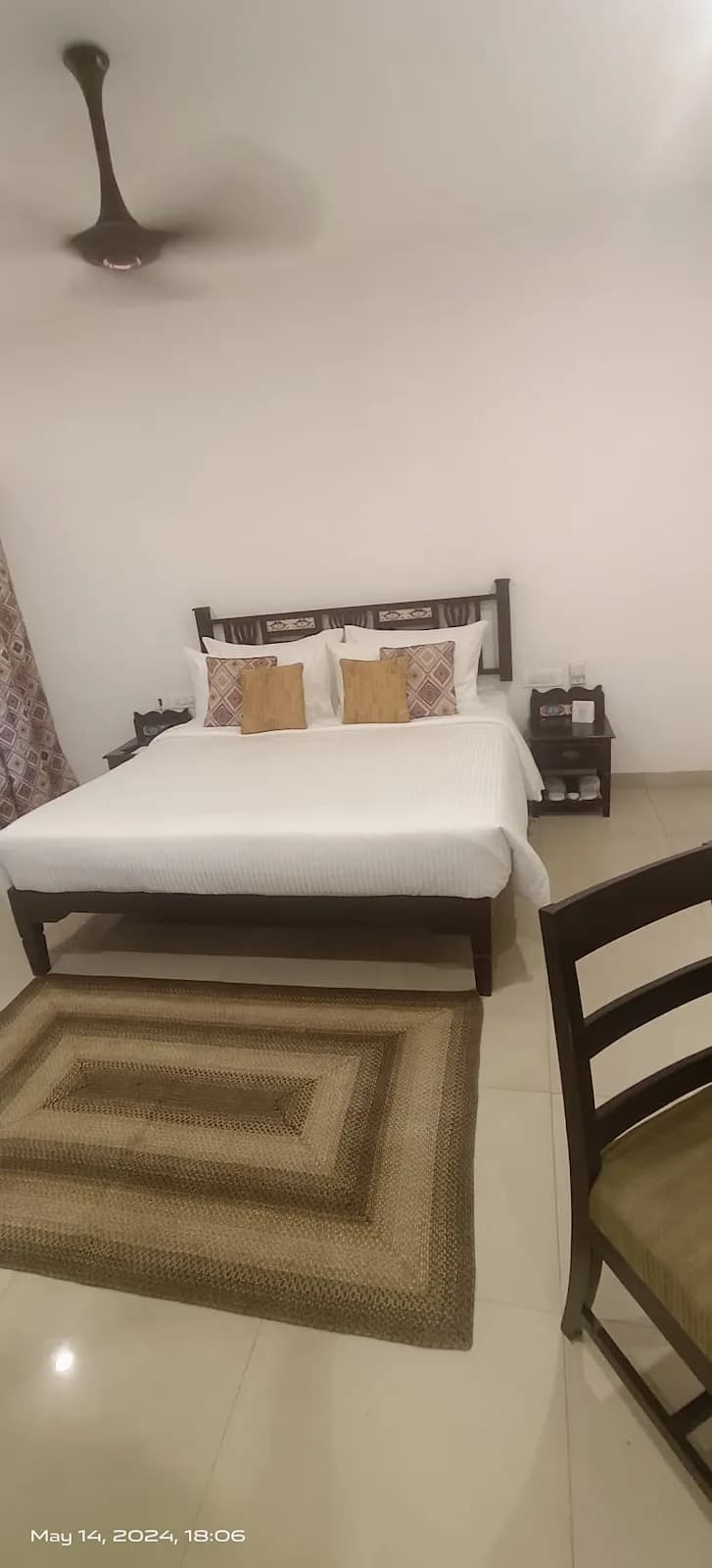
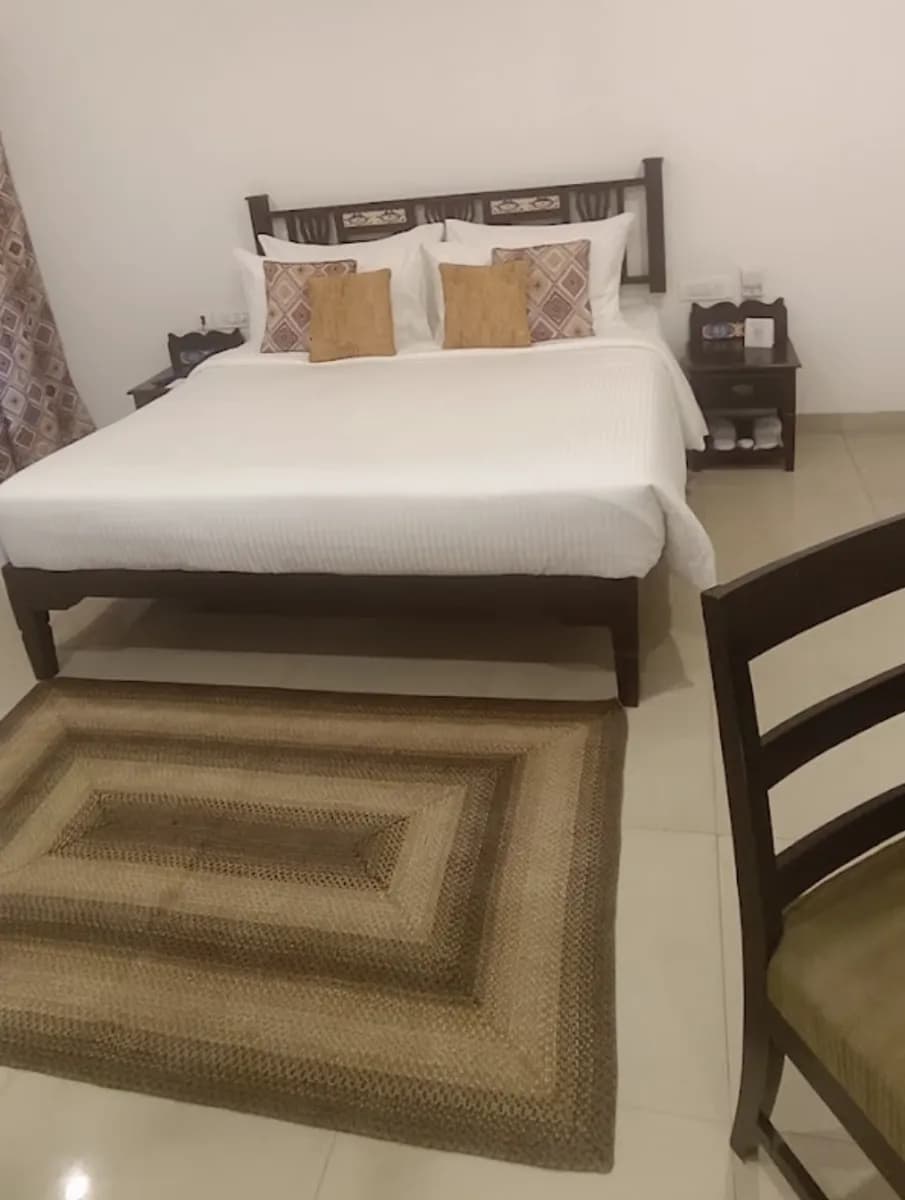
Fitted carpet is the wrong idea for most of Ribandar. The old houses have tiled or stone ground floors and back straight onto the Mandovi, and in the monsoon those floors sweat. What suits is a rug that can be rolled up, carried to the balcony and aired when the sun comes out. Flat-woven cotton dhurries and synthetic rugs dry fastest; avoid anything with a rubber back, which holds wet against the tiles and leaves a mark. Upstairs rooms are drier and can take a thicker pile. In the flats on the hill, a rug under the seating has another use: it softens footsteps for the people living below.
- Ground-floor halls in river-side houses: a cotton dhurrie on a breathable underlay, lifted and aired on dry days through the monsoon.
- Upstairs bedrooms in two-storey houses: a wool or Persian-style rug beside the bed, where the floor stays drier.
- Flats on the hill: a rug large enough to sit under the sofa's front feet, with a band of tile left showing all round.
Ribandar is the long, narrow village on the Mandovi between Panjim and Old Goa, reached by the causeway from the city. A single road runs through it, lined with old houses that back onto the river, with a ferry across to Chorão.
Ribandar is known for its row of Portuguese-era houses, many two storeys high with balconies over the road and the water behind. Several have been restored. Newer flats stand on the hill above.
With the river on one side and salt pans and mangroves along the causeway, Ribandar is humid and breezy, and mosquitoes are common in the evening.
Riverside and backwater homes
Ground floors near water are damp underfoot in the monsoon. Use rugs that can be lifted and dried, not fitted carpet, and avoid rubber-backed rugs that trap moisture against the floor.
Old Goan houses
Old tiled and stone floors are part of the house, so use rugs, not fitted carpet. A dhurrie or a Persian-style rug suits the furniture, with an underlay so it does not slip on polished tiles.