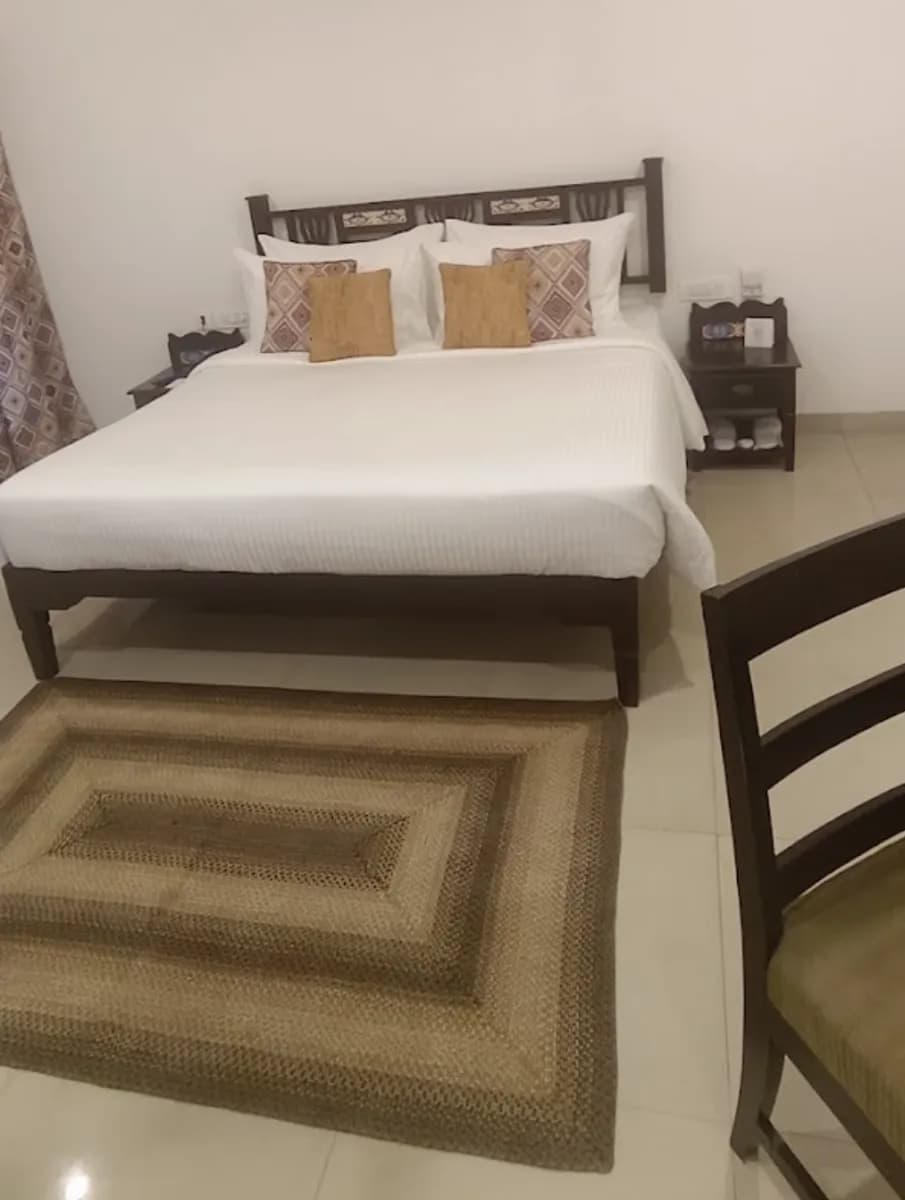
Which wall the bed stands against decides most of this in Old Goa. Walls near the Mandovi carry moisture, and thick upholstery held tight to an outer one can grow mould where nobody looks. Stand the padding off the plaster on battens so that air gets round the back, or let the bed carry its own headboard, and choose leatherette or a close synthetic cloth that a damp sponge will clean. In the older houses of the wards there may be a carved wooden bed that should stay as it is; a cushioned pad shaped to the old bedhead gives comfort and leaves the carving alone. Larger bedrooms in the colonies can give a wide panelled design an inner wall.
- Bedrooms on outside walls: a leatherette headboard held off the plaster by battens, so the reverse can breathe through the wet months.
- Old carved beds in ward houses: a removable cushioned pad shaped to the bedhead and tied on, with no screws into old timber.
- Roomy bedrooms in the colonies: a wide panelled headboard on an inner wall, in a wipeable synthetic weave.
Old Goa was the capital of Portuguese India, and its great churches, including the Basilica of Bom Jesus and the Se Cathedral, are a World Heritage Site. Today it is a small town on the Mandovi, east of Panjim, with residential colonies and villages spreading around the monuments.
People live in housing colonies, new apartment buildings along the highway and older houses in the surrounding wards. The area is quiet and has drawn families who work in Panjim but want more space.
Old Goa lies beside the river and is humid, with low ground that stays wet in the monsoon. It is inland enough that salt is not a concern.
Old Goan houses
Old carved beds are worth keeping. An upholstered panel can be made to sit within the existing frame, or the cane and padding renewed, without altering the woodwork.
Riverside and backwater homes
In a damp room, avoid thick padding pressed hard against an outside wall. A wall-hung headboard with a gap behind it, in a cover that can be wiped, stays fresh.



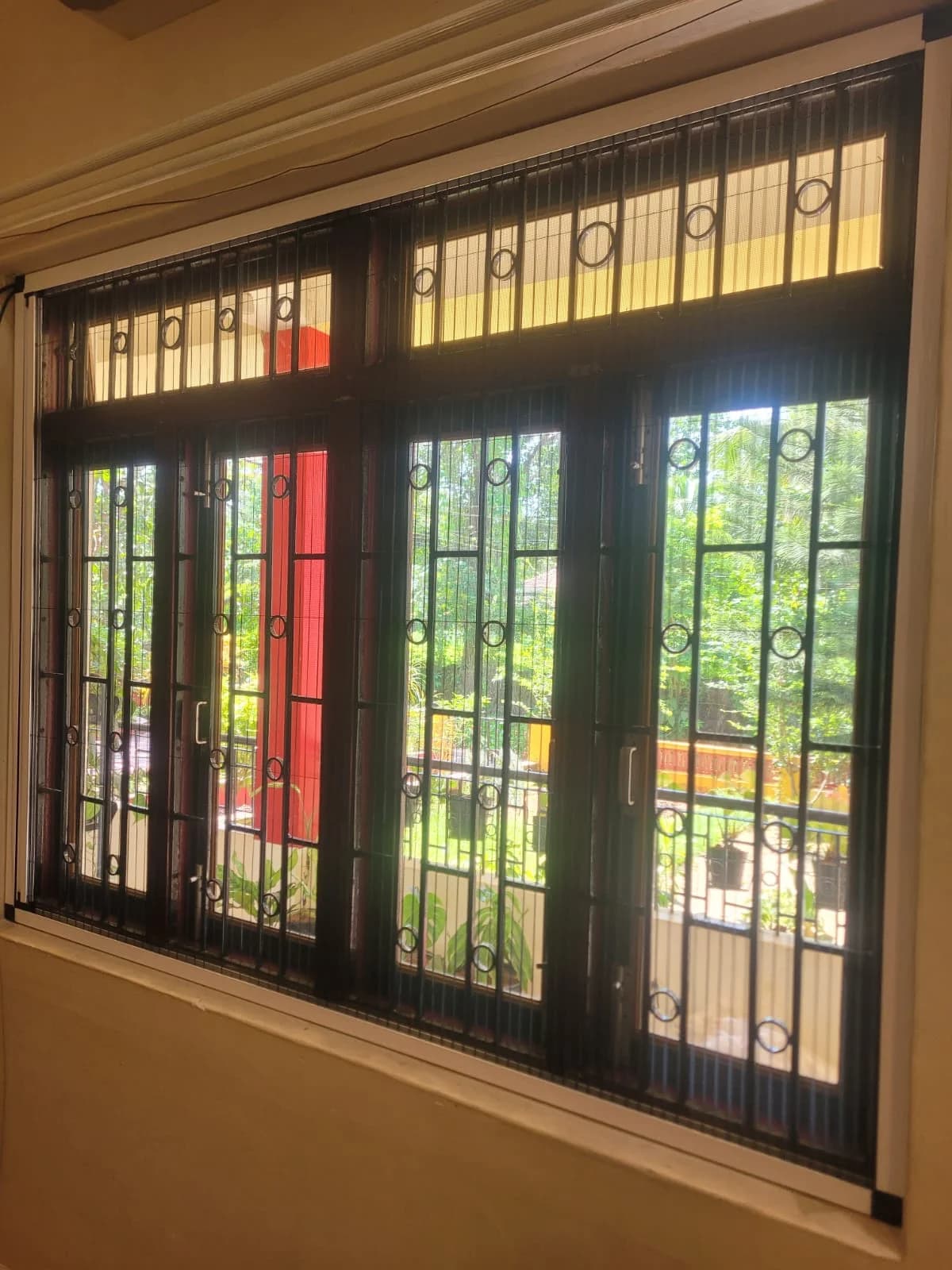 sliding-nets