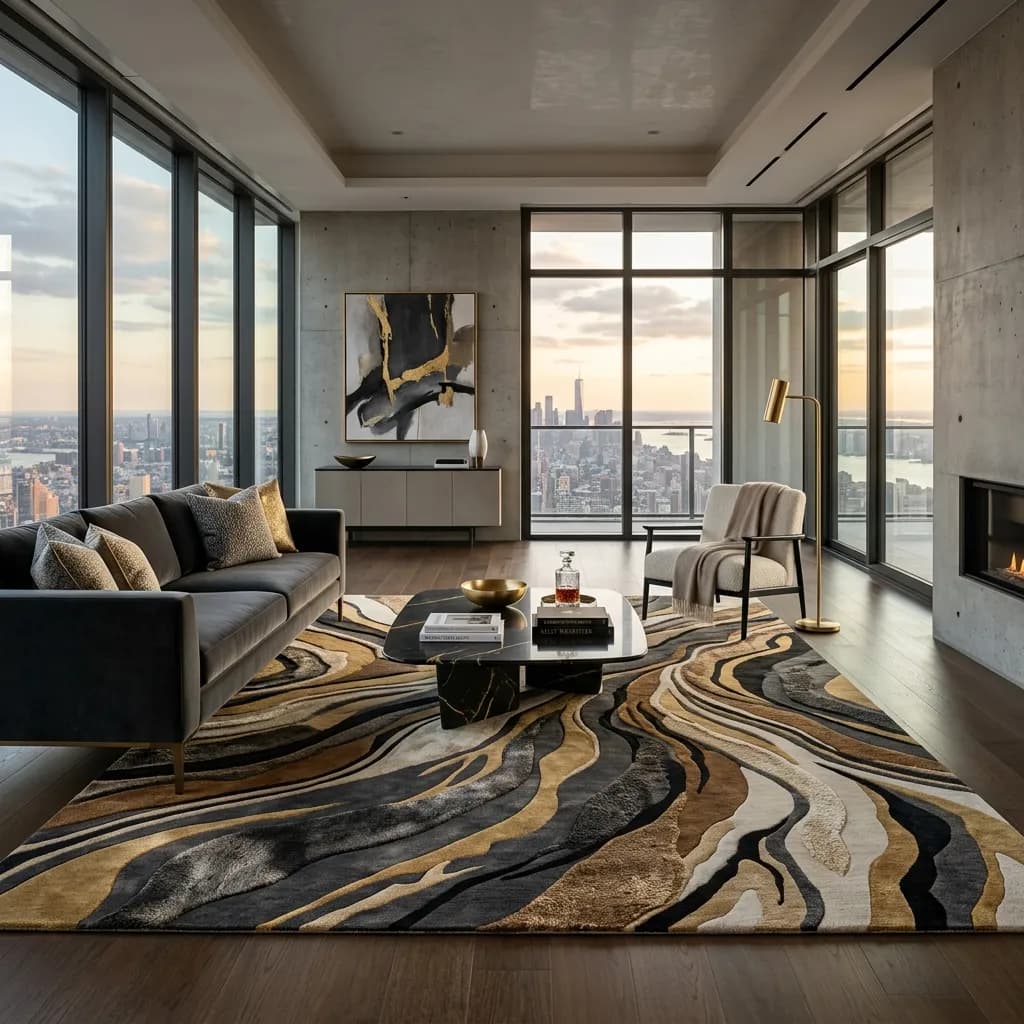
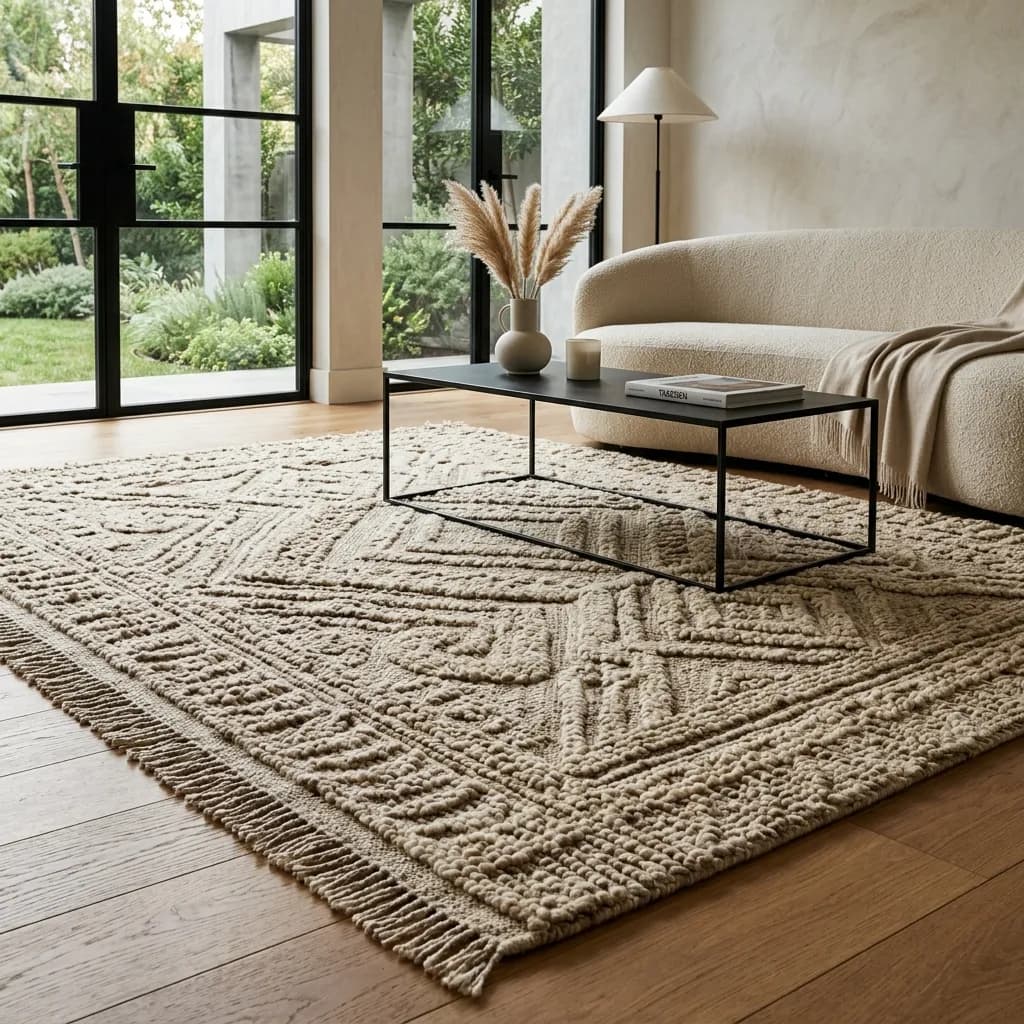
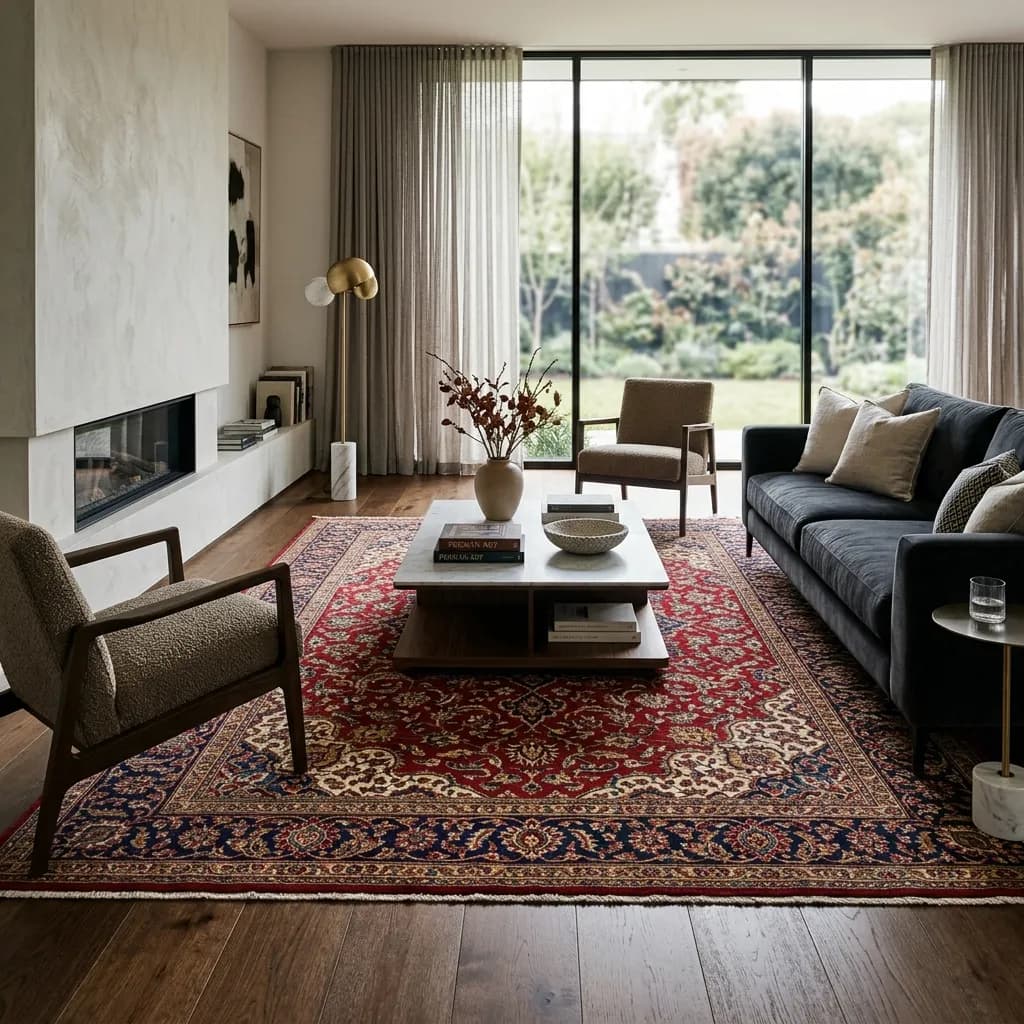
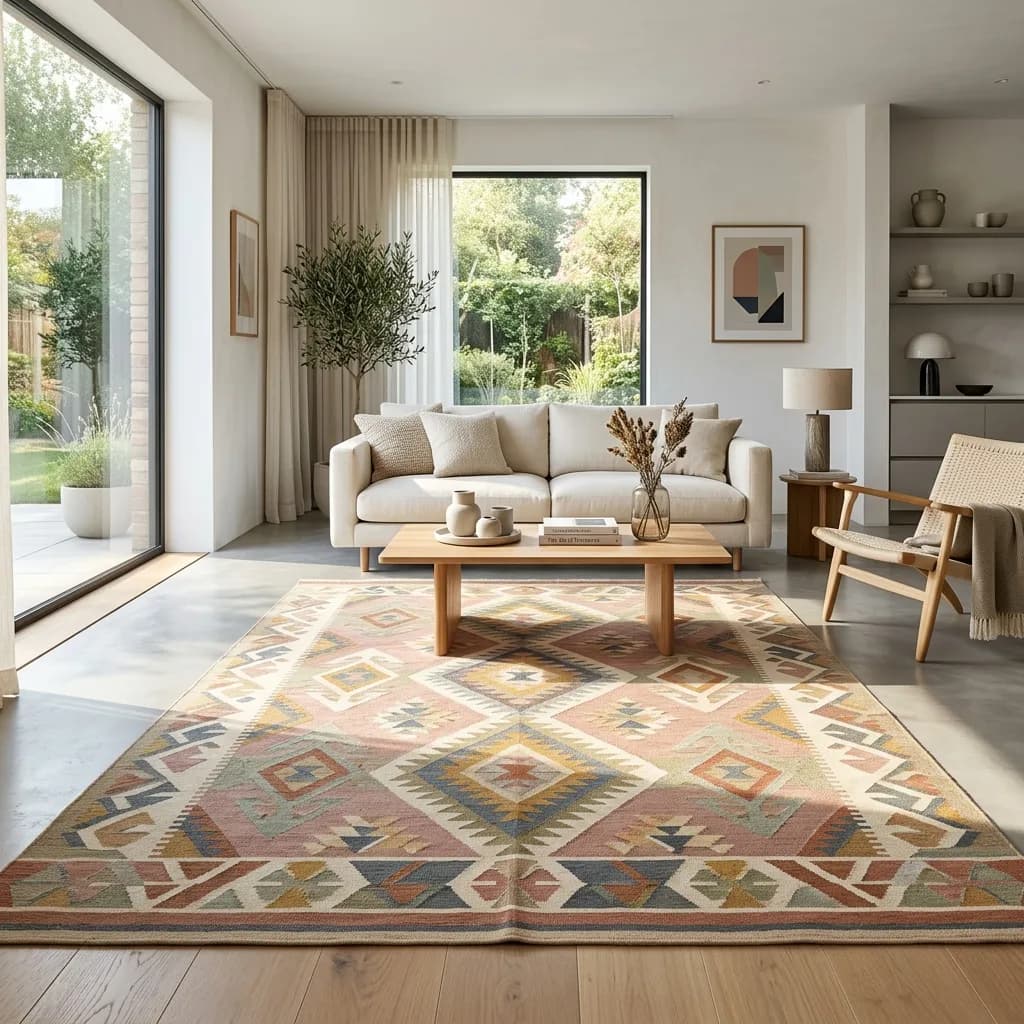
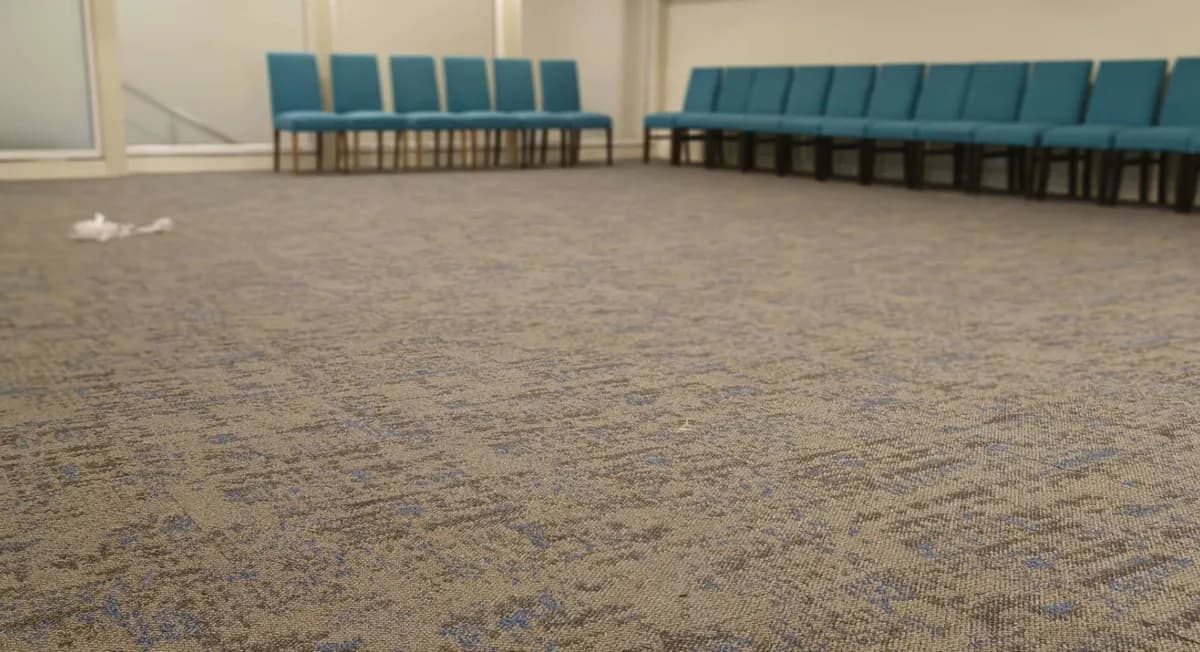
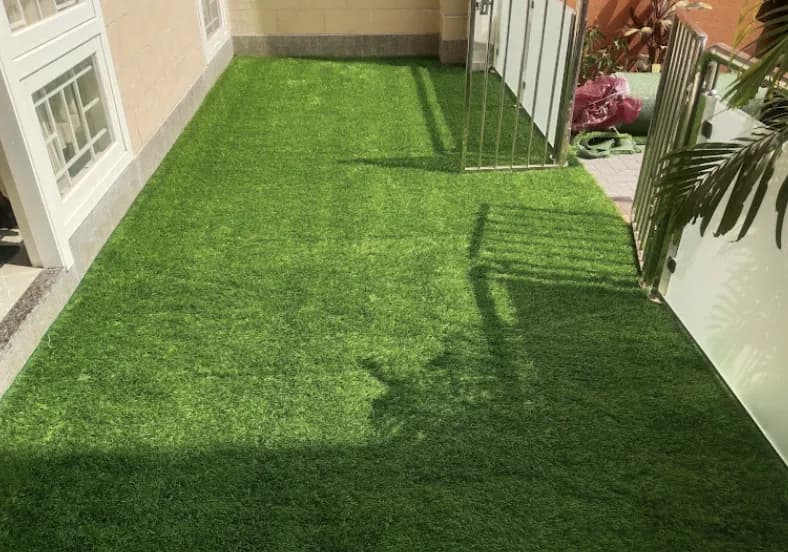
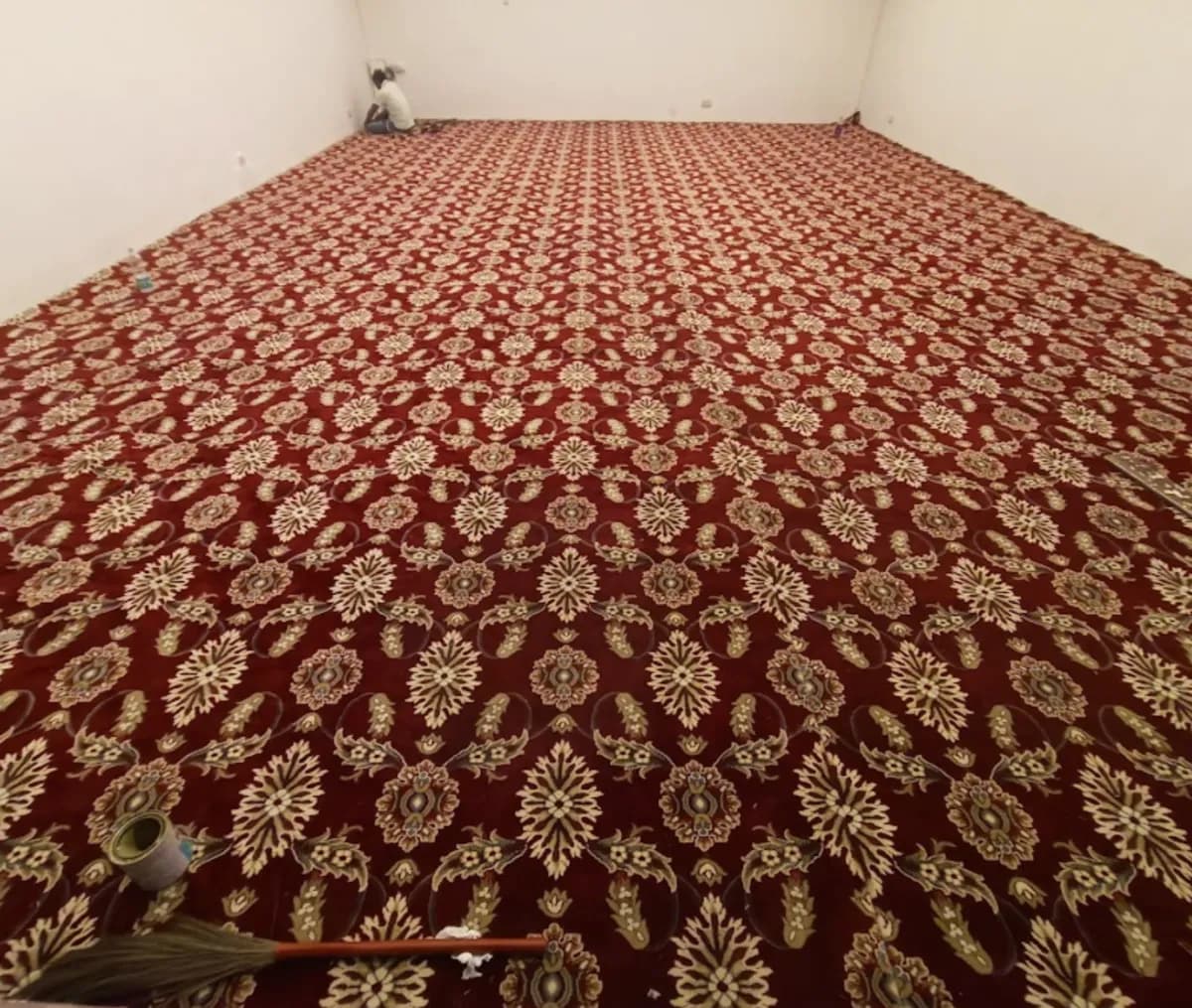
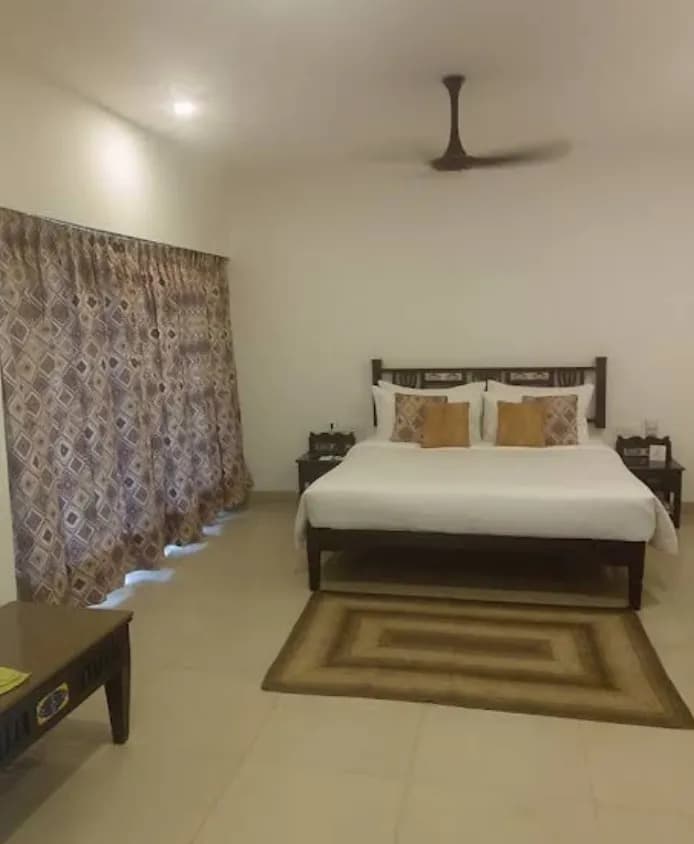
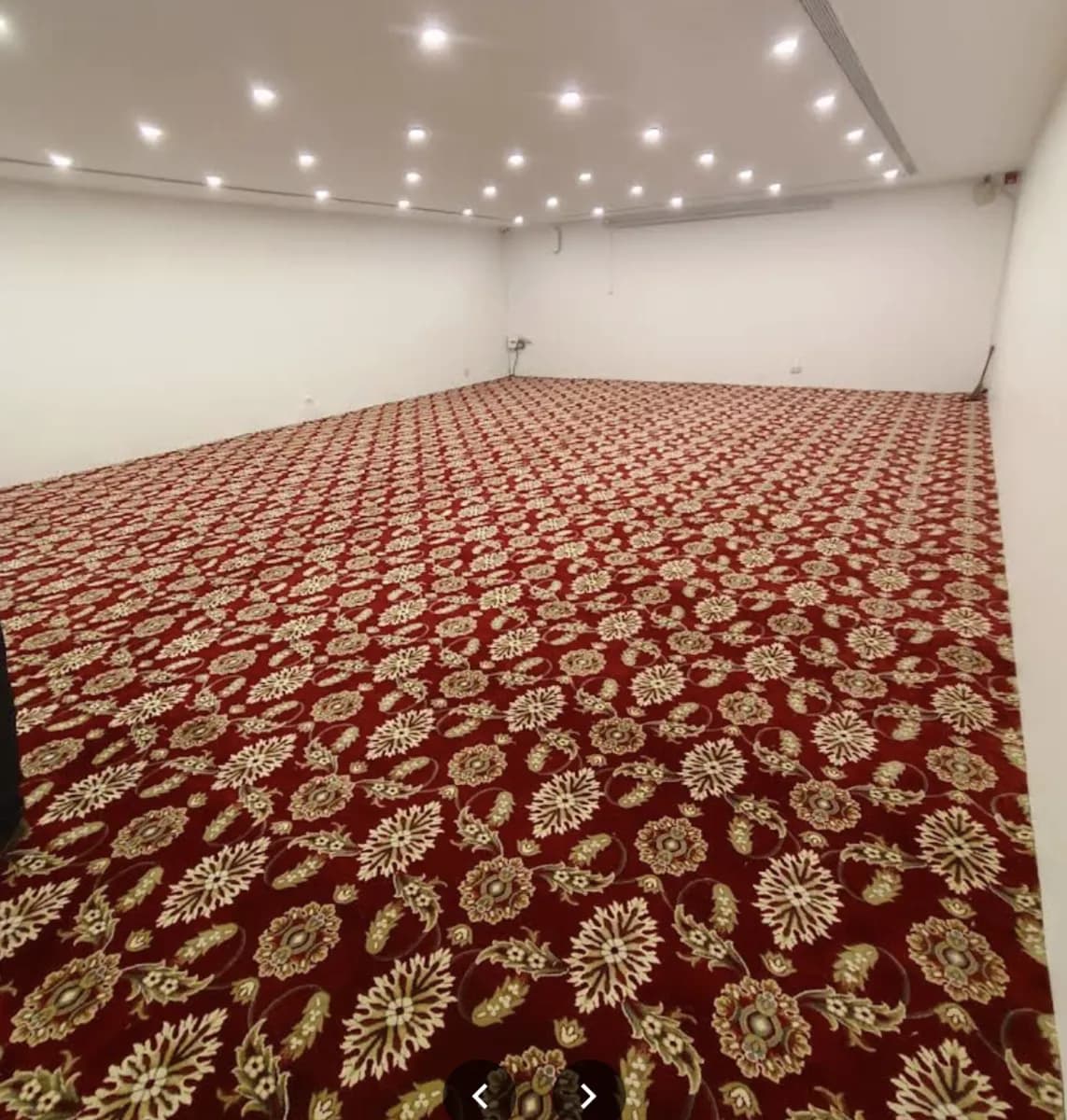
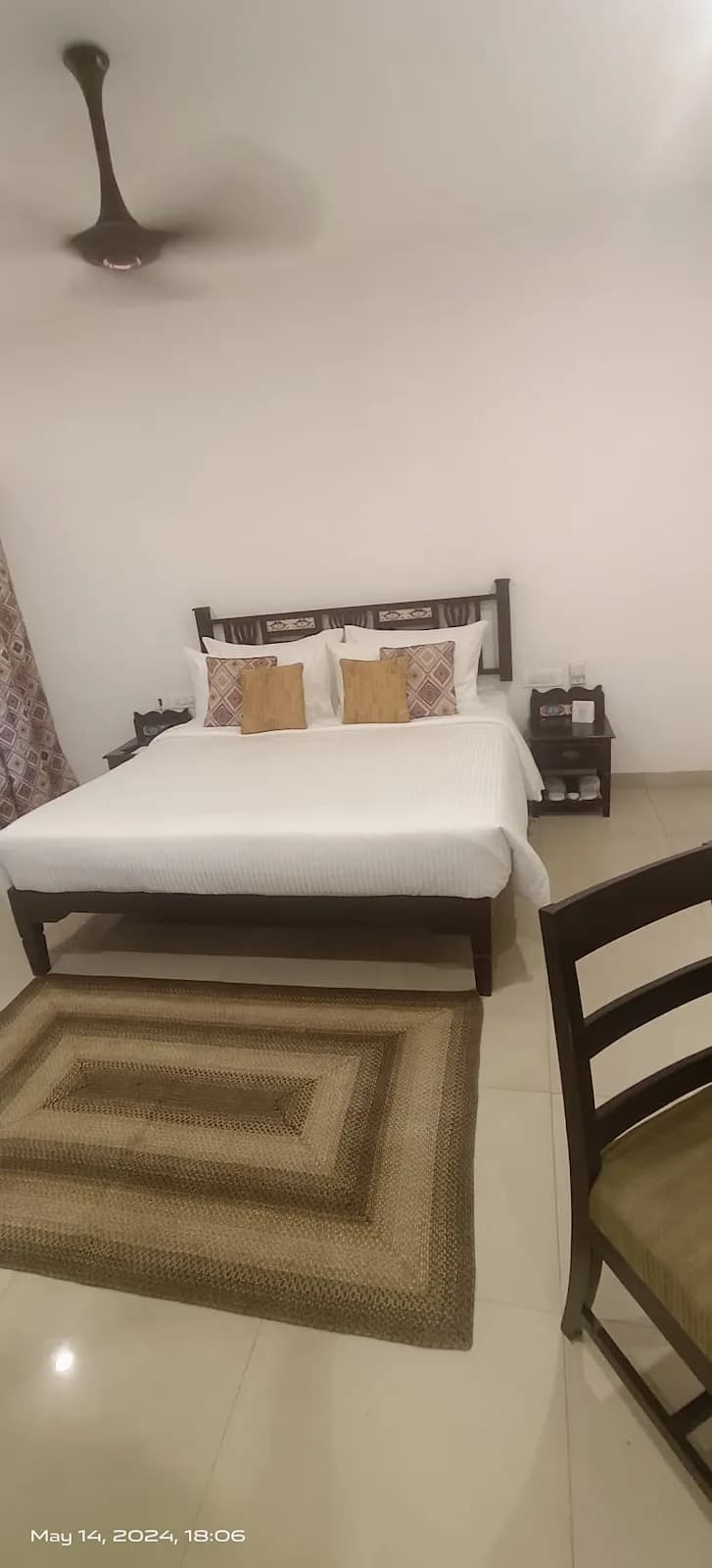
A rug at Mobor meets sand from the beach, wet feet from the terrace and damp from the river, often on a single afternoon. Choose for that. Polypropylene and nylon rugs in dark, patterned designs hide sand and marks, dry quickly and can be lifted, hosed and aired on a terrace. Wool and jute hold moisture and smell; rubber-backed rugs trap water against a ground floor that is already damp in the monsoon. Fitted carpet has a place only in closed, air-conditioned rooms on upper floors. For holiday property the useful rug is machine-made and replaceable, washed when the season ends and stored dry through the worst of the rain.
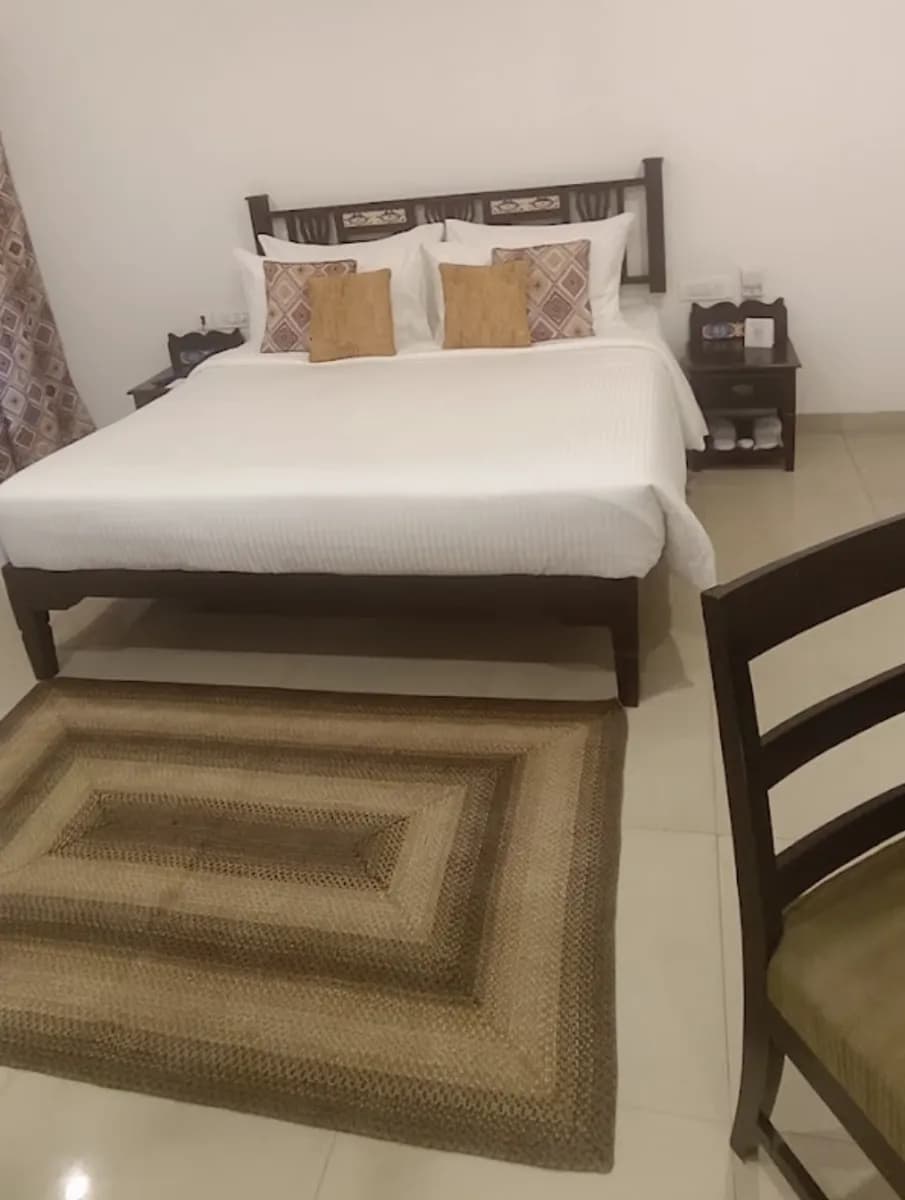
- Resort rooms and villas: dark patterned synthetic rugs beside the bed, lifted and washed between seasons to clear the sand.
- Ground floors on the river side: loose rugs without rubber backing, taken up and dried whenever the floor feels damp.
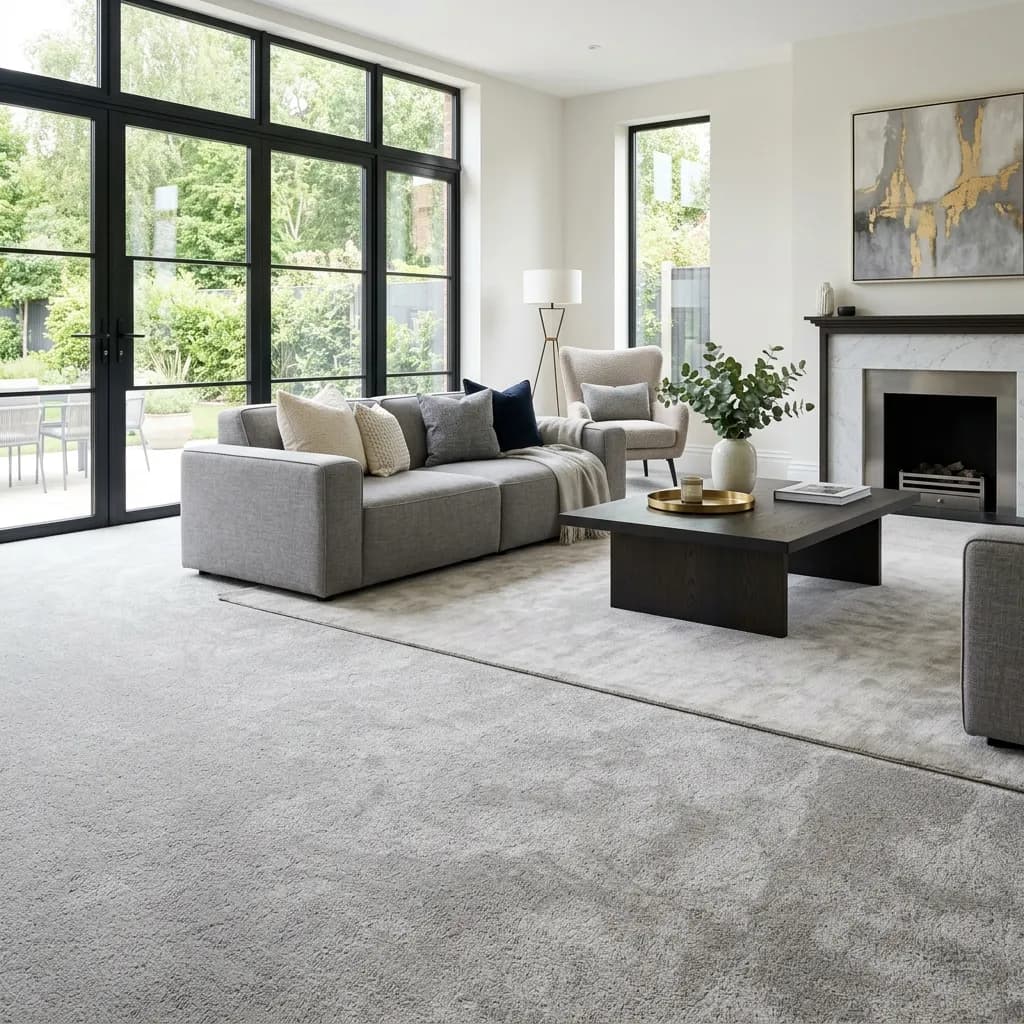
- Air-conditioned upper-floor suites: wall-to-wall carpet is workable here, provided doors to the terrace are kept closed.
Mobor is the southern tip of the Cavelossim peninsula, where the Sal river meets the sea. It is a small area of beach resorts, a fishing jetty and a few villas, with water on both sides and the road ending at the river mouth.
Almost everything here is resort or holiday property. Rooms face either the sea or the river, with terraces and sit-outs that are used as much as the rooms themselves.
Mobor is the most exposed point on this coast. Wind, salt spray and monsoon rain reach every building, and outdoor furnishings take the worst of it.
Sea-facing homes
Wool and jute hold moisture near the sea and can smell. Synthetic rugs in polypropylene or nylon dry quickly and resist mildew, and can be taken outside to air. Wall-to-wall carpet suits only air-conditioned rooms.
Riverside and backwater homes
Ground floors near water are damp underfoot in the monsoon. Use rugs that can be lifted and dried, not fitted carpet, and avoid rubber-backed rugs that trap moisture against the floor.