Best Carpet for Living Room — Complete Buying Guide for Indian Homes
Which rug size, material, and style works best under your sofa? Wool vs Turkish vs Persian vs synthetic — a practical, no-fluff guide for choosing the right living room carpet for your Indian home.
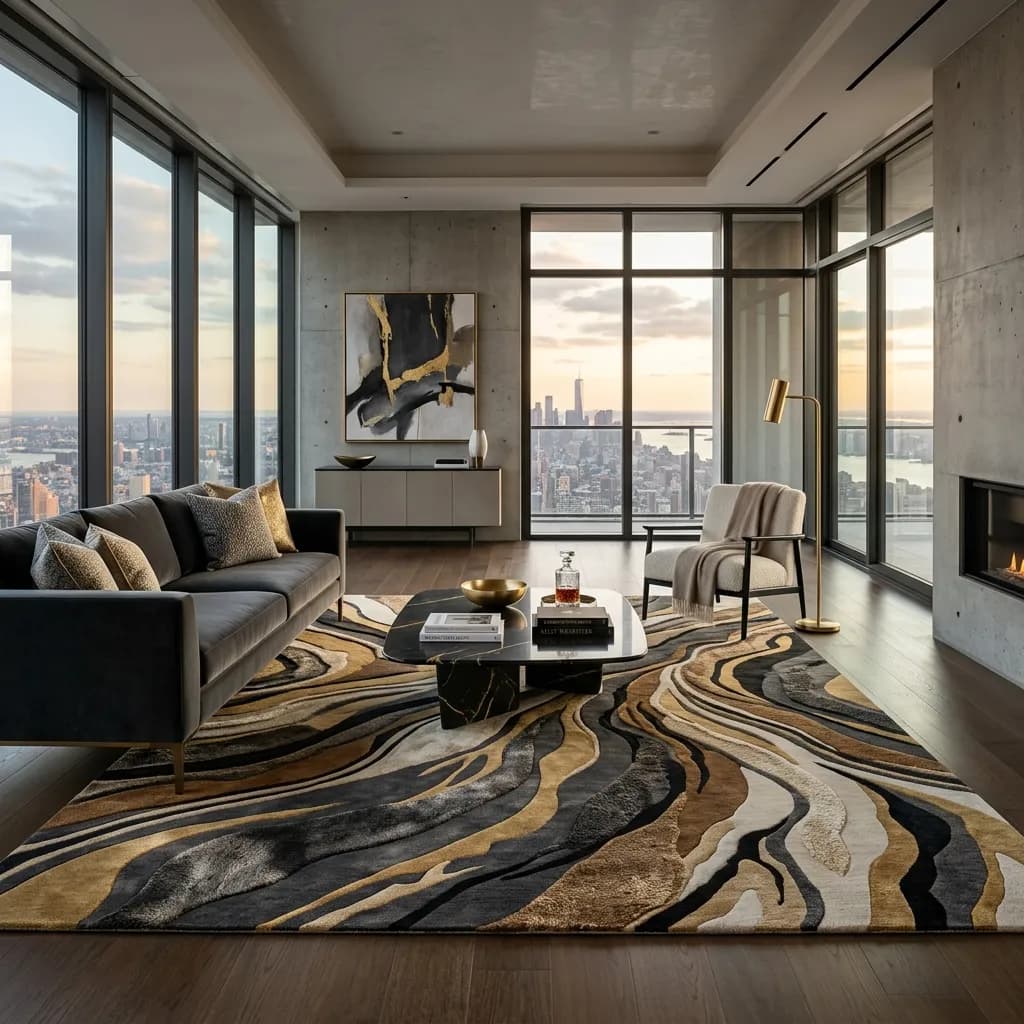
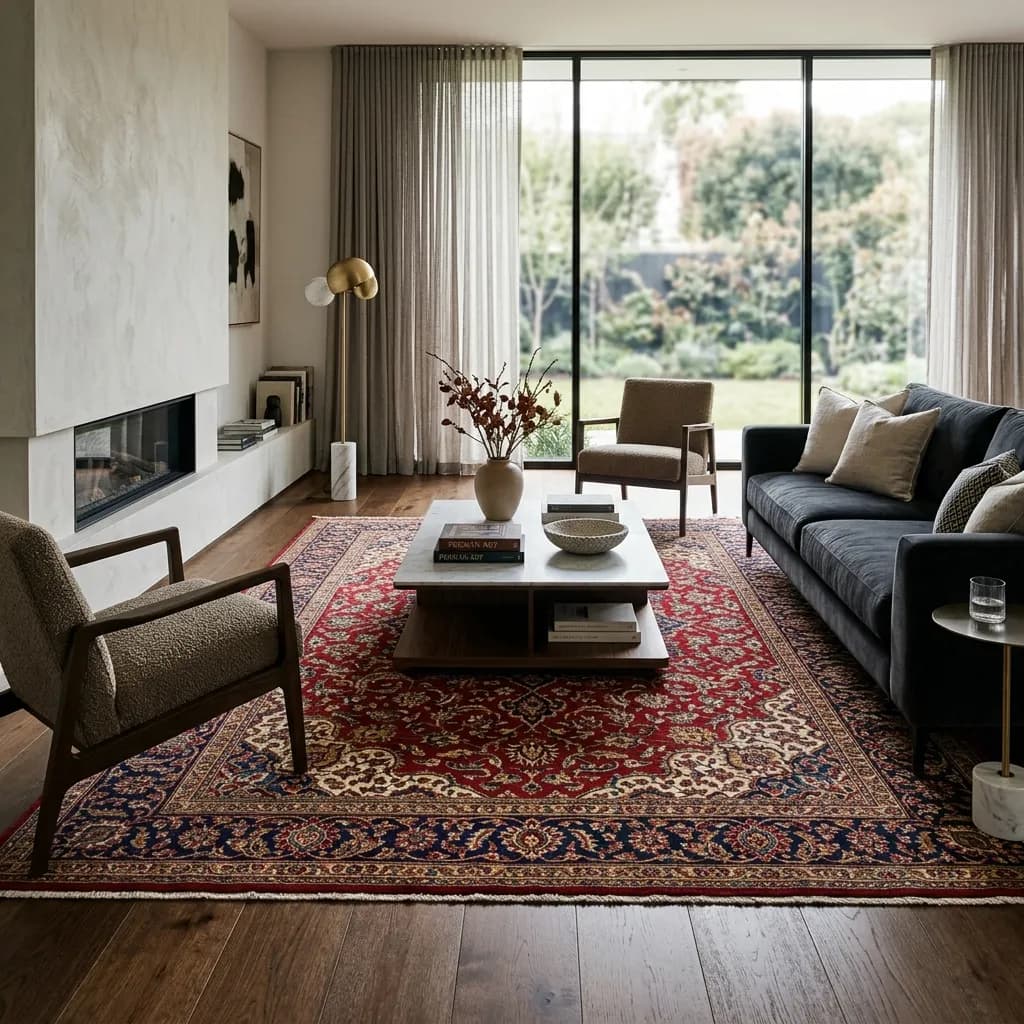
The right rug transforms a living room — anchors seating, adds warmth, and defines the space.
Why the Living Room Carpet Is the Most Important Piece You'll Choose
Ask any interior designer what single decor purchase transforms a room the most, and the answer is almost always: the right rug. Curtains frame windows, wallpaper accents a wall, sofas anchor the seating — but a large, well-chosen carpet is the visual foundation of the entire living room. It defines the seating zone, ties disparate furniture pieces into one cohesive setting, adds warmth (both literal and visual), and absorbs sound so the room feels welcoming instead of echo-y.
Get it wrong — too small, wrong material, wrong style — and the whole room looks off-balance. Get it right, and even a modestly furnished living room instantly feels curated and complete.
This guide walks you through every decision, in the order you should make them:
- 1Size (the #1 mistake — most people buy too small)
- 2Material (matches your climate, family, budget)
- 3Style & pattern (matches your interior aesthetic)
- 4Colour (works with your walls, sofa and lighting)
- 5Underlay (extends life 40%+)
- 6Where to buy in India (with real 2026 price bands)
We'll use real examples from our RUG WAY, Persian and wool collections at /carpets — but the principles apply whether you buy from us, a local dealer, or online.
Step 1 — Get the Size Right (Most People Get This Wrong)
The single most common carpet mistake in Indian living rooms: buying a rug that's too small. A 4×6 ft rug floating in the middle of a large room, with all furniture standing on bare floor around it, looks like a doormat. It disconnects the seating instead of anchoring it.
The three correct sizing rules for Indian living rooms:
Rule 1: Front-legs-on (minimum acceptable) — At minimum, the front legs of your sofa and armchairs should sit on the rug. If they float on bare floor with the rug tucked away under the coffee table, the rug is too small.
Rule 2: All-legs-on (best for medium/large rooms) — Ideally, all four legs of every seating piece sit fully on the rug. This creates the strongest visual anchor and the most cohesive room.
Rule 3: 8-12 inches of floor border — Leave about a foot of floor showing between the edge of the rug and the walls. Wall-to-wall coverage looks like a fitted carpet (different aesthetic); wall-hugging edges look installed rather than decorative.
Rug size chart by sofa/room:
- ●1BHK / small apartment · 2-seater sofa · 10×12 ft living room: 5×8 ft rug (front-legs-on) or 6×9 ft rug (all-legs-on)
- ●Standard 2BHK · 3-seater sofa · 12×15 ft living room: 6×9 ft rug (minimum) or 8×10 ft rug (recommended)
- ●3+2 sofa set OR L-shape sofa · 14×18 ft living room: 8×10 ft rug (minimum) or 9×12 ft rug (recommended)
- ●Large villa living room · sectional or 3+2+1 · 18×22 ft+: 9×12 ft rug (minimum) or 10×14 ft custom size
All our machine-woven Turkish rugs (RUG WAY Turkish Delight) are stocked in 3×5, 4×6, 5×7 and 6×9 ft — see the full collection at /carpets. Persian, wool and dhurrie can be made in any custom size — send your room dimensions on WhatsApp for a quote.
Step 2 — Choose the Right Material for Your Climate & Family
Material choice depends on three factors: your climate, who lives in the home (kids, pets, elders), and how much maintenance you're willing to do. Here are the six main options for Indian living rooms:
1. Machine-Woven Turkish (heatset PP + polyester blend) — The most popular choice in Indian homes today. Turkish rugs like our RUG WAY Turkish Delight collection use 10 mm dense pile made from 60% PP heatset + 40% polyester. Highly stain-resistant, softer than pure synthetic, and available in modern abstract, geometric, medallion and floral designs. Great value for money. Approximate starting price ₹7,100 for 3×5 ft. Ideal for: mainstream living rooms, first-time buyers, homes with kids.
2. Pure Wool (100% New Zealand wool or wool-blend) — The premium natural fibre. Wool is naturally stain-resistant (thanks to lanolin coating), incredibly durable (lasts 15-20 years easily), and soft underfoot. It's also hypo-allergenic and inherently flame-retardant. The downside: needs professional cleaning, more expensive (approx ₹450/sq ft+), and takes time to fully break in. See /carpets/wool for our range. Ideal for: luxury homes, master living rooms, cold-climate cities.
3. Hand-Knotted Persian (wool or wool-silk blend) — The pinnacle of rug-making. Every knot is tied by hand — a 6×9 ft Persian rug can take 8-14 months to weave. They're investment pieces that appreciate in value over decades. Motifs like Tabriz medallions, Kashan florals, Isfahan symmetry, and Nain ivory backgrounds each have distinct aesthetics. Prices from approx ₹550/sq ft for entry-level wool up to ₹1,800/sq ft+ for pure silk. Explore /carpets/persian. Ideal for: heritage/luxury interiors, statement living rooms, investment collectors.
4. Cotton Dhurrie (flat-weave) — Traditional Indian handloom rugs. Reversible, breathable, lightweight, and often washable. Perfect for humid coastal homes because they don't trap moisture. Best styles: cotton geometrics, wool-blend tribal, jute naturals. Starting from approx ₹1,499 for 3×5 ft. Full range with size + price chart at /carpets/dhurrie. Ideal for: rentals, verandas, kids' rooms, beach houses, casual bohemian aesthetics.
5. Jute & Sisal (natural plant fibre) — Rustic, textural, sustainable. Adds an earthy coastal or bohemian feel. Downsides: rough underfoot (not for barefoot lounging), stains permanently if soaked, doesn't handle spills well. Best in dry climates (Delhi, Bangalore) or covered verandas.
6. Synthetic (nylon, polyester, olefin) — The most affordable and easy-care option. Machine-washable, stain-resistant, kid and pet friendly. Doesn't last as long as wool or Turkish (5-8 years). Perfect for tight budgets, rental homes, or heavy-traffic spaces like TV rooms and playrooms.
Coastal Home in Goa/Mumbai/Chennai? Read this first
Humidity destroys certain rugs faster. Best coastal choices: Turkish machine-woven, cotton dhurries, wool-blend, and synthetic olefin. Avoid pure silk and pure jute for coastal/humid living rooms — they need drier climates to survive.
Step 3 — Pattern & Style That Match Your Interior Aesthetic
Once size and material are decided, pattern is where personal style comes in. Broad guidelines that work for most Indian homes:
Modern minimalist interior (grey/beige walls, sleek sofa, low coffee table): Go for a solid-colour or subtle-textured rug. Avoid busy patterns that fight for attention with the clean architecture. Consider a Turkish geometric or a cream/grey wool wall-to-wall.
Contemporary Indian interior (warm walls, mid-century sofa, mix of textures): Bold geometric or abstract Turkish rug works beautifully. Our RUG WAY Turkish Delight range has 20+ contemporary patterns that anchor mid-century modern Indian living rooms perfectly.
Traditional / heritage interior (carved teak, brass accents, tall ceilings): This is where Persian rugs shine. Deep-medallion Kashan or Tabriz designs in ruby, indigo and cream anchor traditional living rooms with unmatched grace. Nothing else looks right.
Bohemian / eclectic interior (mixed patterns, plants, layered textures): Cotton dhurrie in indigo geometric or terracotta stripes. Layer smaller dhurries over a base sisal rug for extra texture.
Coastal / villa interior (whites, blues, natural fibres, Goan Portuguese vibes): Cane-woven jute in dry areas, cotton dhurrie in coastal areas. Blues, whites and natural naturals. Avoid heavy Persian designs in beach-house settings.
Kids-friendly interior: Stain-resistant Turkish or synthetic in a patterned design (patterns hide small stains). Avoid solid cream or ivory.
Formal / entertaining interior: Persian or wool in a large size (all-legs-on) with a symmetrical pattern that photographs beautifully.
Step 4 — Colour Choice — Match Your Room's Existing Palette
Colour is where amateur choices go wrong. The rug should complement your existing walls, sofa, and curtains — not fight them. Three colour strategies that always work:
Strategy 1: Match & extend the sofa — Pick a rug whose dominant colour appears somewhere on your sofa (fabric, cushions, throw). This creates visual continuity. Example: charcoal sofa + cream throw pillow → cream rug with charcoal geometric.
Strategy 2: Complementary accent — Pick a rug in a colour that's opposite on the colour wheel from your sofa. Example: navy sofa → warm rust/terracotta rug (creates dramatic focal contrast).
Strategy 3: Neutral foundation — Beige, cream, or warm-grey rug that lets your sofa and art be the visual stars. Safe, versatile, and easy to change other decor around later.
Colours to avoid unless intentional: pure white (shows every speck), pure black (shows every hair), and clashing multi-brights (looks chaotic in Indian sun-lit rooms).
Colour testing tip: Before committing, request a swatch or photograph of the rug placed near your sofa in your actual living room lighting. Colours look completely different in showroom halogen vs Indian daylight. Our Goa customers get free in-home rug trial — we bring 3-4 rugs to your living room, place them, and let you see the difference in your actual light.
Step 5 — Underlay (The Rug Accessory Nobody Tells You About)
A quality rug underlay (also called a rug pad) is the single cheapest upgrade that dramatically improves your carpet's performance. Yet 80% of Indian homeowners skip it. Here's why you shouldn't:
1. Prevents slipping on tile and marble floors. Without an underlay, most rugs — especially thin dhurries and flat-weaves — slide dangerously on smooth Indian tile floors. A grip underlay solves this instantly.
2. Extends rug life by 30-40%. The underlay absorbs footfall shock that would otherwise crush the pile. Vacuum after vacuum, the pile stays fuller and springier for years longer.
3. Adds cushioning and warmth. Especially valuable on cold marble/tile floors — the extra millimeters of cushioning make a barefoot walk noticeably more comfortable and quieter.
4. Protects your floor from dye transfer. Some rugs (especially cheaper synthetics) can bleed dye onto your floor over years, especially in humid conditions. An underlay barrier prevents this.
Types: Rubberised grip (for hard floors — most common), felt (for extra cushioning, quieter), and felt-rubber combo (best of both, our recommendation for premium rugs).
Cost: Approximate ₹45-120/sq ft depending on quality. We include a recommended underlay quote with every rug order — WhatsApp us your rug size for the exact upgrade cost.
Step 6 — Where to Buy in India (Real Price Bands, 2026)
Living room carpet prices in India span a wide range. Here's an honest 2026 price map so you can budget realistically. All prices approximate — actual quotes vary daily by pattern, weave density, current stock, delivery pincode, and market conditions.
₹6,000 – ₹15,000 (budget entry): Machine-woven synthetic (nylon/polyester) rugs 3×5 to 5×7 ft. Basic Turkish machine-woven small rugs. Cotton dhurrie 3×5 to 5×8 ft. Ideal for rental homes, first-flat buyers, kids' rooms.
₹15,000 – ₹35,000 (mid-market): RUG WAY Turkish Delight collection 5×7 to 6×9 ft (starting approx ₹16,600 for 5×7). Cotton dhurrie 6×9 to 8×10 ft. Wool-blend area rugs. Best value bracket for mainstream Indian living rooms. This is the sweet spot for most buyers.
₹35,000 – ₹1,00,000 (premium): Hand-tufted 100% wool rugs 6×9 to 8×10 ft. Larger Turkish 8×10+ ft. Entry-level hand-knotted Persian 4×6 ft. Great choice for owned homes and long-term investment.
₹1,00,000+ (luxury/investment): Hand-knotted Persian rugs in 6×9 ft and larger. Silk-wool blends. Museum-quality hand-knots. Semi-antique Persians. These are heirloom pieces that outlast furniture and appreciate over decades.
Where to shop:
- ●Online + national retailers: Good for budget synthetics and standard-size cotton dhurries. Downsides: no colour testing in your lighting, difficult returns for large items, quality variance between brands.
- ●Local carpet dealers: Fine for budget, but pricing is opaque and quality claims are hard to verify.
- ●Specialty rug studios (like ours): Best for mid-market to luxury. You get in-home trial, honest quotes, care instructions, professional installation, and years of after-sales support. Our full range is at /carpets — from washable cotton dhurries to hand-knotted Persians — with free in-home trial across Goa and insured shipping across India.
Free Rug Trial in Your Own Living Room (Goa)
For Goa customers: we bring 3-4 shortlisted rugs directly to your home, place them under your sofa in your actual daylight, and let you decide with zero pressure. Book via WhatsApp on +91 9579542260 — we cover Panjim, Margao, Vasco, Mapusa, Candolim and every locality.
Common Mistakes to Avoid
Ten years of installing living room rugs in Goan homes has taught us the mistakes almost every first-time buyer makes:
1. Buying too small. The #1 mistake — see the sizing rules above. If in doubt, go one size up.
2. Choosing colour without testing in your actual light. Showroom halogen lies. Indian golden-hour daylight, blue-white LED overheads, and warm tungsten lamps all render the same rug in different tones.
3. Ignoring the underlay. ₹2,000 extra doubles the rug's usable life.
4. Wrong material for climate. Pure silk or jute in a Goa monsoon = mildew disaster. Wool in a scorching Rajasthan summer = fine (wool actually handles heat well). Match material to your climate.
5. Over-patterning. Bold walls + bold sofa + bold rug = visual chaos. If two of the three are patterned, keep the third solid or textured-solid.
6. Neglecting care. A ₹50,000 wool rug with no vacuum routine looks worse in 3 years than a ₹15,000 dhurrie that's cared for properly. See our full carpet care guide at /blog/how-to-clean-carpets-and-rugs-at-home.
7. Ignoring the rug-to-curtain-to-sofa colour triangle. All three should share at least one common colour or tone to visually connect. Our design consultants can advise via WhatsApp with a photo of your existing sofa and curtains.
8. Buying without measuring first. Print a paper template of the rug size and place it in your living room for 24 hours before buying — you'll immediately see if the size feels right.
Ready to Choose? Your Next Steps
You now know everything you need to pick the right living room carpet. To move forward:
Step 1 — Measure your living room (see sizing rules above). Note your sofa footprint and how much floor space is around it.
Step 2 — Browse our /carpets collection to shortlist 3-5 options that match your material, size and style needs.
Step 3 — WhatsApp us your shortlist + a photo of your living room on +91 9579542260. Our design consultant reviews and recommends based on your existing sofa, walls and curtain colours. Free consultation, no obligation.
Step 4 — In-home trial (Goa) or physical swatch (Pan-India) — For Goa: we bring the shortlisted rugs to your home for a live trial. Pan-India: we send physical swatches by courier so you can test colour and texture before committing.
Step 5 — Order + install — Approve your final choice, get today's exact quote, and we deliver in 5-7 days across India (free installation in Goa; DIY guide for Pan-India customers).
For deep-care once your rug arrives, bookmark /blog/how-to-clean-carpets-and-rugs-at-home. For related decor decisions, see our curtain buying guide, wallpaper design ideas and headboard styles — all in the /blog library.
Need Custom Carpets & Rugs Collection?
Order custom dimensions online for Pan-India delivery, or book a free site consultation in Goa with our senior decor team.
Frequently Asked Questions
What size carpet should I buy for my living room?
The rug should be large enough that at least the front legs of your sofa sit on it — ideally all four legs. For a 3-seater sofa, use minimum 5×8 ft (6×9 ft is better). For an L-shape sofa or larger 3+2 setup, choose 8×10 ft. Rule of thumb: leave 8-12 inches of floor showing on all sides between rug edge and walls.
Which carpet material is best for Indian living rooms?
Turkish machine-woven and pure wool carpets are the most popular in India for living rooms — they combine durability, comfort and easy maintenance. For coastal humid homes (Goa, Mumbai, Chennai), synthetic olefin or cotton dhurries handle humidity better. For heritage/luxury interiors, hand-knotted Persian rugs are the top choice.
How much does a good living room carpet cost in India?
Machine-woven Turkish rugs (like our RUG WAY Turkish Delight collection) typically start around ₹7,100 approx for 3×5 ft and scale to ₹25,650 approx for 6×9 ft. Hand-tufted wool rugs from ₹450/sq ft approx. Hand-knotted Persian rugs from ₹550/sq ft. Actual prices vary daily by pattern, weave density and current market rates — WhatsApp us for today's exact quote.
Should the carpet fully cover the living room floor or just define a seating area?
For most Indian homes: a large area rug that anchors the sofa and coffee table is better than wall-to-wall carpet. It defines the seating zone, is easier to clean, can be rotated to distribute wear, and is portable when you move. Wall-to-wall carpets suit dedicated home theatres, hotel-style lounges, and formal cold-climate rooms.
Do you deliver living room carpets across India?
Yes. We ship all machine-woven, dhurrie and synthetic rugs across India via BlueDart/DTDC (5-7 business days). Hand-knotted Persian rugs are shipped insured. Free in-home viewing across Goa lets you try 3-4 rugs in your actual living room lighting before you commit.
More on carpets
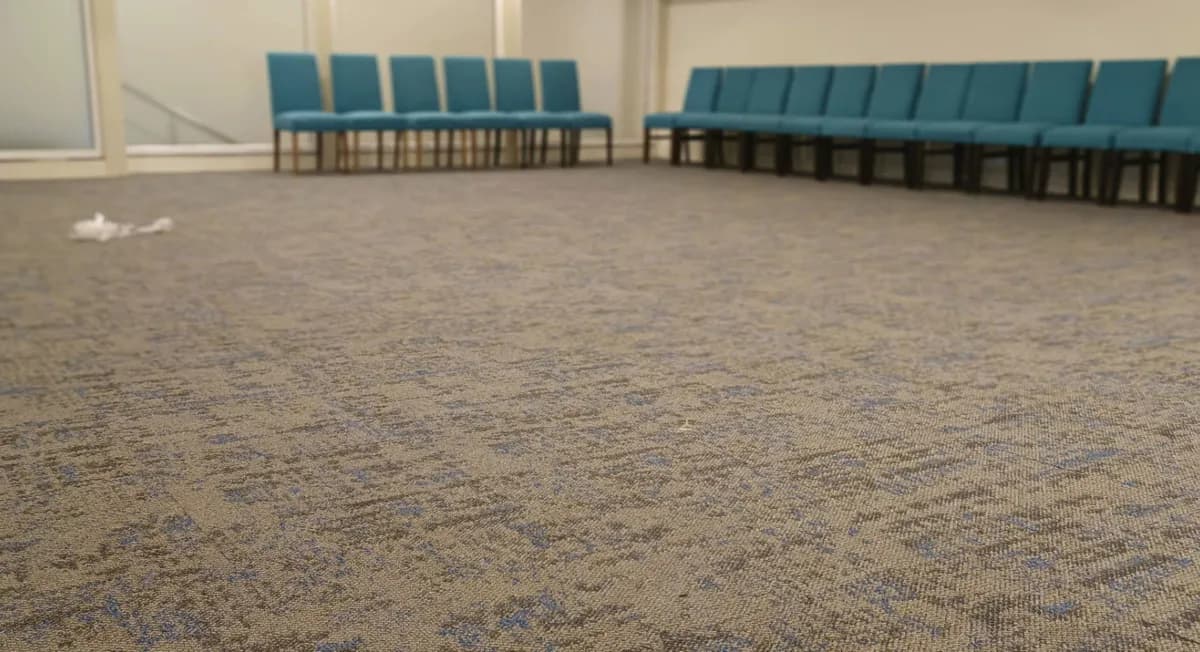
Commercial Wall-to-Wall Carpeting Price Per Sq Ft: Office Flooring Solutions
7 min read

Commercial Carpet Tiles vs Roll Carpets: Office Flooring Durability & Acoustic Guide
8 min read
How to Clean Carpets and Rugs at Home — Complete 2026 Care Guide for Indian Homes
12 min read