A headboard in a Mobor resort room is leaned on by wet hair, sun cream and one guest after another, in a building that salt and damp reach from two sides. Fabric that soaks things up is the wrong answer. Leatherette or a tight performance weave wipes clean, and a simple panelled shape is far easier to re-cover than deep buttoning when the time comes. Hang it on the wall with a gap behind, never packed tight against an outside wall, and have the timber backing sealed all over so it does not swell. In river-facing rooms, where damp lingers longest, a wipeable cover matters most. Fix it to the wall, not the bed.
- Resort bedrooms: a plain panelled leatherette headboard, wall-hung with an air gap, simple to wipe down between guests.
- River-facing rooms: thinner padding on a sealed board set off the wall, since damp collects behind anything pressed flat.
- Villa master bedrooms: a wider headboard in performance weave, with sealed backing and stainless wall fixings.
Mobor is the southern tip of the Cavelossim peninsula, where the Sal river meets the sea. It is a small area of beach resorts, a fishing jetty and a few villas, with water on both sides and the road ending at the river mouth.
Almost everything here is resort or holiday property. Rooms face either the sea or the river, with terraces and sit-outs that are used as much as the rooms themselves.
Mobor is the most exposed point on this coast. Wind, salt spray and monsoon rain reach every building, and outdoor furnishings take the worst of it.
Sea-facing homes
Fix a headboard a little off a sea-facing wall so air can move behind it, and choose a synthetic or leatherette cover that does not hold damp. Wooden backing boards should be sealed on both sides.
Riverside and backwater homes
In a damp room, avoid thick padding pressed hard against an outside wall. A wall-hung headboard with a gap behind it, in a cover that can be wiped, stays fresh.

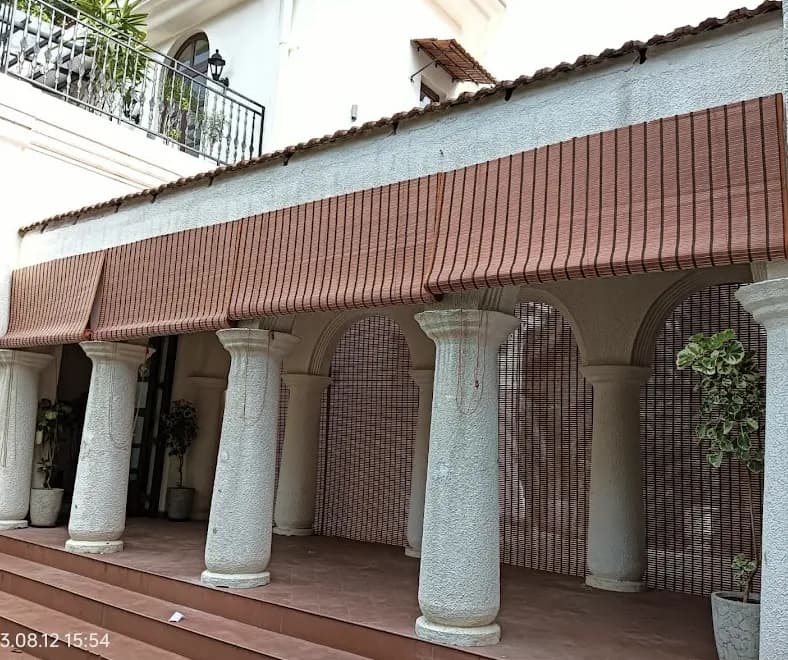 awnings