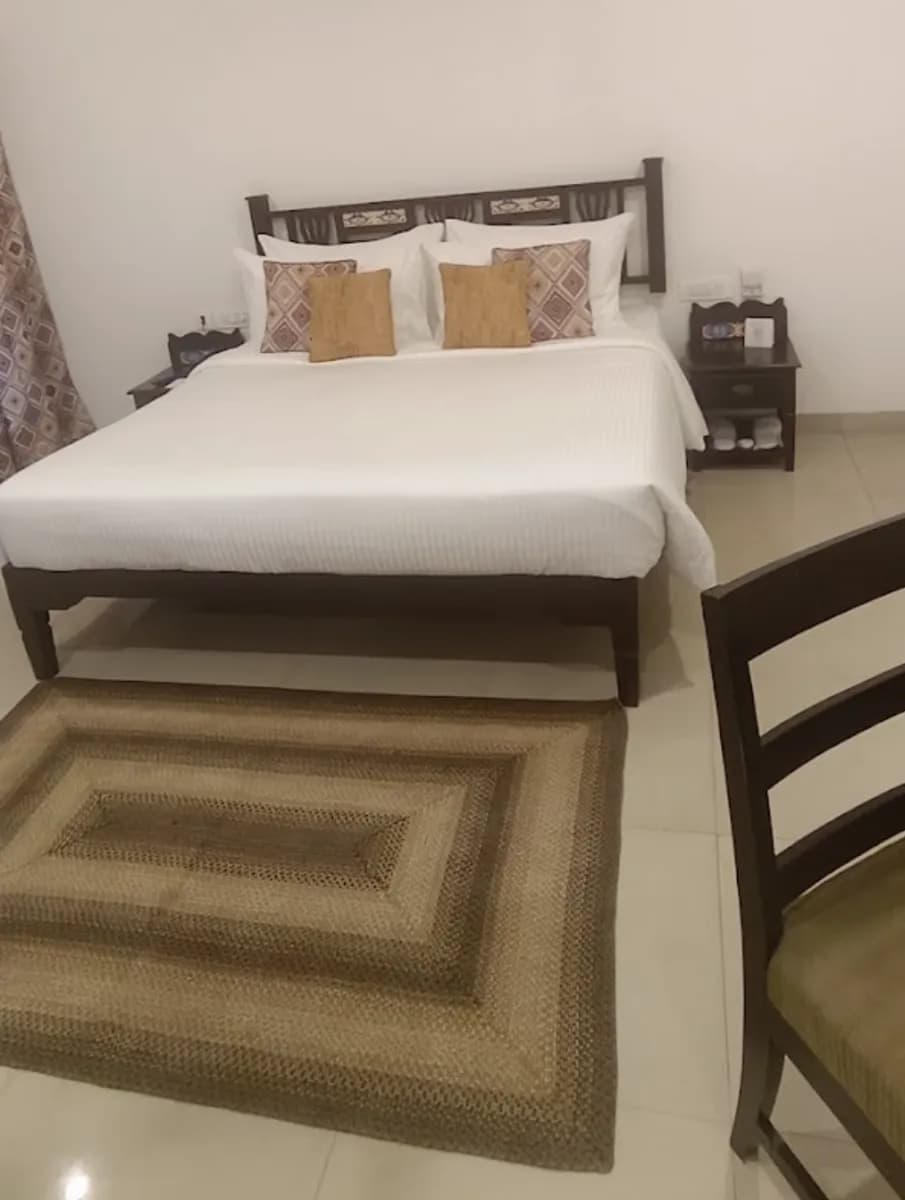
Bedrooms in Ribandar's old houses tend to have one wall that is never quite dry, the one nearest the river, and a bed placed against it needs some care. A thick padded headboard pushed tight to that wall will smell musty before the monsoon is over. Hang the board on spacers so air passes behind, or fix it to the bed and pull the bed a little forward. Leatherette or a tight synthetic weave wipes down and does not take up moisture the way velvet does. Where a house has kept its carved wooden bed, have a padded panel made to sit inside the existing frame, so the woodwork stays untouched.
- Old carved beds: an upholstered panel cut to fit within the frame and held by it, leaving the carving exactly as found.
- Bedrooms on the river side: a wall-hung panelled headboard on spacers, in leatherette that can be wiped when the air turns heavy.
- Compact bedrooms in the hill flats: a wall-mounted board slightly wider than the bed, saving the depth a bed-fixed one would take.
Ribandar is the long, narrow village on the Mandovi between Panjim and Old Goa, reached by the causeway from the city. A single road runs through it, lined with old houses that back onto the river, with a ferry across to Chorão.
Ribandar is known for its row of Portuguese-era houses, many two storeys high with balconies over the road and the water behind. Several have been restored. Newer flats stand on the hill above.
With the river on one side and salt pans and mangroves along the causeway, Ribandar is humid and breezy, and mosquitoes are common in the evening.
Riverside and backwater homes
In a damp room, avoid thick padding pressed hard against an outside wall. A wall-hung headboard with a gap behind it, in a cover that can be wiped, stays fresh.
Old Goan houses
Old carved beds are worth keeping. An upholstered panel can be made to sit within the existing frame, or the cane and padding renewed, without altering the woodwork.



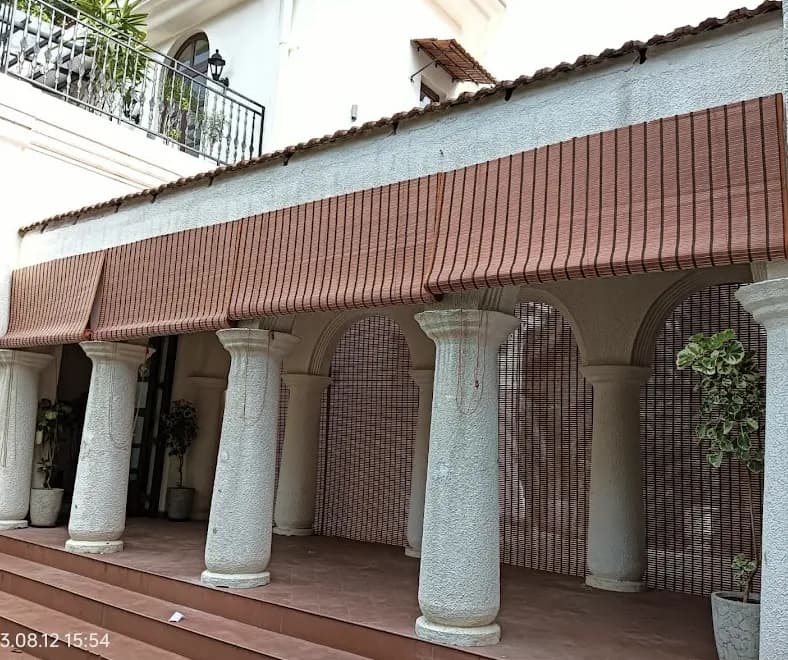 awnings