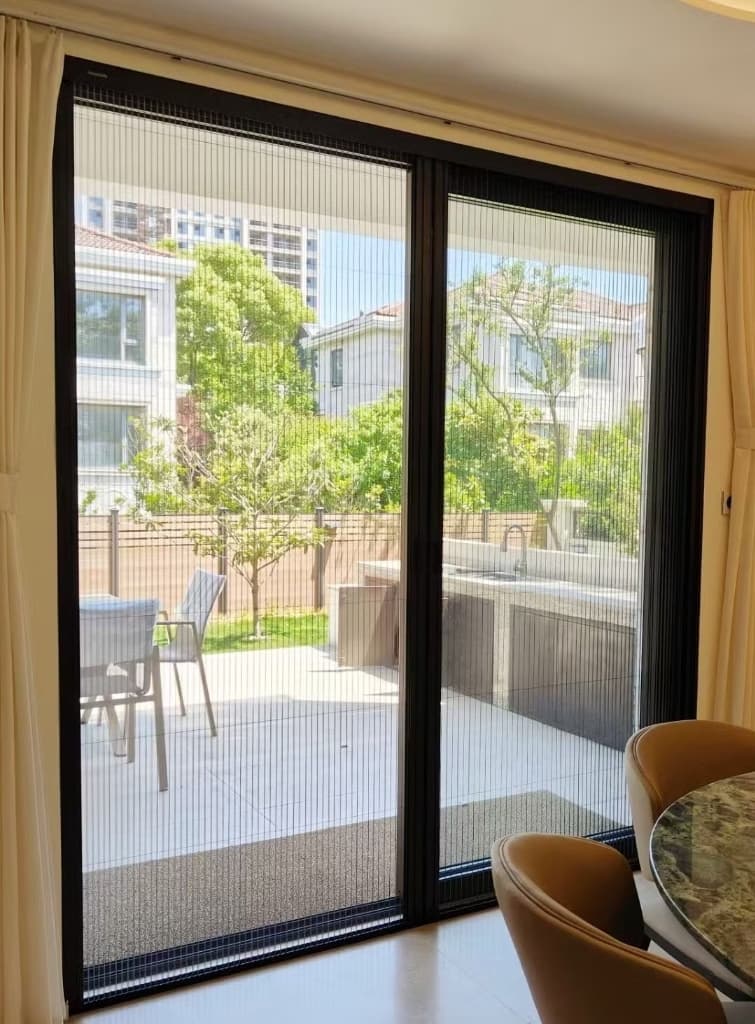
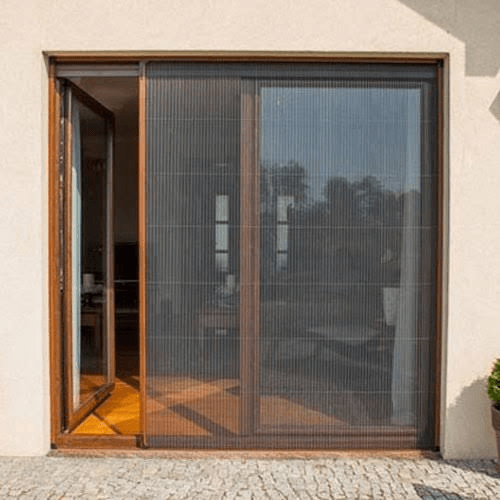
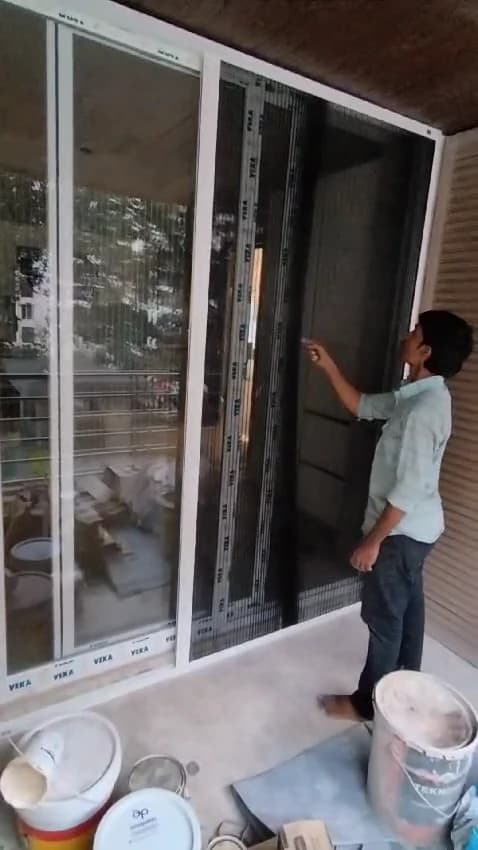
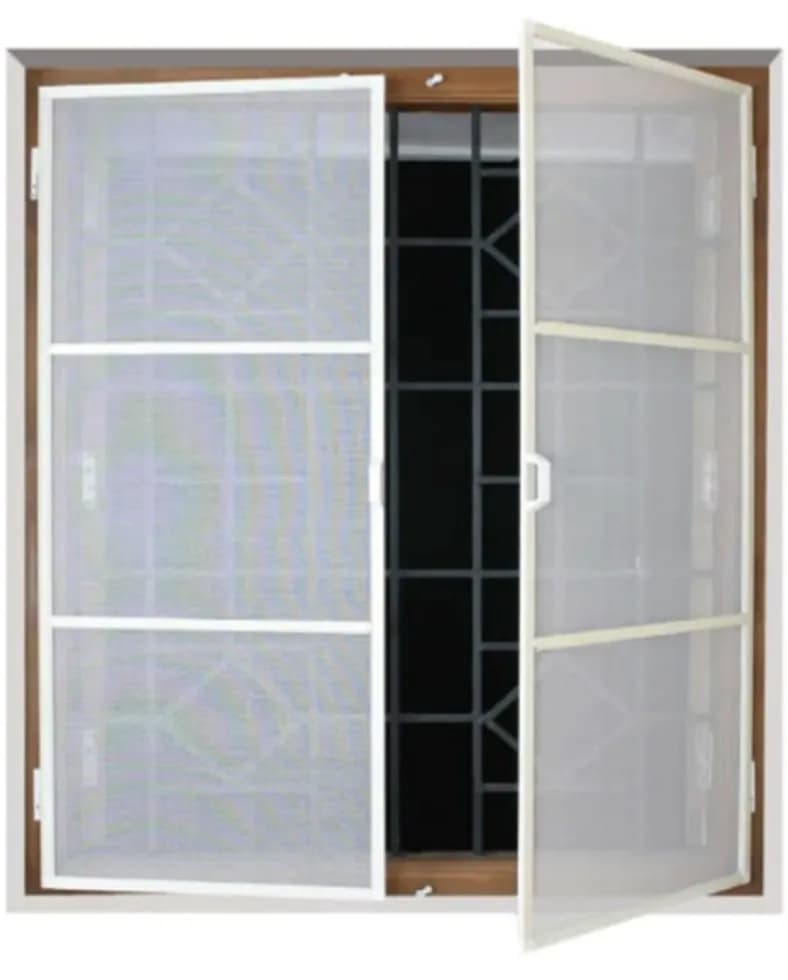
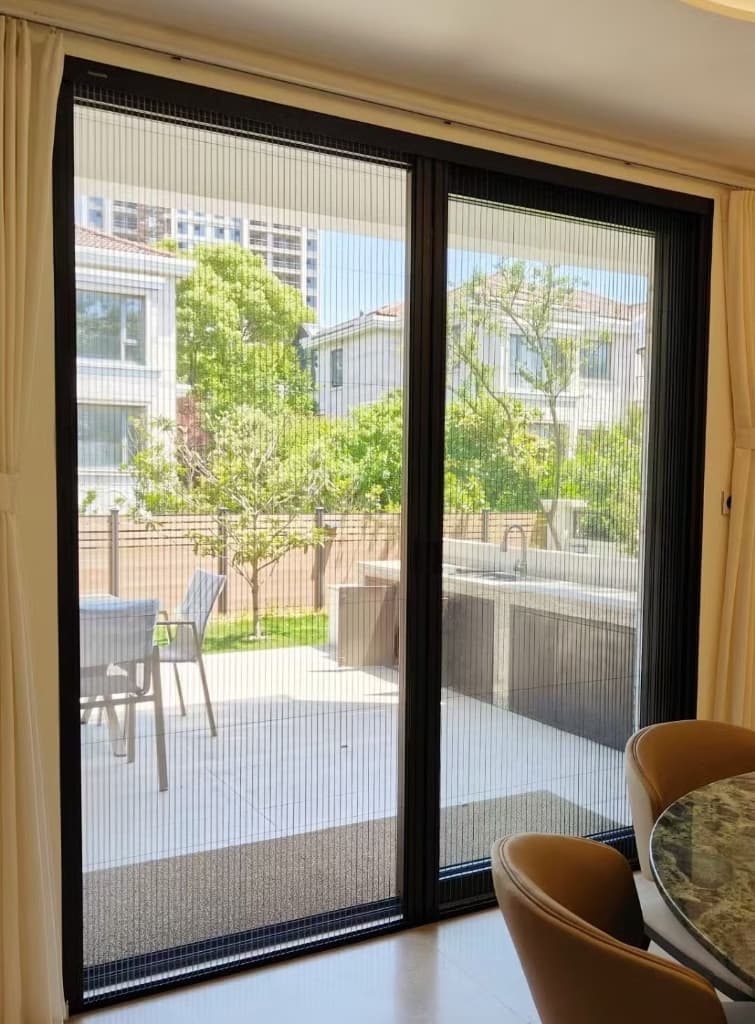
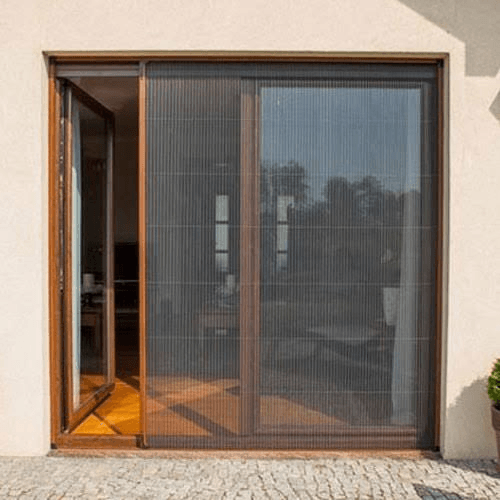
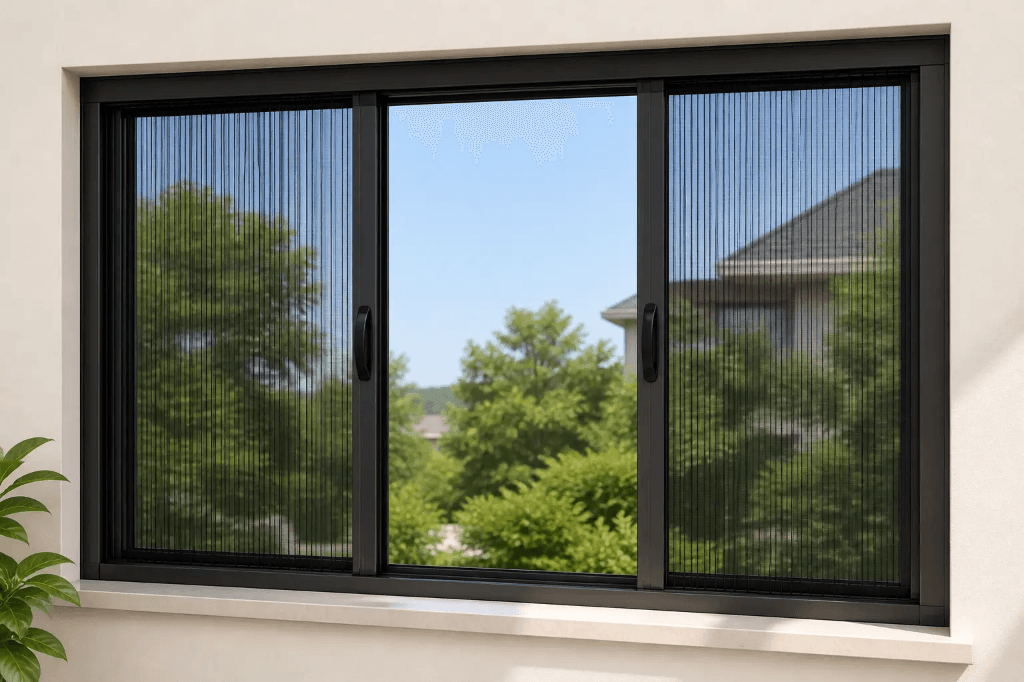
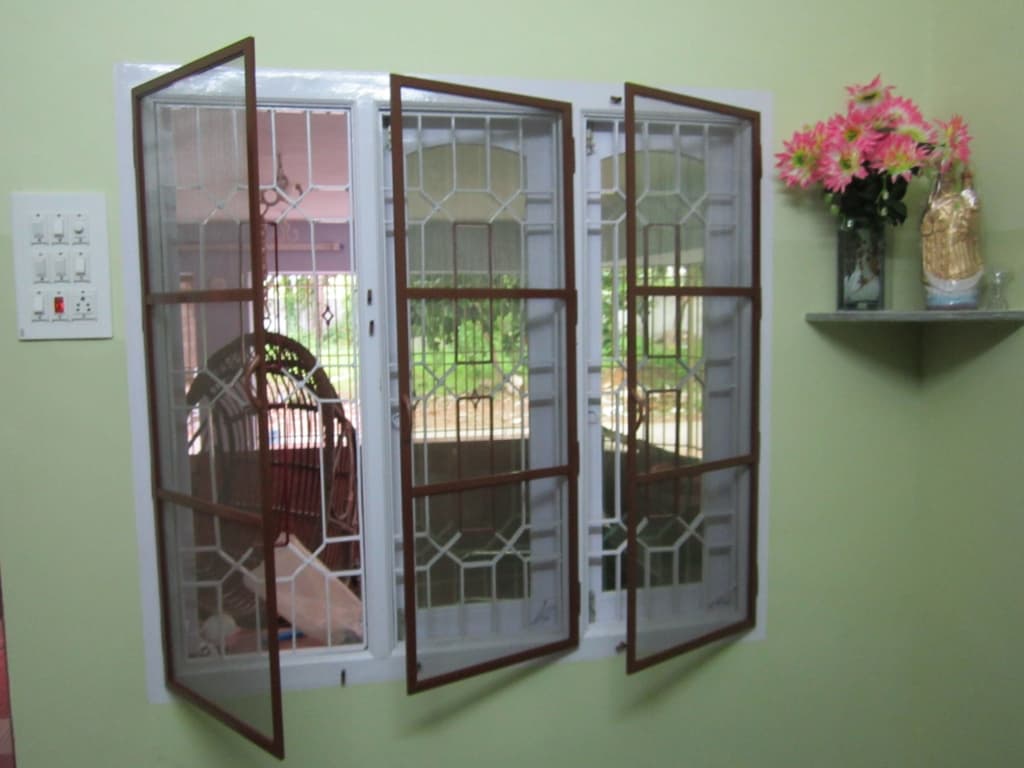
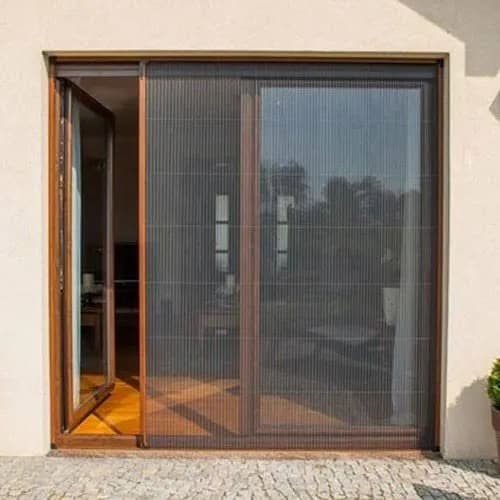
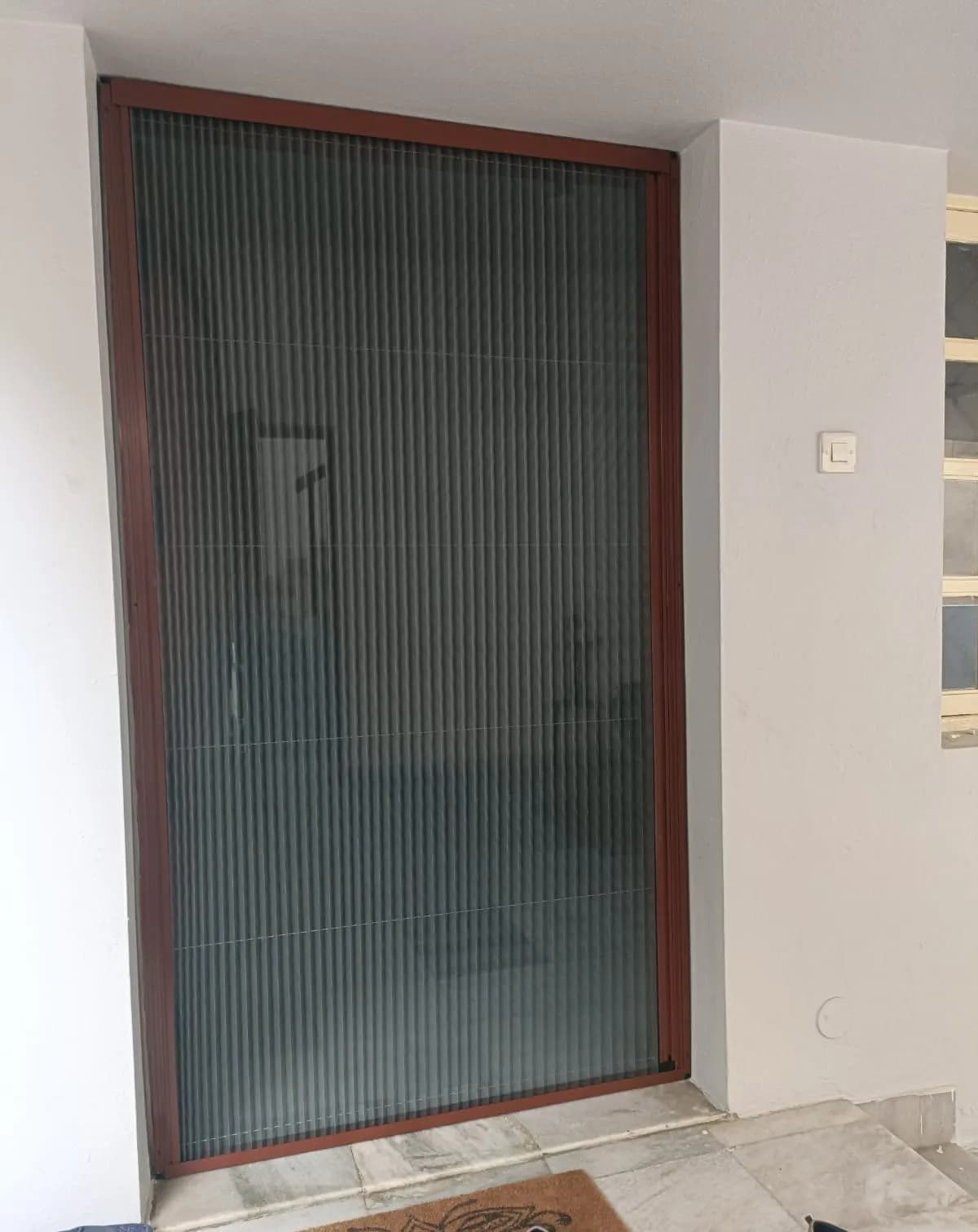
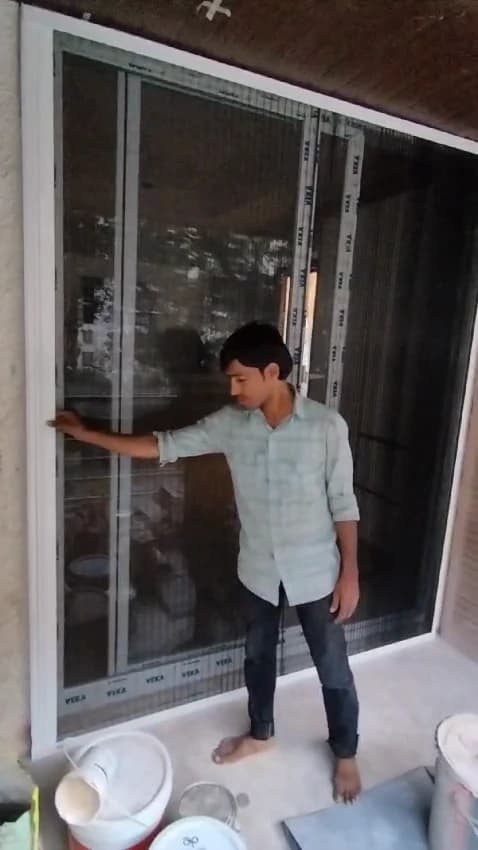
Salt pans and mangroves line the causeway, the Mandovi runs behind the houses, and by dusk Ribandar's mosquitoes are out in force. Here nets are less a comfort than a necessity. The difficulty is the openings themselves: tall double doors onto balconies, shuttered windows, frames that are no longer true. A pleated net handles these well, because it is made to the opening as it actually is and folds flat to one side while the doors are in use. Mount it on the face that leaves the shutters free to close. Do not overlook the small openings, such as bathroom ventilators; one unscreened gap lets the whole evening's swarm indoors.
- Balcony double doors over the road: a pleated net in two halves meeting at the centre, folded away when the doors are thrown open.
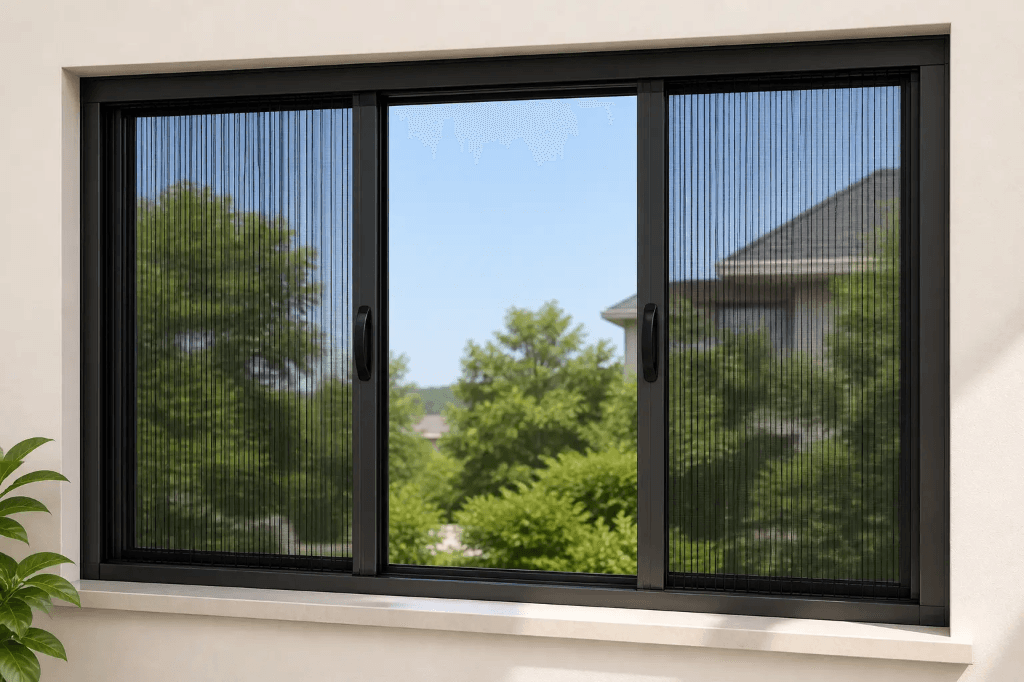
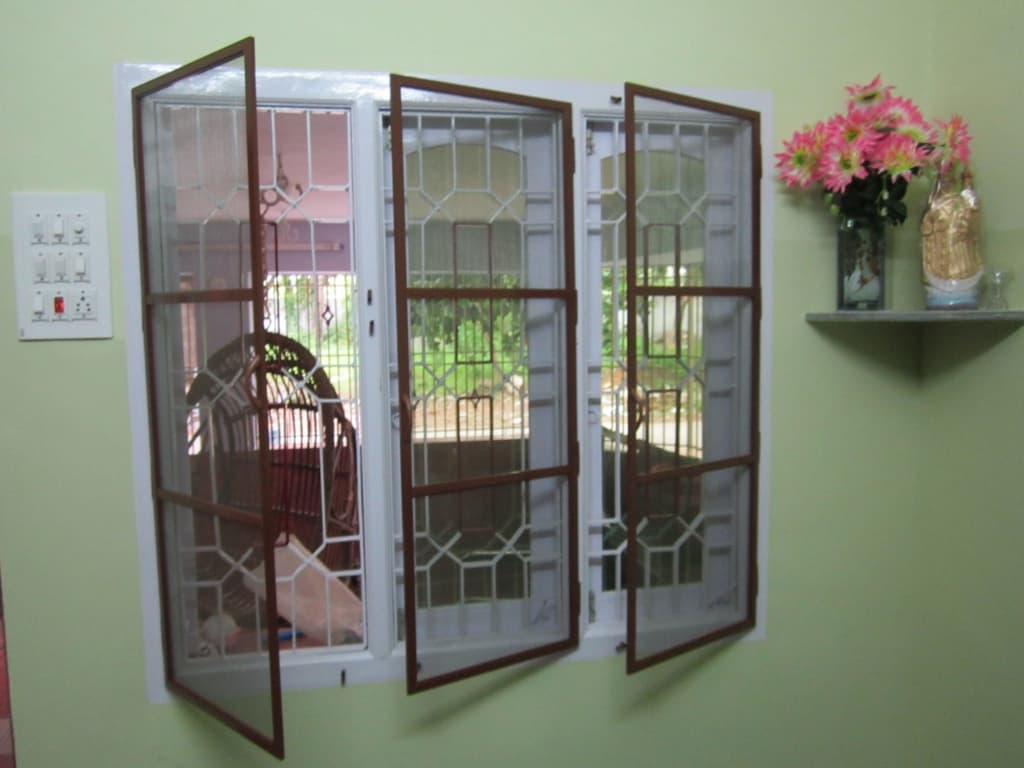
- River-facing windows at the back: aluminium-framed nets with fibreglass mesh on each opening used after sunset, ventilators included.
- Newer flats up the hill: a sliding net on its own track beside the glass, for the balcony door and every bedroom window.
Ribandar is the long, narrow village on the Mandovi between Panjim and Old Goa, reached by the causeway from the city. A single road runs through it, lined with old houses that back onto the river, with a ferry across to Chorão.
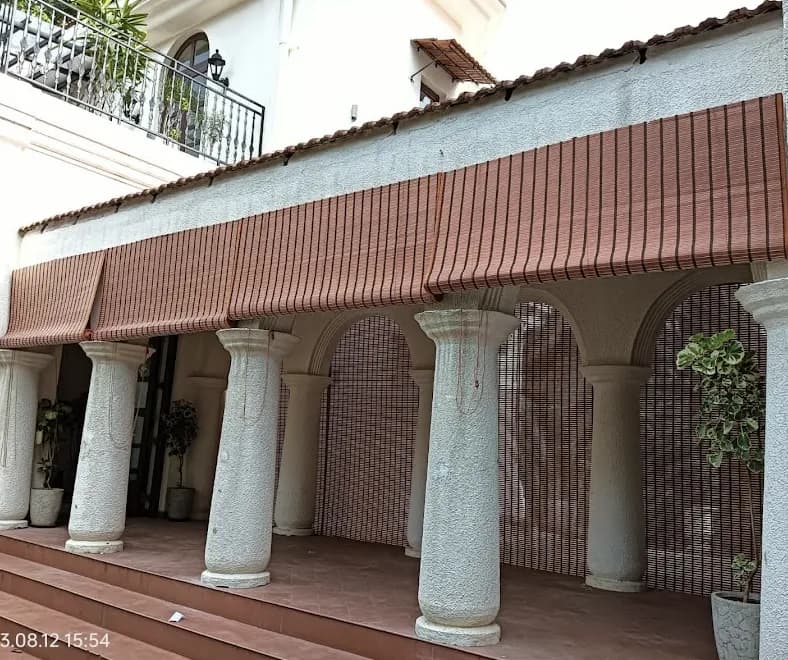
Ribandar is known for its row of Portuguese-era houses, many two storeys high with balconies over the road and the water behind. Several have been restored. Newer flats stand on the hill above.
With the river on one side and salt pans and mangroves along the causeway, Ribandar is humid and breezy, and mosquitoes are common in the evening.
Riverside and backwater homes
Near water and paddy fields mosquitoes are worst at dusk. Fit nets on every opening that is used in the evening, including bathroom ventilators, because one unscreened window undoes the rest.
Old Goan houses
Old windows have shutters and grilles, and nothing is square. Each net is made to the measured opening and fixed on the side that leaves the shutters free, usually as an openable or pleated panel.