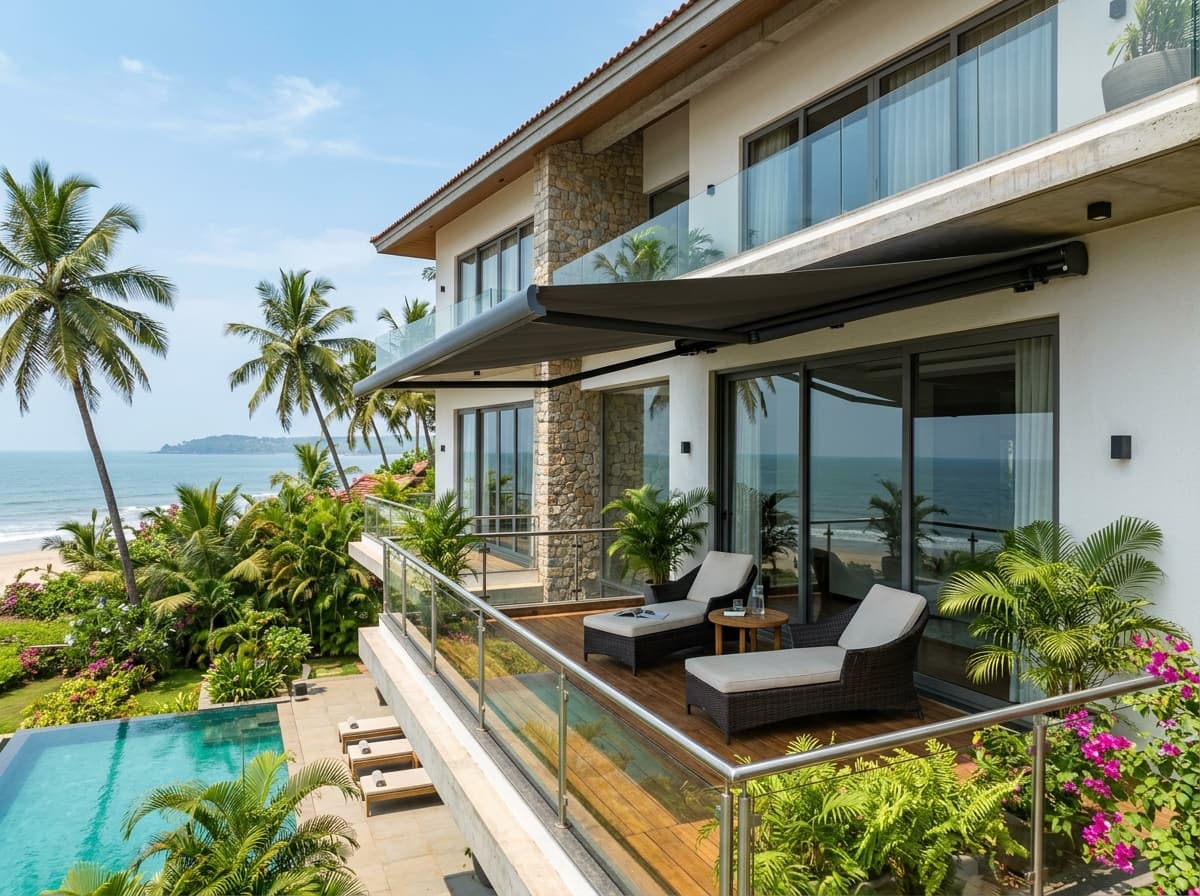
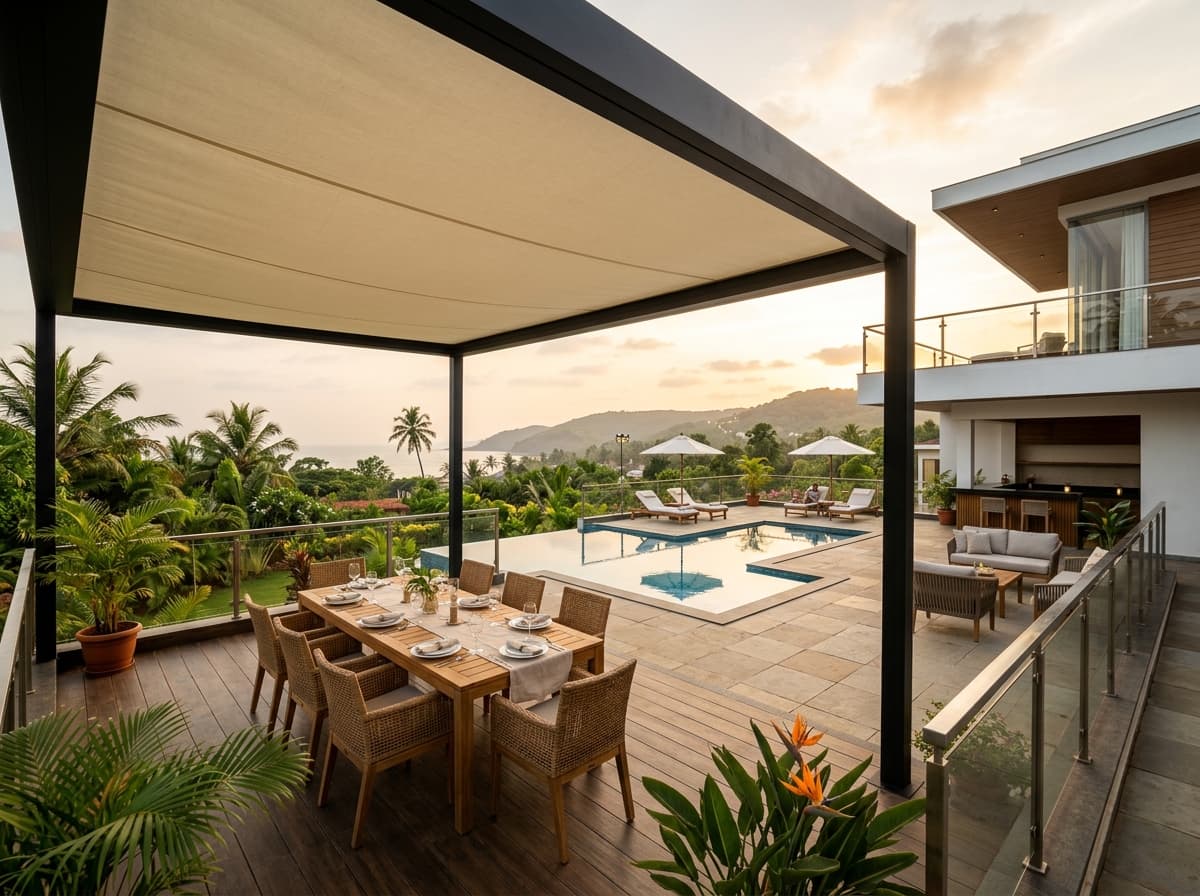
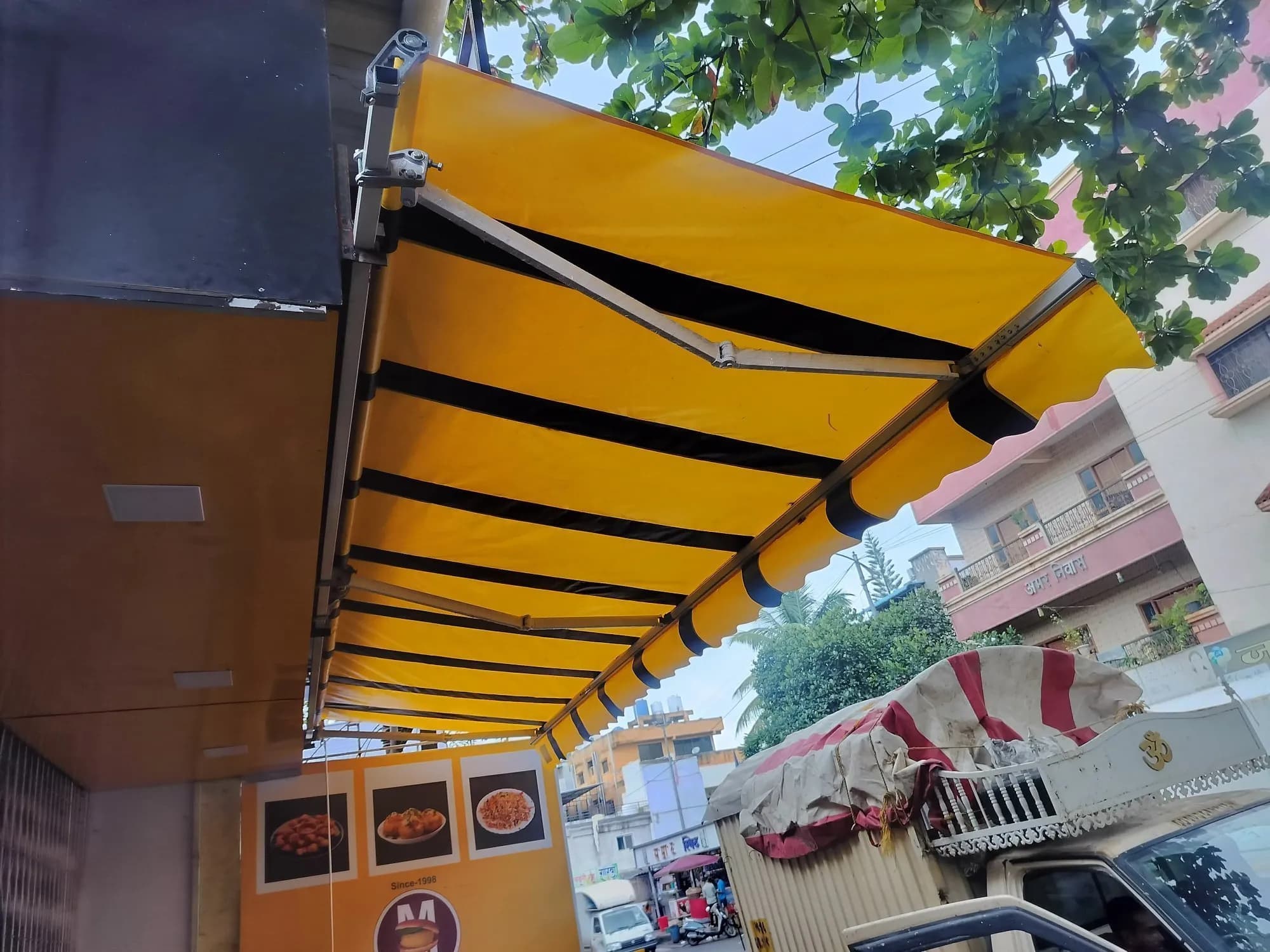
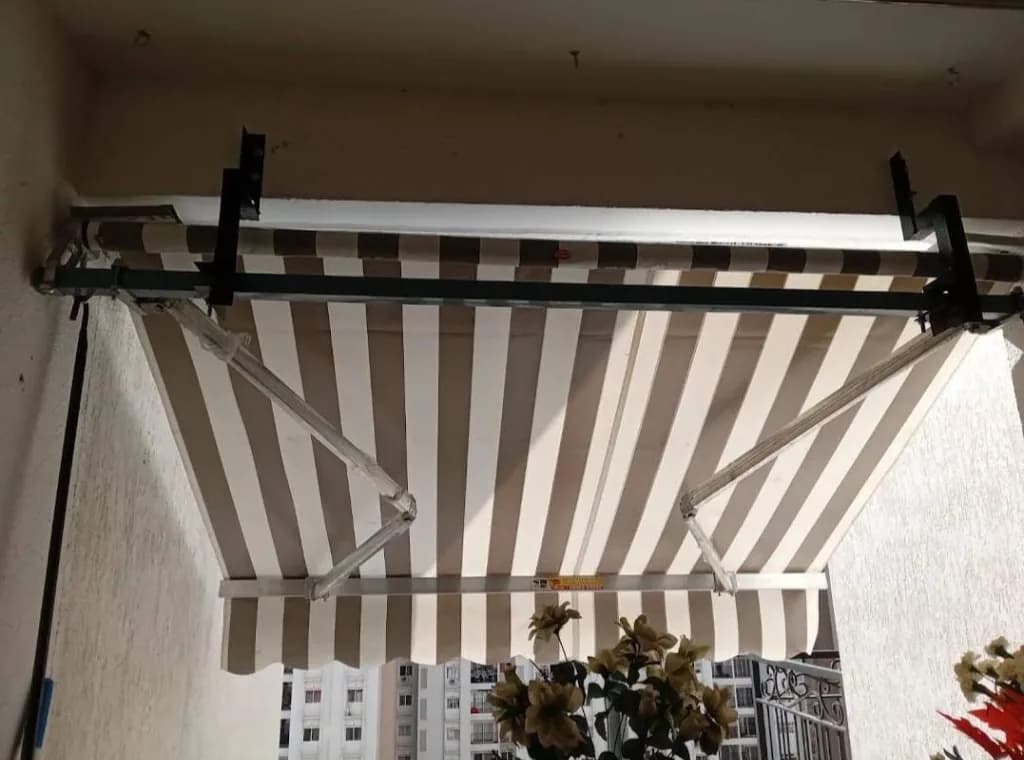
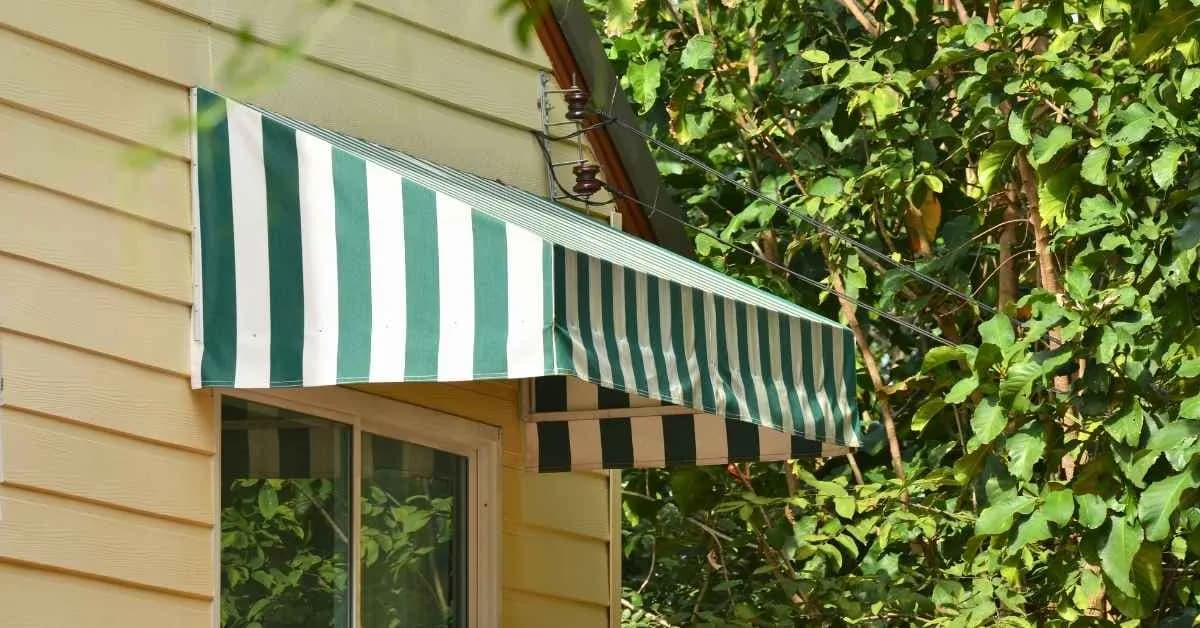
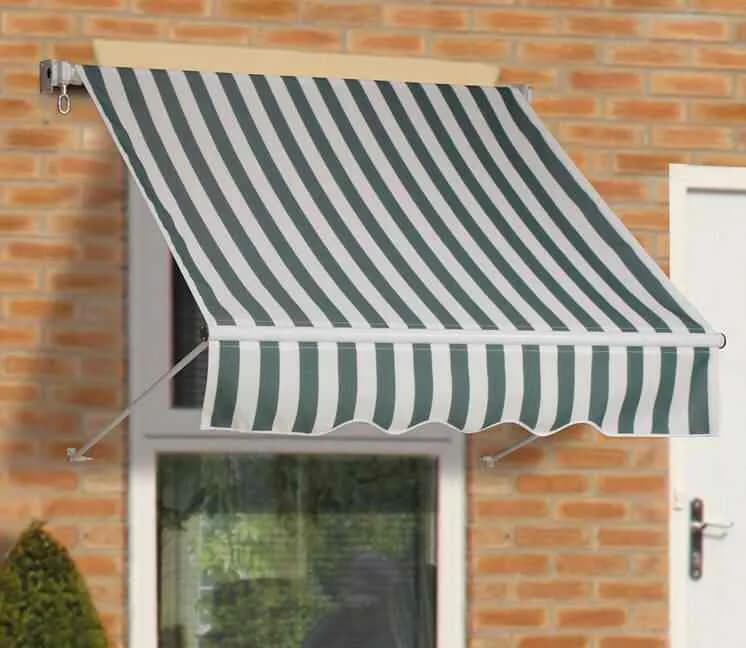
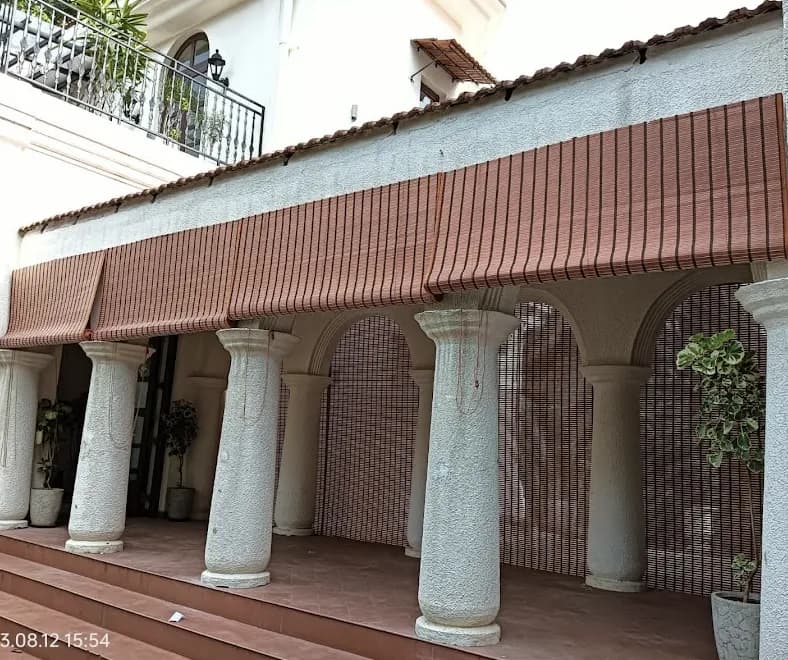
Two things limit an awning in Ribandar: the wall and the road. Portuguese-era houses are laterite and lime, which crumble around an ordinary expansion bolt, so the brackets have to land on a concrete lintel, a beam, or a steel plate made to spread the load. And because the houses front directly onto the one road through the village, a folding-arm awning on that side must clear passing traffic, which often rules the street side out. The river side is the natural place: a back terrace or sit-out facing the Mandovi. Cloth stays damp longer beside water, so pick a mildew-treated acrylic and let it dry while open before winding it away.
- Back terraces over the river: a folding-arm awning in solution-dyed acrylic, fixed to the lintel and wound in when the breeze stiffens.
- Road-facing fronts: a short projection set high enough to clear vehicles, in a colour that sits well under a tiled roof.
- Top-floor flats on the hill: ask the housing society first, then choose a manual awning that stays within the balcony line.
Ribandar is the long, narrow village on the Mandovi between Panjim and Old Goa, reached by the causeway from the city. A single road runs through it, lined with old houses that back onto the river, with a ferry across to Chorão.
Ribandar is known for its row of Portuguese-era houses, many two storeys high with balconies over the road and the water behind. Several have been restored. Newer flats stand on the hill above.
With the river on one side and salt pans and mangroves along the causeway, Ribandar is humid and breezy, and mosquitoes are common in the evening.
Riverside and backwater homes
Beside water, fabric stays damp longer. Choose a fabric treated against mildew and roll the awning out to dry after rain before closing it for long periods.
Old Goan houses
Old walls are laterite and lime, which will not hold an ordinary anchor. The awning is fixed to a beam, a concrete lintel or a steel bracket made for the wall, and chosen in a colour that suits the tiled roof and plaster.