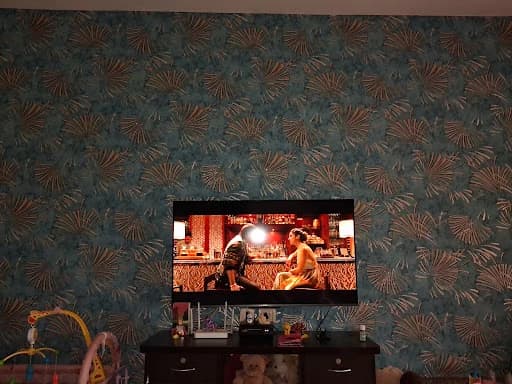
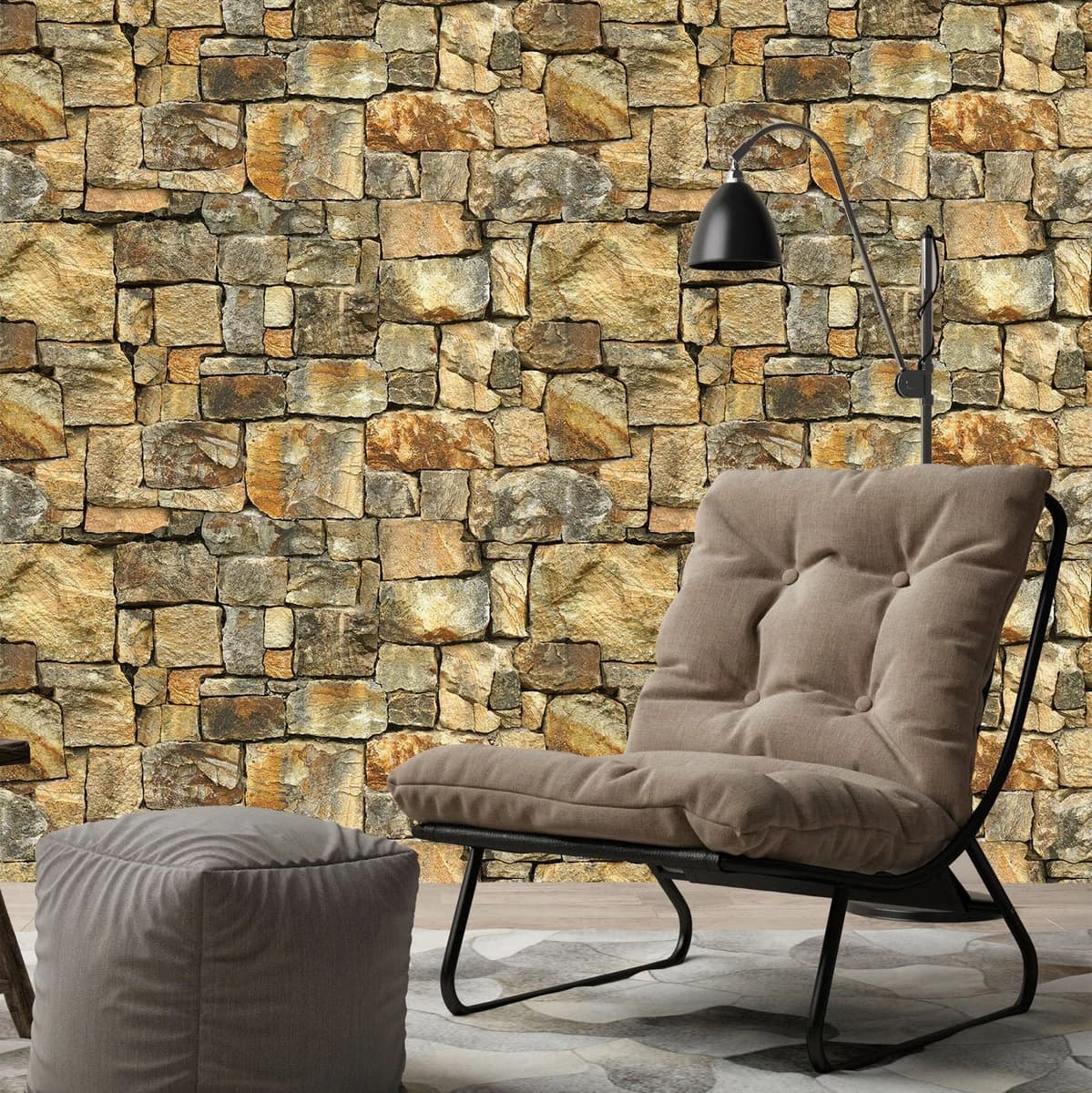
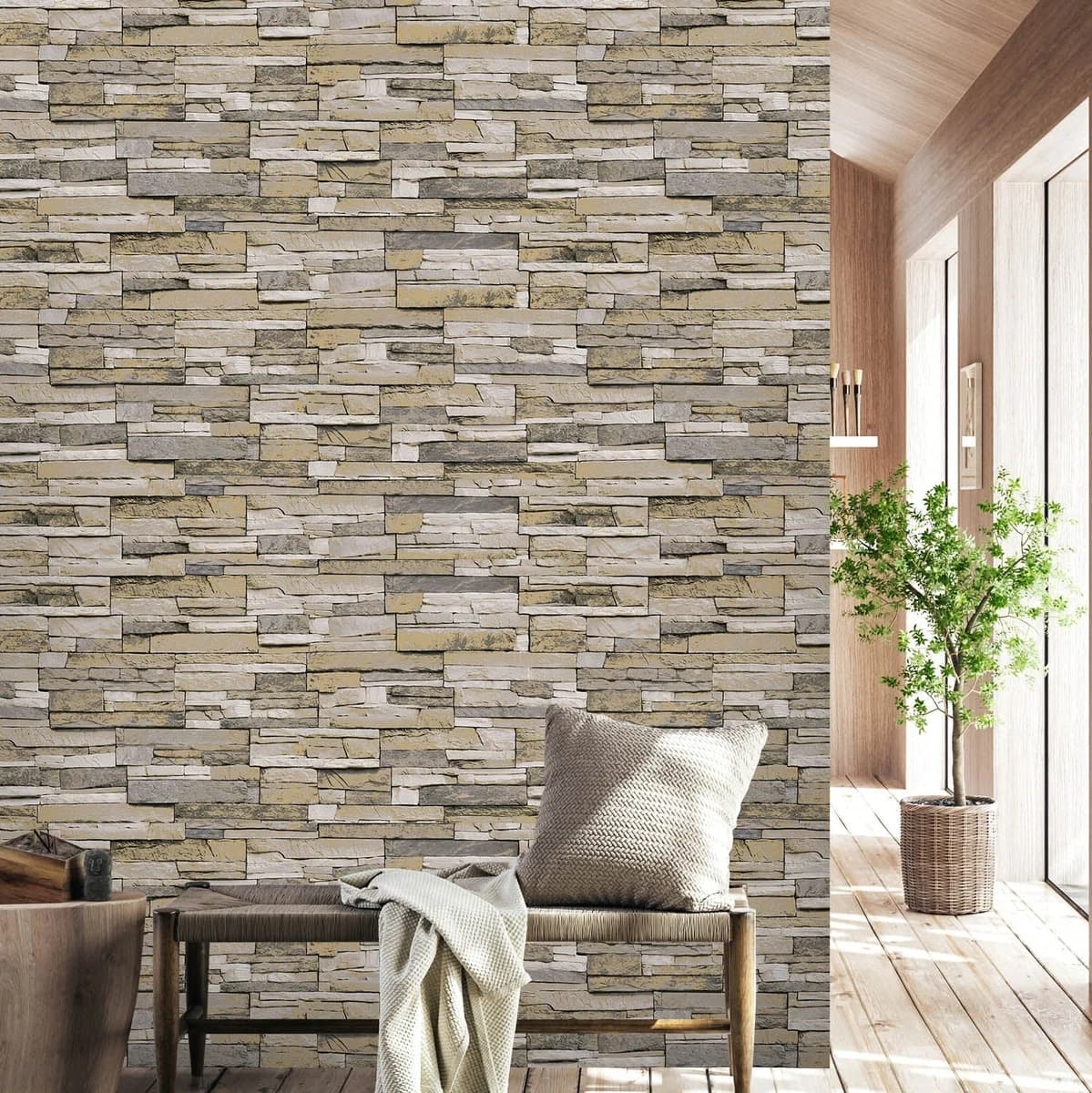
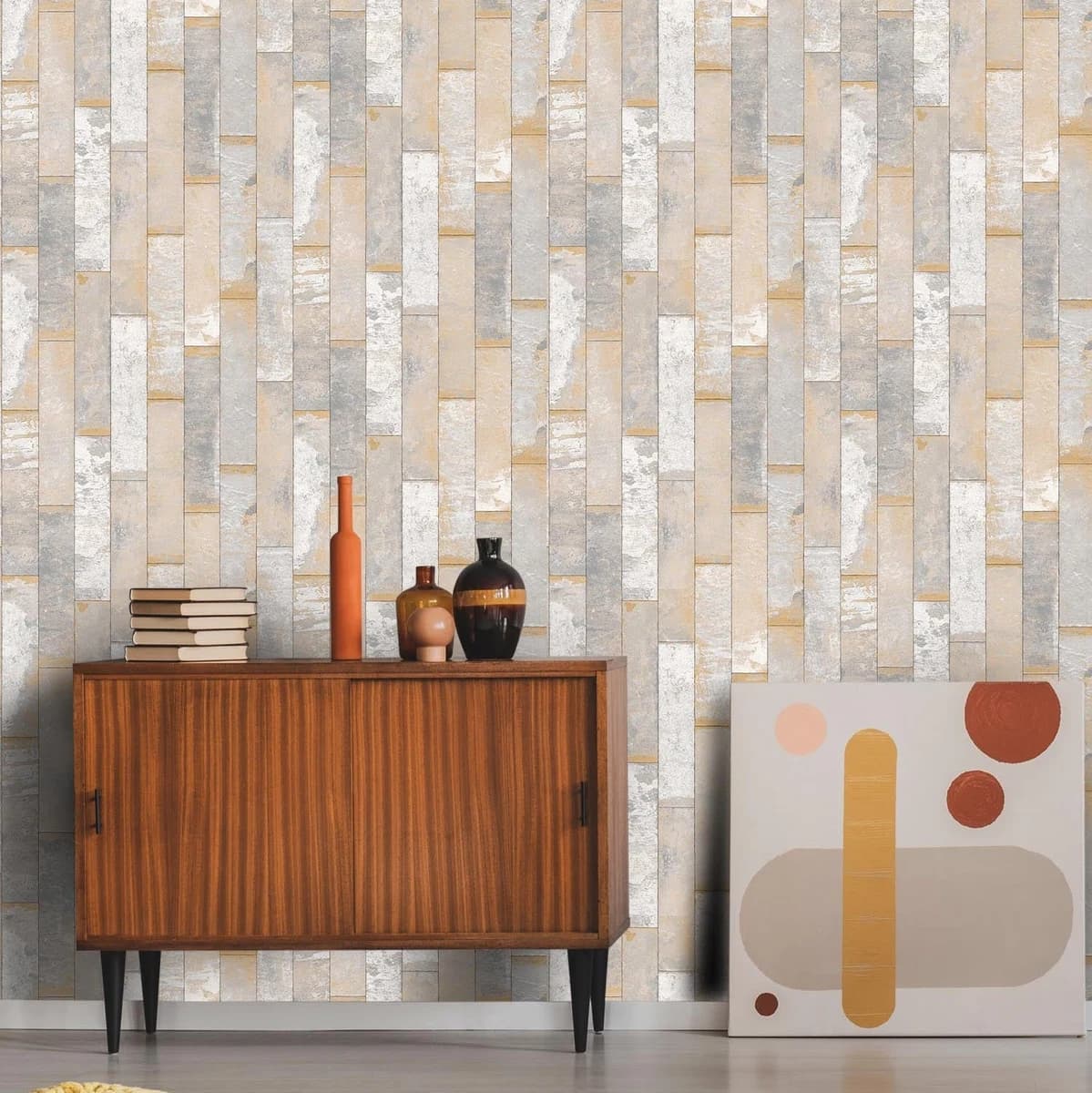
New plaster is the main thing to respect in Bainguinim. Walls in a house just handed over are still giving up moisture from construction, and wallpaper hung too early can bubble or lift; let the walls dry out and take a coat of primer first. After that the conditions are good: the high ground is drier than the riverside below it, and modern brick-and-cement walls are flat and true. Large living rooms in the plot houses have the wall area for a mural or a broad repeat, designs that need distance to be read. The wall to be careful with is one that faces the monsoon directly; watch it through a wet season for seepage before covering it.
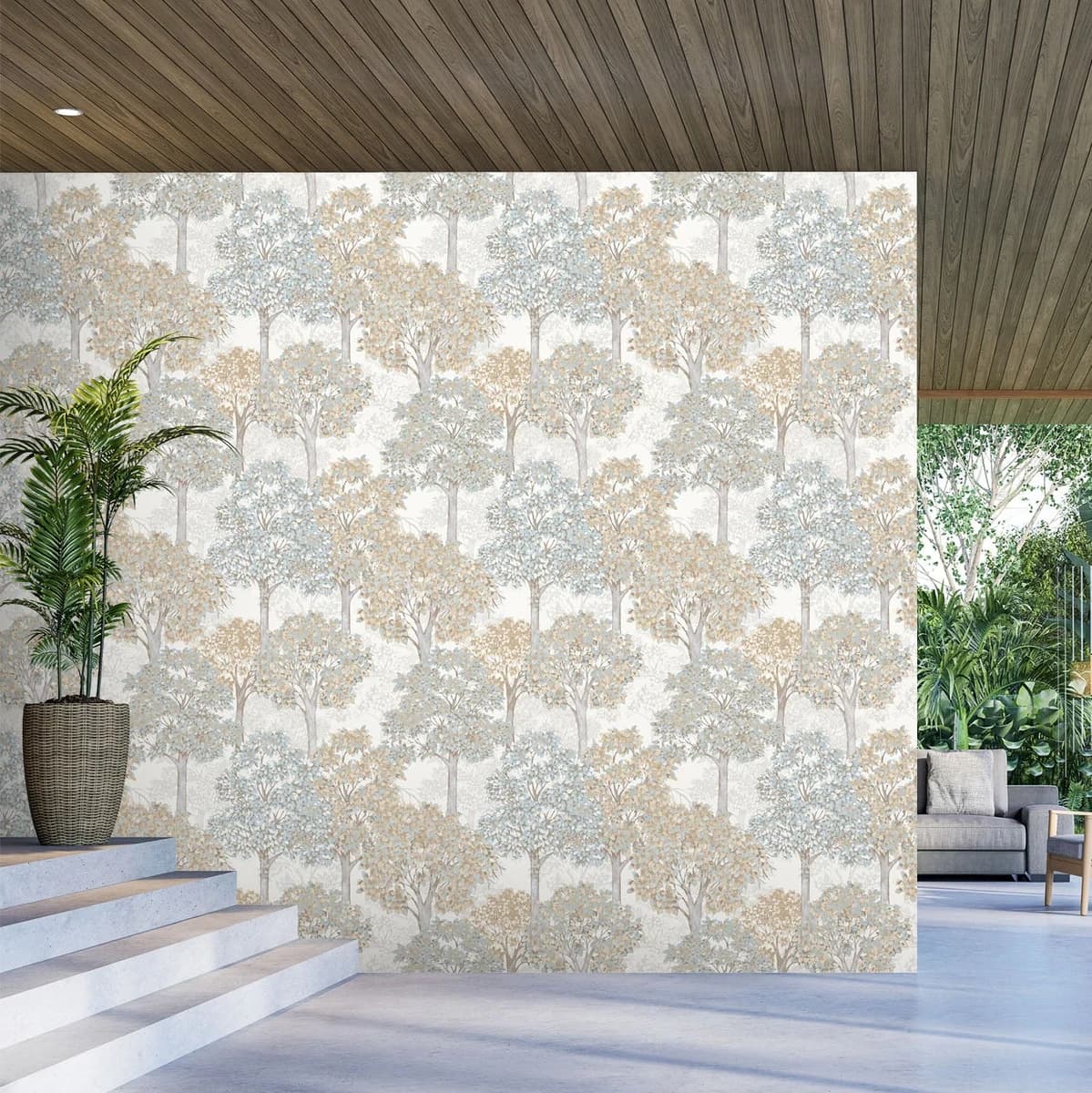
- Living rooms in independent houses: a mural, or paper with a big repeat, on the longest unbroken wall, set out from the ceiling down.
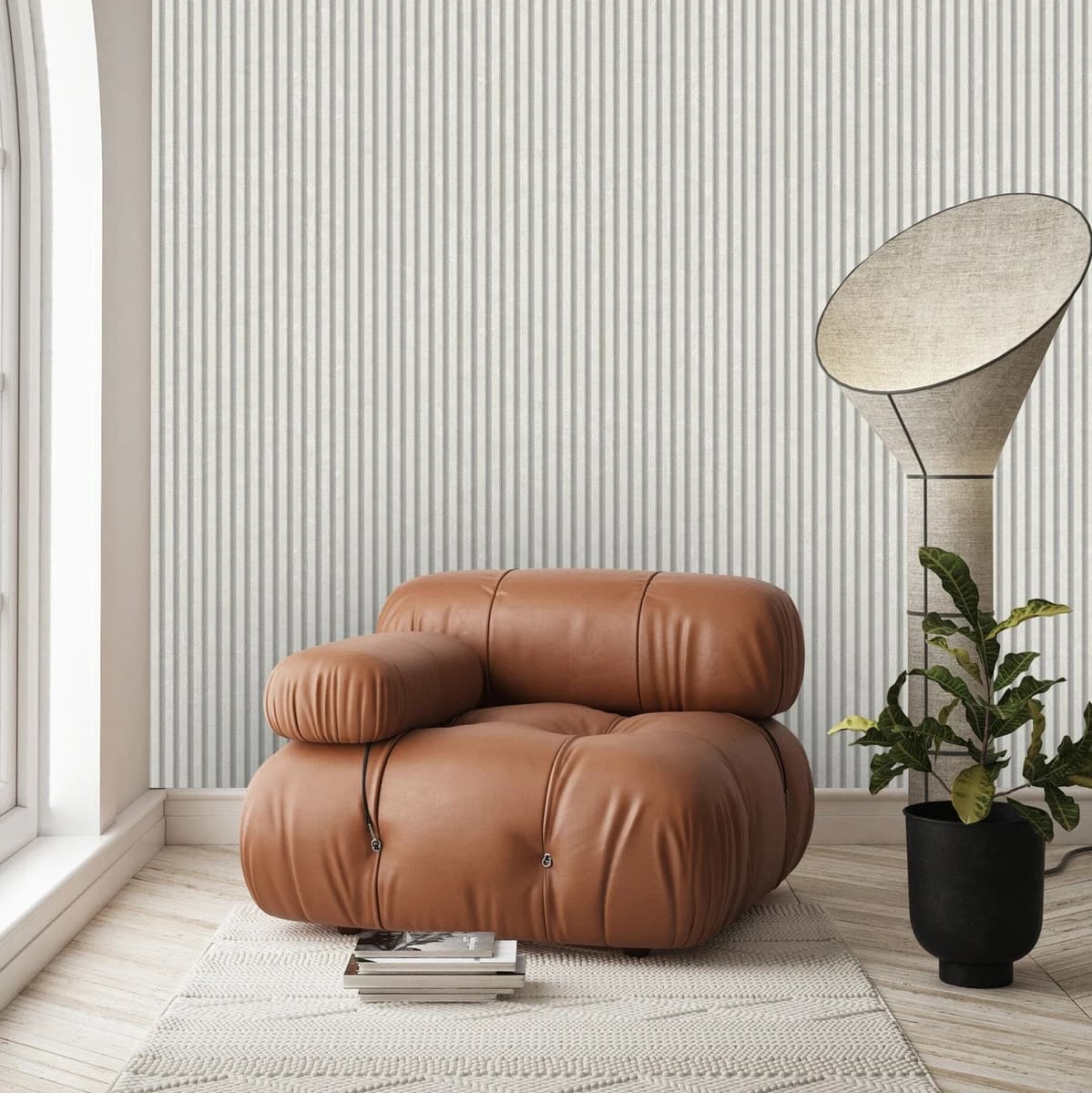
- Bedrooms in new flats: a textured vinyl behind the bed, hung once the builder's plaster has dried fully and been primed.
- Walls shared with a bathroom: looked over for damp before anything else, and finished in PVC panels, not wallpaper, if any shows.
Bainguinim is a village next to Old Goa, on the higher ground above the Mandovi. It has seen new housing projects and plotted developments in recent years, as families look for homes within reach of Panjim.
Most homes are new: flats in recent complexes and independent houses on plots. They are handed over bare, so owners start from curtain tracks and nets.
The higher ground is open to sun and wind and drier than the riverside. Monsoon rain is heavy, as everywhere in Tiswadi.
Inland homes
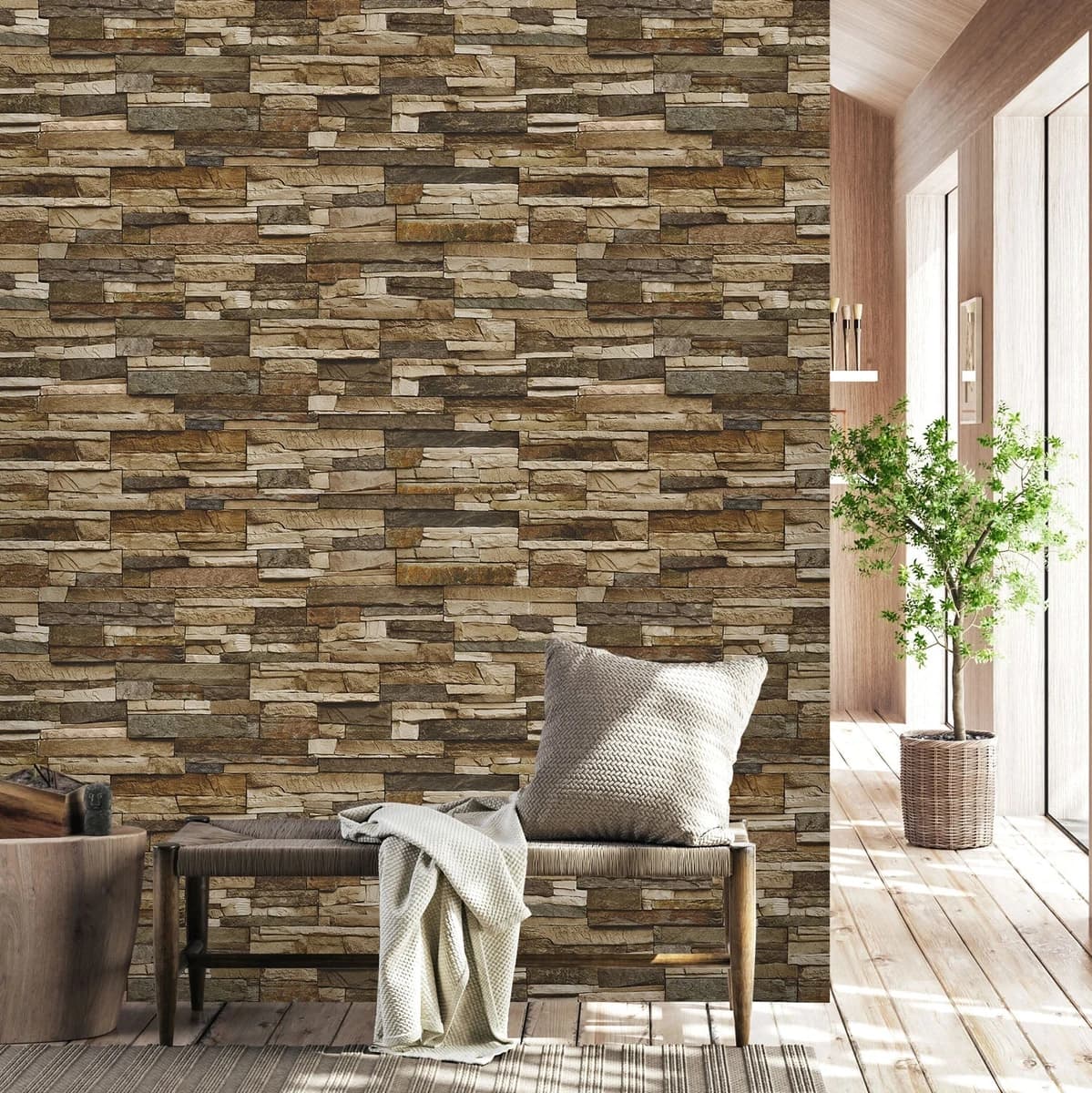
Dry inland walls are the kindest to wallpaper. Almost any type can be used, including textured and fabric-backed papers. The risk here is a wall that takes the full monsoon rain from outside, which should be checked for seepage before papering.
Apartments and town flats
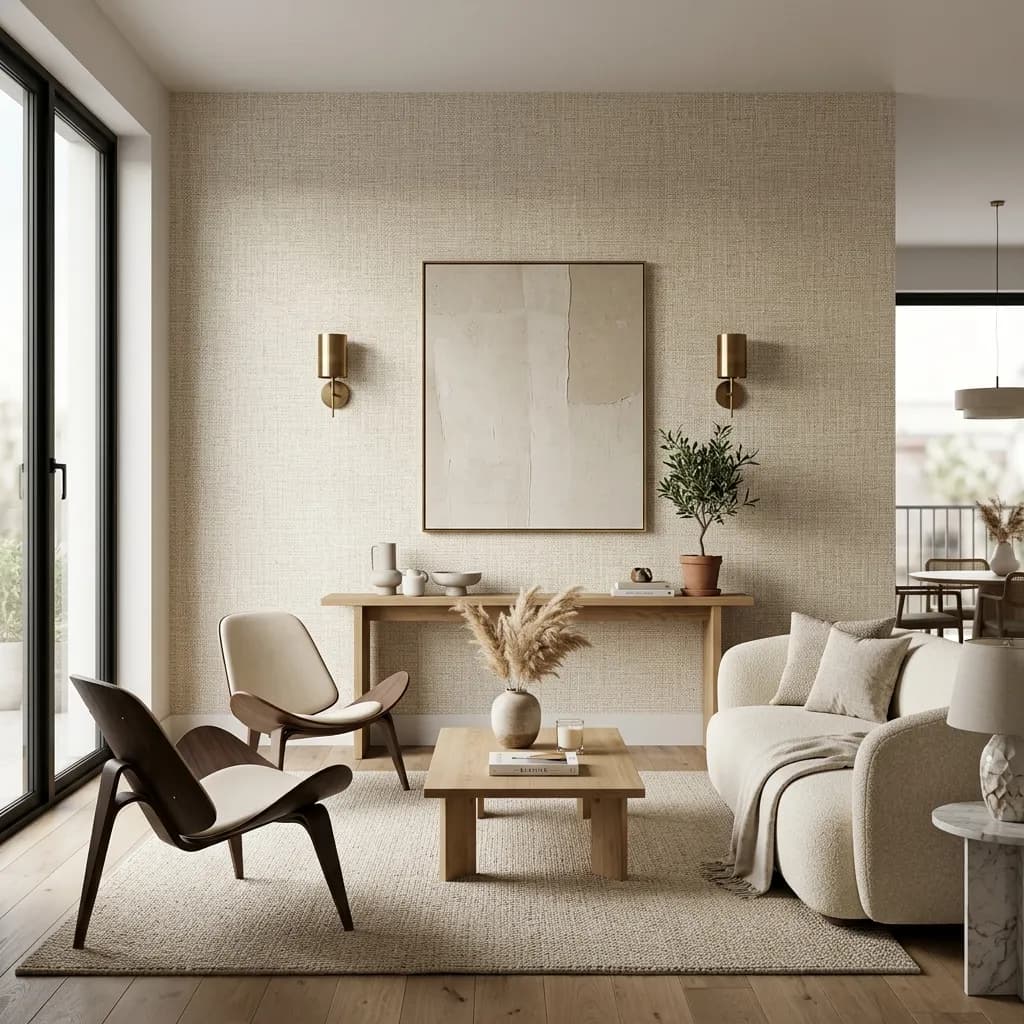
In a flat, one papered wall behind the sofa or the bed changes the room for little cost. Shared walls with a neighbour's bathroom or kitchen should be checked for damp. Vinyl wallpaper wipes clean, which suits homes with children.