Types of Wallpaper — Complete Guide to 6 Wallpaper Categories for Indian Walls
Vinyl vs non-woven vs 3D vs fabric vs grasscloth vs peel-and-stick — which wallpaper survives Indian humidity, monsoon, and 20-year use. An honest material-by-material comparison.
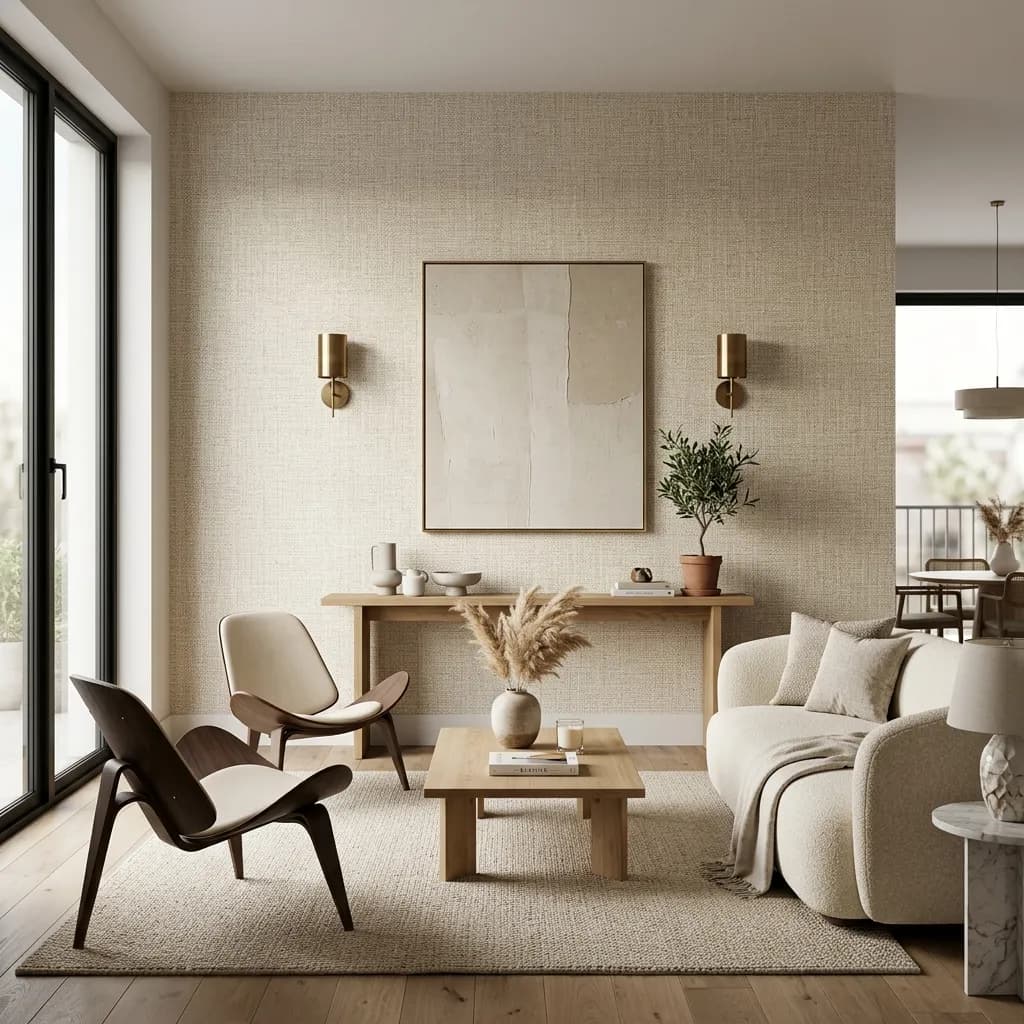
Choosing the right wallpaper material is more important than choosing the pattern.
Why Wallpaper 'Material' Matters More Than Pattern
Most people pick wallpaper by pattern — floral, geometric, plain, damask. But two wallpapers with the same pattern can behave completely differently on your wall depending on the base material. One may last 15 years without a bubble; the other peels off within 18 months in Indian humidity.
This guide covers the 6 wallpaper categories you'll encounter when shopping in India — with honest guidance on:
- 1Base material composition (what it's actually made of)
- 2Best-fit rooms (bedroom, bath, kitchen, exterior-facing walls)
- 3Humidity and monsoon behavior (critical for coastal India)
- 4Longevity (real Indian conditions, not marketing claims)
- 5Installation and removal difficulty
- 6Approximate 2026 India prices
By the end you'll know exactly which wallpaper material to choose for each wall in your home. Browse our /wallpapers collection with confidence — including the /wallpapers/3d dedicated 3D collection.
1. Vinyl Wallpaper — The Coastal India Workhorse
What it is: A wallpaper with a printed vinyl (PVC) top layer bonded to either a paper backing (traditional) or non-woven backing (modern premium). The vinyl surface is 100% waterproof and wipeable with a damp cloth.
Best for: Kitchens (splashes wipe off), bathrooms (steam-resistant), children's rooms (wipe off crayon and food), hallways (high-traffic wear), coastal India walls (Goa, Mumbai, Chennai, Kochi), monsoon-affected regions.
Approximate India price: ₹90-160/sq ft (material + install). Premium imported Italian vinyl from approx ₹180-300/sq ft. Prices vary daily.
Longevity in Indian conditions: 12-15 years with proper installation. The vinyl surface doesn't degrade in humid air the way paper does.
Sub-types:
- ●Solid Vinyl: Thickest, most durable, best for kitchens/baths.
- ●Vinyl-Coated Paper: A paper base with a clear vinyl coating on top — cheaper but less durable than solid vinyl.
- ●Paper-Backed Vinyl: Vinyl top + paper backing — old standard, being phased out in favor of non-woven-backed vinyl.
- ●Non-Woven-Backed Vinyl: Premium modern choice — combines vinyl's waterproofing with non-woven's easy install/removal. What we recommend for most Indian homes.
Pros: Waterproof, wipeable, mildew-resistant (if anti-fungal treated), 12-15 year life, huge design variety.
Cons: Not breathable (may trap moisture behind if wall itself is damp — need to fix wall damp first), petroleum-based (less eco-friendly), cheaper vinyl can look plastic-y up close.
Best for these rooms: Bathrooms (all wall surfaces), kitchen backsplash areas, children's bedrooms, hallways, humid coastal-facing walls.
2. Non-Woven Wallpaper — Easy Install, Breathable, Renter-Friendly
What it is: A wallpaper made from a blend of natural cellulose fibers and synthetic polyester fibers pressed into a non-woven fabric backing. Feels like a thick cloth-paper hybrid. Installed using paste-the-wall technique (paste applied to wall, dry paper applied on top — vs paste-the-paper for old wallpapers).
Best for: Bedrooms, living rooms with good ventilation, rental homes (removes cleanly without wall damage), heritage/older buildings where walls need to breathe, drier interior walls away from bathrooms/kitchens.
Approximate India price: ₹60-100/sq ft basic; premium designer non-woven up to ₹200/sq ft. Prices vary daily.
Longevity in Indian conditions: 8-12 years in dry interior walls. Less suitable for direct humid exposure (bathrooms).
Installation advantages:
- ●Paste-the-wall method: Apply paste directly to wall, then hang dry non-woven sheet. Much easier than paste-the-paper.
- ●No soaking wait time: Traditional paper wallpaper needs 5-10 min soak after pasting before hanging. Non-woven skips this.
- ●Dry hanging: Sheets don't stretch or shrink when applied dry.
- ●Faster install: Professional installer can hang 30-40% more sq ft per hour vs traditional paper wallpaper.
Removal advantages:
- ●Peel-off strippable: Grab a corner, pull — the whole sheet peels off in a single strip. No steaming, no scraping, no wall damage.
- ●Renter-friendly: Deposit-safe. Landlord won't notice it was ever there after removal.
Pros: Easy install, easy removal, breathable, doesn't stretch/shrink, tear-resistant, hides small wall imperfections.
Cons: Not waterproof (avoid bathrooms), less design variety than vinyl (though growing), slightly higher entry-price than basic vinyl.
Best for these rooms: Bedrooms, offices, living rooms, kids study areas, older homes with historic wall issues, rentals.
3. 3D Wallpaper — Textured Relief for Statement Walls
What it is: Wallpaper with physical embossed relief — raised patterns you can feel with your fingertips. Not just printed images but actual dimensional texture. Modern 3D wallpapers combine physical embossing with printed shadow/light effects for exaggerated depth. Base material is usually vinyl or heavyweight non-woven.
Best for: Feature/accent walls behind bed headboards, living room TV walls, dining room focal walls, entrance foyers, luxury master bedrooms, hospitality lobbies.
Approximate India price: ₹140-220/sq ft standard; premium imported 3D relief from ₹250-400/sq ft. Prices vary daily. See /wallpapers/3d for our full 3D collection.
Longevity in Indian conditions: 10-15 years — the embossed texture doesn't degrade; the base material determines lifespan.
Pattern categories:
- ●Geometric 3D: Diamonds, hexagons, chevrons with raised edges. Modern, minimalist. Excellent for TV walls and offices.
- ●Botanical/Tropical 3D: Palm leaves, banana leaves, monstera with raised veins. Excellent for Goa villas, coastal aesthetic, biophilic design.
- ●Brick/Stone 3D: Faux exposed brick, faux stone masonry. Industrial-loft aesthetic. Good for cafes and living rooms.
- ●Floral 3D: Peonies, roses, damasks with raised petals. Romantic bedroom aesthetic.
- ●Textured Neutral 3D: Grasscloth-imitation, linen-imitation, plaster-imitation. Subtle luxury for high-end interiors.
Pros: Instant visual drama, hides wall imperfections better than flat wallpaper, doesn't require artwork on top, luxury feel, huge trend in Indian homes.
Cons: More expensive than flat wallpaper, harder to clean (dust settles in the crevices — vacuum with brush attachment monthly), harder to remove (thicker material), matching pattern repeat at seams takes skill (use experienced installer).
Best for these rooms: Master bedroom headboard walls, TV walls, dining room walls, entrance foyers, luxury guest bedrooms.
Deep dive: Read our /blog/wallpaper-for-bedroom-design-ideas-india-2026 for bedroom-specific 3D wallpaper styling.
4. Fabric-Backed Wallpaper — Luxury Textile on Your Walls
What it is: Woven textile (silk, linen, cotton, or synthetic fiber blend) bonded to a paper or non-woven backing. Feels like real fabric — because it IS real fabric — mounted on a wall. Sometimes called 'silk wallpaper' or 'linen wallpaper'.
Best for: Formal drawing rooms, luxury master bedrooms, executive home offices, heritage restorations, hospitality suites, meditation/prayer rooms (calming textile texture).
Approximate India price: ₹180-300/sq ft standard; imported silk-blend from ₹350-600/sq ft. Prices vary daily.
Longevity in Indian conditions: 10-15 years in DRY interior walls only. Not suitable for humid exposure.
Sub-types:
- ●Silk-Blend Fabric: Woven silk on paper backing. Ultra-luxurious sheen. Very delicate — dust and fade risk.
- ●Linen-Blend Fabric: Woven linen on non-woven backing. Natural, matte finish. More durable than silk.
- ●Faux Suede Fabric: Synthetic microfiber with suede-like nap. Rich matte finish. More stain-resistant than natural fibers.
- ●Velvet Flock Fabric: Textured velvet-like nap in patterns (traditional damask style). Old-world grand luxury.
Pros: Extraordinarily luxurious tactile feel, matte non-reflective finish (no glare), excellent sound absorption (softens acoustics), formal high-end aesthetic.
Cons: Expensive, requires DRY walls (never bathrooms, kitchens, coastal exteriors), difficult to clean (spot-clean only, no wiping), can absorb odors (avoid dining rooms with strong cooking exposure), delicate installation requires experienced fabric-specialist installer.
Best for these rooms: Master bedroom accent walls, formal drawing rooms, home offices, hospitality suites.
5. Grasscloth / Natural Fiber Wallpaper — Organic Texture
What it is: Natural plant fibers (grass, sisal, jute, bamboo, seagrass, arrowroot, hemp) woven onto a paper or non-woven backing. Each panel has slight color variations because the natural fibers vary — this is part of its charm, not a defect.
Best for: Boho-styled homes, eco-conscious design, dining rooms, home offices, meditation spaces, luxury villa entrances, coastal 'natural' aesthetic homes (though not in high-humidity zones).
Approximate India price: ₹220-400/sq ft. Imported premium (Japanese arrowroot, Chinese silk sisal) from ₹450-800/sq ft. Prices vary daily.
Longevity in Indian conditions: 8-12 years in DRY interior walls. Never in bathrooms, kitchens, or damp walls.
Pros: Extraordinarily unique organic look, adds warm natural texture, sustainably harvested (natural plant fibers), signature 'high-end designer' aesthetic, works beautifully in tropical/coastal Indian design languages.
Cons: Very expensive, natural color variation between panels means seams may show, not washable (spot clean with dry brush only), attracts dust (vacuum monthly), can attract insects if damp, seams are visible by design (some see this as charm, others as flaw).
Not suitable for: Bathrooms, kitchens, humid coastal exterior-facing walls, homes with heavy pet dander (attracts fur), children's rooms (delicate).
Best for these rooms: Dining rooms, formal home offices, master bedroom accent walls, entrance foyers, meditation/yoga rooms.
6. Peel-and-Stick / Self-Adhesive Wallpaper — DIY Rental Solution
What it is: Wallpaper with a permanent adhesive backing (like a sticker) that peels off a release liner and sticks directly to the wall — no water, no paste, no pasting brush. Removes cleanly when repositioned or fully removed.
Best for: Rental homes (deposit-safe, fully removable), kids' rooms with frequent redecorating, temporary accent walls, apartments with strict lease terms (no permanent alterations), DIY projects, hostels/PGs, seasonal decor.
Approximate India price: ₹80-160/sq ft. Prices vary daily.
Longevity in Indian conditions: 3-5 years (designed for shorter-term use). Not a long-term investment wallpaper.
Pros: Zero mess installation (no paste), fully DIY (no professional needed), removes cleanly (no wall damage), repositionable during installation (peel and re-apply if misaligned), affordable, perfect for rentals.
Cons: Shorter lifespan (adhesive weakens after 3-5 years in humid climates), less premium design variety, adhesive can leave slight residue on very old paint, edges can lift in high-humidity zones (Goa/Mumbai monsoon).
Installation tips:
- ●Clean wall surface first (dust, grease affects adhesion)
- ●Prime raw or textured walls for better adhesion
- ●Work top-to-bottom, smooth with a squeegee card as you unroll
- ●Overlap seams by 1-2 mm (matching patterns) then trim overlap with a sharp blade
Best for these rooms: Kids bedrooms, home office accent walls, rental flat living rooms, temporary event spaces.
Humidity + Monsoon Guide — Which Wallpaper Survives Where in India
India's diverse climate demands wallpaper matched to zone:
Coastal / High Humidity (Goa, Mumbai, Kerala, Chennai):
✓ Vinyl (all sub-types) — Best choice ✓ Non-woven-backed vinyl — Best choice ✗ Pure paper wallpaper — will bubble/peel ✗ Fabric wallpaper — will absorb humidity, mildew risk ✗ Grasscloth — will attract mold on natural fibers
Monsoon-Affected (Konkan Coast, Assam, NE India):
✓ Vinyl with anti-fungal treatment — Mandatory ✓ Anti-fungal moisture-proof imported Italian wallpaper — Our default recommendation ✗ All natural fiber wallpapers
Dry / Continental (Delhi NCR, Rajasthan, Punjab winters):
✓ Non-woven — Great choice, breathable ✓ Fabric-backed — Suitable (dry air preserves textiles) ✓ Grasscloth — Suitable ✓ Vinyl — Suitable (universally works)
Hilly / Cool (Himachal, Uttarakhand, Nilgiris):
✓ Non-woven — Great choice ✓ Vinyl — Great choice ! Fabric — OK but watch for winter moisture condensation
Bathrooms / Kitchens (ALL India):
✓ Vinyl ONLY (solid vinyl preferred) ✗ Everything else — will fail within months
Anti-fungal treatment: For any wallpaper going onto potentially humid Indian walls, insist on anti-fungal wallpaper adhesive AND anti-fungal treatment of the backing. This prevents mold/mildew growth behind the wallpaper. Our /wallpapers collection is 100% anti-fungal treated for Indian coastal use.
Installation & Longevity — What Actually Determines How Long Wallpaper Lasts
The wallpaper material matters, but installation quality matters equally. A premium imported Italian vinyl wallpaper installed badly will last less than 5 years. A basic non-woven installed correctly can last 12+ years.
Installation quality checklist:
- 1Wall preparation: Fix cracks, sand rough patches, prime with wallpaper primer. Skipping primer is the #1 cause of premature failure.
- 1Anti-fungal adhesive: For Indian conditions, use adhesive with fungicide additive. Regular flour-paste adhesive breeds mold in humid air.
- 1Correct paste amount: Too little = won't adhere, edges lift. Too much = adhesive squeezes out at seams and stains.
- 1Seam alignment: Pattern matches at seams must be exact — mismatched patterns are visible from 3 meters away. Requires skilled installer.
- 1Smoothing: Air bubbles must be worked out with a smoothing brush from center-out. Trapped bubbles turn into permanent domes.
- 1Seam butting (not overlapping): Modern wallpapers butt-join (edges meet exactly) rather than overlap. Overlapping creates visible ridges.
- 1Trim allowance: Top and bottom cuts must be sharp and straight. Uneven cuts show against ceilings and baseboards.
Maintenance for maximum life:
- ●Dust monthly with soft brush or vacuum brush attachment (especially 3D textured wallpaper)
- ●Spot-clean vinyl with damp cloth + mild soap (never abrasive scrub)
- ●Never wet-clean fabric, grasscloth, or paper wallpaper — dry brush only
- ●Address wall dampness immediately (repair leak source, then check wallpaper)
- ●Keep AC/dehumidifier running in monsoon to reduce ambient humidity
When to replace: Vinyl at 12-15 years, non-woven at 8-12 years, fabric/grasscloth at 8-12 years, peel-and-stick at 3-5 years. Or immediately if you see bubbling, peeling edges, mildew spots, or fading — these indicate installation/environment failure and won't self-correct.
Making Your Choice — Wallpaper Type Decision Framework
Use this framework to pick the right wallpaper for each room:
Step 1: Room use dictates material category
- ●Bathroom / Kitchen → Vinyl only (solid vinyl or non-woven-backed vinyl)
- ●Kids bedroom → Vinyl (wipeable) or Peel-and-Stick (frequently updateable)
- ●Master bedroom → Non-woven, 3D, fabric, or premium vinyl
- ●Living room / TV wall → 3D vinyl or premium fabric
- ●Dining room → Grasscloth, fabric, or non-woven
- ●Office / study → Non-woven or subtle 3D
- ●Formal drawing room → Fabric or premium designer vinyl
- ●Rental flat → Peel-and-stick OR non-woven (removes cleanly)
Step 2: Climate zone confirms material
- ●Coastal / humid India → Vinyl or non-woven-backed vinyl only
- ●Dry inland India → Any wallpaper category works
- ●Monsoon-heavy region → Anti-fungal treated vinyl mandatory
Step 3: Budget narrows options
- ●Basic (₹60-100/sq ft) → Non-woven or basic vinyl
- ●Mid-range (₹100-180/sq ft) → Premium vinyl or basic 3D
- ●Premium (₹180-300/sq ft) → Designer 3D, fabric, or imported vinyl
- ●Luxury (₹300+/sq ft) → Silk fabric, grasscloth, imported Italian designer
Step 4: Longevity expectation
- ●3-5 years (rental, kids, trend-following) → Peel-and-stick
- ●8-12 years (typical replacement cycle) → Non-woven, fabric, grasscloth
- ●12-15 years (long-term investment) → Vinyl, premium 3D
Ready to browse?
- ●/wallpapers — Full curated collection
- ●/wallpapers/3d — Dedicated 3D relief wallpaper collection
Free in-home catalog visit (Goa): Our design consultant brings 3 physical catalog books (Italian designer + India-made anti-fungal + 3D relief samples) to your home. Try samples against your actual wall lighting. Book on WhatsApp +91 9579542260.
Related reading: /blog/wallpaper-for-bedroom-design-ideas-india-2026 (bedroom-specific styling), /blog/curtains-for-bedroom-complete-buying-guide-india (matching curtains + wallpaper), /blog/types-of-curtains-complete-guide-india (curtain material guide).
Need Custom Wallpapers Collection?
Order custom dimensions online for Pan-India delivery, or book a free site consultation in Goa with our senior decor team.
Frequently Asked Questions
What are the main types of wallpaper?
Six main wallpaper categories used in Indian homes: (1) Vinyl — durable, water-resistant, most popular; (2) Non-Woven — breathable, easy install, easy removal; (3) 3D Relief / Textured — embossed patterns with actual depth; (4) Fabric-Backed — luxury look with textile weave; (5) Grasscloth / Natural Fiber — organic sisal, jute, bamboo weave; (6) Peel-and-Stick / Self-Adhesive — DIY-friendly repositionable rentals. Each has distinct pros for Indian conditions.
Vinyl wallpaper vs non-woven — which is better?
Vinyl: waterproof PVC surface, wipeable, best for bathrooms/kitchens/humid coastal walls, lasts 12-15 years. Non-woven: breathable polyester-cellulose blend, easier to install (paste-the-wall not paste-the-paper), easier peel-off during removal, better for bedrooms/dry interior walls, lasts 8-12 years. For India's humidity, vinyl (or vinyl-coated non-woven) wins.
Is 3D wallpaper a separate material or a pattern?
Both. '3D wallpaper' technically refers to any wallpaper with embossed physical texture (raised patterns you can feel — brick relief, geometric depth, floral relief). The base material is usually vinyl or heavyweight non-woven. Modern 3D wallpapers combine physical embossing with printed depth illusions (shadows, gradients) for a strong dimensional effect. Explore our /wallpapers/3d collection targeting the 18,100/mo India search demand for '3d wallpaper for wall'.
Which wallpaper survives Indian humidity and monsoon?
For humid coastal walls (Goa, Mumbai, Kerala) and monsoon-affected regions: (1) Vinyl or vinyl-coated wallpaper is best — waterproof surface repels moisture; (2) Choose non-woven backing (not paper backing) — resists mildew; (3) Anti-fungal treatment on the backing paste is mandatory; (4) Avoid pure paper, pure fabric, or grasscloth wallpapers in bathrooms/kitchens/exterior-facing walls. We ONLY stock anti-fungal moisture-proof imported Italian wallpaper suitable for Indian coastal climate.
How much does wallpaper cost per square foot in India?
Approximate 2026 India wallpaper prices per square foot (material + installation): Non-woven basic approx ₹60-100/sq ft, premium vinyl approx ₹90-160/sq ft, 3D relief textured approx ₹140-220/sq ft, fabric-backed premium approx ₹180-300/sq ft, grasscloth from approx ₹220-400/sq ft, imported Italian designer from approx ₹200-500/sq ft. Prices vary daily by import batch and shipping rates.
More on wallpapers
3D Wallpaper Designs for Living Room Walls India: Accent Murals, Anti-Mold Prep & Price
8 min read
Wallpaper vs Paint: Cost Comparison, Humidity Durability & Maintenance in India
8 min read
Wallpaper for Bedroom — 2026 Design Ideas, Types & Installation Guide (India)
12 min read