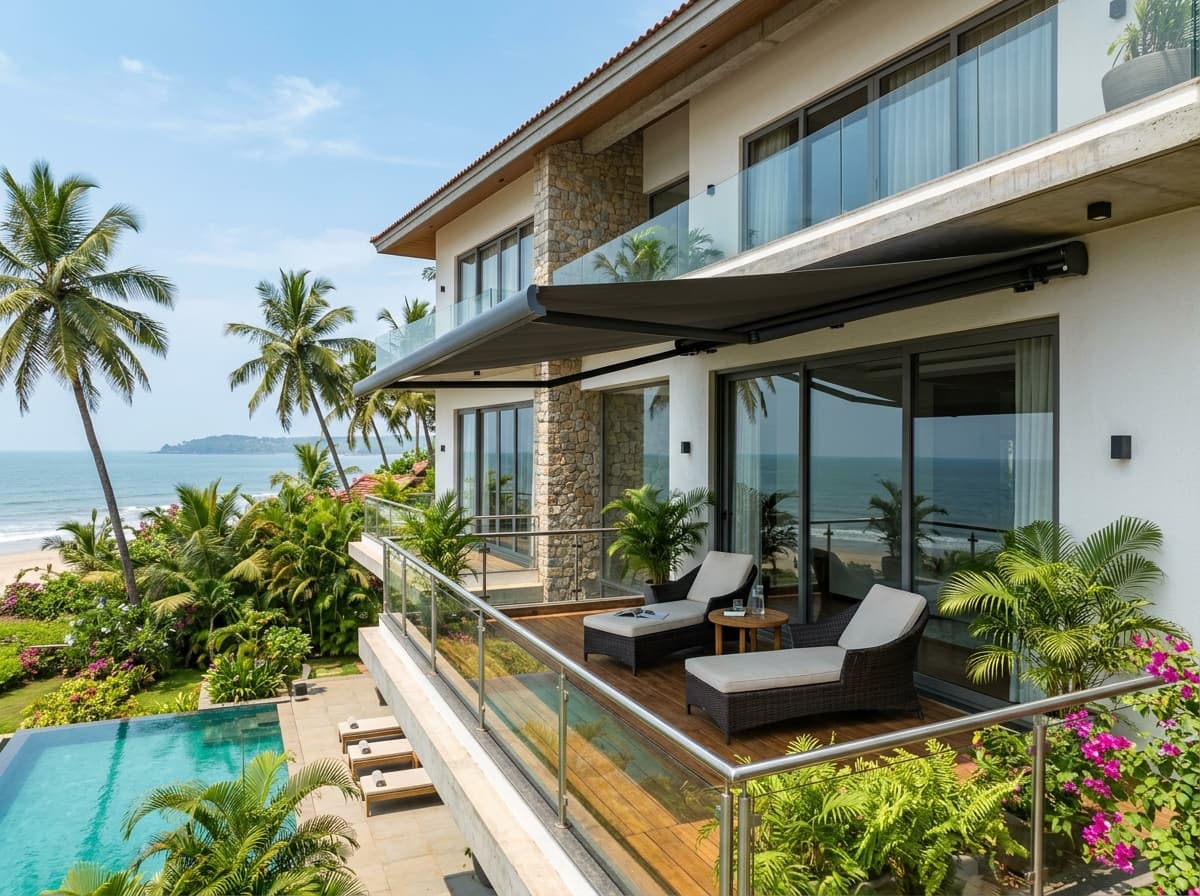
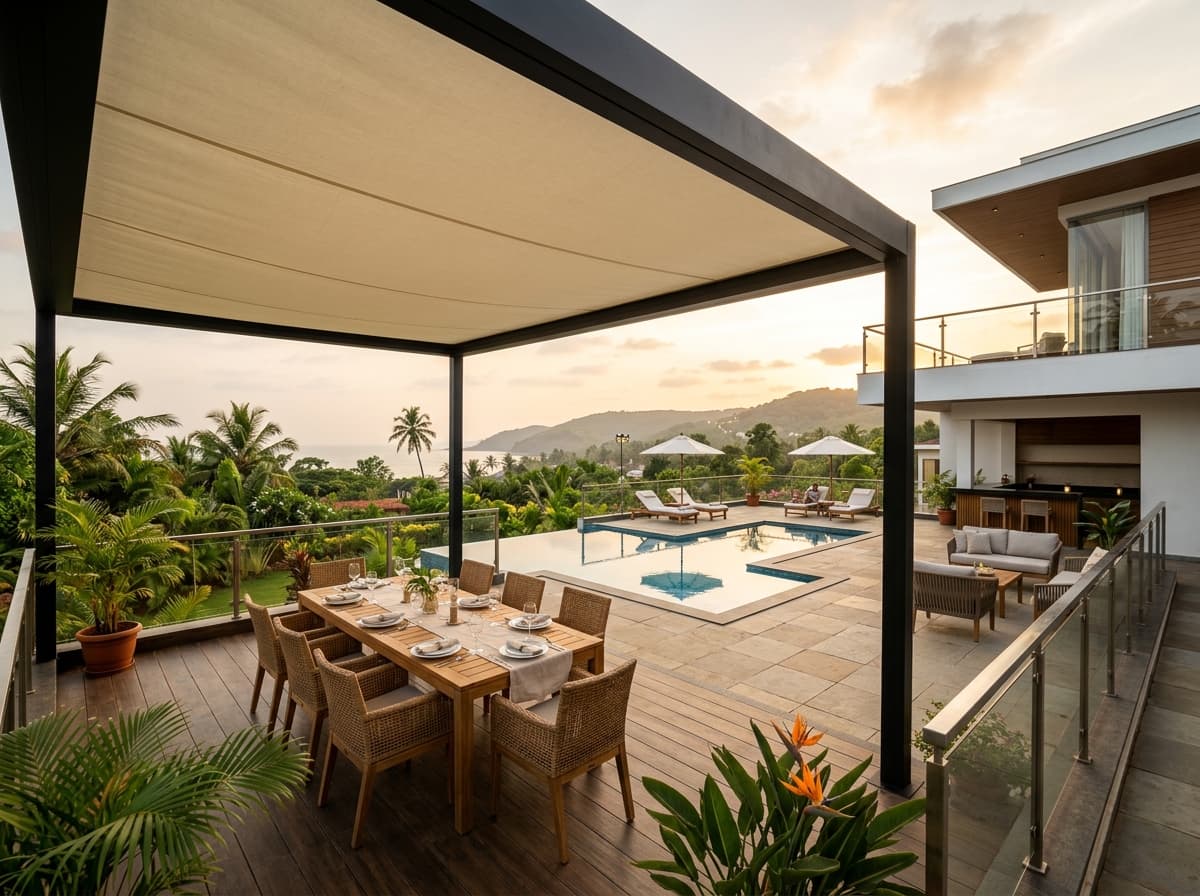
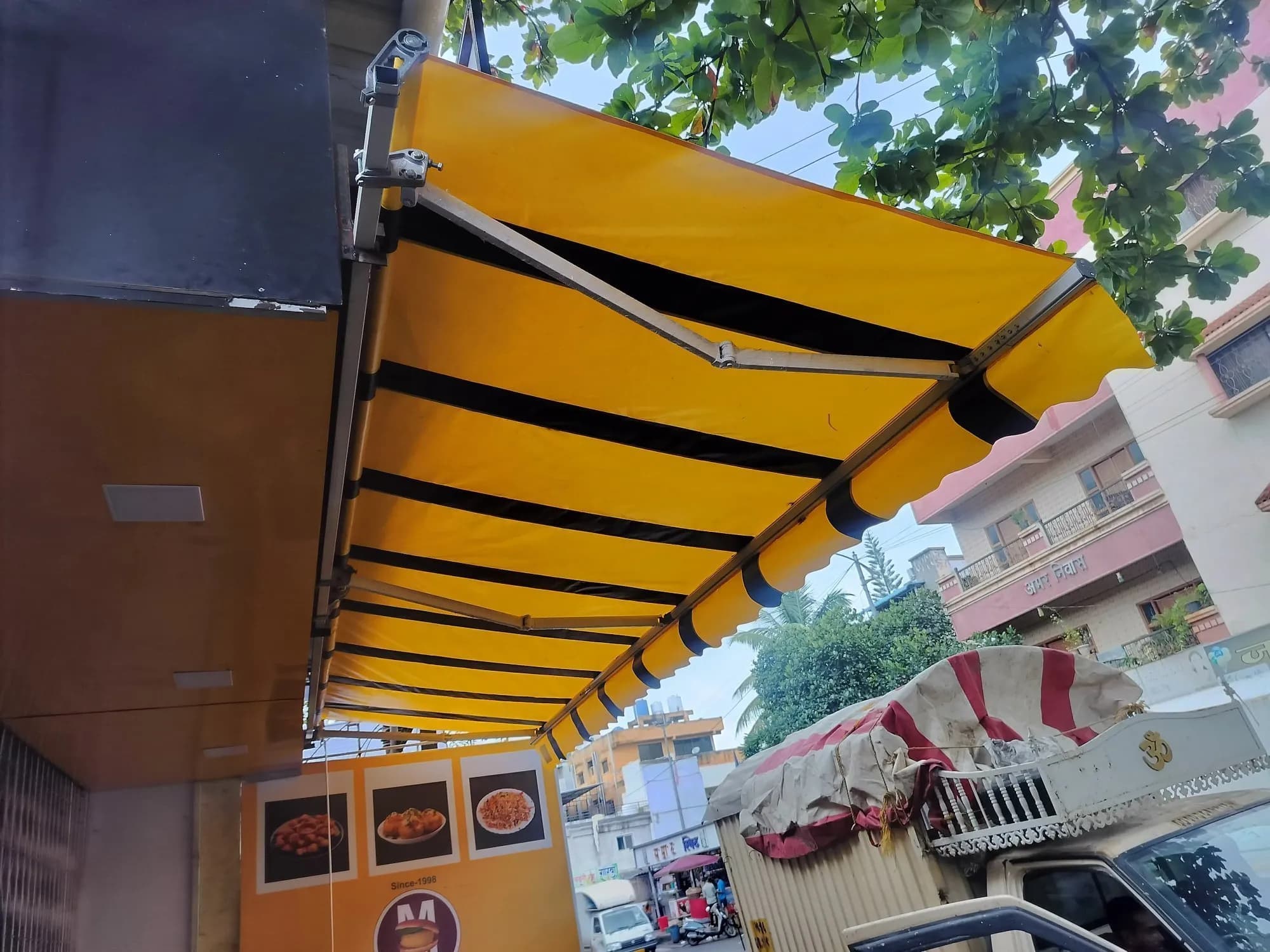
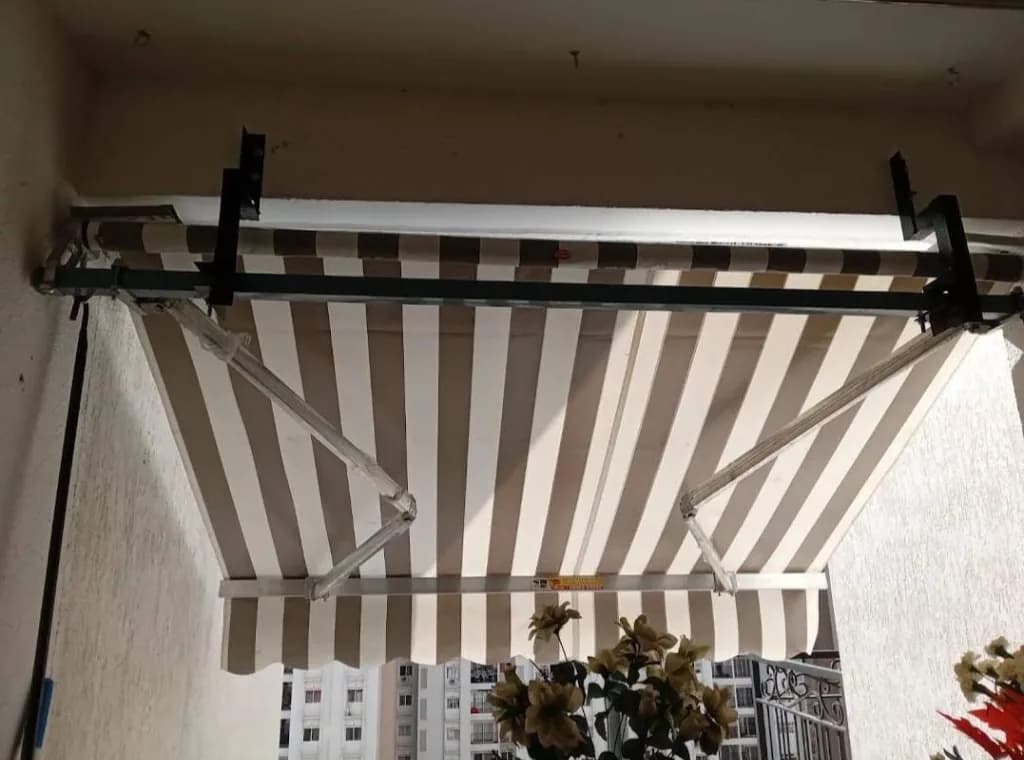
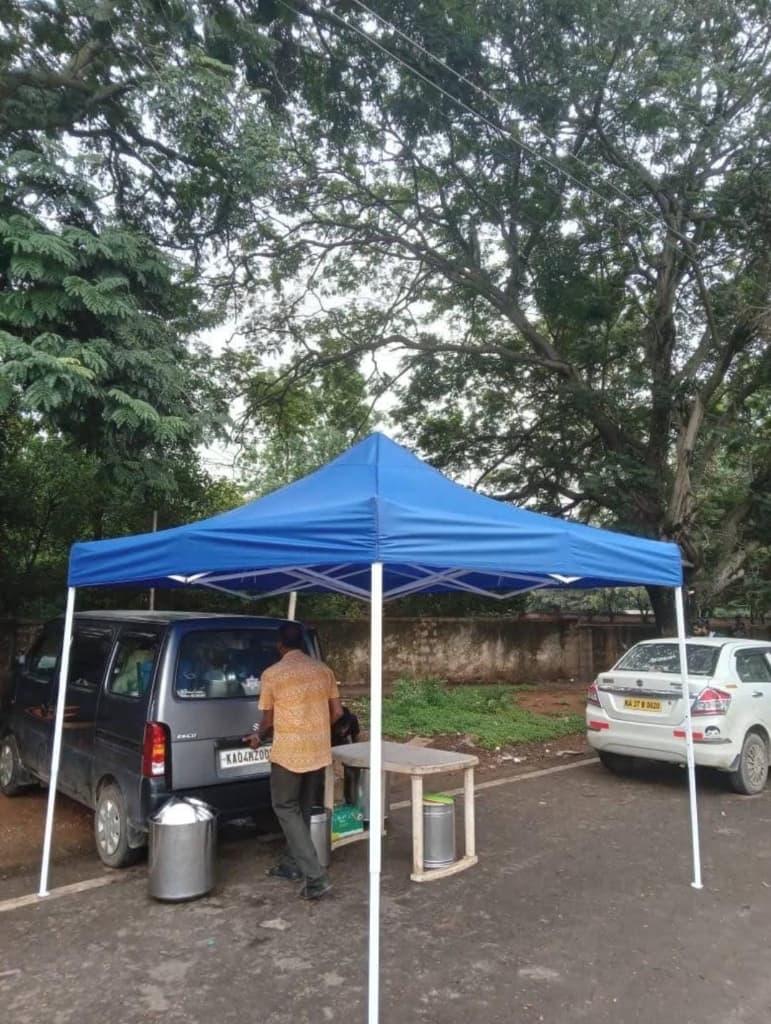
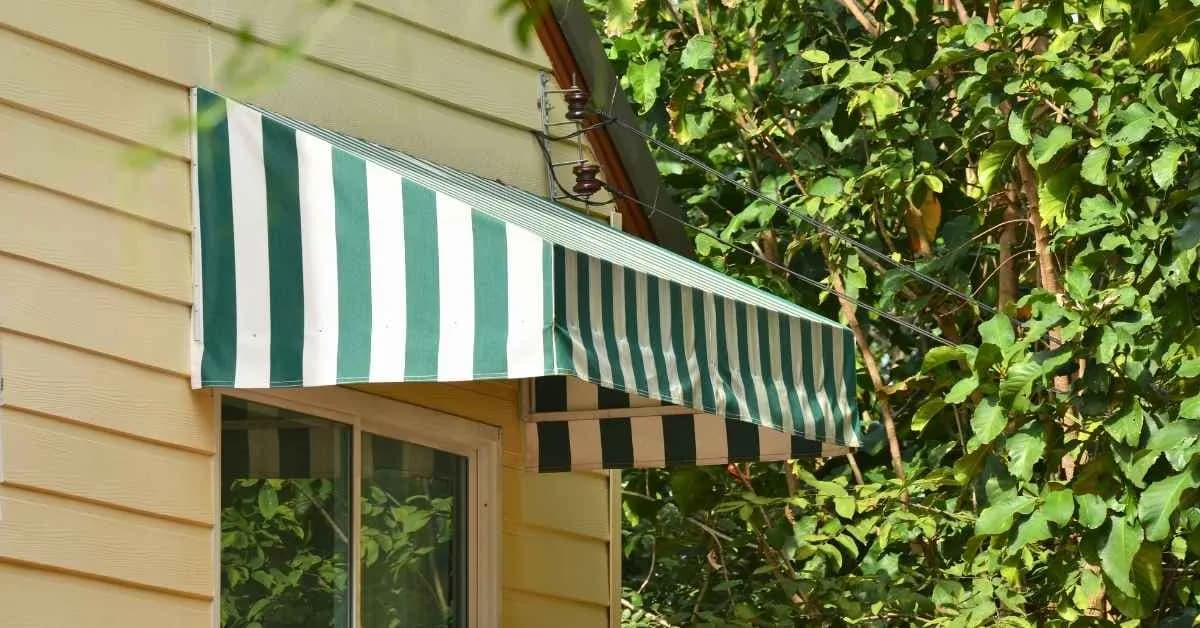
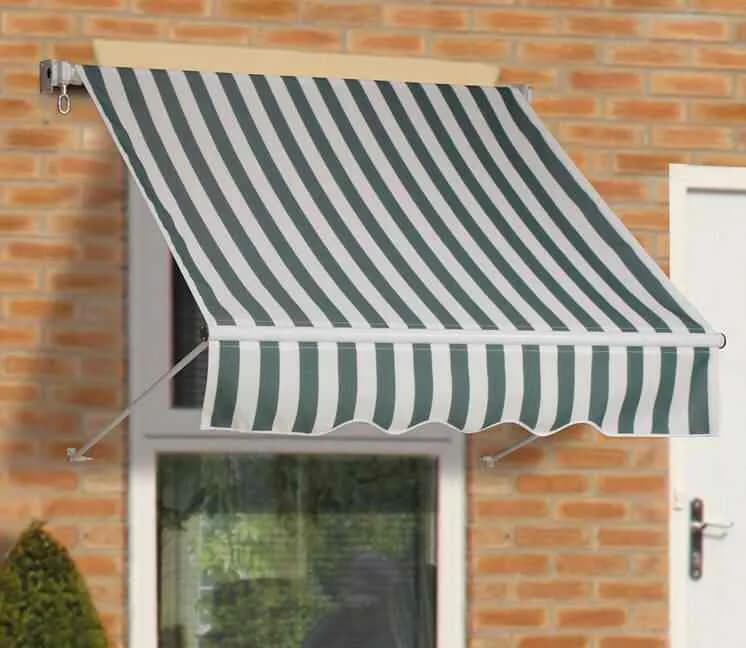
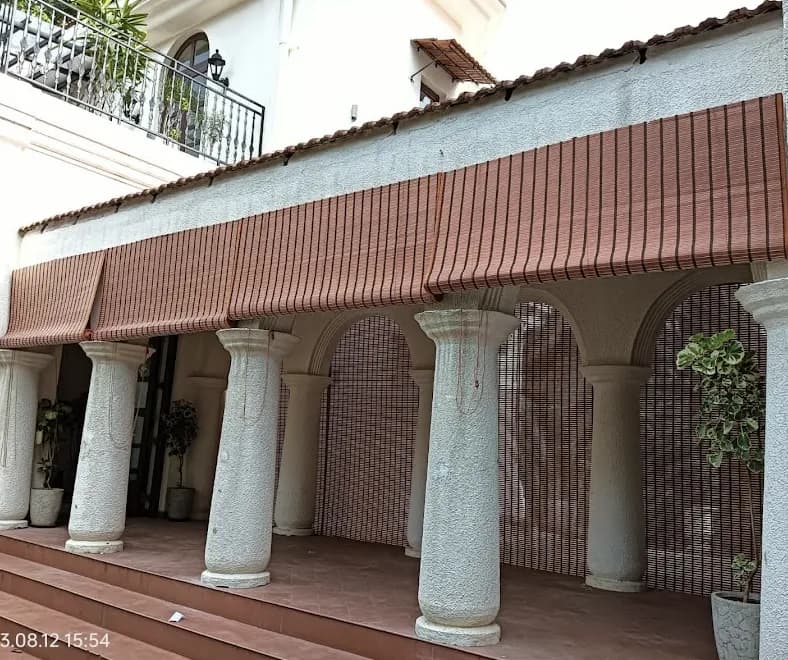
Shade is the reason for an awning in Marcaim, and dust is the thing that spoils one. The village is inland and hot, and an awning over a west-facing sit-out, shop door or office entrance spares the wall behind it the worst of the afternoon heat. Pale fabric shows every mark of the estate's dust and soot; charcoal, bottle green or a deep stripe looks clean for longer, and an occasional hosing stops grime bonding to the cloth. Tilt it enough for monsoon water to leave by the front edge. In the old village, on damp ground near the river, unroll it on the first dry day after rain. Like any awning, it comes in when the wind is strong.
- Shop and office entrances near the estate: an awning in charcoal or another deep colour, rinsed off whenever truck soot begins to show.
- Sit-outs of newer houses that look west: a manual awning pitched steeply, shading the wall through the hottest part of the day.
- Old houses below, near the fields: cloth treated against mildew, aired open between showers, on brackets bolted into a sound lintel.
Marcaim, also written Madkai, is a village south-west of Ponda, near the Zuari. It is known for the Navdurga temple and for its industrial estate, one of the larger ones in the taluka, with the old village and its fields lying below.
There are traditional village houses near the temple and newer homes and rented rooms for people working in the estate. Factories and offices in the estate need blinds and, in places, strip curtains.
Marcaim is inland, with low ground near the river that is humid and prone to mosquitoes. The industrial estate adds dust and truck traffic.
Homes near the port, airport and industrial estates
Dust and soot mark pale fabric. Choose a mid or dark colour, and hose the fabric down from time to time before the dirt sets.
Inland homes
Inland, an awning is mostly for sun. One over a west-facing sit-out or window keeps the wall and room behind it cooler. Fix it with enough pitch for monsoon rain to run off, not pool.