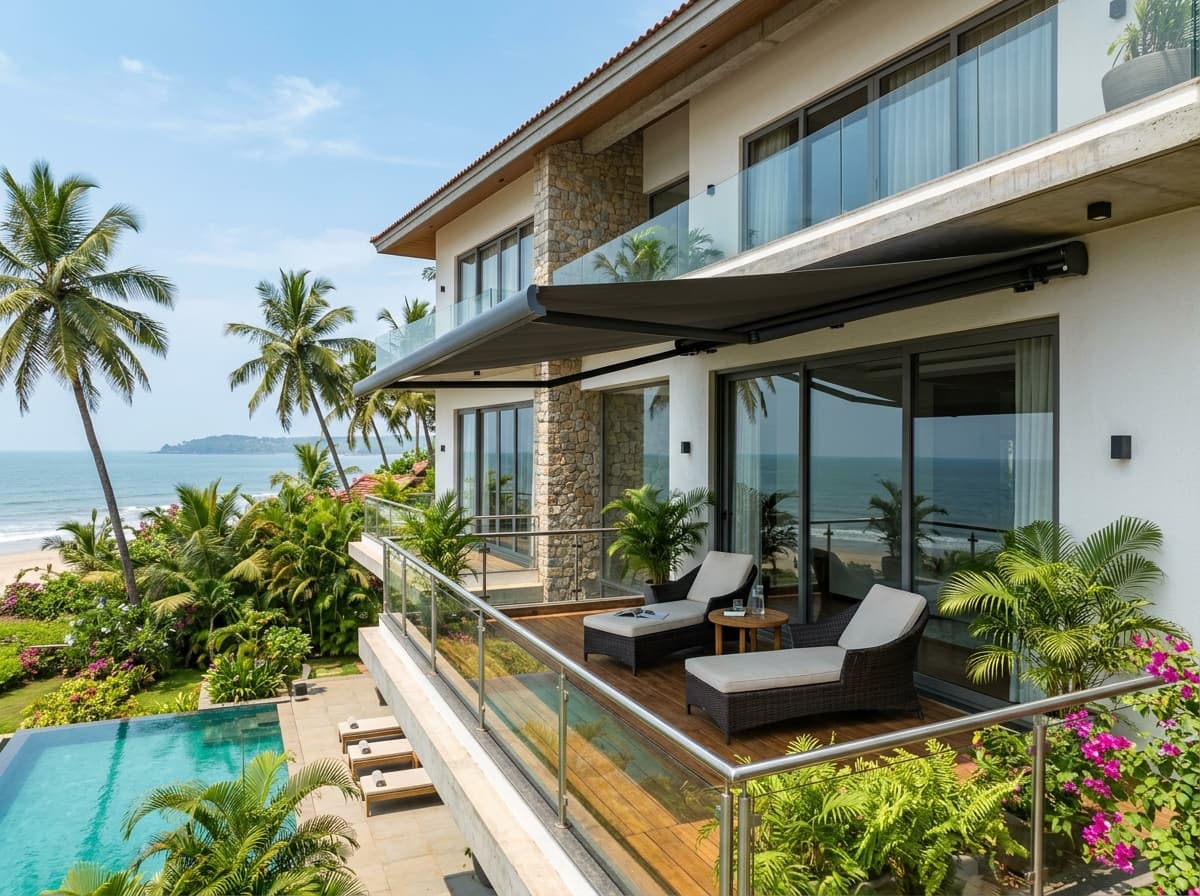
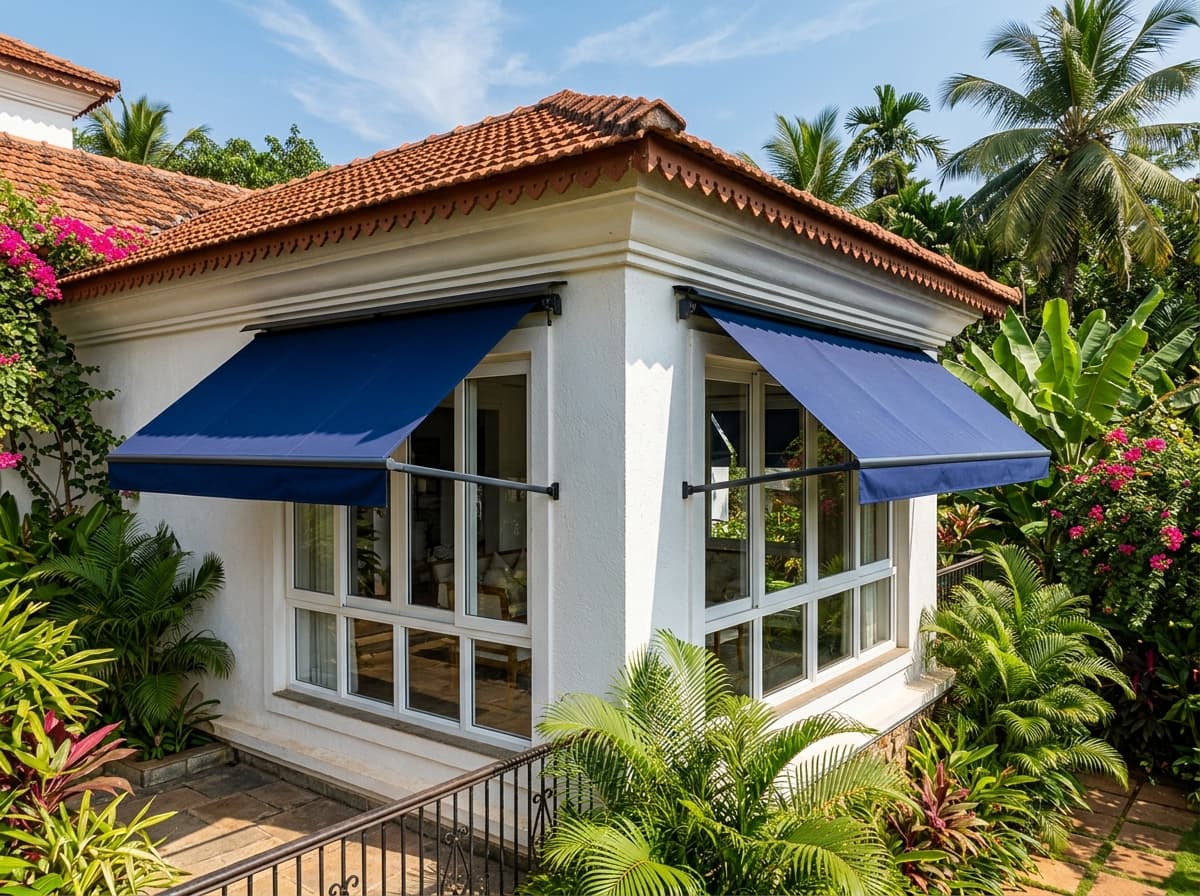
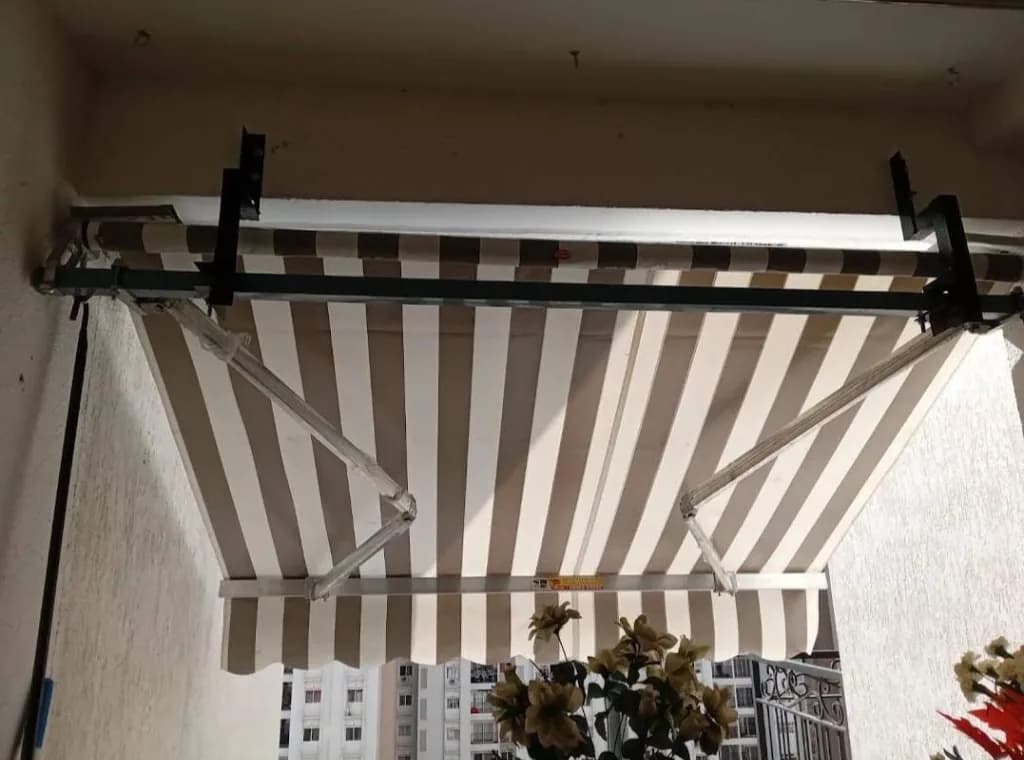
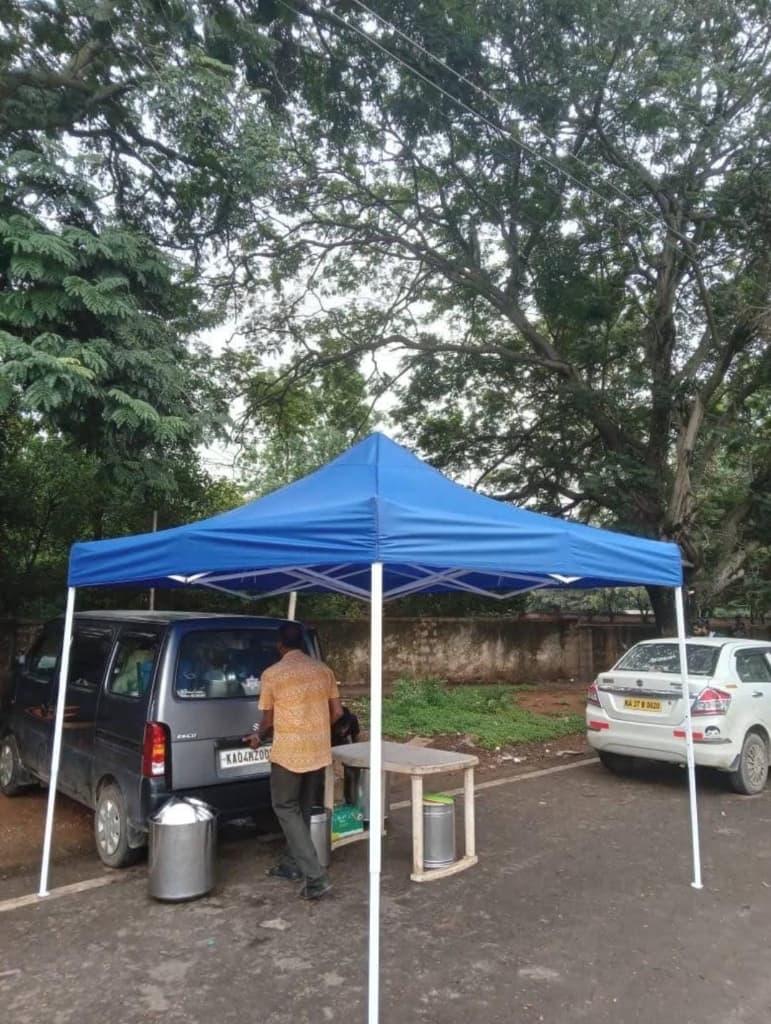
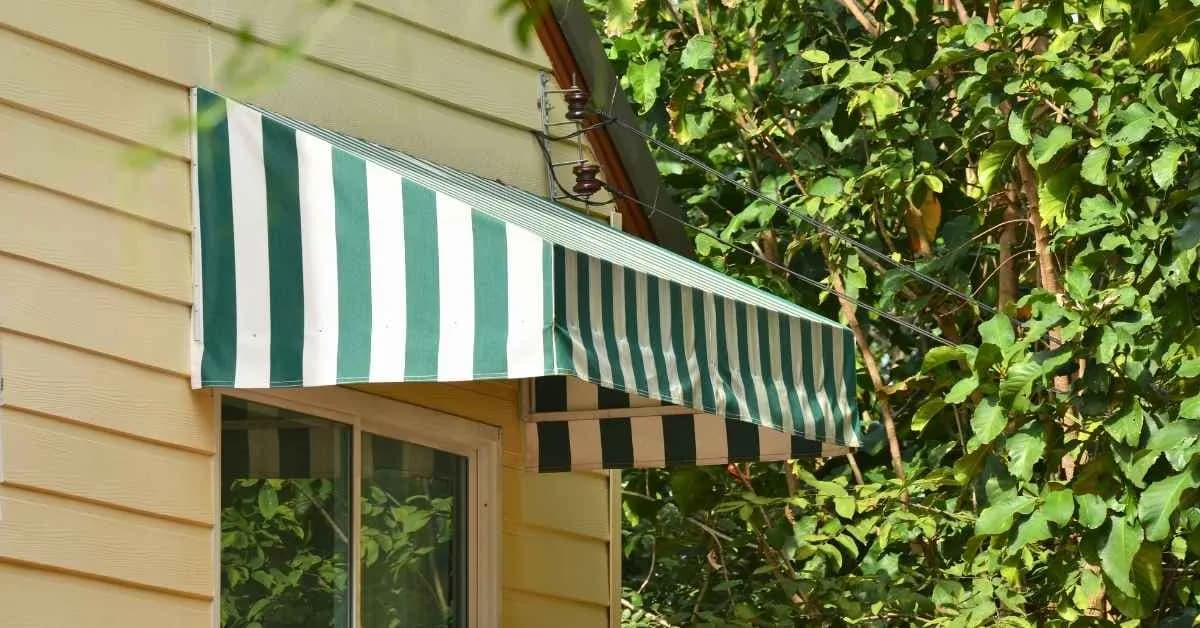
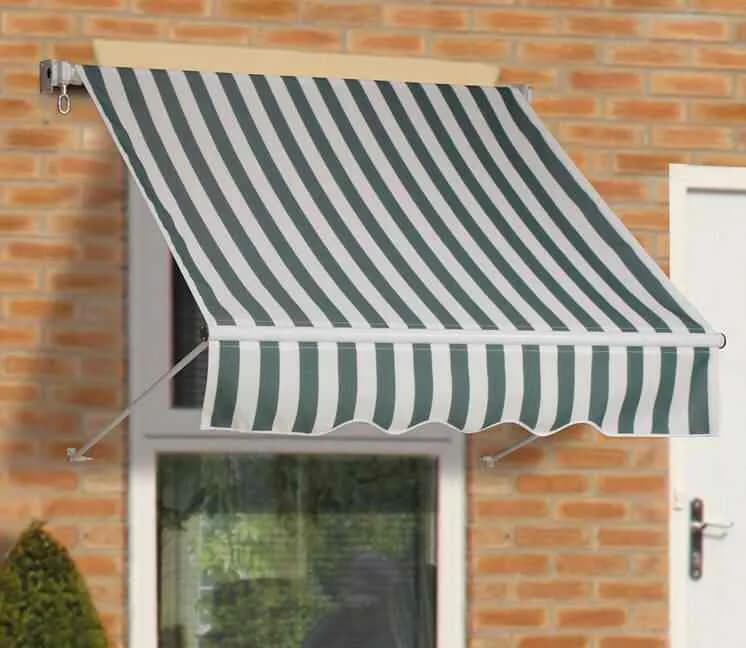
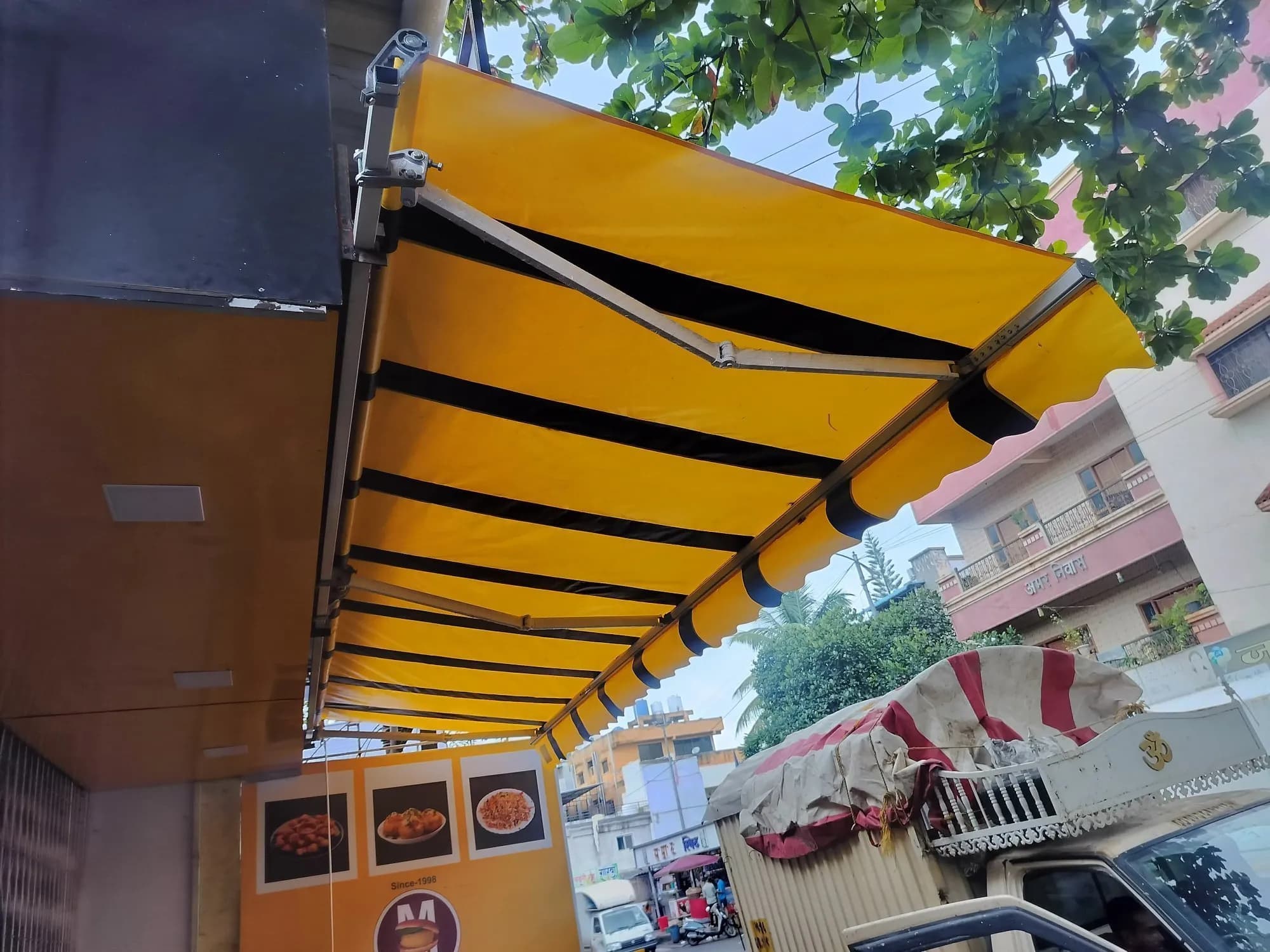
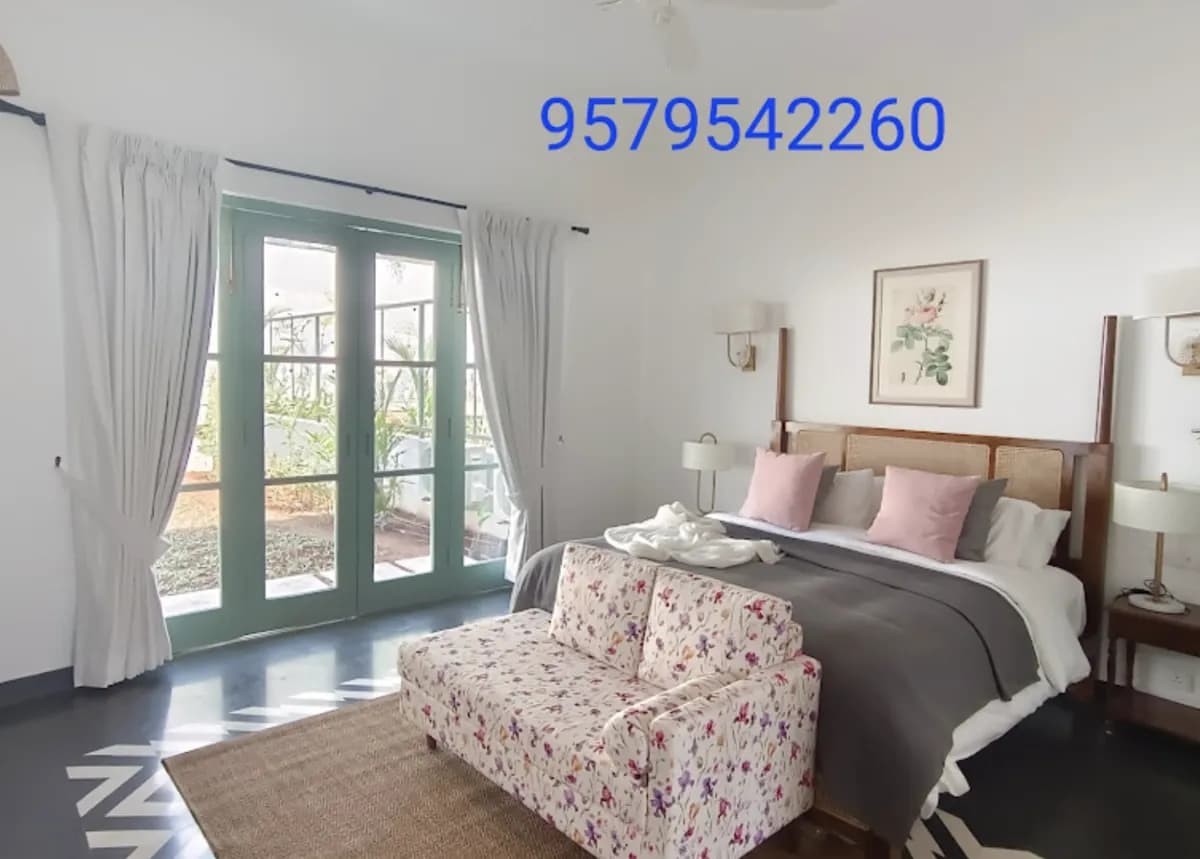
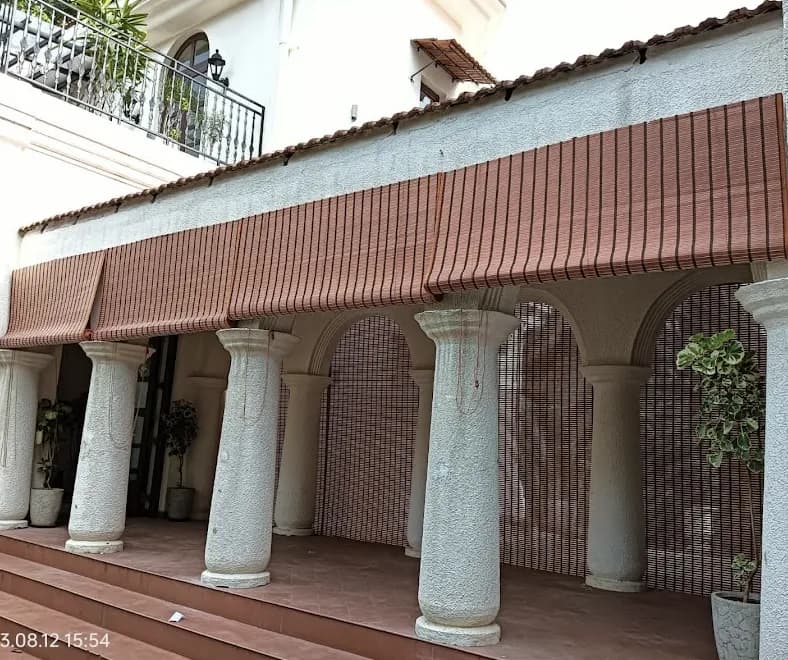
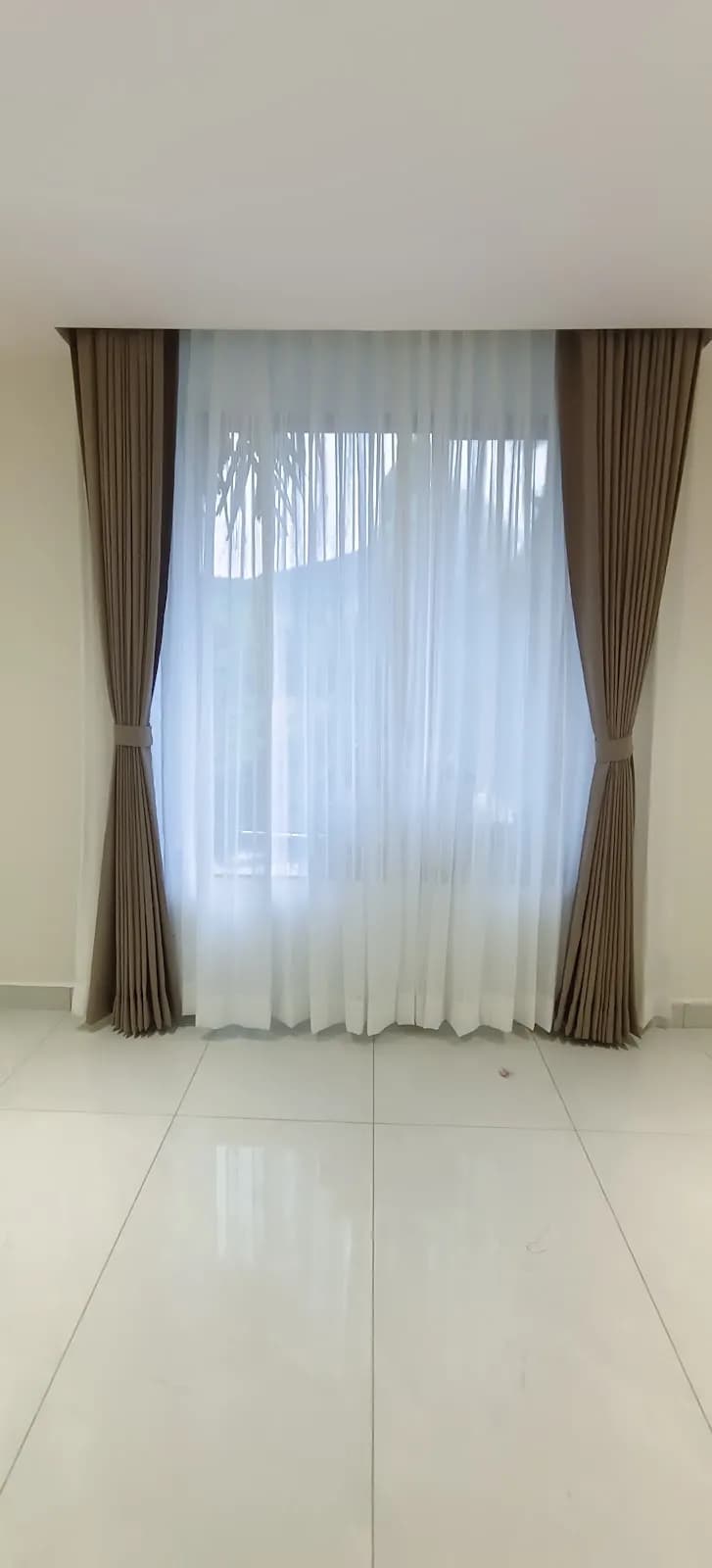
There is no sea wind to fear in Ponda, so an awning here is a sun and rain device, and a useful one: summers are hotter than on the coast, and a west-facing sit-out or shop window bakes from two o'clock. A folding-arm awning over it keeps the wall and the room behind noticeably cooler. Fix it with a good slope, because the monsoon is heavy and water that pools on the fabric stretches it. Pale colours soon show the soot and dust of a working town, so choose a mid or dark shade and hose it down before the dirt sets. In an apartment building, ask the society before drilling the facade.
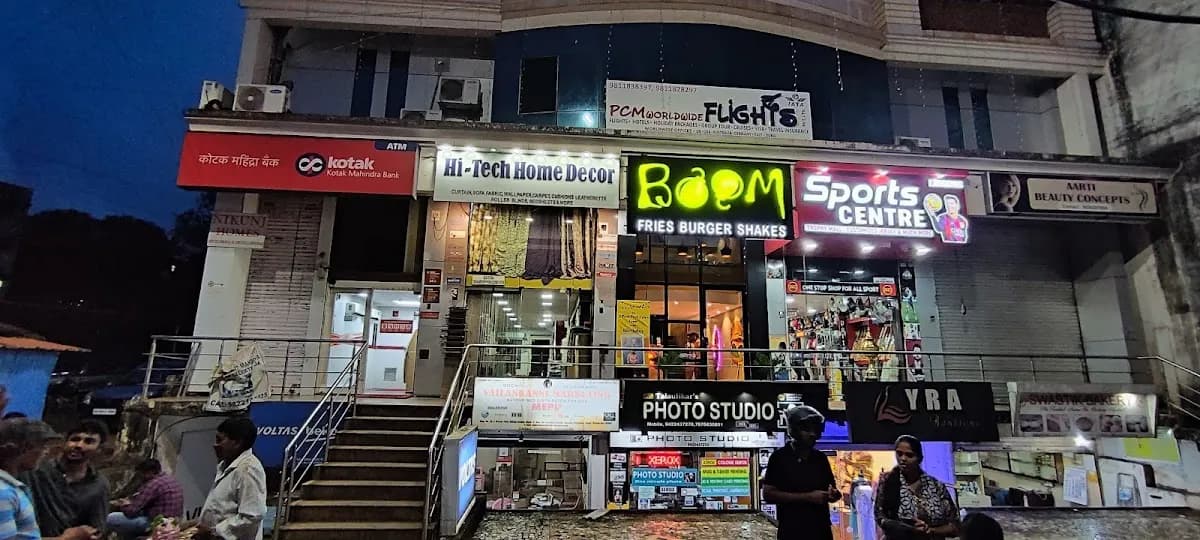
- Shops near the market: a retractable awning over the front in a dark stripe or plain shade, rinsed with a hose now and then.
- West-facing sit-outs in housing colonies: a hand-cranked awning pitched steeply, so heavy rain runs off the front bar.
- Top-floor terraces: retract the awning when storms blow up over the hills, since a folding-arm type is not built for strong gusts.
Ponda is the main town of the Goan hinterland, set among low forested hills. It is the centre of the taluka best known for its temples, at Mangeshi, Mardol and Kavlem, and for spice plantations, and it is also a working town, with industrial estates nearby and a busy market.
Ponda has grown fast in apartment buildings and housing colonies for people working in the industries and offices around it, alongside traditional family houses. Homes are owner-occupied and furnished for daily life, with pooja rooms and large family living rooms.
Ponda is well inland. There is no salt in the air, but summers are hotter than on the coast and the monsoon is heavy, with the surrounding hills adding to humidity. Dust from traffic through the town is noticeable.