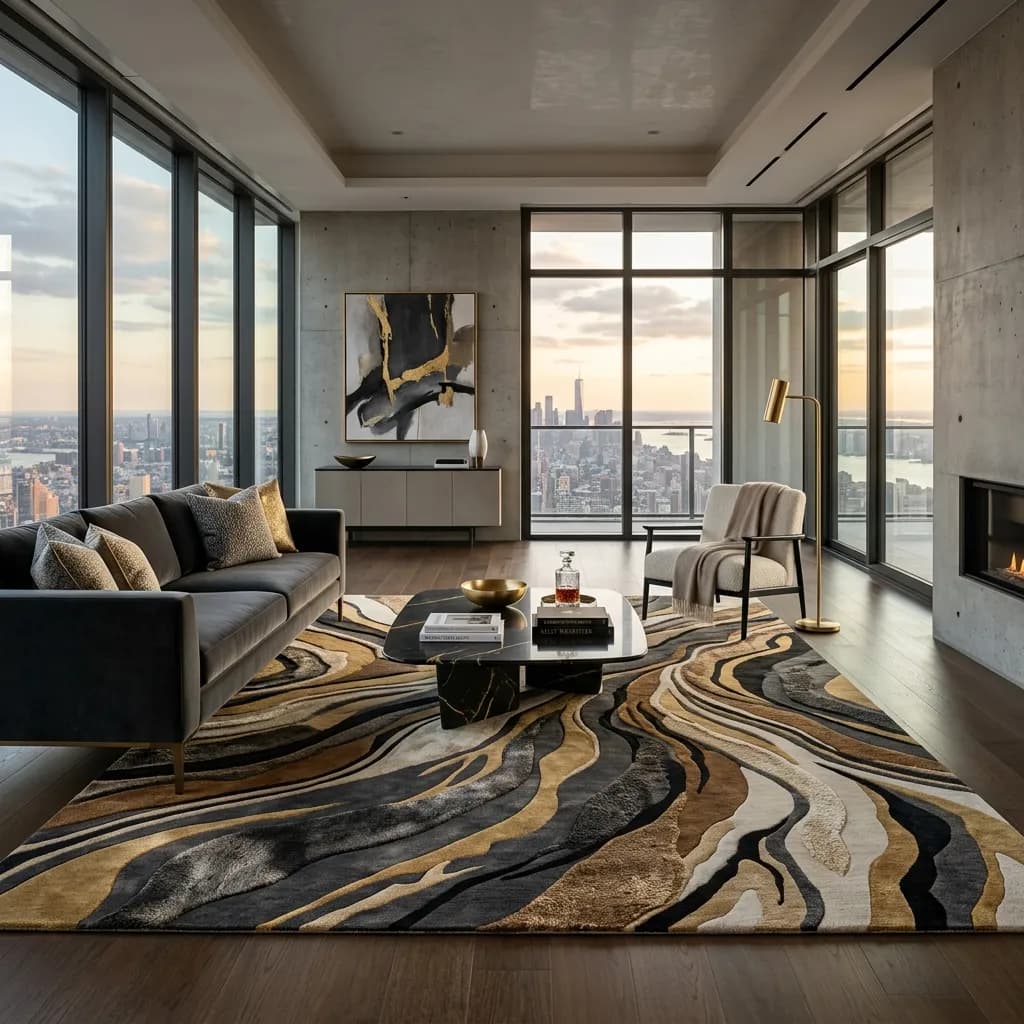
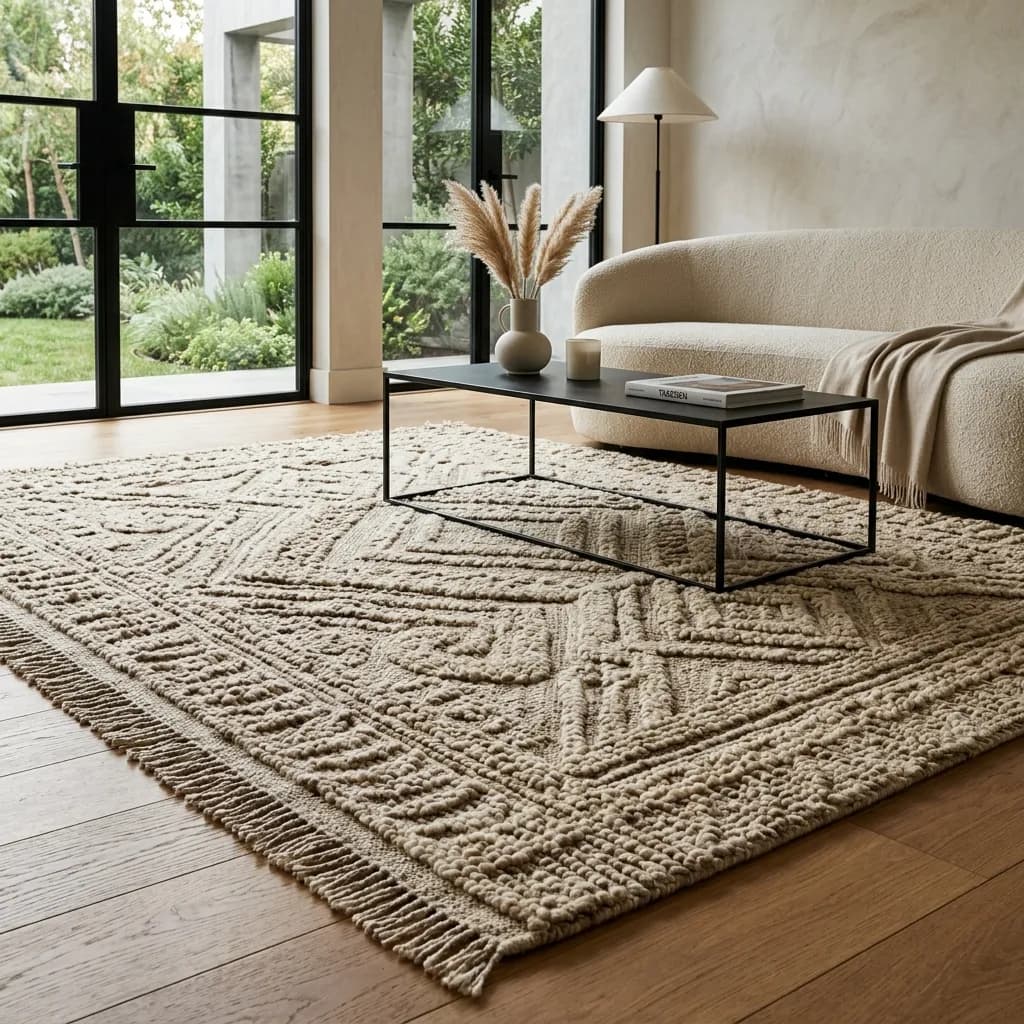
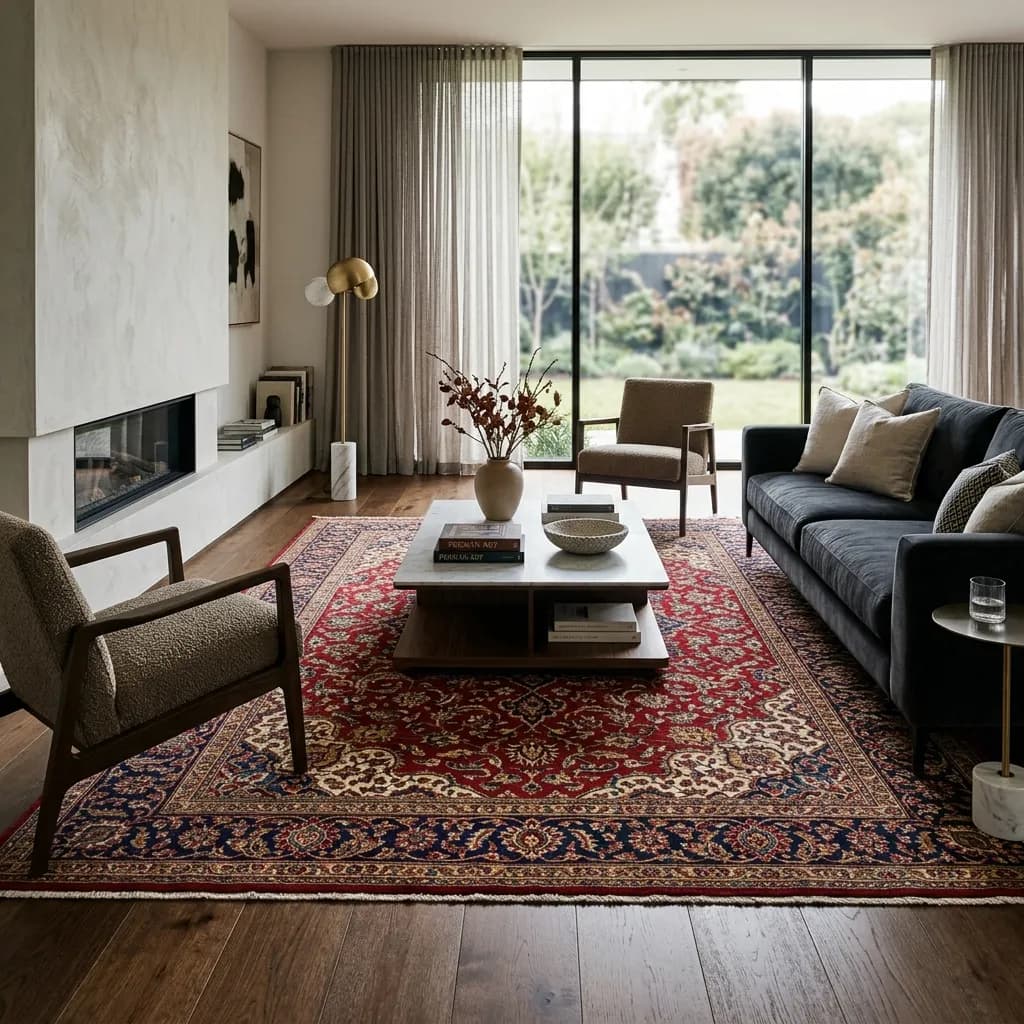
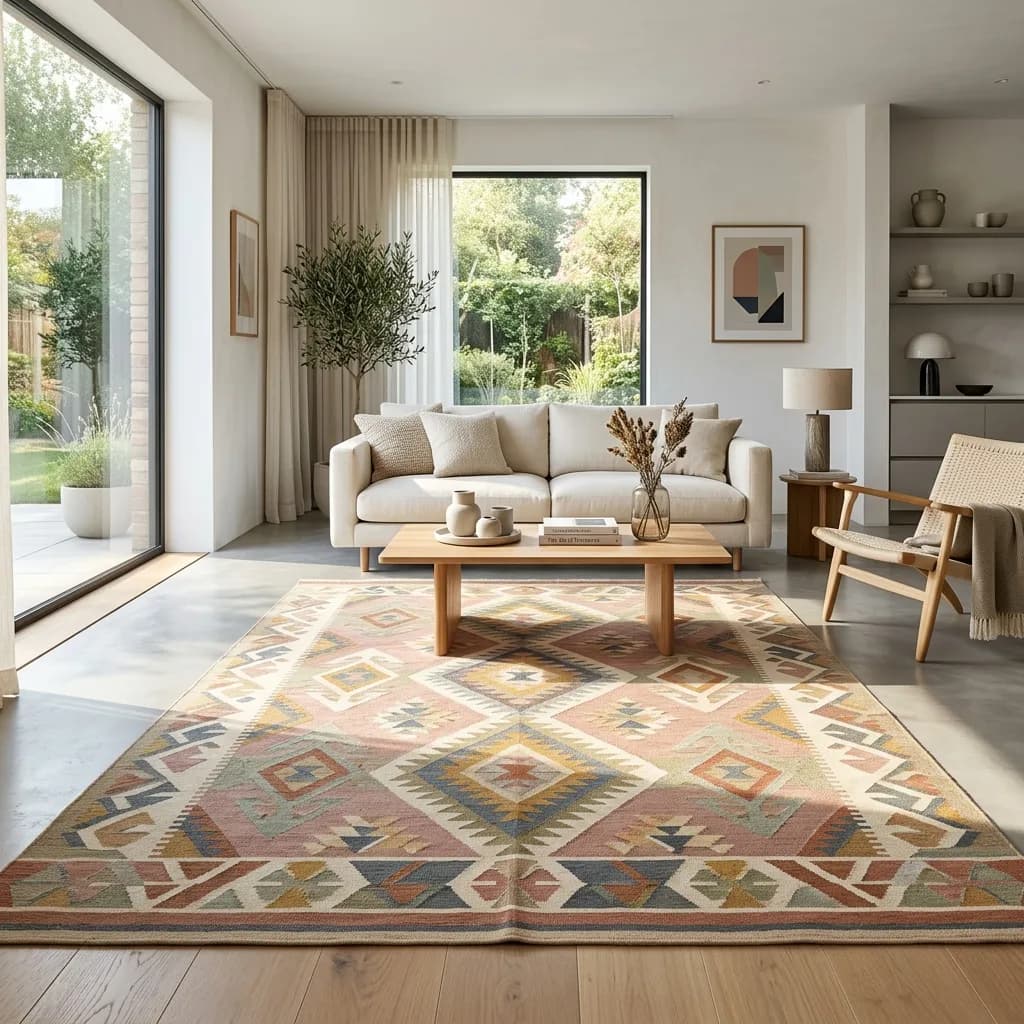
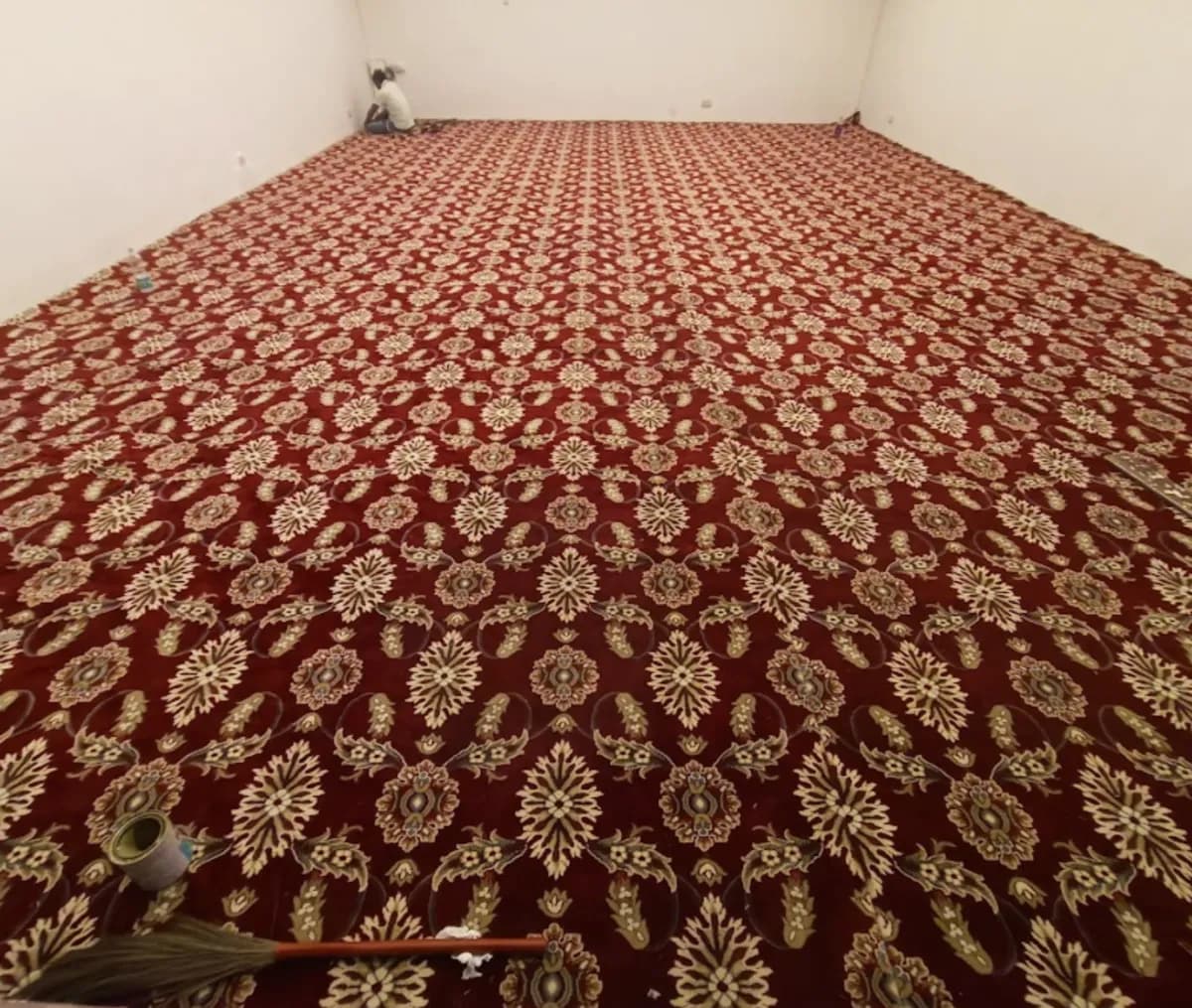
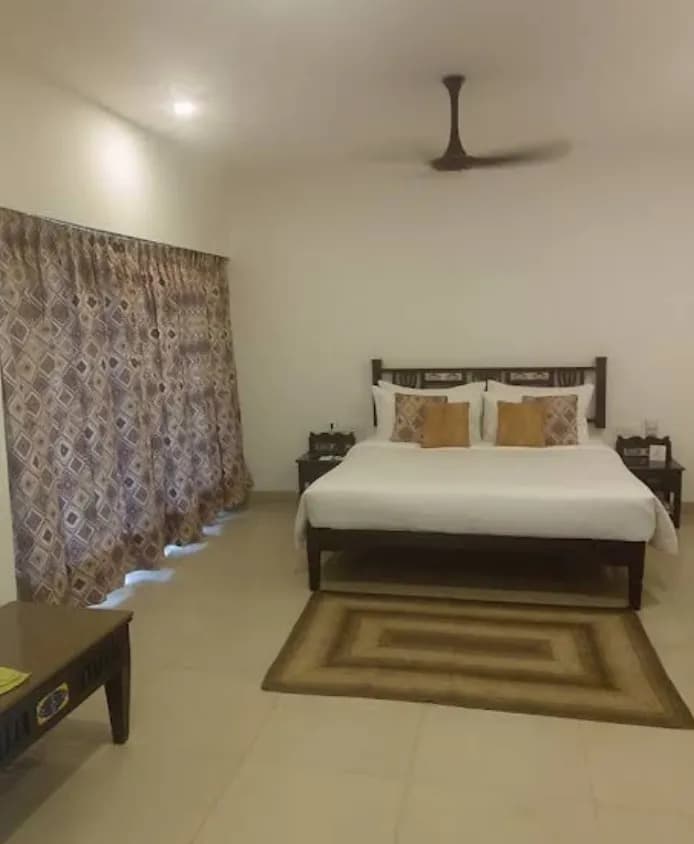
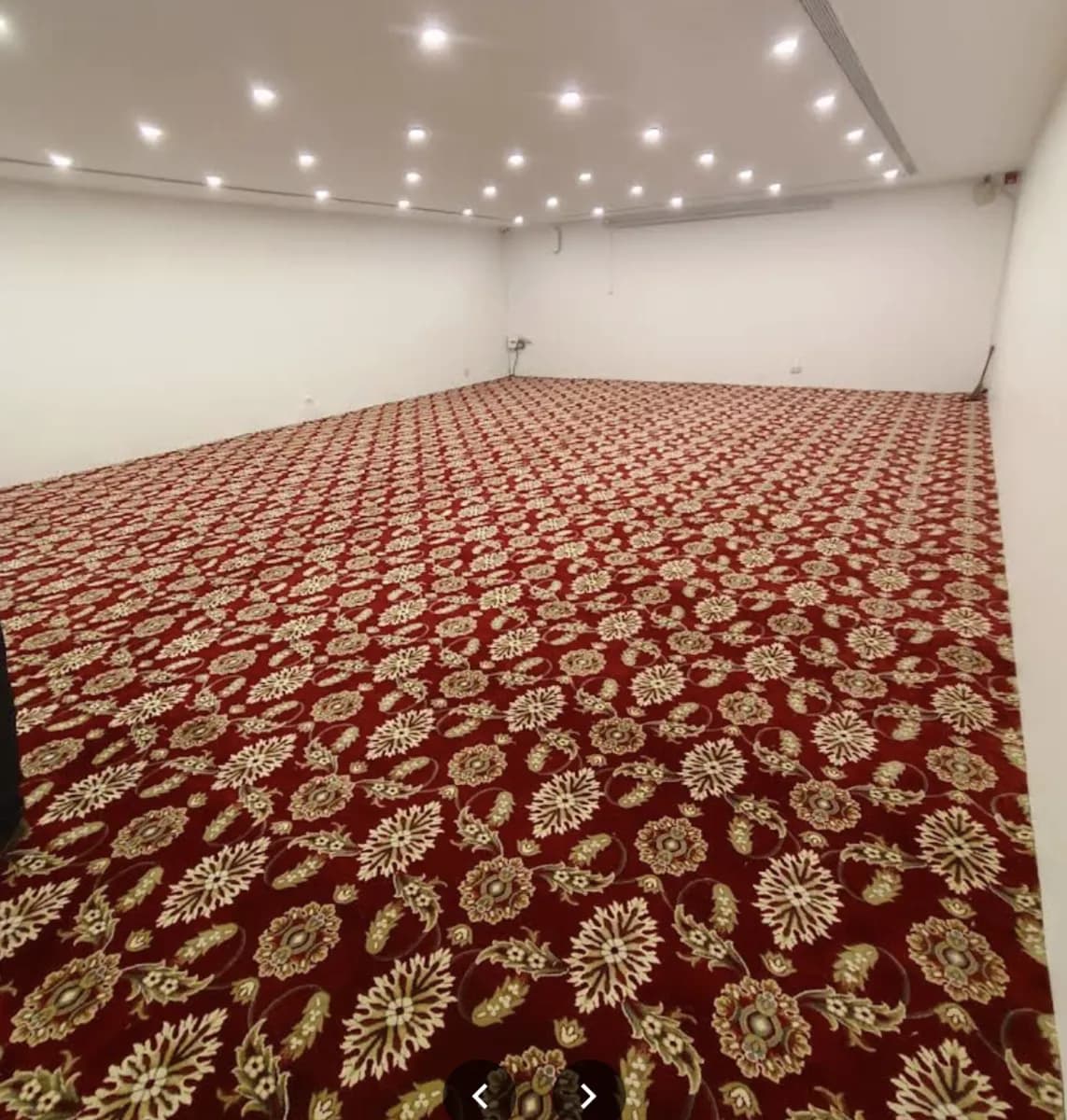
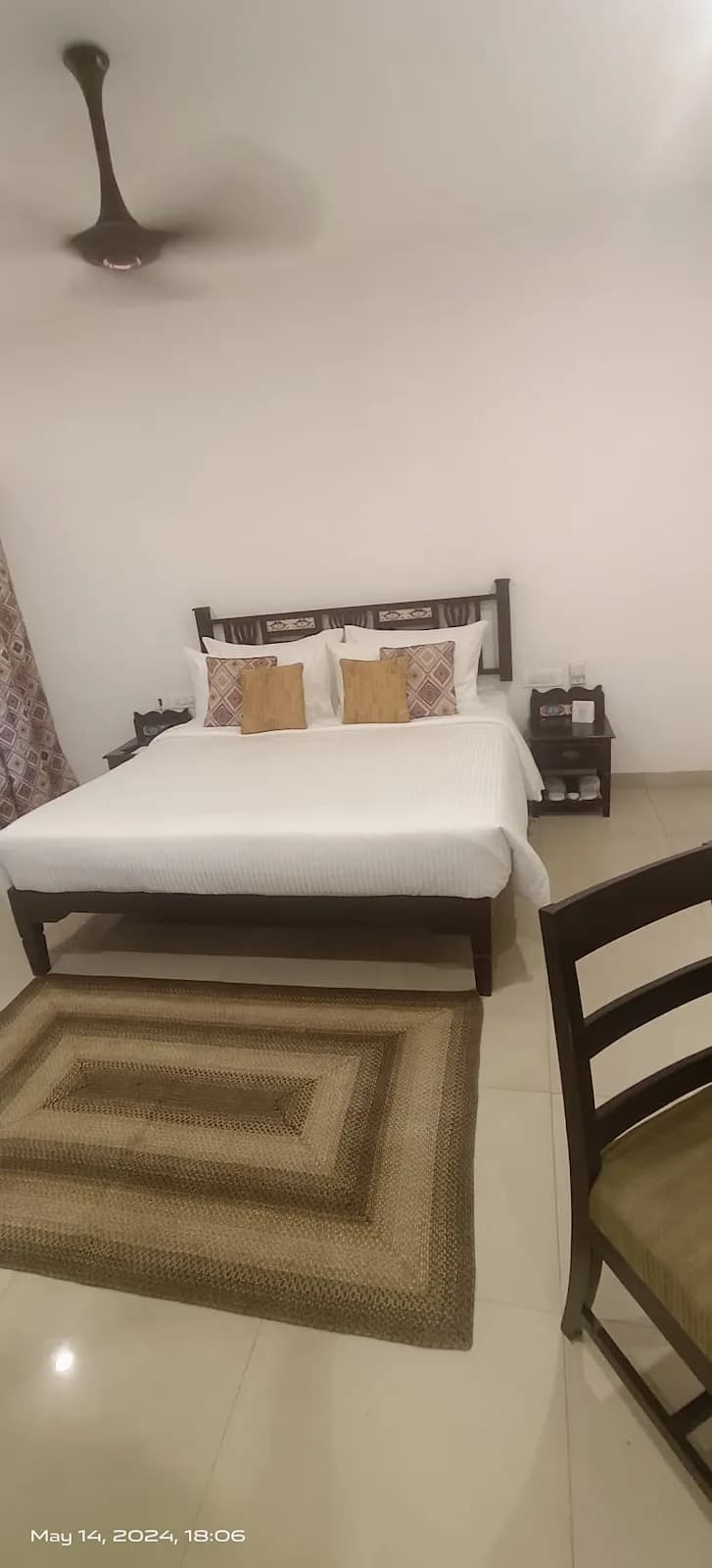
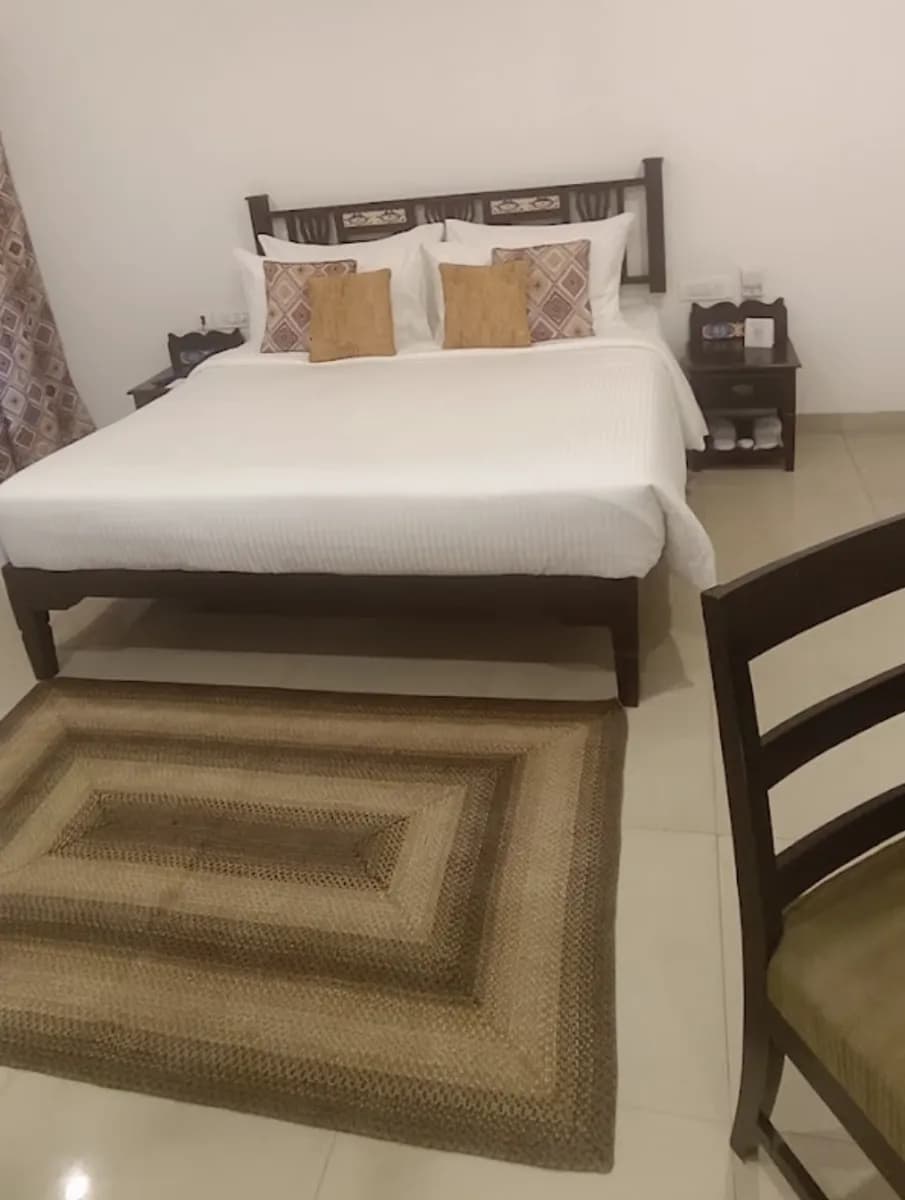
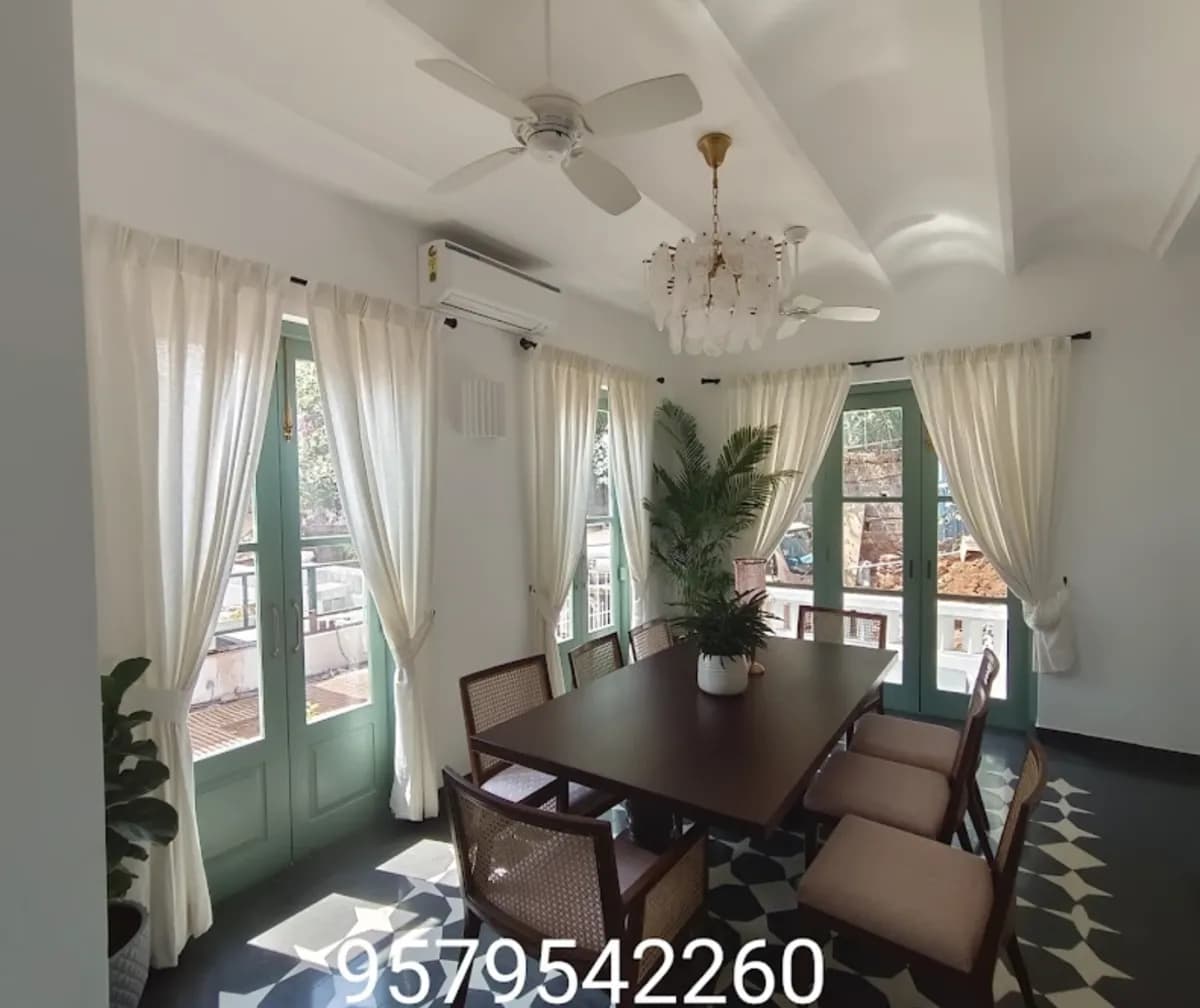
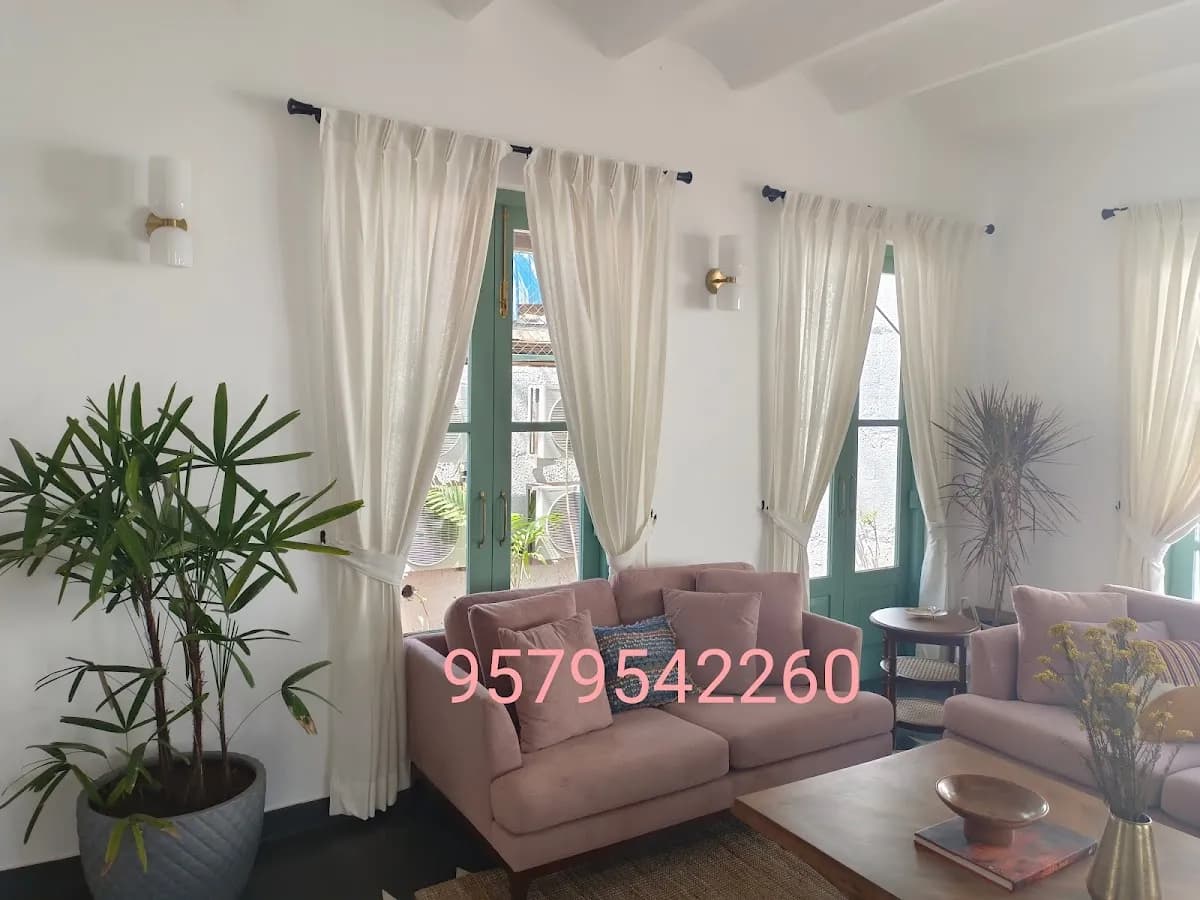
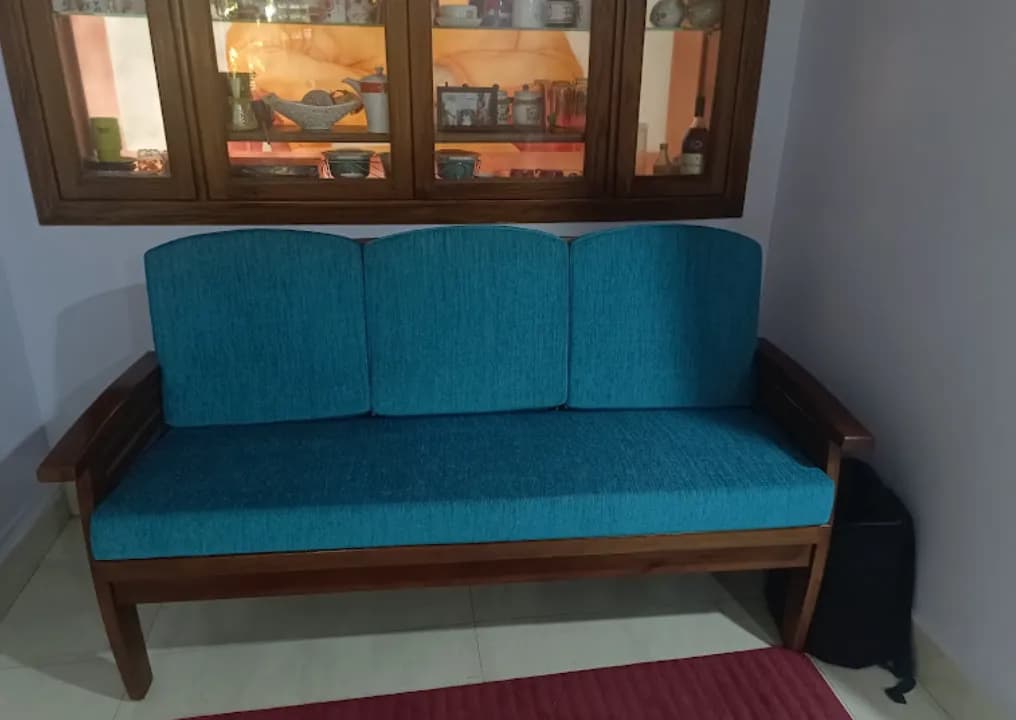
Natural fibres are at home in Sangolda. The village stands inland on rising ground, the air carries no salt and only moderate humidity, and wool, jute and cotton dhurries can all be used without the musty smell they pick up near the coast. That widens the choice for owners who furnish with thought, and a rug can be picked to tie the room together. In the old houses the tiled floors should stay on show, so use rugs with an underlay, never fitted carpet. Villa rooms are large and seldom standard, and the rug must be big enough to sit under the front legs of all the seating. Along the main road, dust means frequent vacuuming.
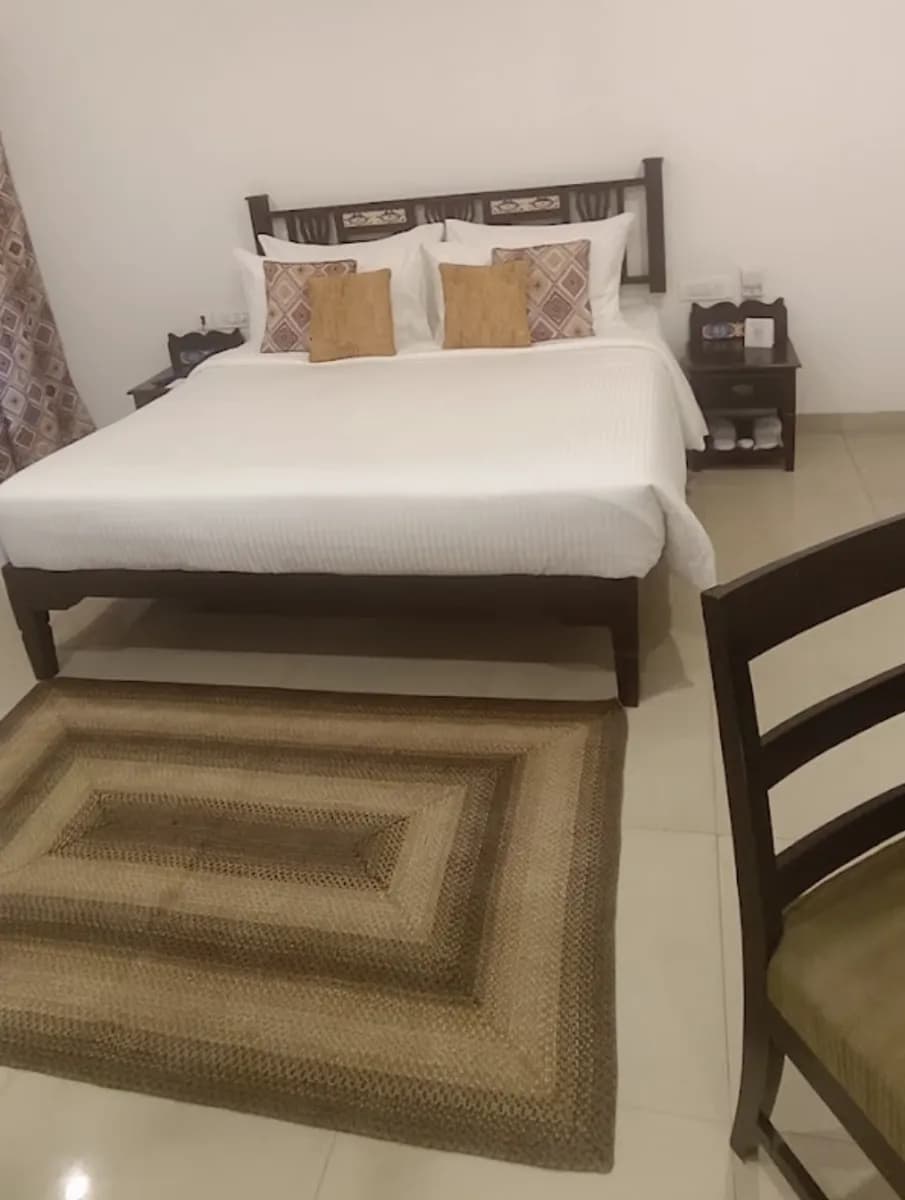
- Old family houses: a dhurrie or Persian-style rug on a non-slip underlay over the original tiles, sized to the furniture group.
- Villa living and dining rooms: a large wool or jute rug measured to the room, since few of these spaces are standard.
- Staircases in row houses: a fitted runner in a hard-wearing wool blend, which softens footsteps between floors.
Sangolda is a village along the road from Porvorim towards Saligao and Calangute. That road is known for its furniture, antique and lifestyle stores, and the village behind it has old houses, a chapel-dotted landscape and new villa developments.
Sangolda homes are a mix of old family houses and newer villas and row houses, many owned by people with an interest in design, given what the main road sells. Furnishing tends to be considered and coordinated.
The village is inland on gently rising ground. There is no salt, moderate humidity, and good shade from trees. Houses on the main road get dust.
Villas and gated homes
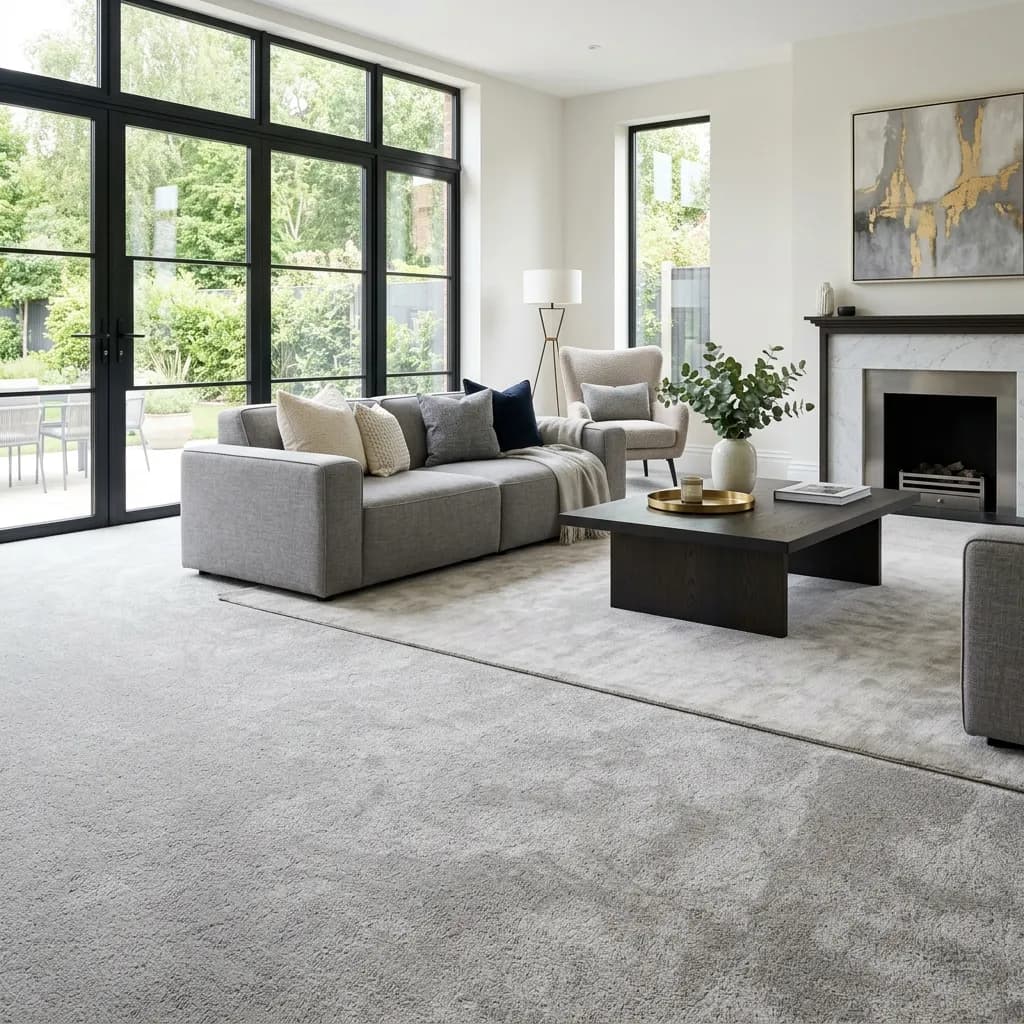
Large rooms need large rugs: the front legs of all the seating should rest on one. Stair runners and bedroom rugs are measured on site, because villa rooms are rarely standard sizes.
Inland homes
A drier inland home can use wool, cotton dhurries and jute without trouble. Rugs gather the dust that comes in from the road, so choose sizes that can be taken out and beaten or vacuumed easily.