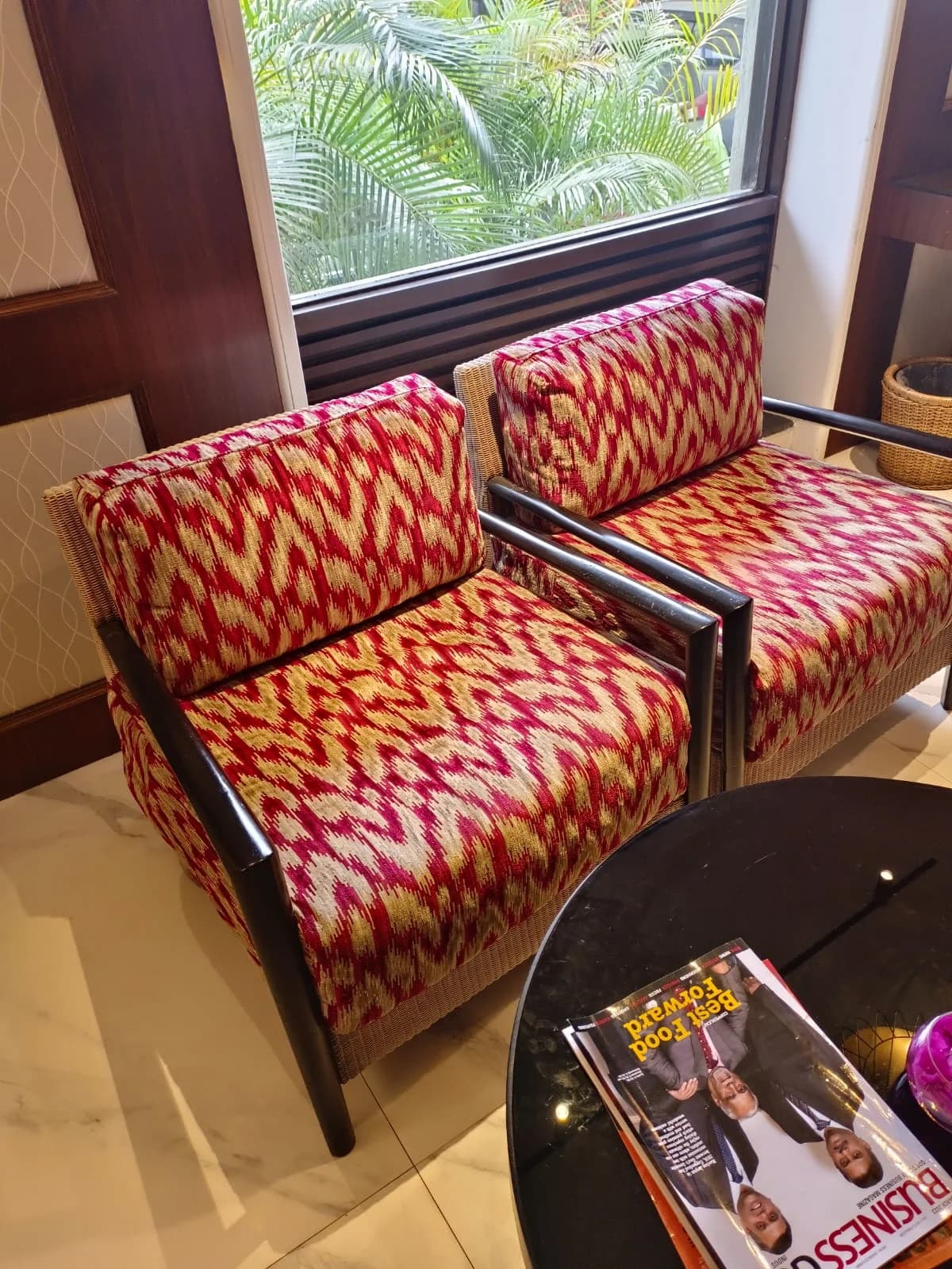
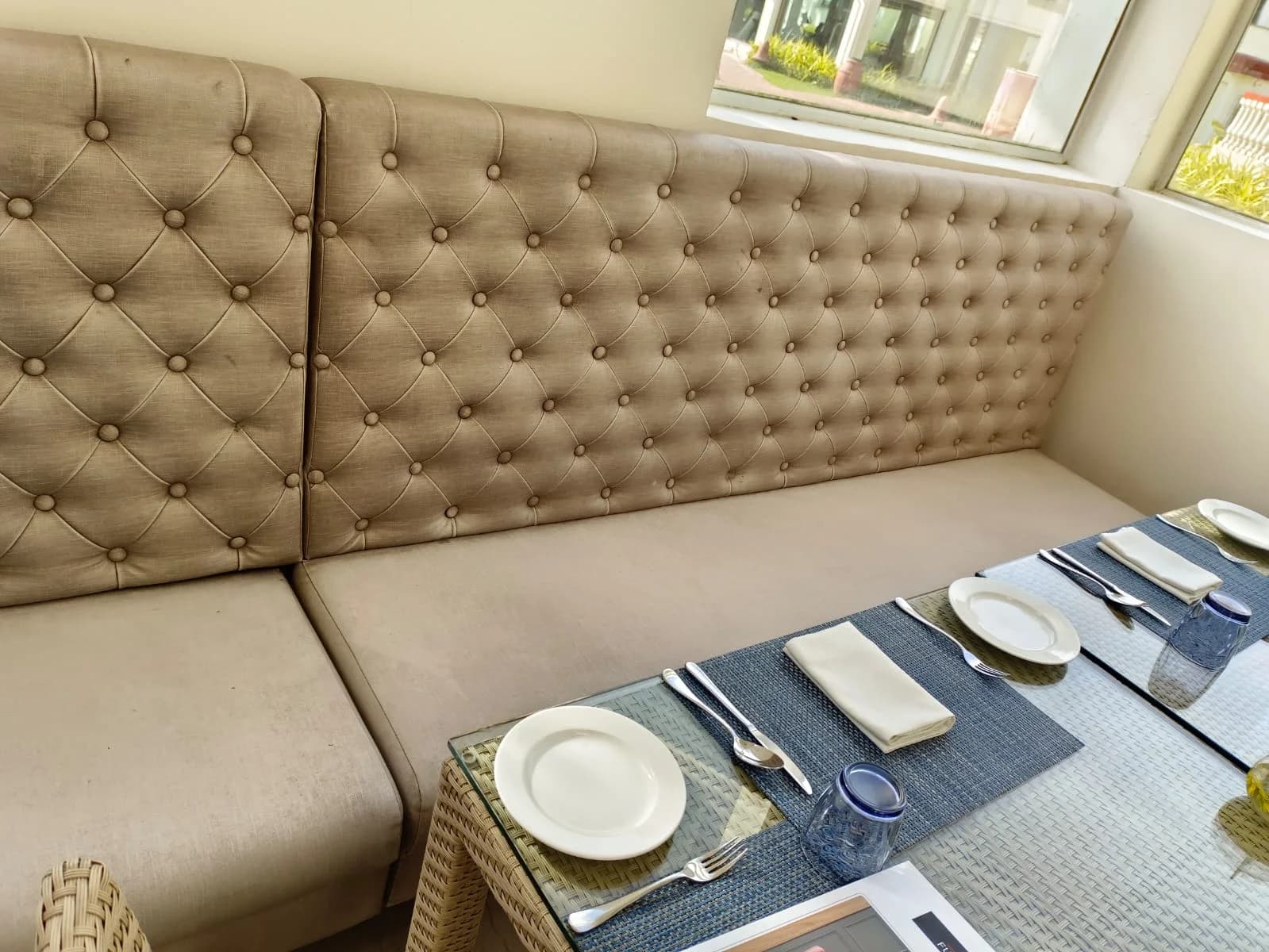
Outdoor seating on this plateau faces sun and wind, not salt. Ordinary cushion fabric left on a Farmagudi terrace loses its colour over a summer and blows across the garden in the first strong gust. Sunbrella acrylic keeps its shade because the dye runs through the fibre, and a passing shower beads off it, since the cloth is water-repellent. Cushions should still be brought under cover for the monsoon proper, when rain is driven in sideways. Have ties sewn on, or a non-slip underside, and zips that close fully. Dust is the everyday mark here, and it brushes off or rinses away under a hose. Mid-tones show it least.
- Open terraces of independent houses: seat cushions with ties at each corner, in a mid-tone weave that does not show dust.
- Covered sit-outs and porches: bench cushions that can stay out all year, since only wind-blown rain reaches them there.
- Common areas of hostels and institutes: plain covers with full zips, all cut from one fabric so that later replacements match.
Farmagudi is the plateau just outside Ponda on the Panjim road. It is an education centre, home to the Goa College of Engineering and other institutes, with a hilltop park, a temple and a small fort memorial, and housing for staff and families around the campuses.
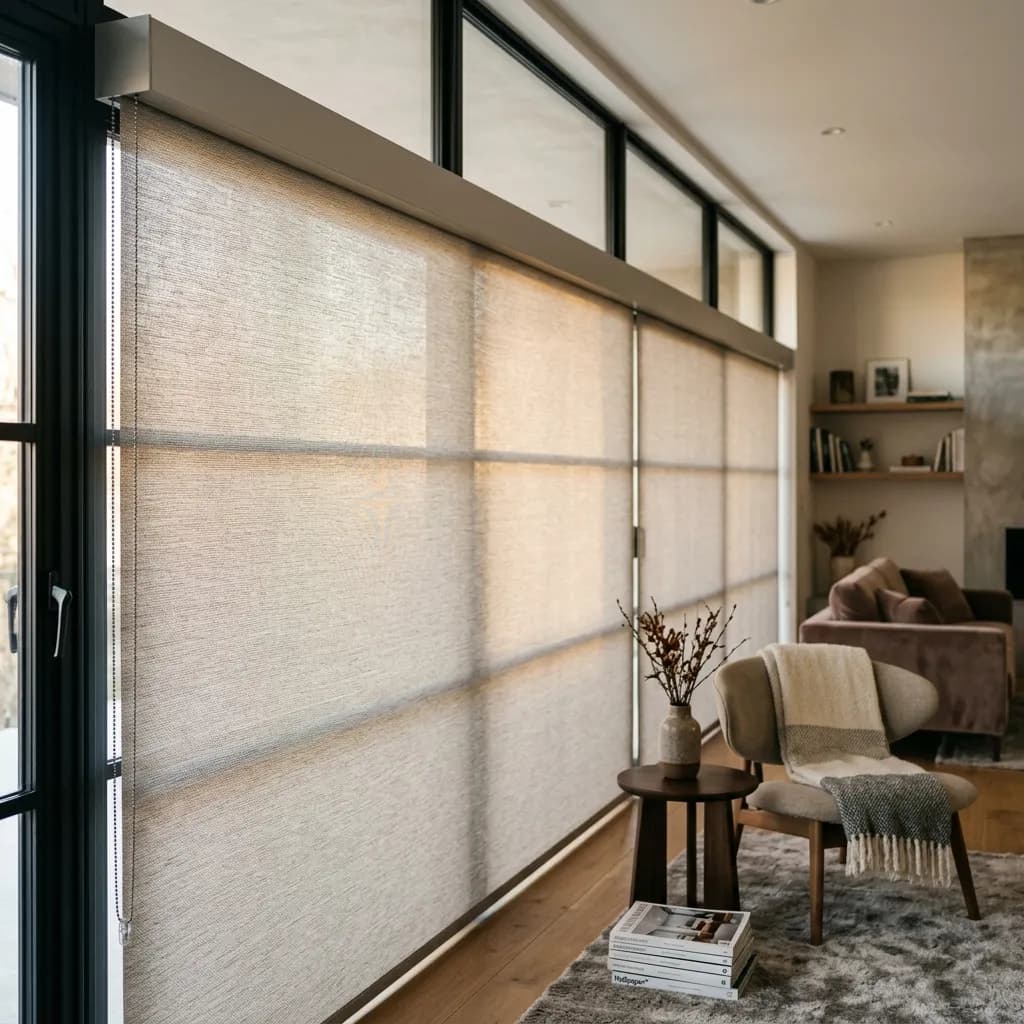
Housing is a mix of institutional quarters, hostels, flats and independent houses. Staff quarters and hostels need plain, durable window coverings in numbers; private houses are furnished like any family home.
The plateau is open and breezy, hot in summer and exposed to driving rain in the monsoon. There is no salt.