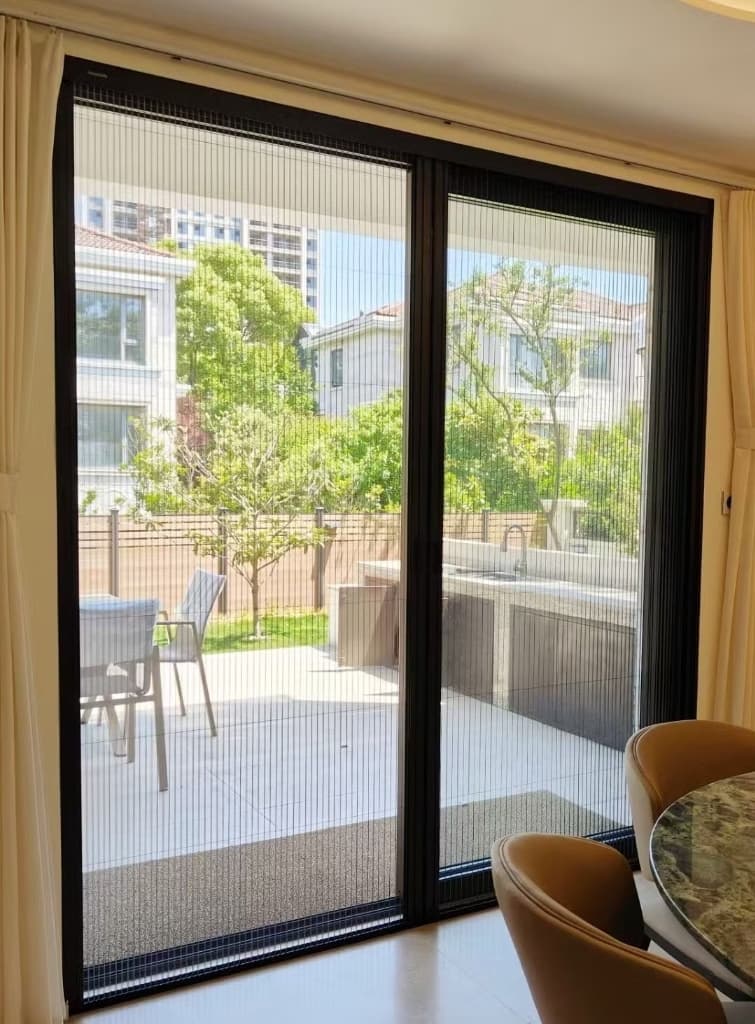
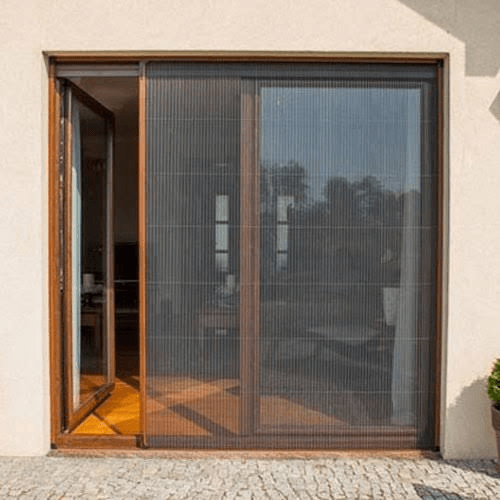
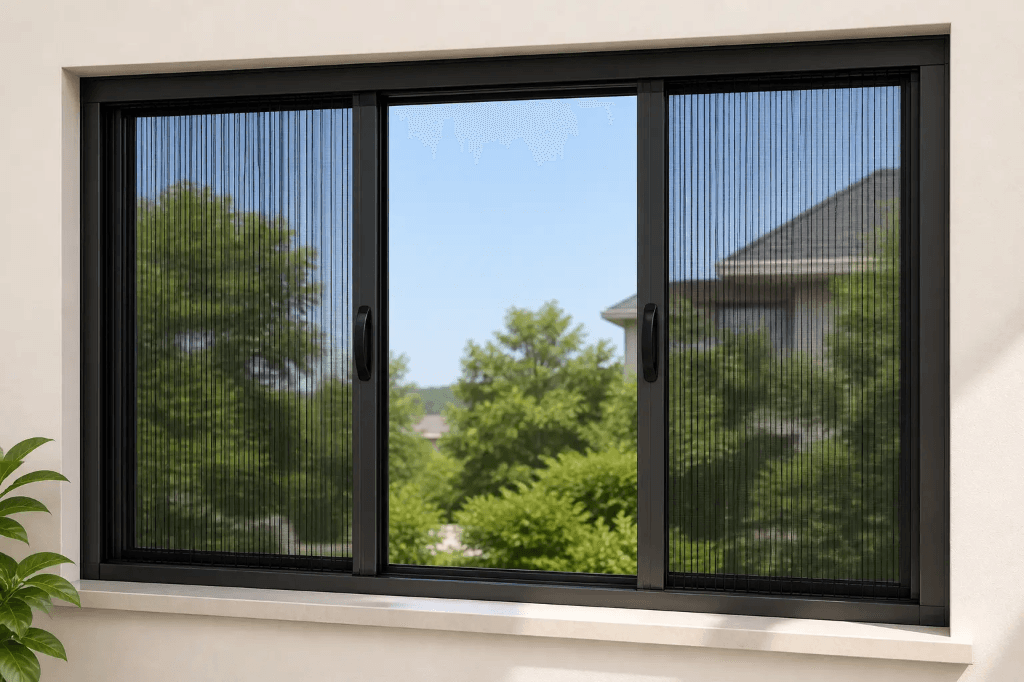
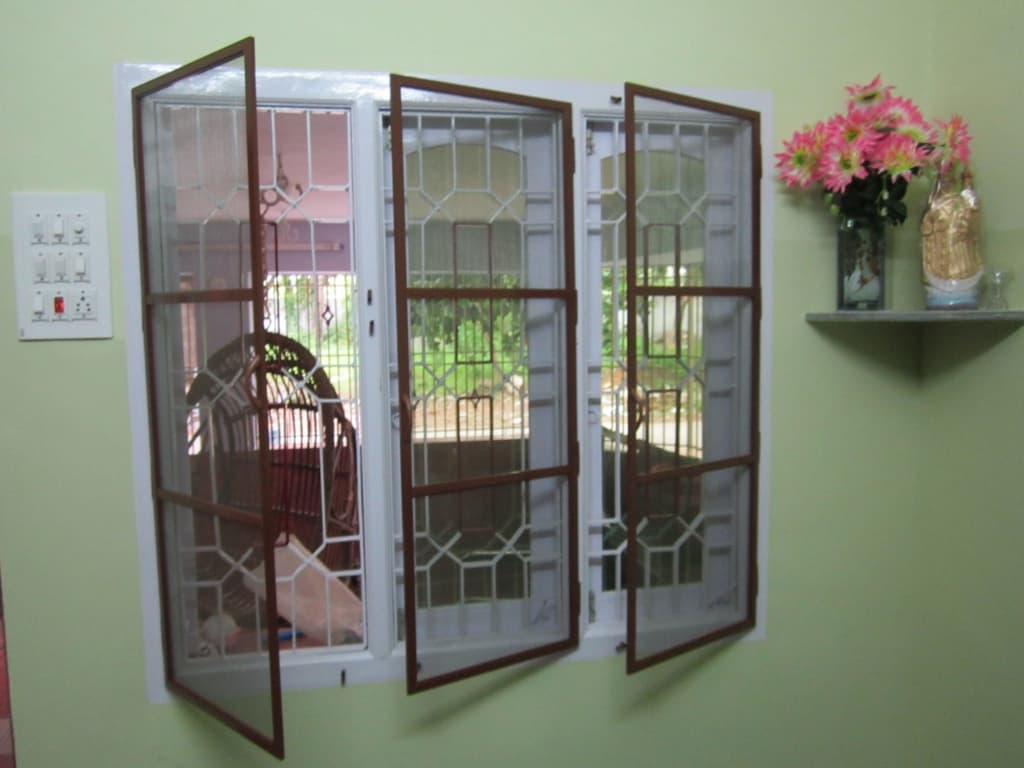
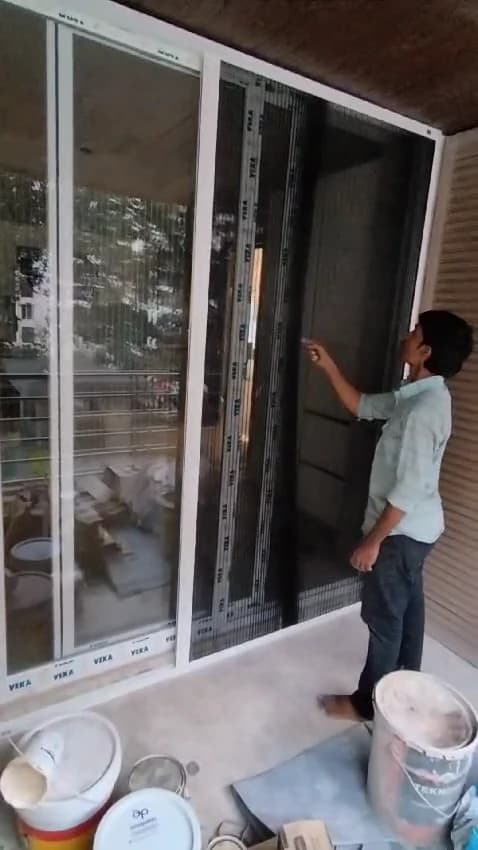
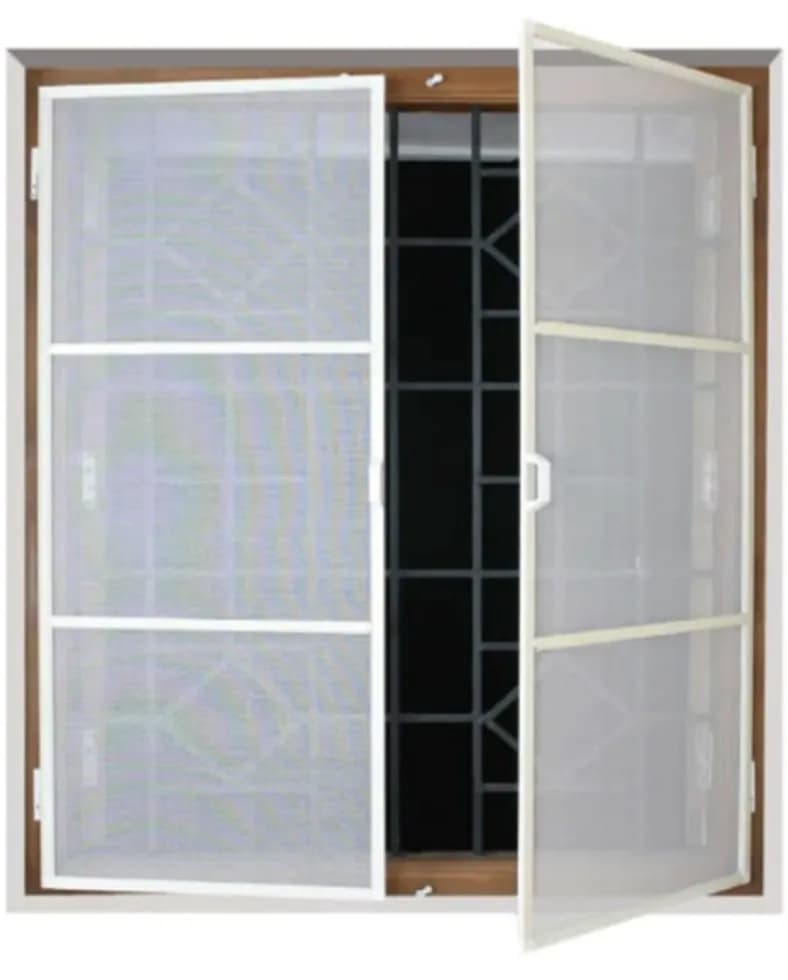
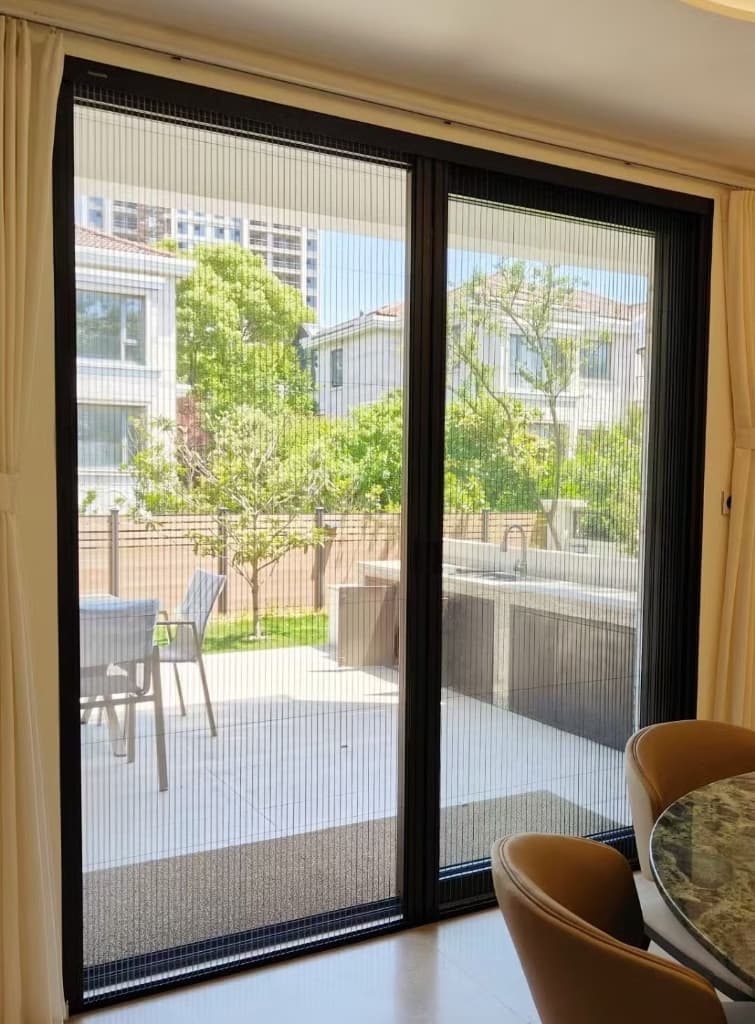
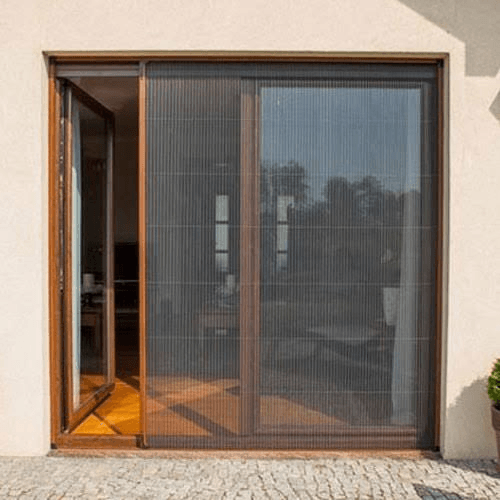
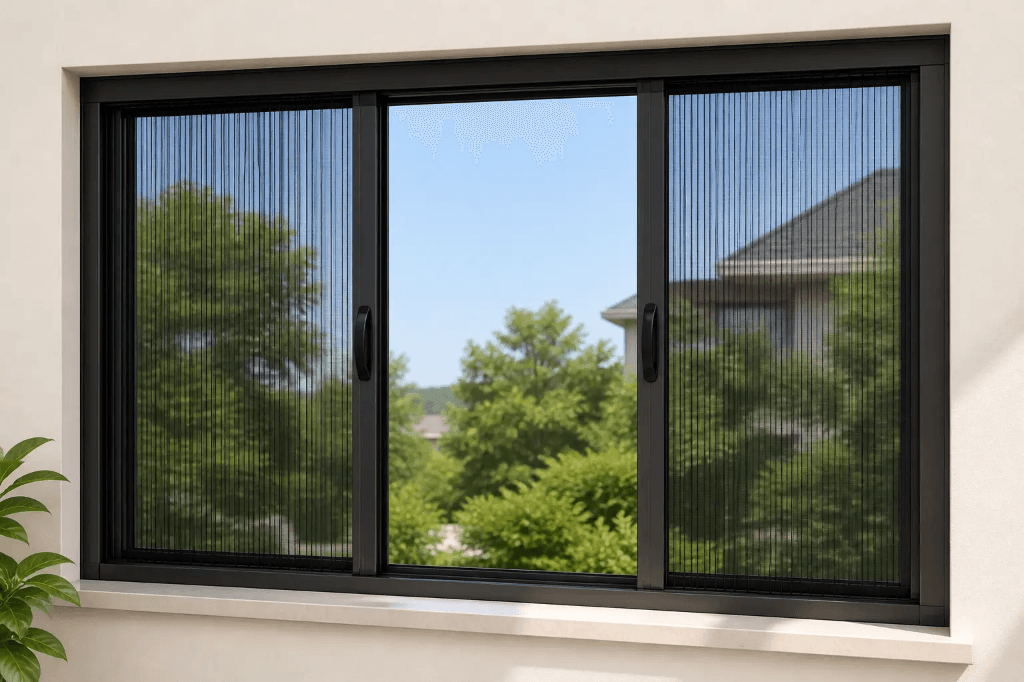
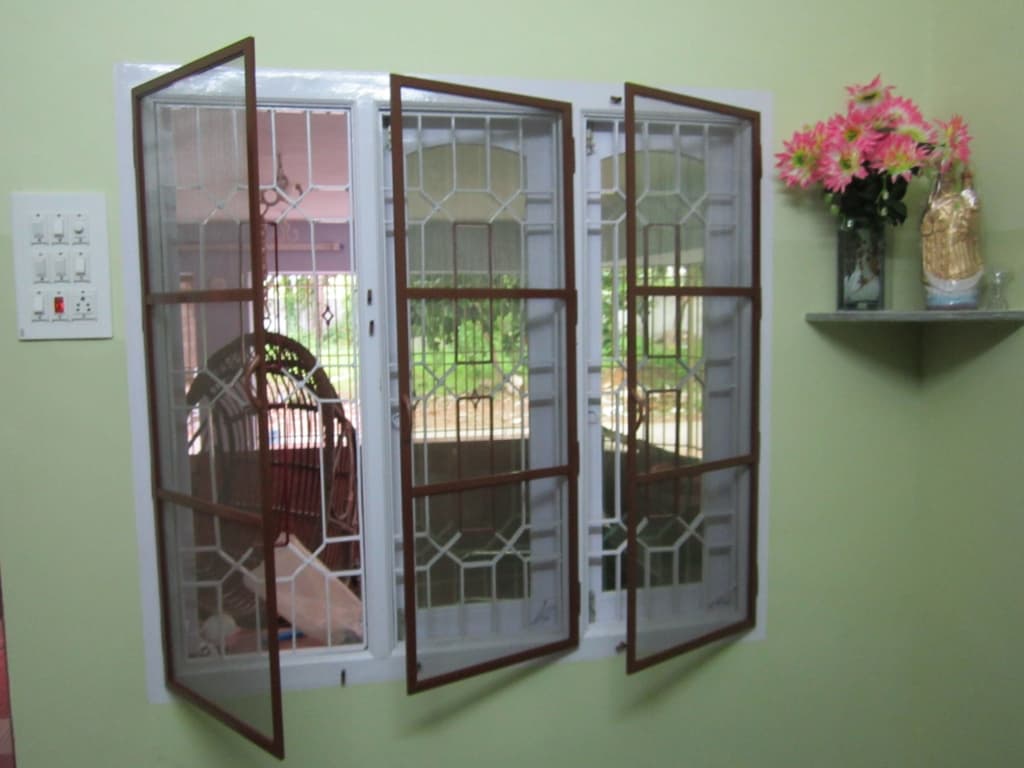
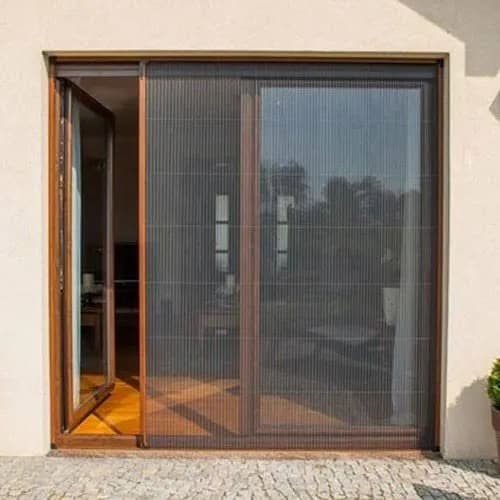
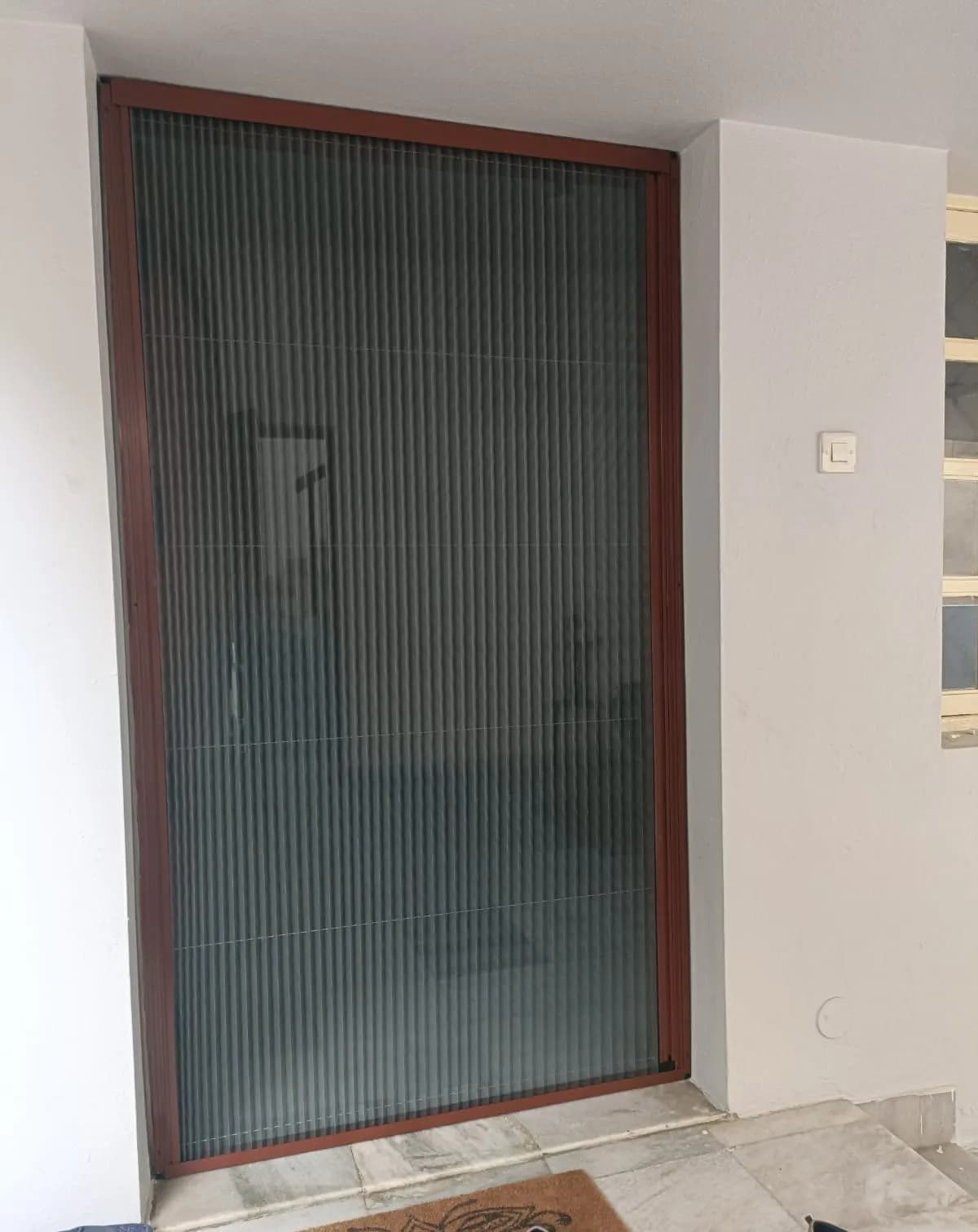
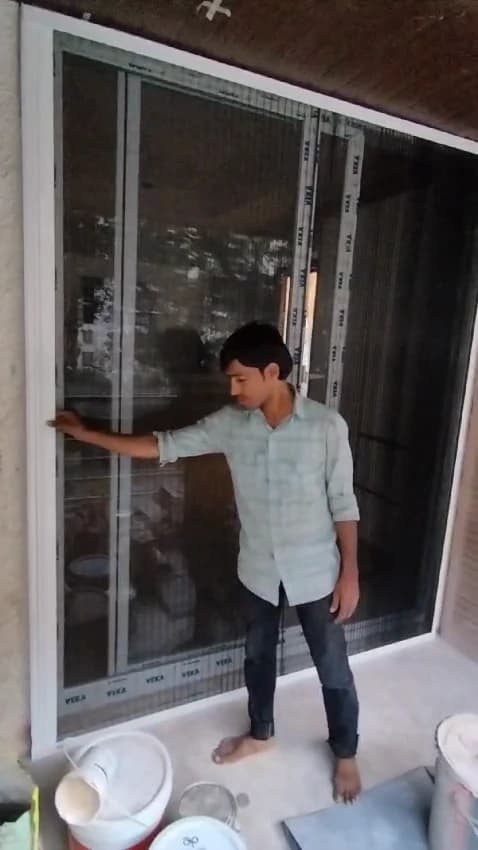
Leaving windows open is how homes in Farmagudi stay cool, and the same breeze that makes this possible is hard on a flimsy net. A wide pleated screen bellies and jumps its track when the wind gets behind it, so on the exposed faces of a building a sliding net in a rigid aluminium frame is the better choice, with a deeper bottom channel. Keep pleated nets for doors out of the wind and for balconies set into the building. After the first rains, insects of every size head for a lit window, and hostels and quarters lit all evening notice it most. Fibreglass mesh is enough; there is no salt on the plateau to justify stainless.
- Hostel and quarters windows: sliding nets in a plain aluminium frame, sturdy enough for daily use and easy to lift out and wash.
- Balcony doors on the windward side: sliding panels in a stout frame section, because the wind pushes a pleated net inwards.
- Sheltered main doors of independent houses: a pleated net that folds flat to one side while people are coming and going.
Farmagudi is the plateau just outside Ponda on the Panjim road. It is an education centre, home to the Goa College of Engineering and other institutes, with a hilltop park, a temple and a small fort memorial, and housing for staff and families around the campuses.
Housing is a mix of institutional quarters, hostels, flats and independent houses. Staff quarters and hostels need plain, durable window coverings in numbers; private houses are furnished like any family home.
The plateau is open and breezy, hot in summer and exposed to driving rain in the monsoon. There is no salt.