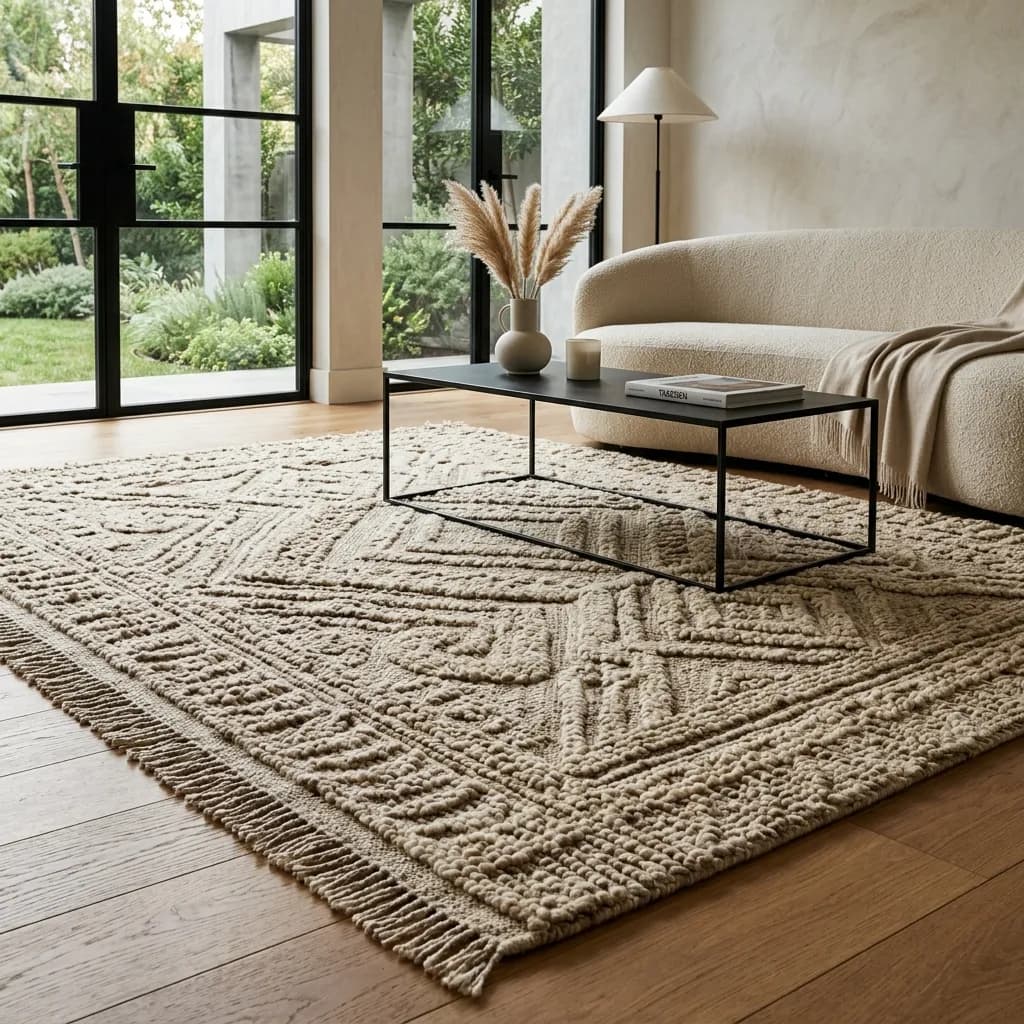
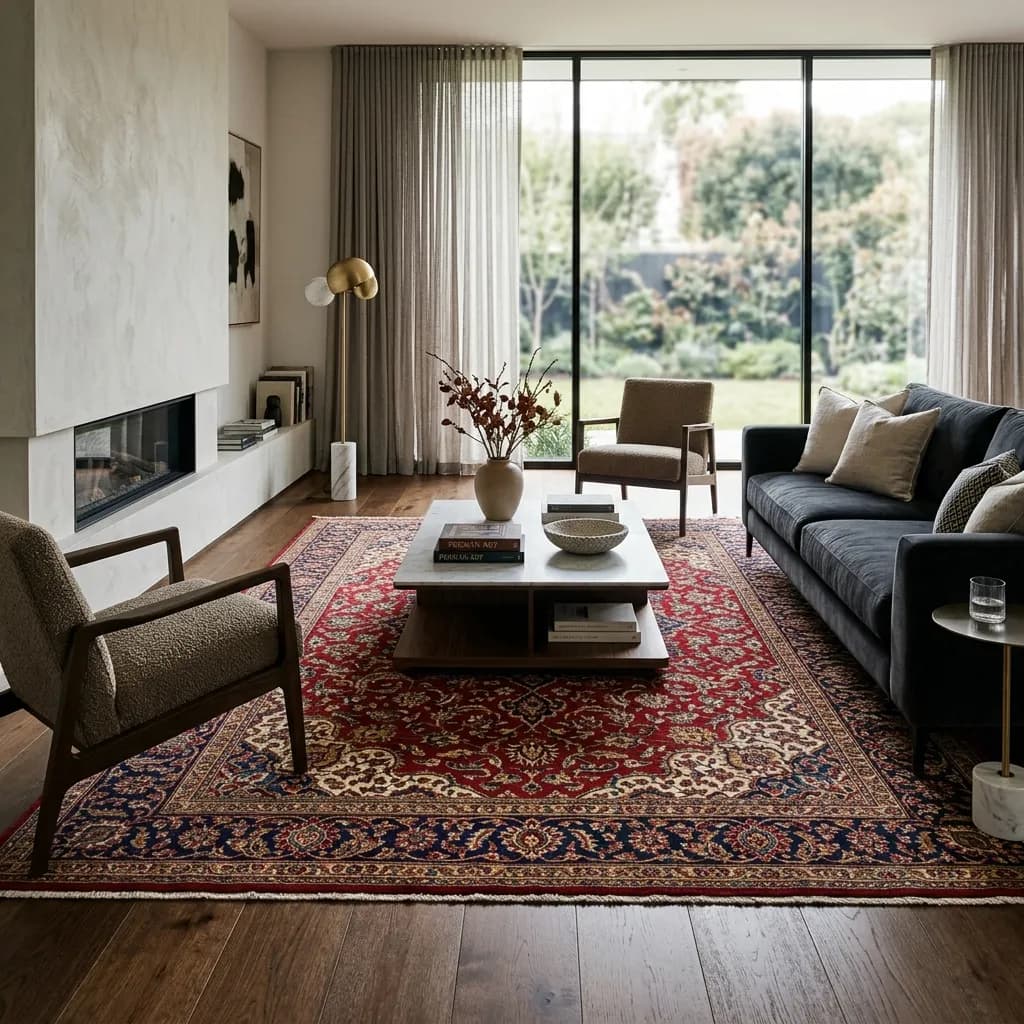
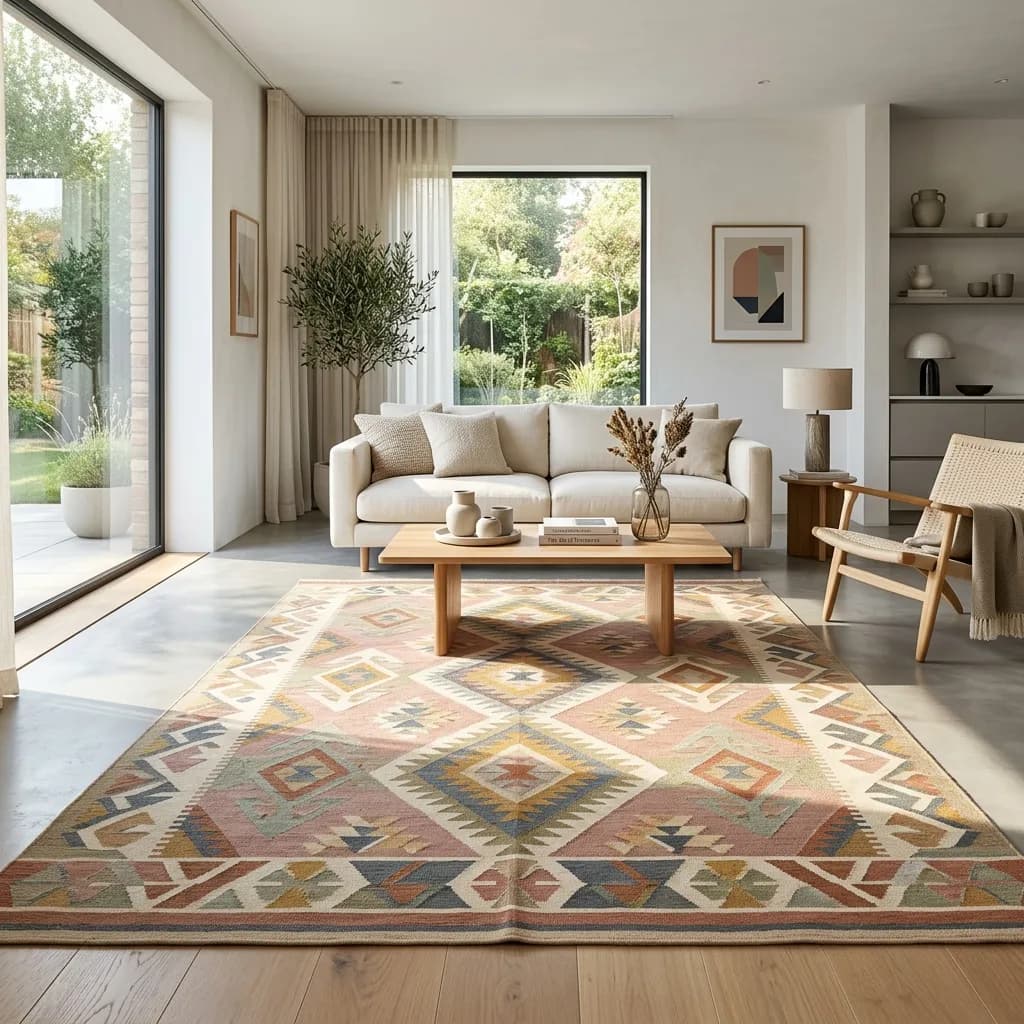
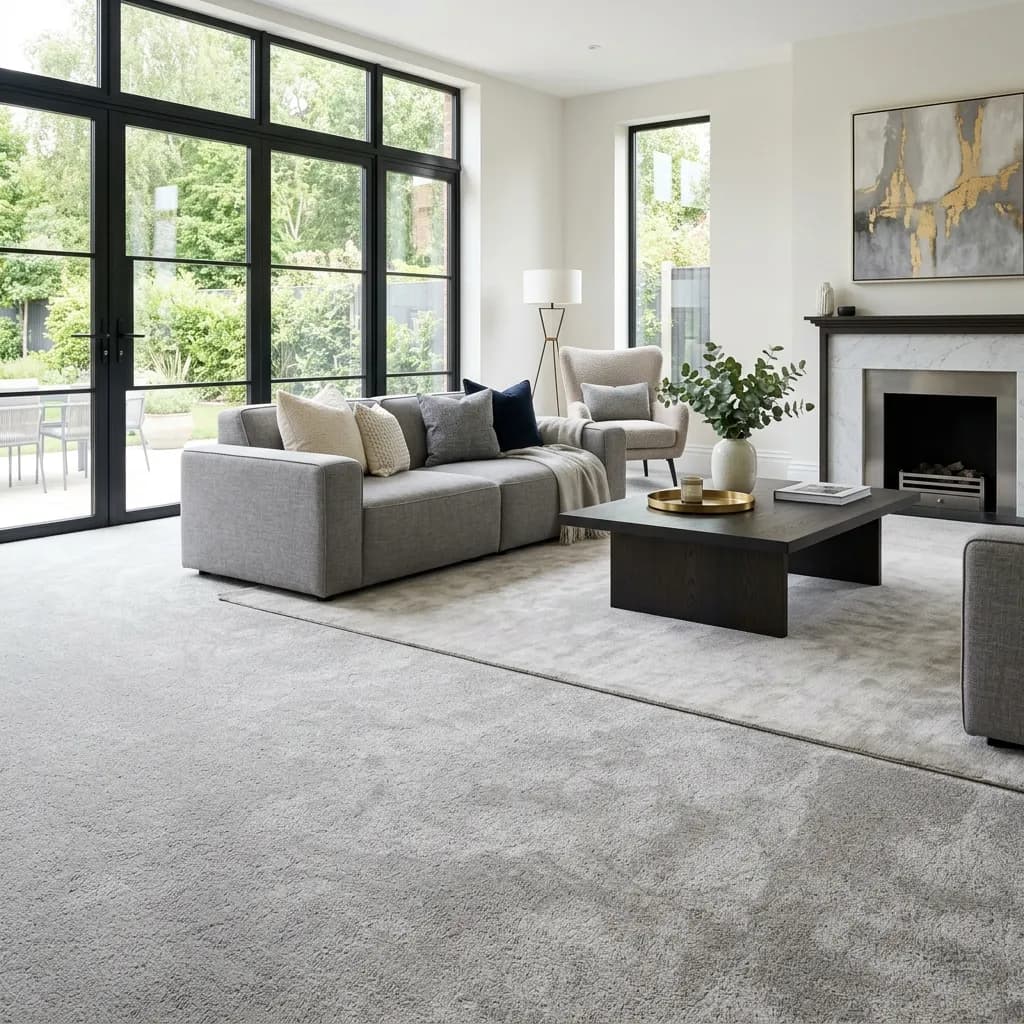
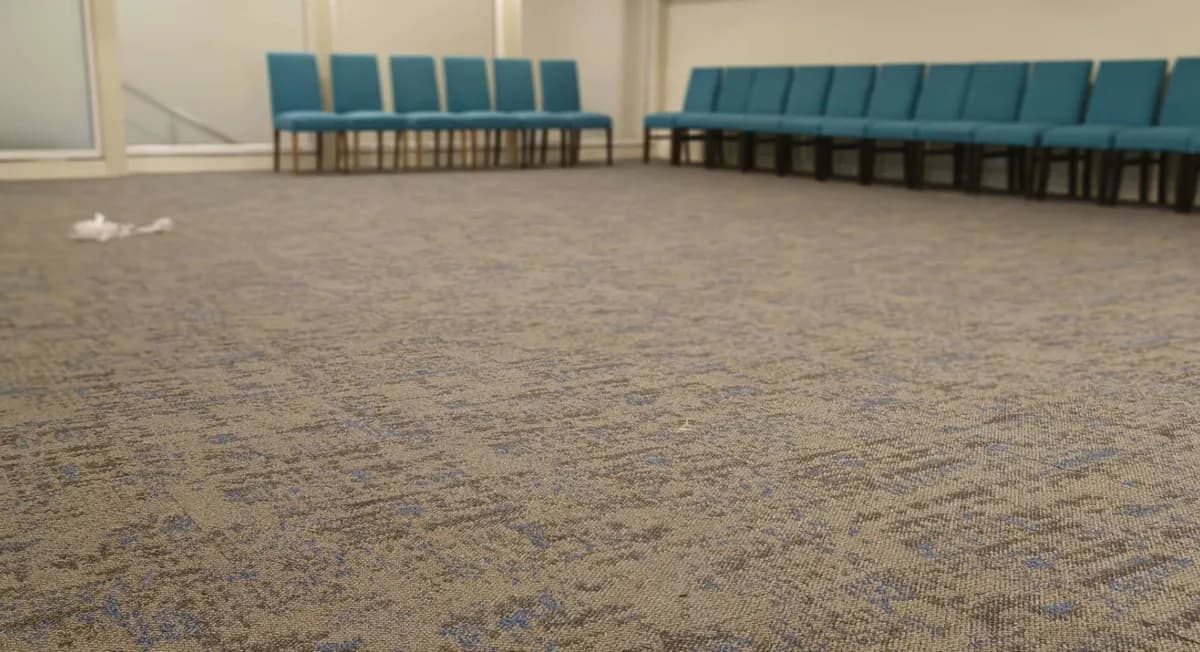
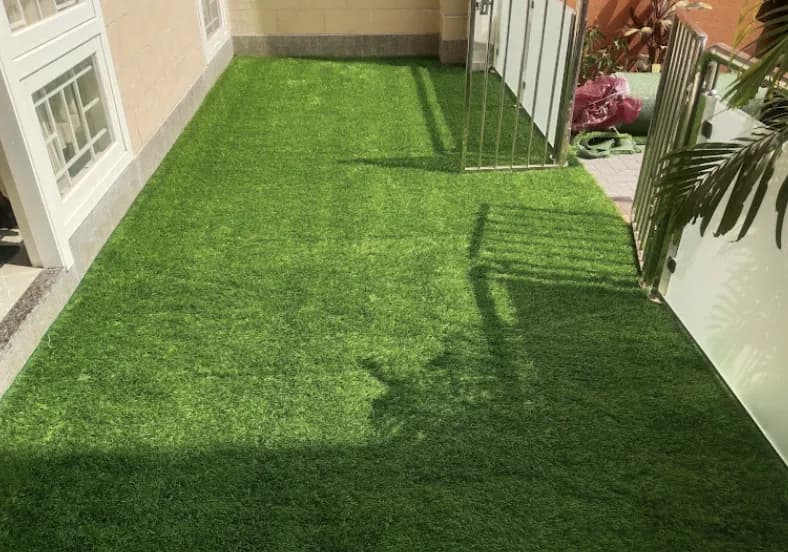
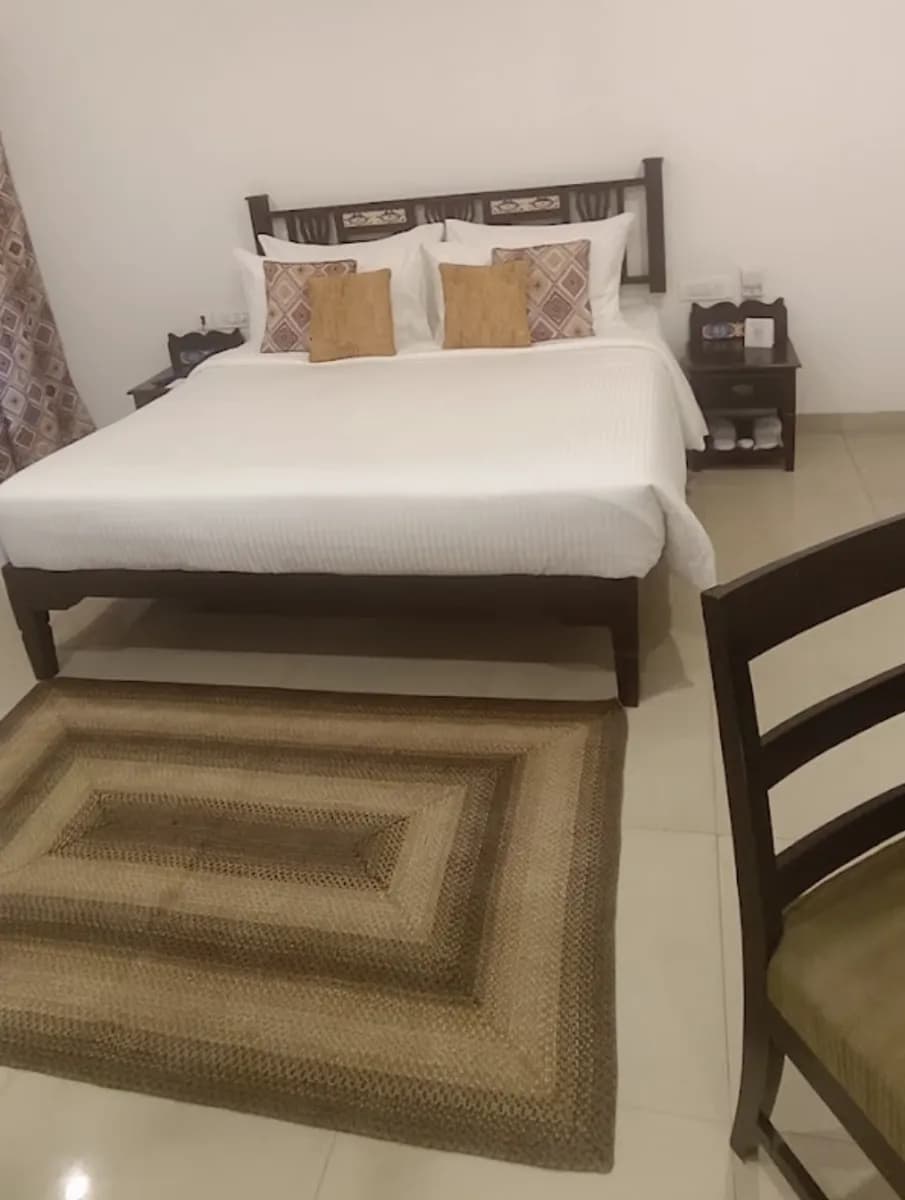
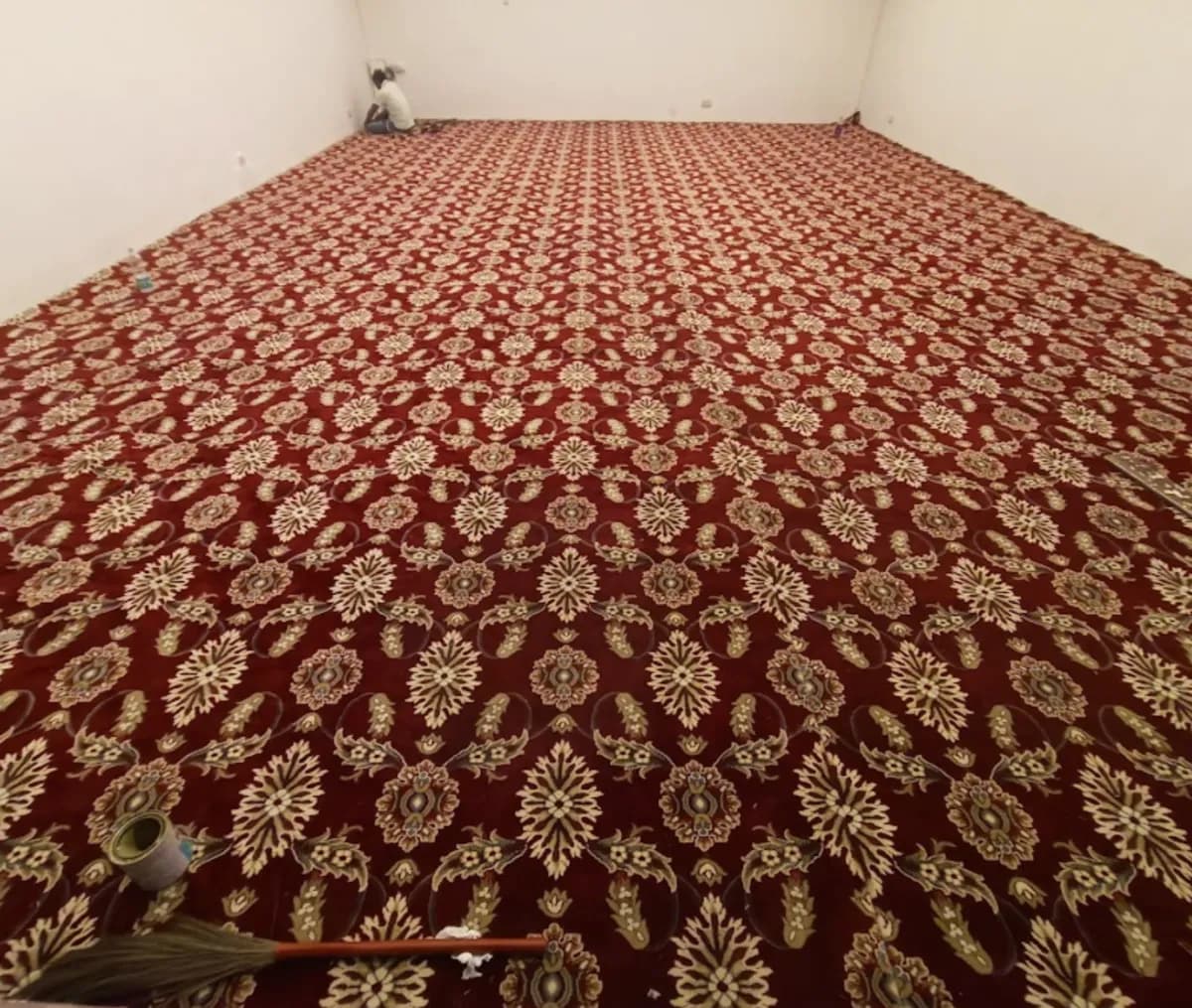
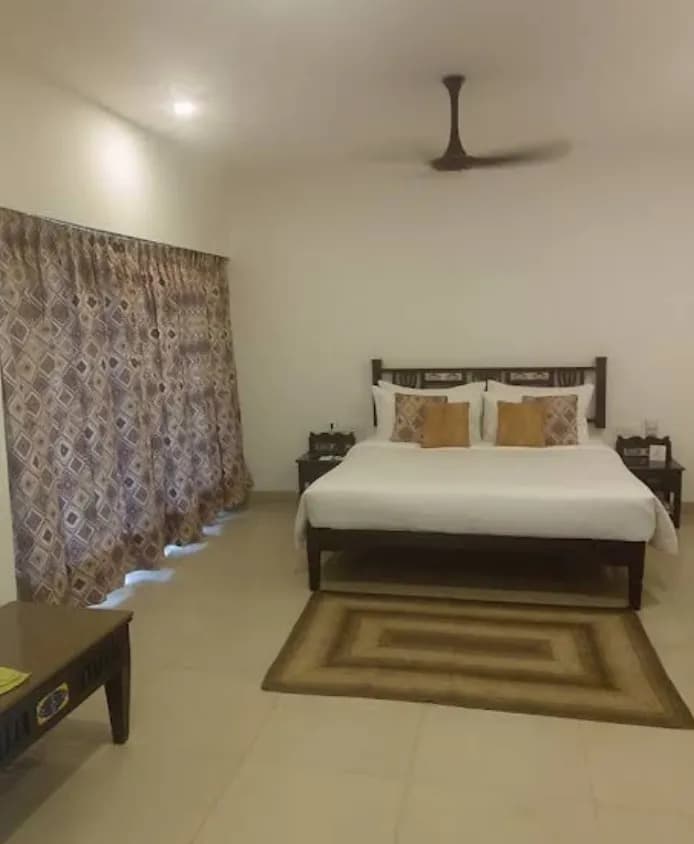
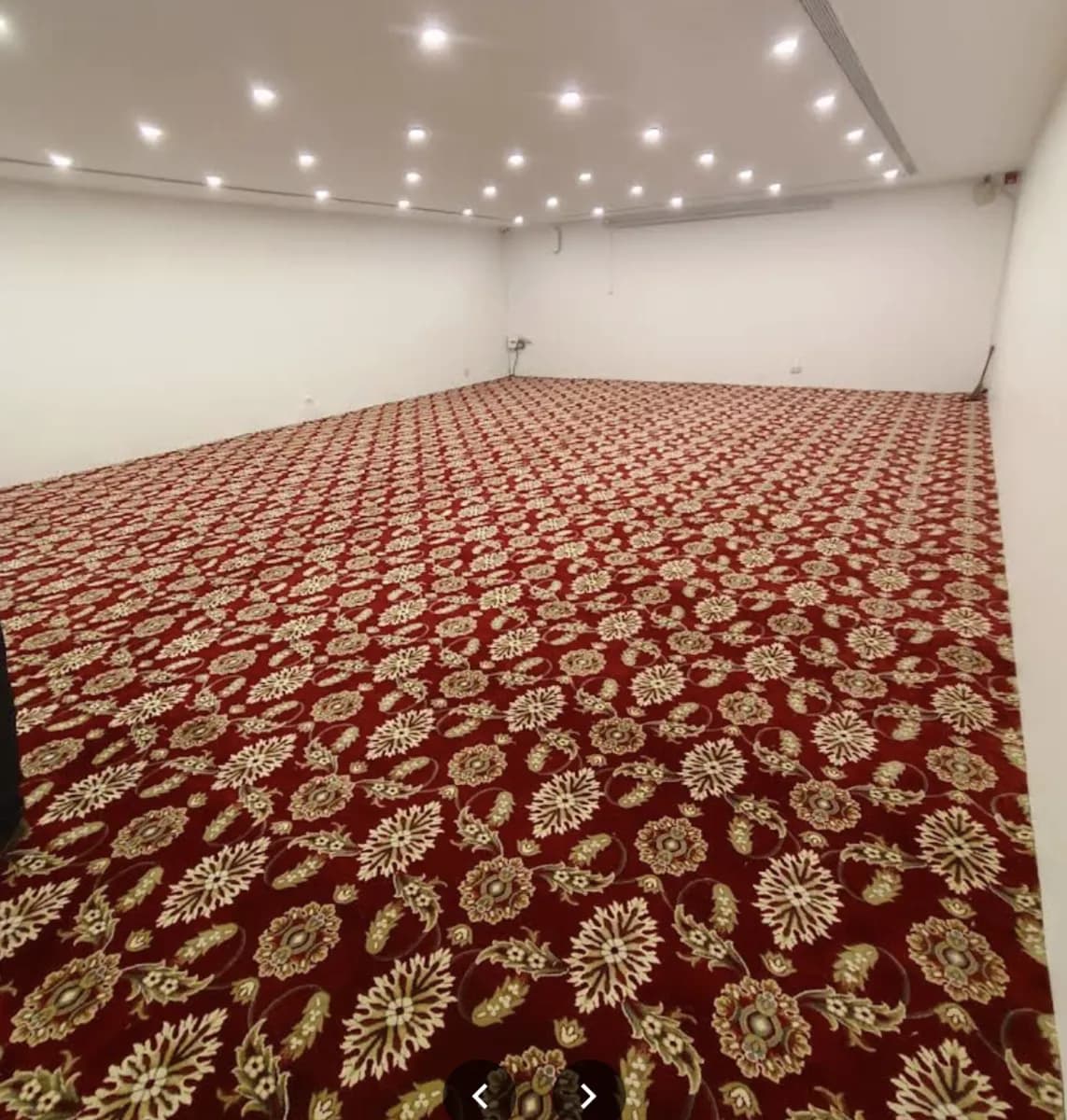
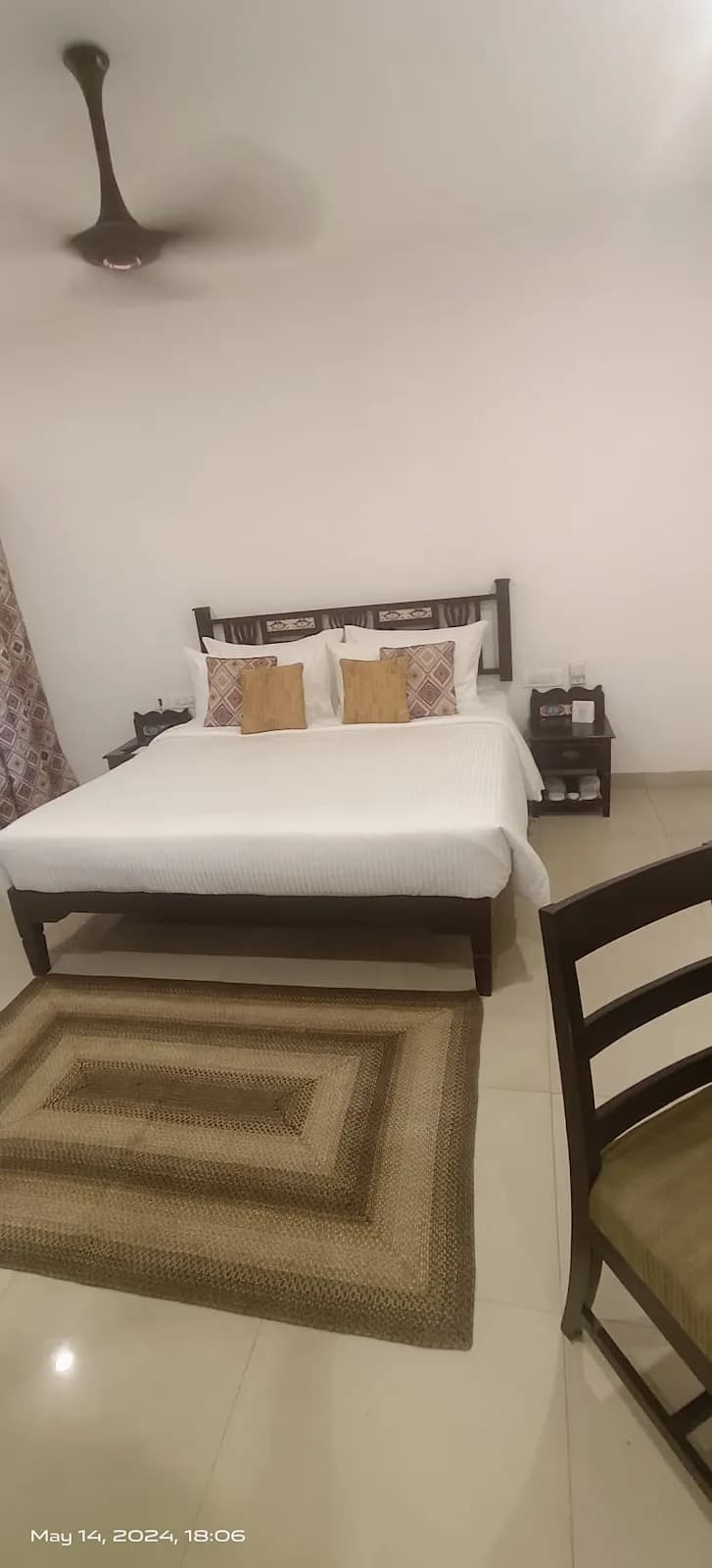
A rug in a Curti flat does two useful things besides looking good. Under the seating it deadens footsteps and dragged chairs for the family downstairs, and it traps the dust that blows in from the highway before it spreads across the tiles. Because the air is dry, natural fibres are safe: wool, cotton dhurries and jute all behave well this far inland. Choose a size that one person can carry to the balcony and shake out, since dust is the everyday enemy. Leave a margin of floor visible on every side so the room does not look smaller. Wall-to-wall carpet makes sense only in an air-conditioned bedroom or study.
- Living rooms: a wool or jute rug sized so the front feet of the sofa and both chairs rest on it.
- Children's rooms: a low-pile cotton or synthetic rug that survives play and can be taken out to the balcony and beaten.
- Air-conditioned home offices: wall-to-wall carpet in a short, dense pile, which quietens the room for calls and takes a rolling chair.
Curti adjoins Ponda on the highway towards Old Goa and Panjim. Once a separate village, it is now the fastest-growing residential part of the Ponda area, with apartment complexes, housing societies and shops along the bypass.
Most Curti homes are flats bought by young families in the last fifteen years or so. They have modern aluminium sliding windows and a balcony, and are furnished step by step as budgets allow.
Curti is inland and warm. New buildings stand in the open with little shade, so upper-floor flats take strong sun, and the highway brings dust and noise.
Inland homes
A drier inland home can use wool, cotton dhurries and jute without trouble. Rugs gather the dust that comes in from the road, so choose sizes that can be taken out and beaten or vacuumed easily.
Apartments and town flats
In a flat, a rug under the seating softens noise for the neighbours below. Leave a border of floor showing around it. Carpet tiles suit a home office because one stained tile can be changed.