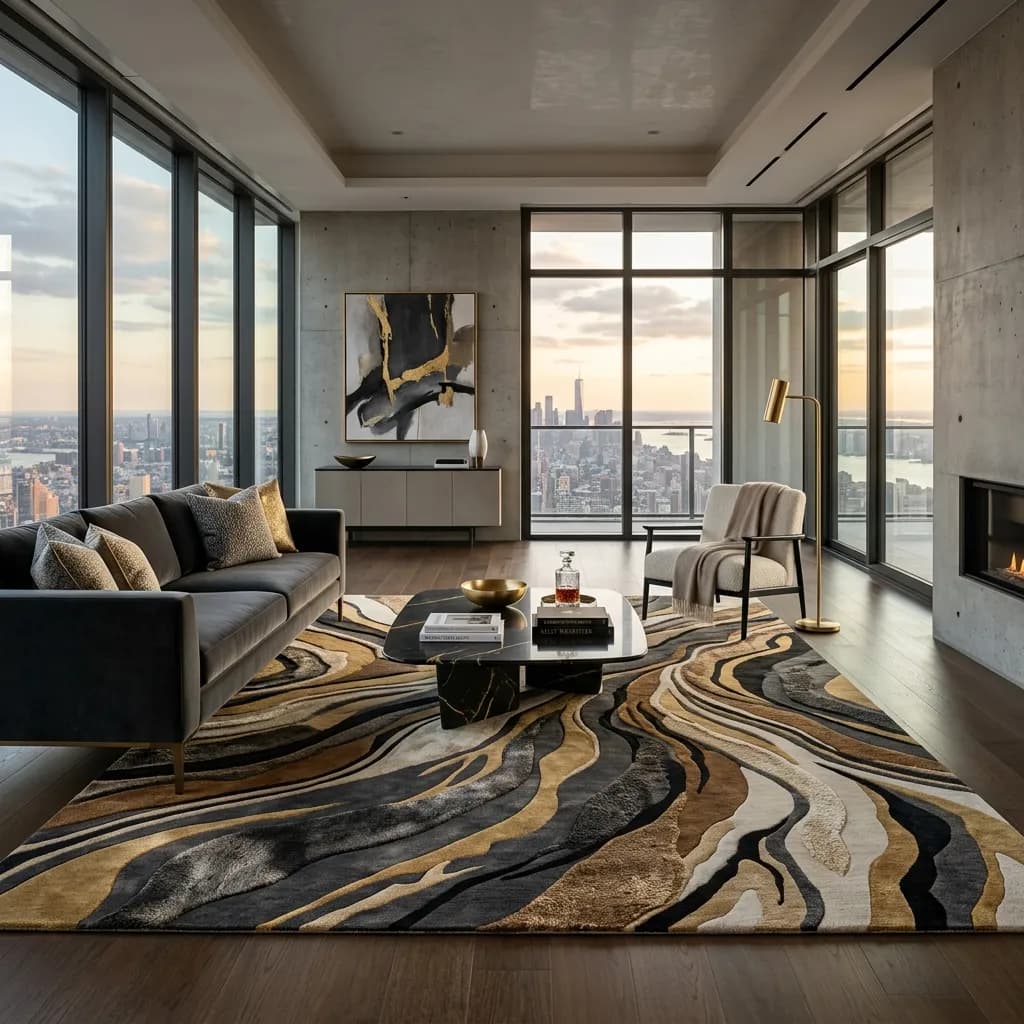
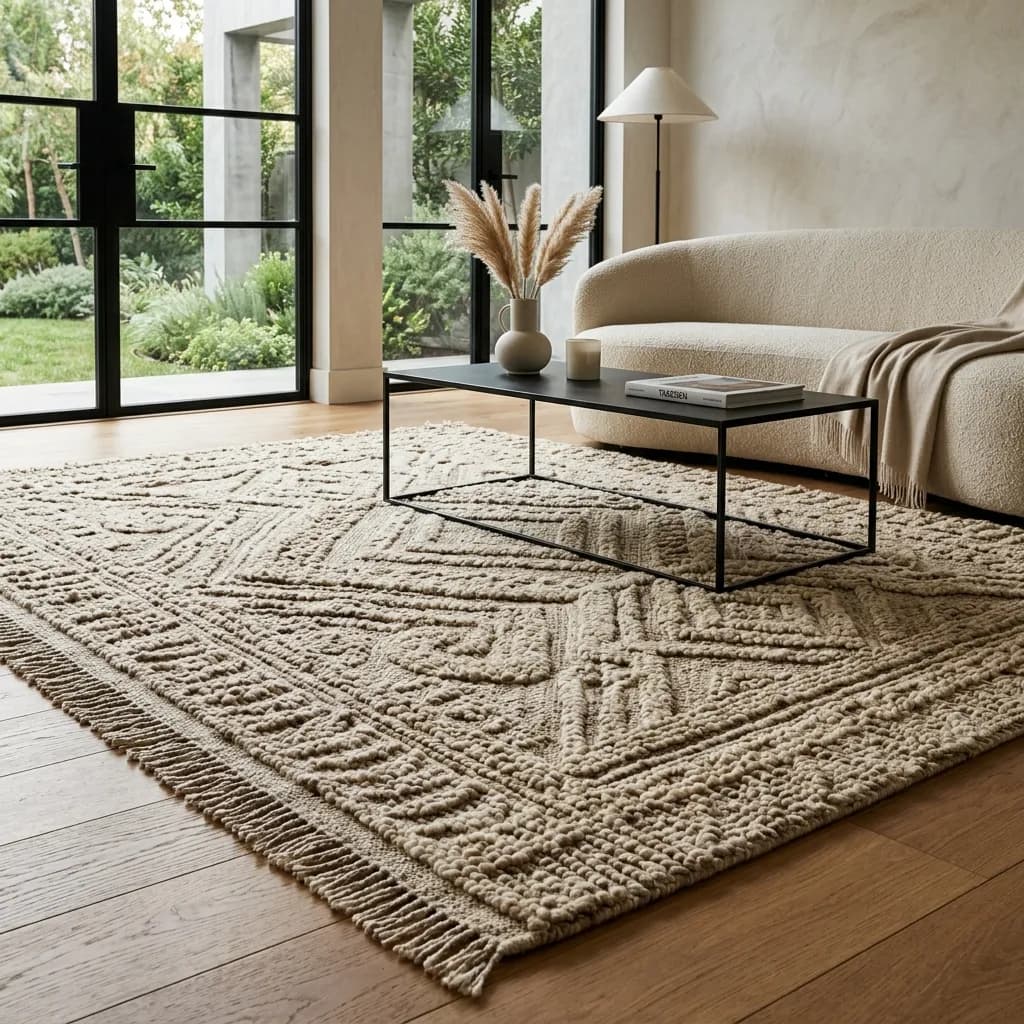
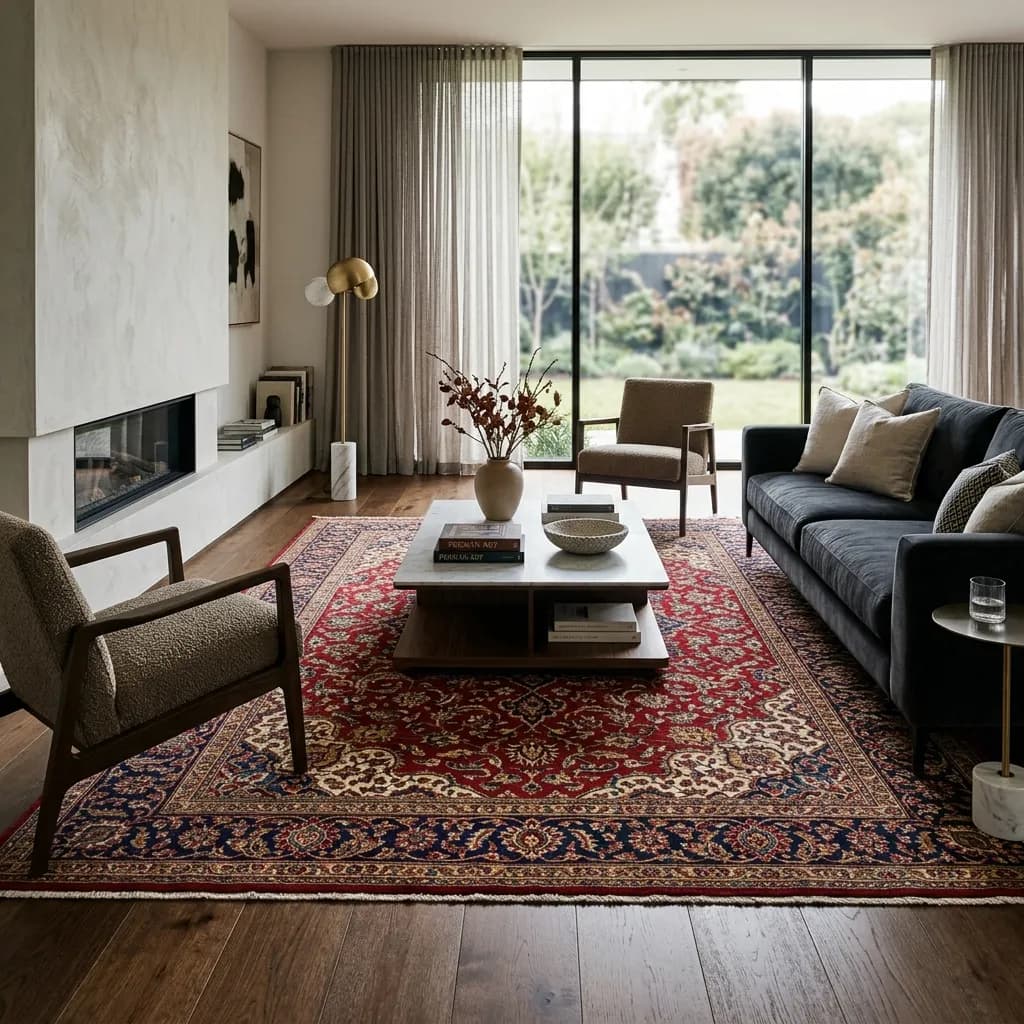
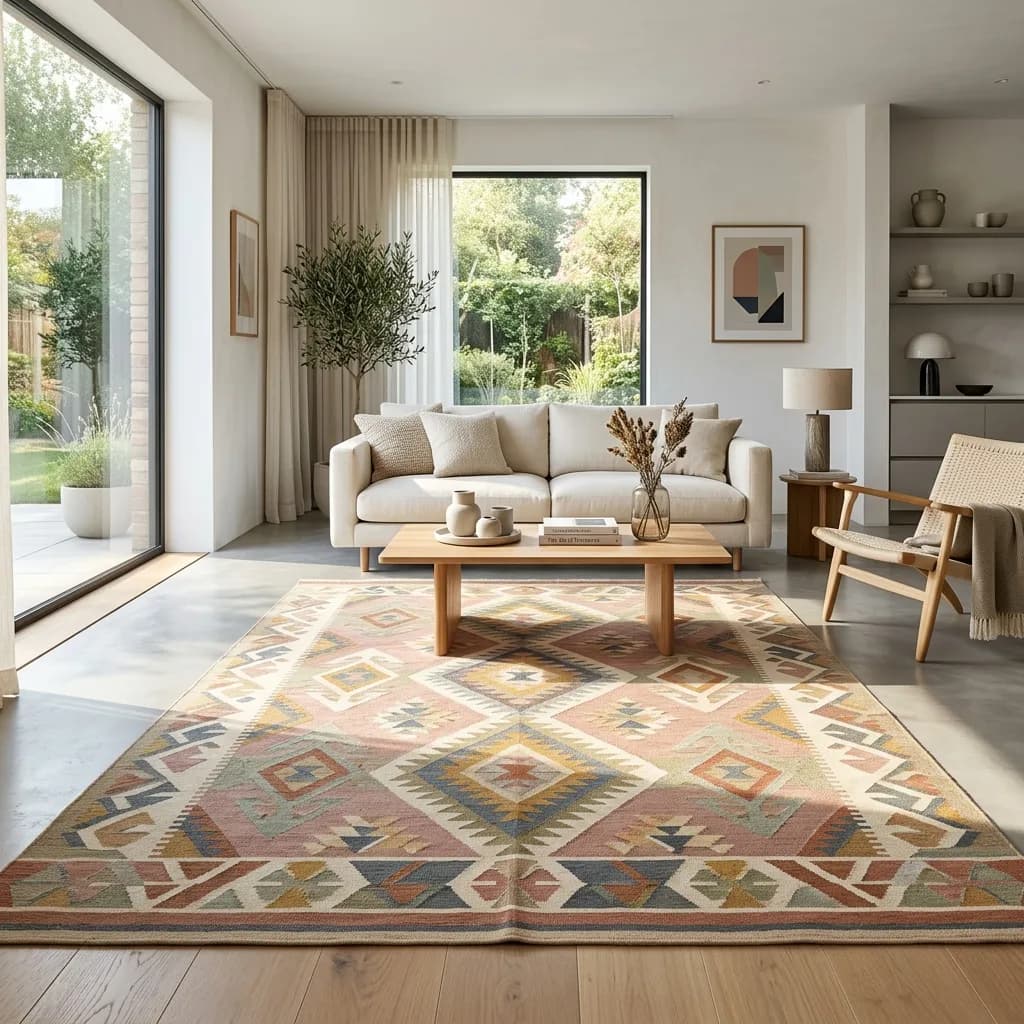
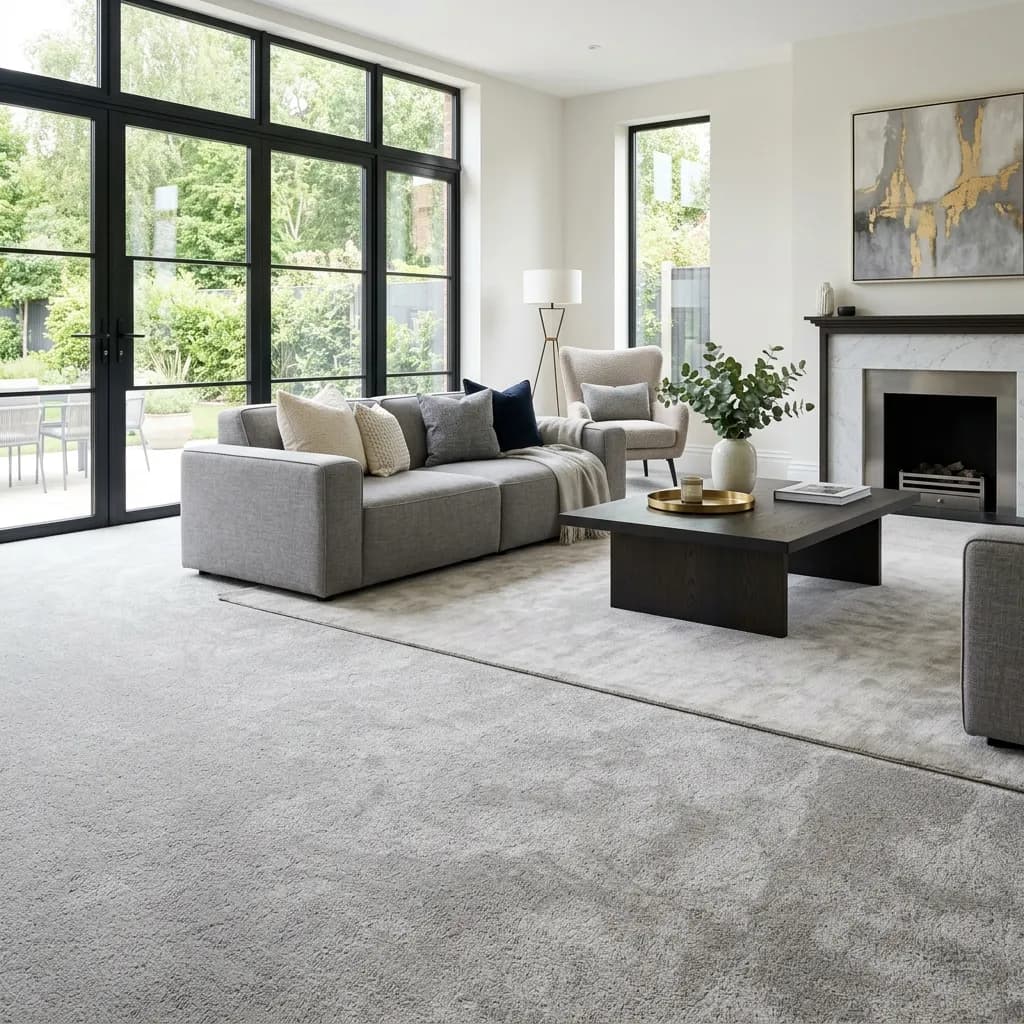
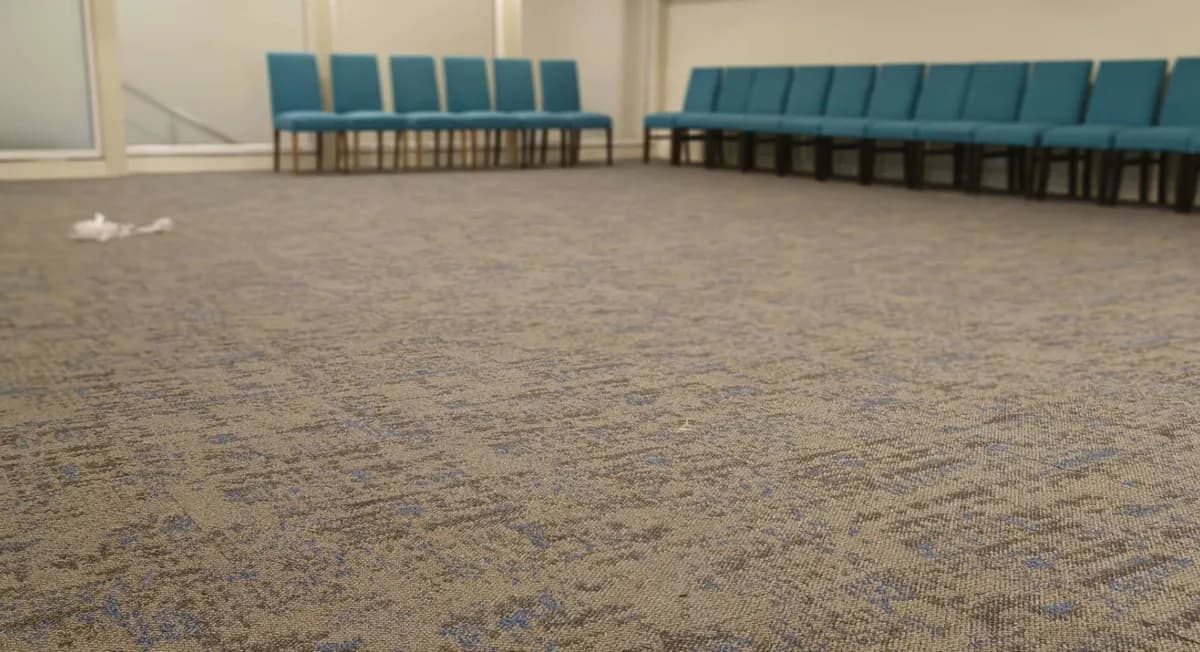
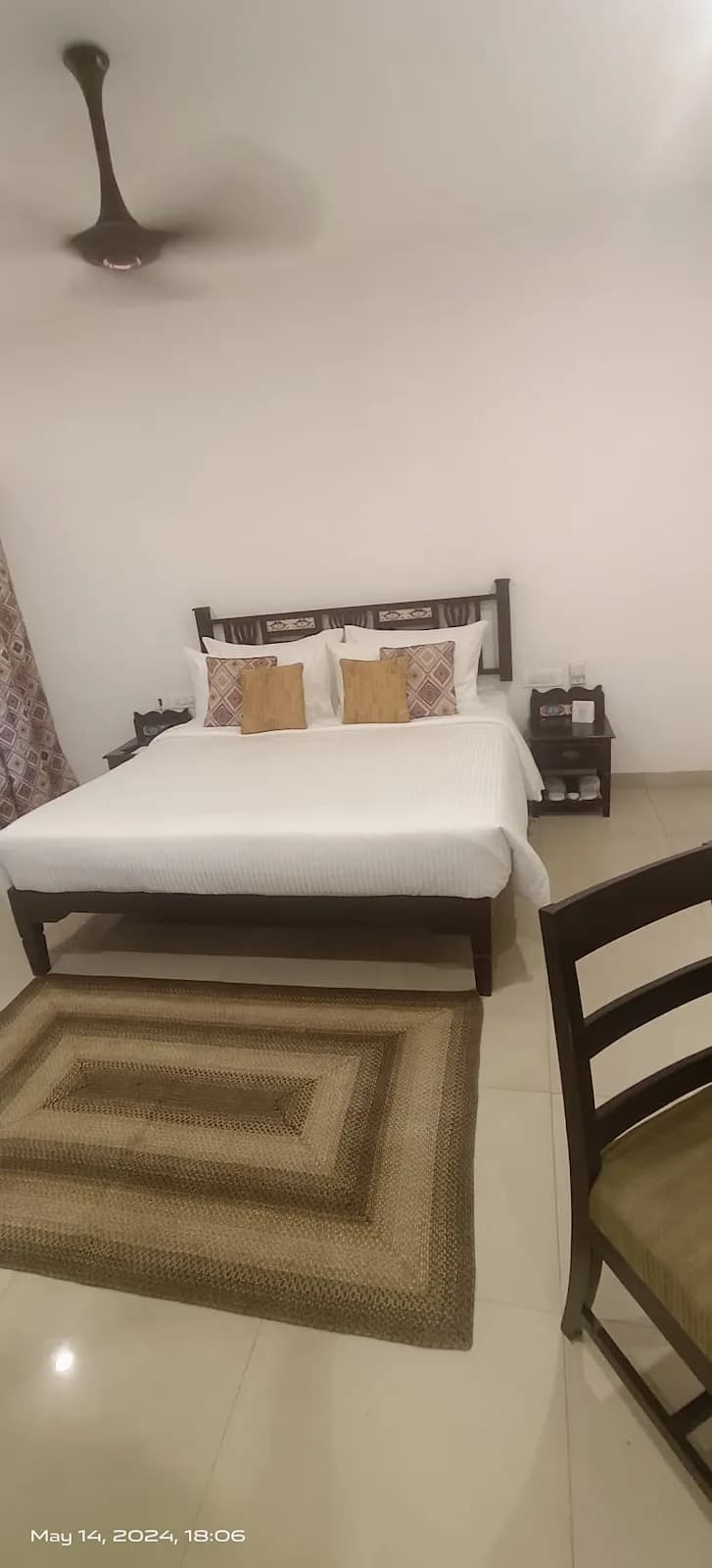
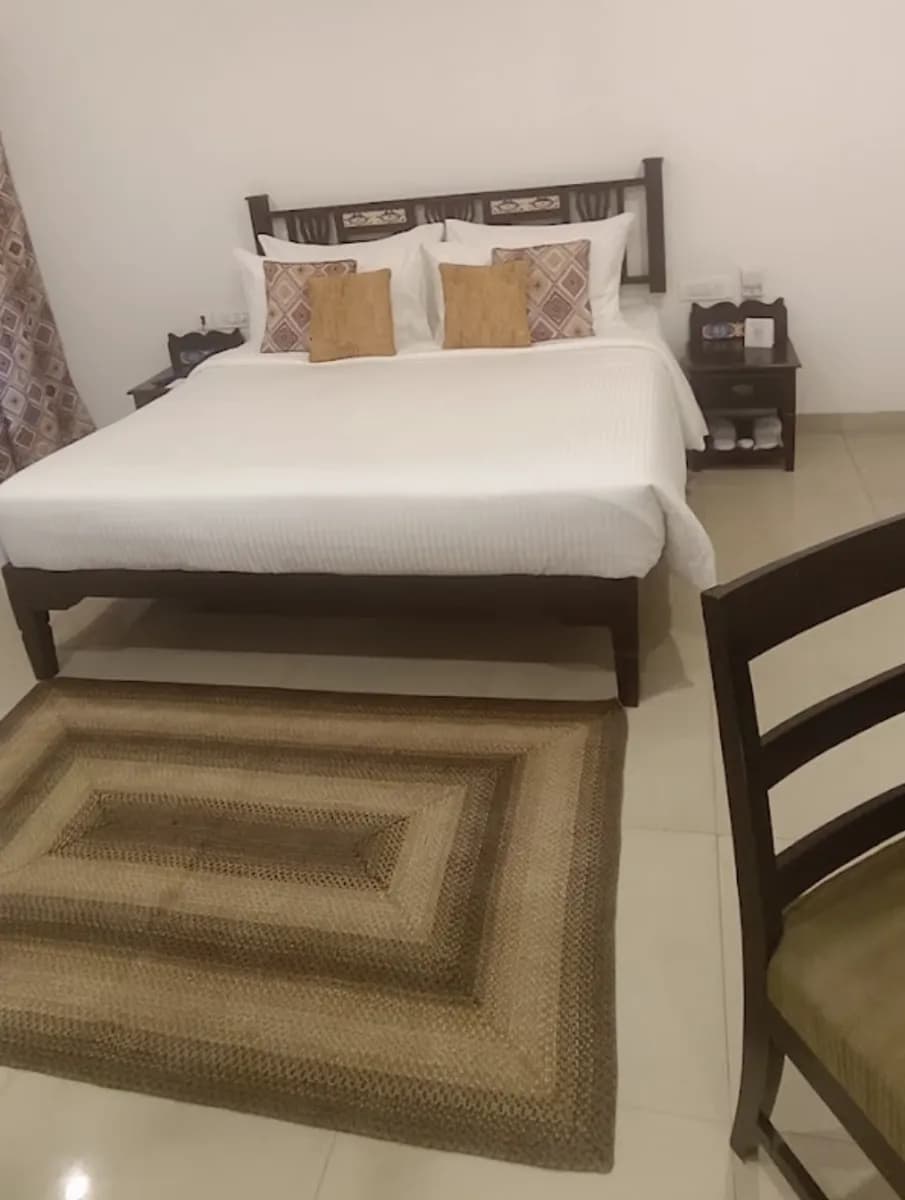
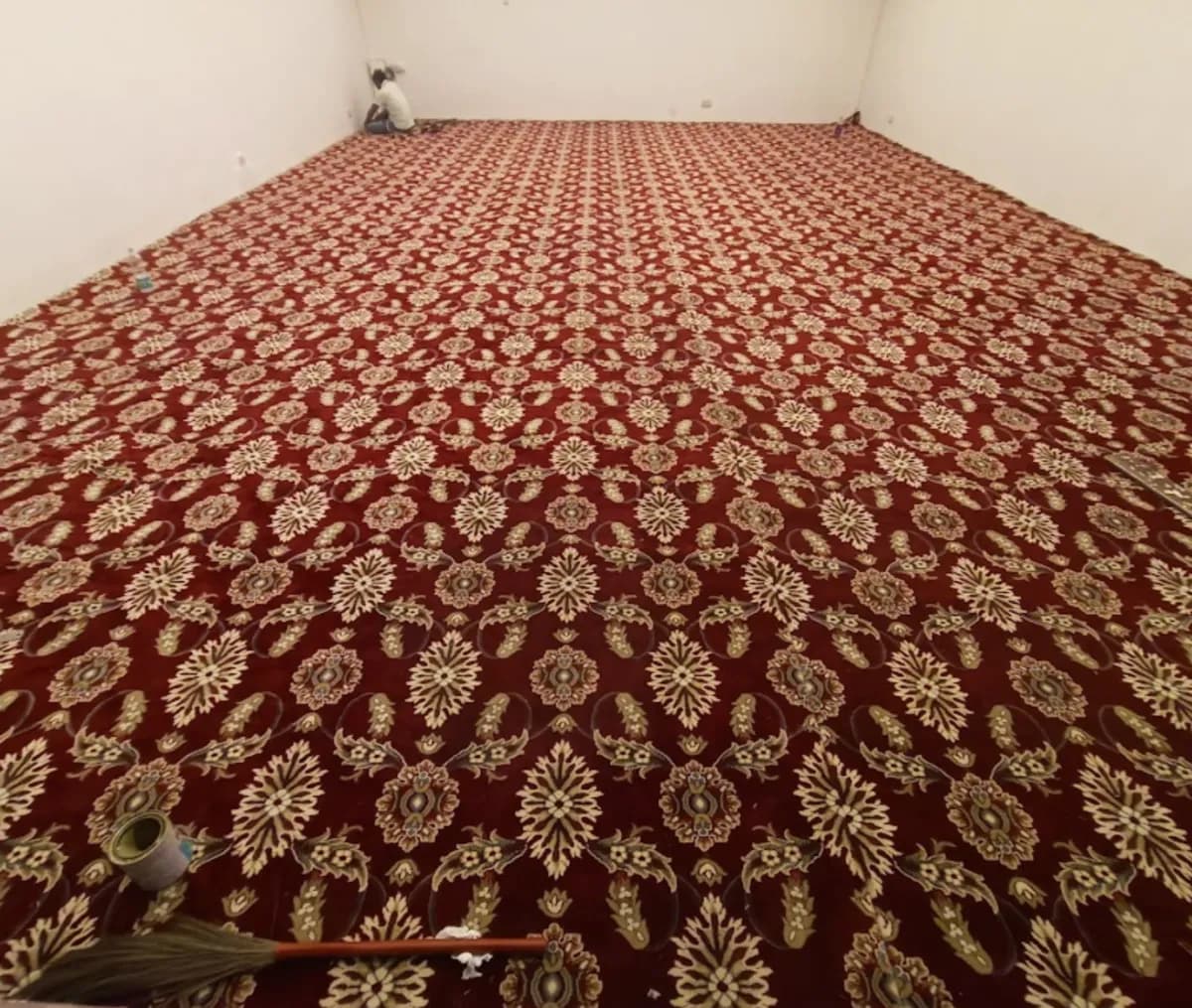
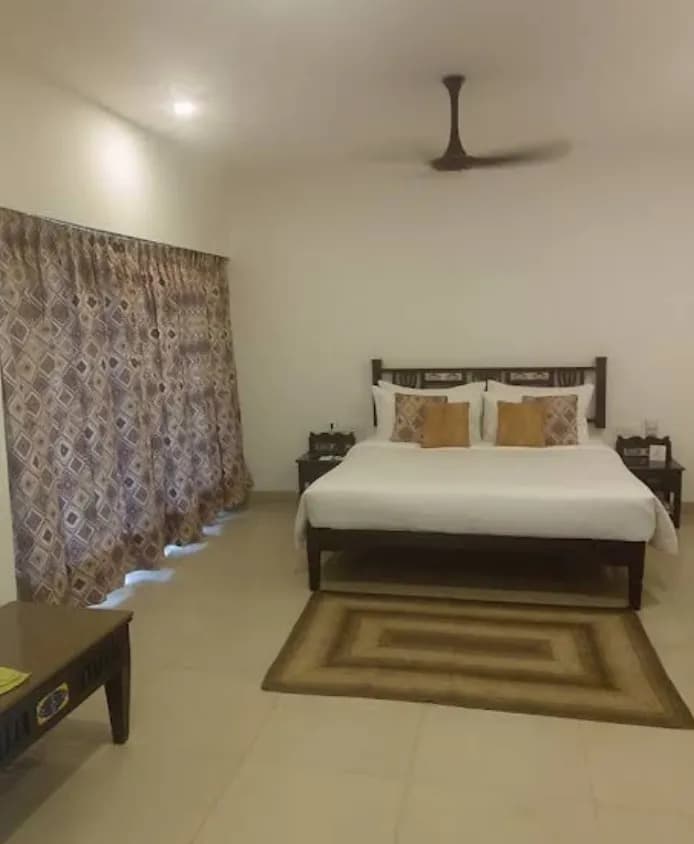
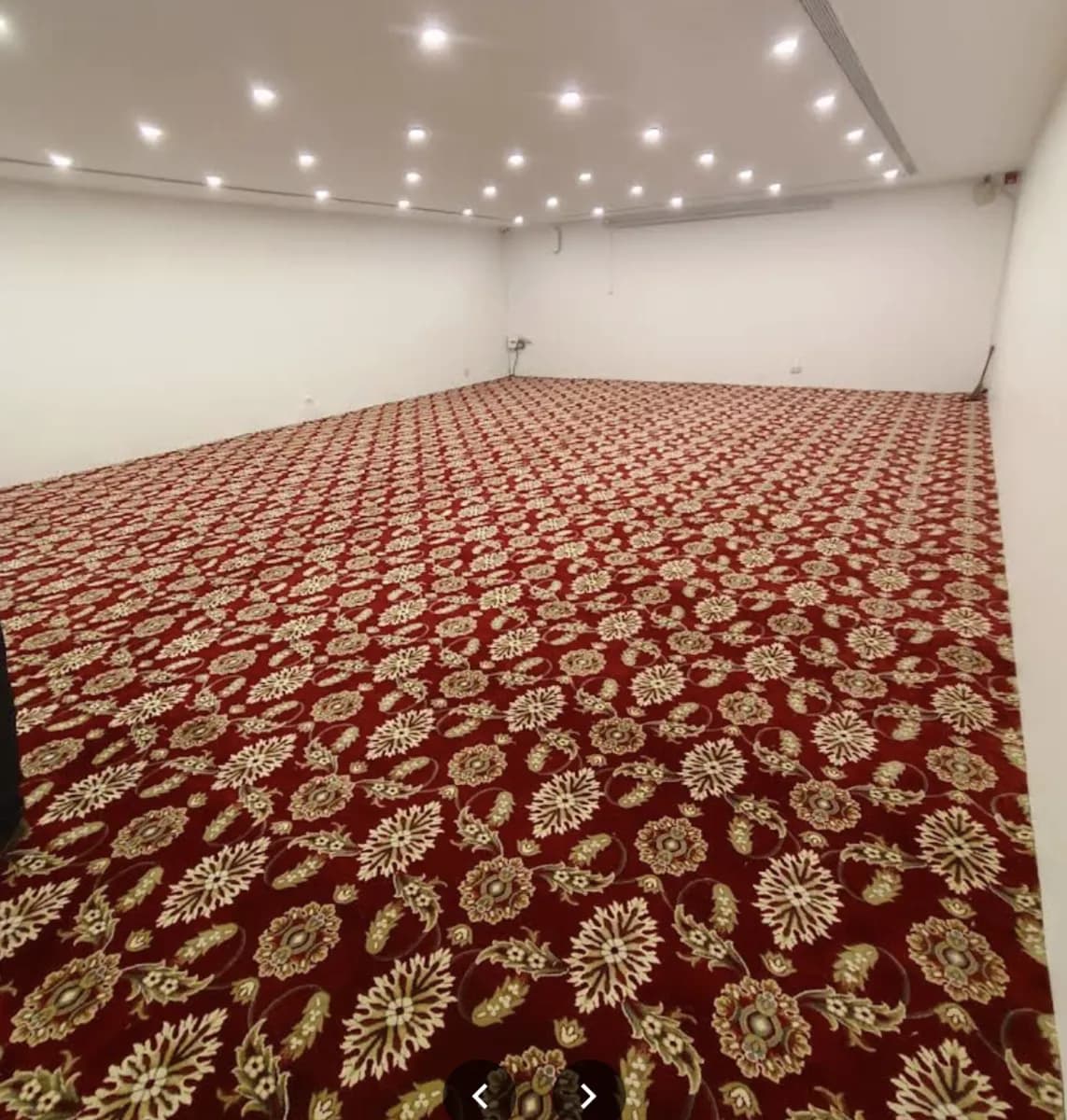
Sand gets into every room in Calangute, carried up from the beach on feet and in bags, and it is the main thing a rug here has to survive. Dark, patterned, machine-made rugs in polypropylene hide it between cleans, shake out easily and cost little to replace when a guest spills something. They also dry quickly, which wool and jute do not in this humidity; natural fibres turn musty in a closed room. Buy several of one design so a ruined rug can be swapped for its twin. Wall-to-wall carpet belongs only in air-conditioned rooms that stay shut, such as a hotel bedroom on the quiet side of the building.
- Guest-house rooms: a small patterned synthetic rug beside each bed, washed and aired in the sun at the end of the season.
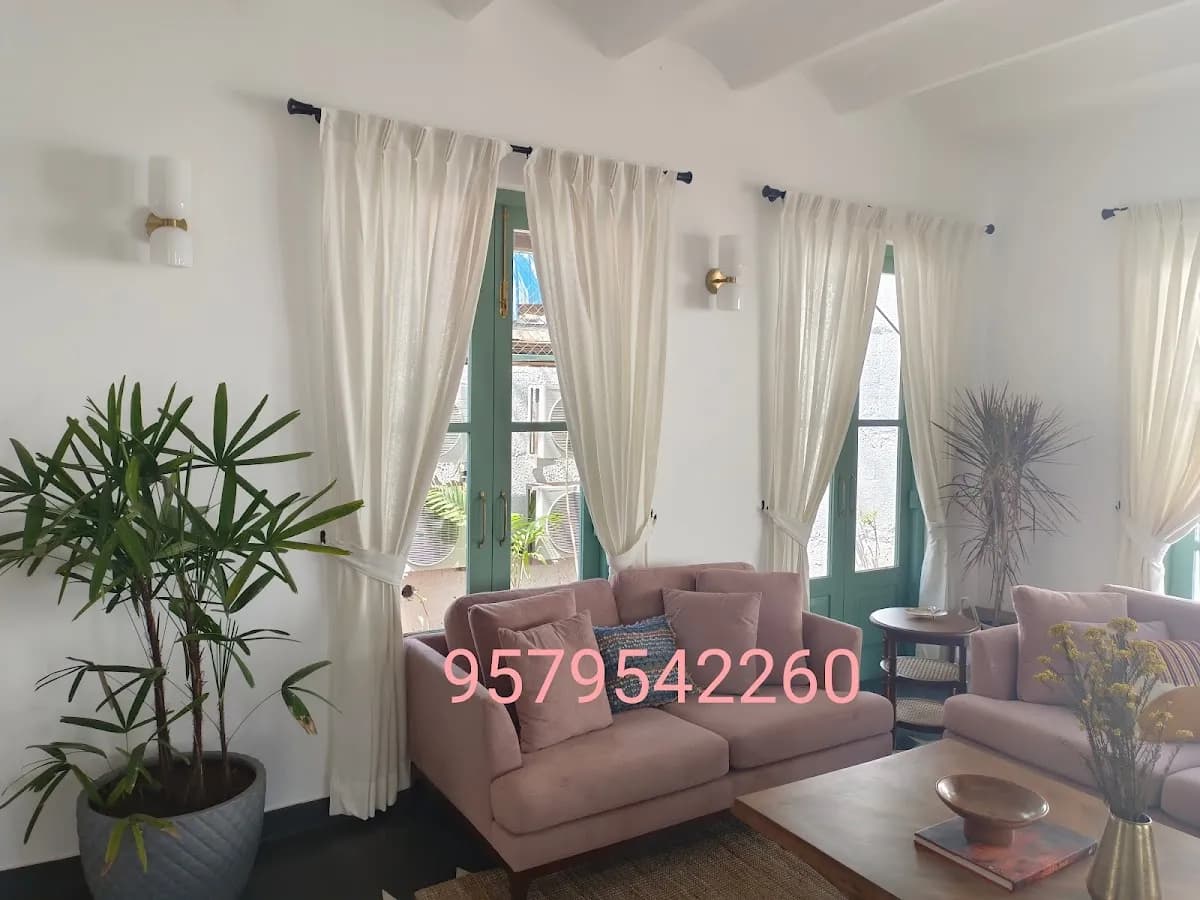
- Holiday flats: one low-pile rug under the seating, with a coarse mat at the door to catch sand from the beach.
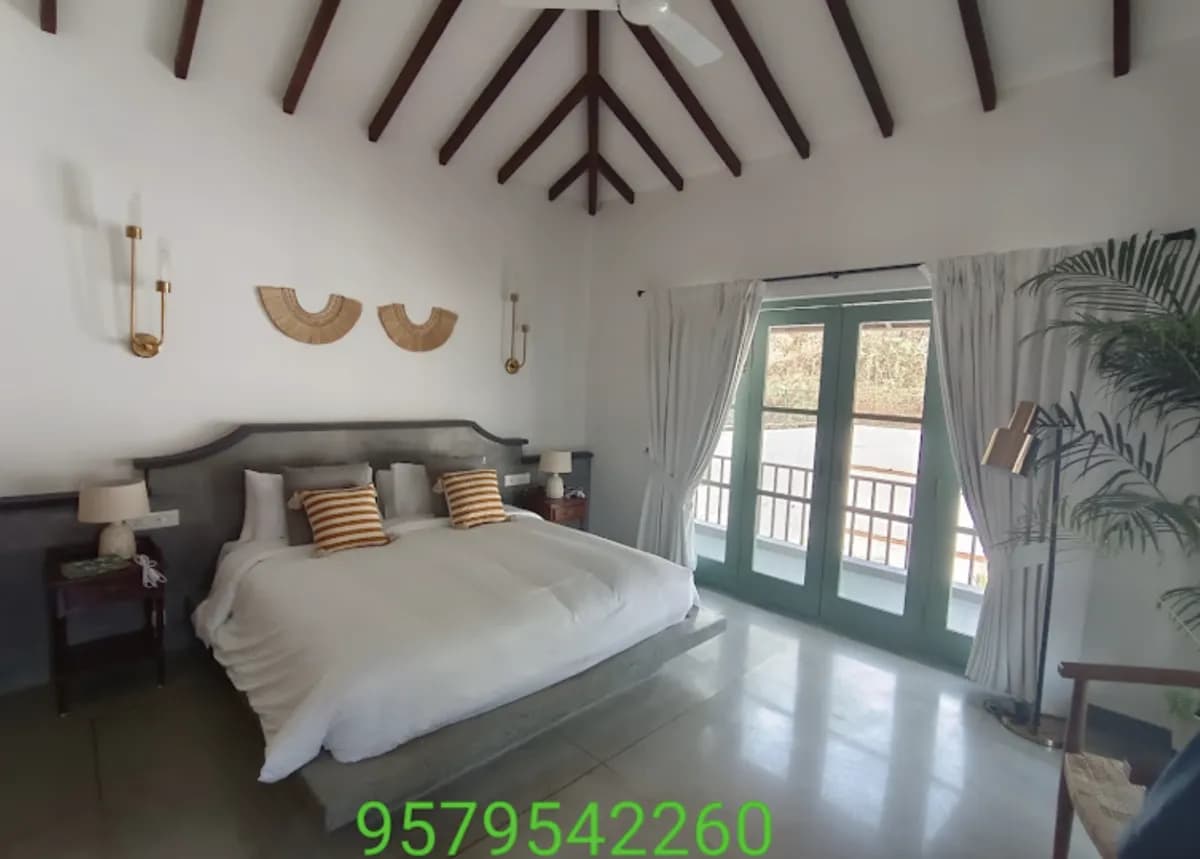
- Air-conditioned hotel bedrooms: wall-to-wall carpet in a dark fleck, only where windows stay closed against the sea air.
Calangute is the largest and busiest beach town in North Goa. From the church at the top of the village a road runs down to the beach through shops, hotels and restaurants, and the lanes on either side are filled with guest houses, holiday apartments and family homes.
A large share of property in Calangute earns its living from visitors: hotels of every size, guest houses, and flats let by the night or the month. Furnishing is bought in quantity and replaced often, so it must be hard-wearing and easy to match later.
The whole town is within reach of sea air. Salt, humidity and sand are constant, and the main roads are noisy and dusty in season.
Sea-facing homes
Wool and jute hold moisture near the sea and can smell. Synthetic rugs in polypropylene or nylon dry quickly and resist mildew, and can be taken outside to air. Wall-to-wall carpet suits only air-conditioned rooms.
Holiday lets and guest houses
Choose dark, patterned, machine-made rugs for a let property. They hide sand and stains, cost little to replace, and can be washed between seasons.