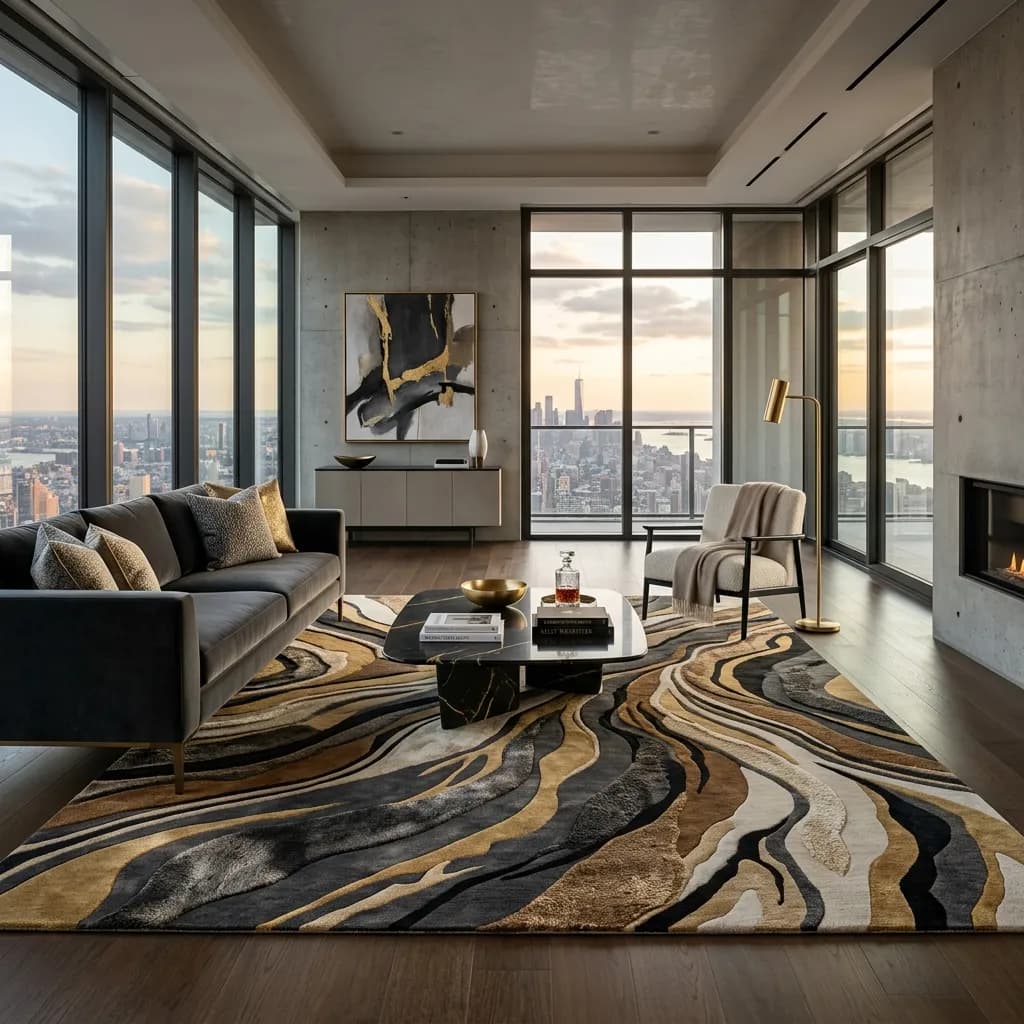
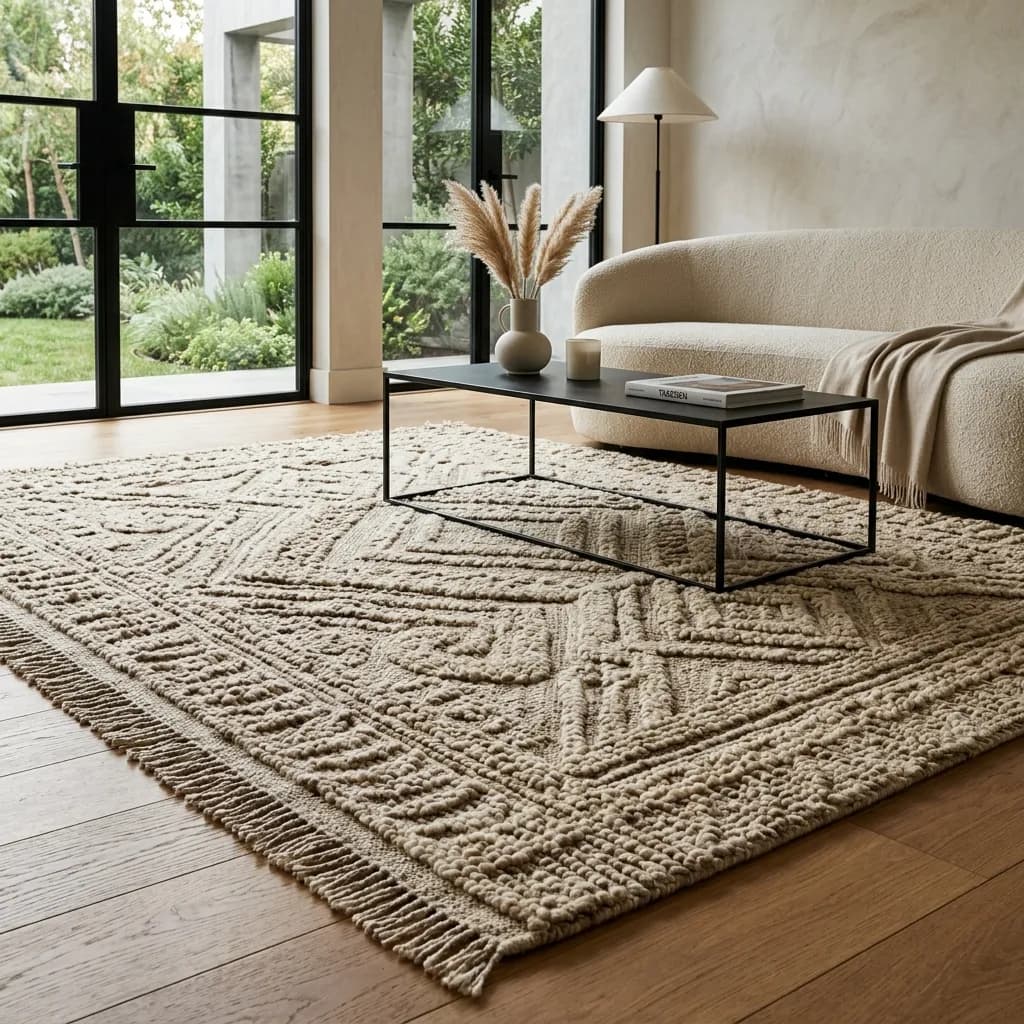
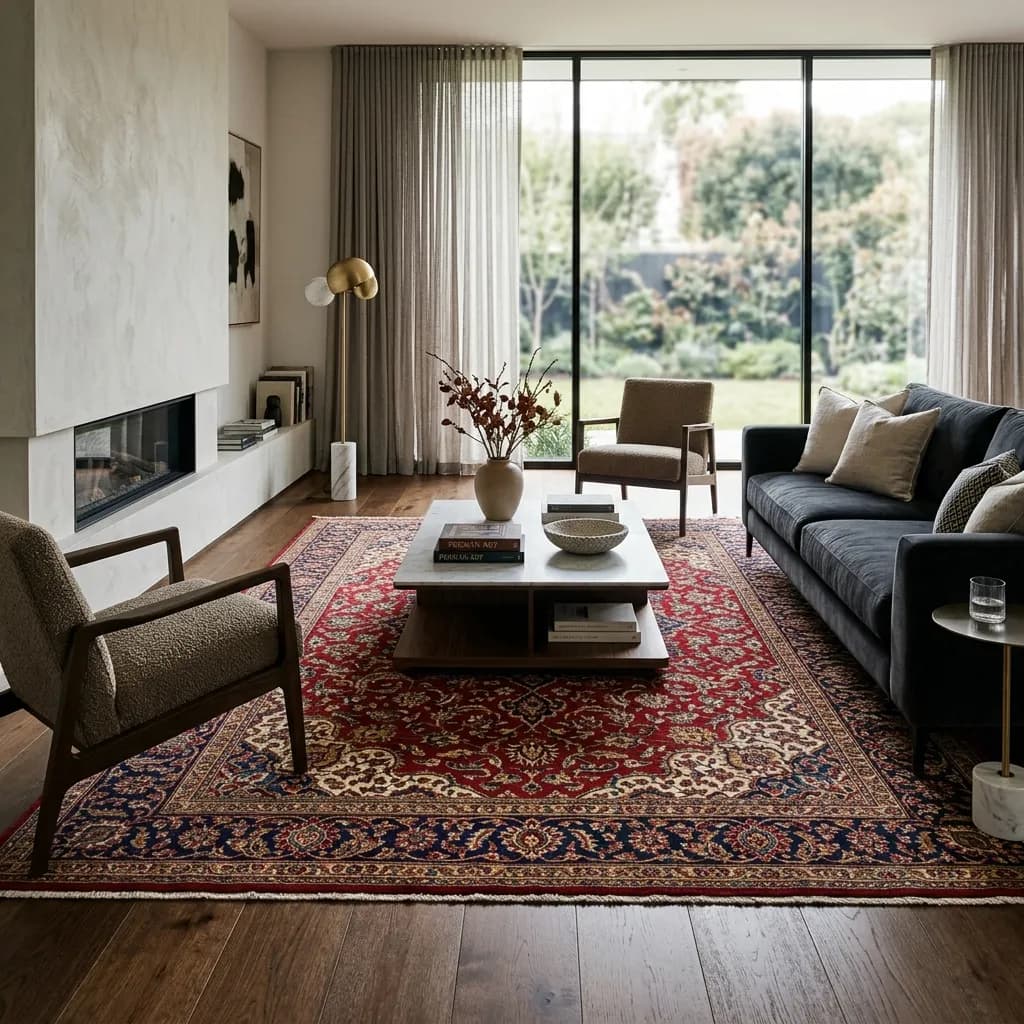
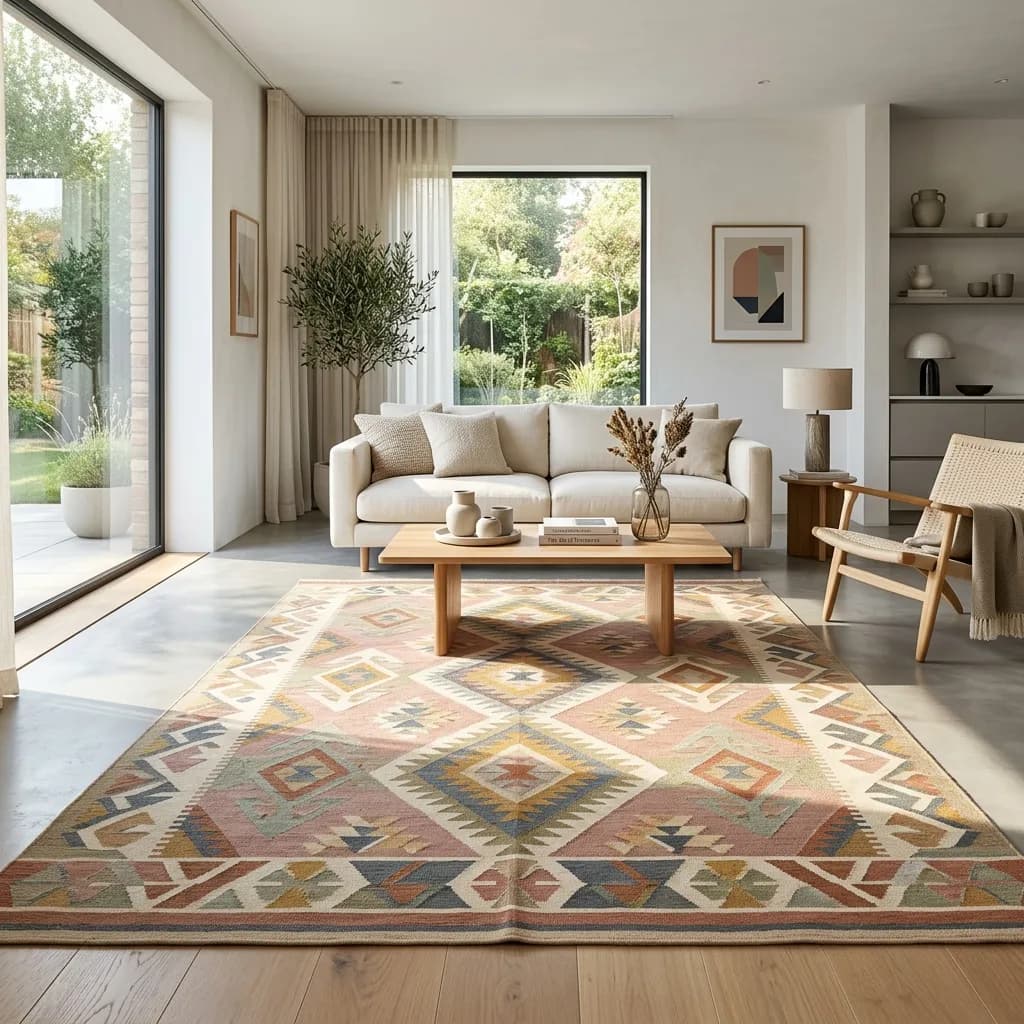
Red earth is the enemy of rugs in Vagator. Laterite dust is carried off the cliffs by the wind and walked in from the terrace, and it shows on anything pale. Dark or patterned machine-made rugs in polypropylene hide it, dry quickly in the sea air and can be washed when the season ends; wool and jute hold salt damp and are best avoided. The plateau's rooms are bright, with large windows to the west, so pick colours that will not show fading along the sunny edge. In hotels and let villas, rugs that are easily replaced are wiser than fine ones. Fitted carpet belongs only in closed, air-conditioned rooms.
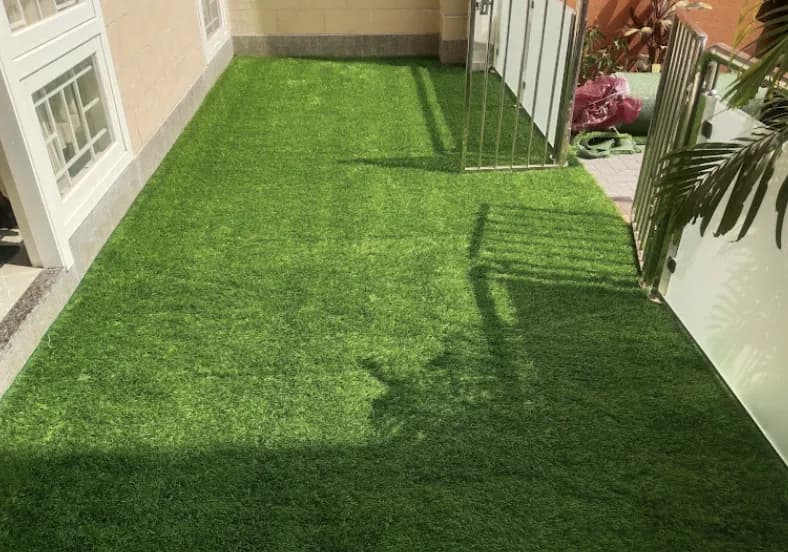
- Rooms opening onto a terrace: a short-pile polypropylene rug in terracotta or brown tones, with a heavy doormat at the threshold.
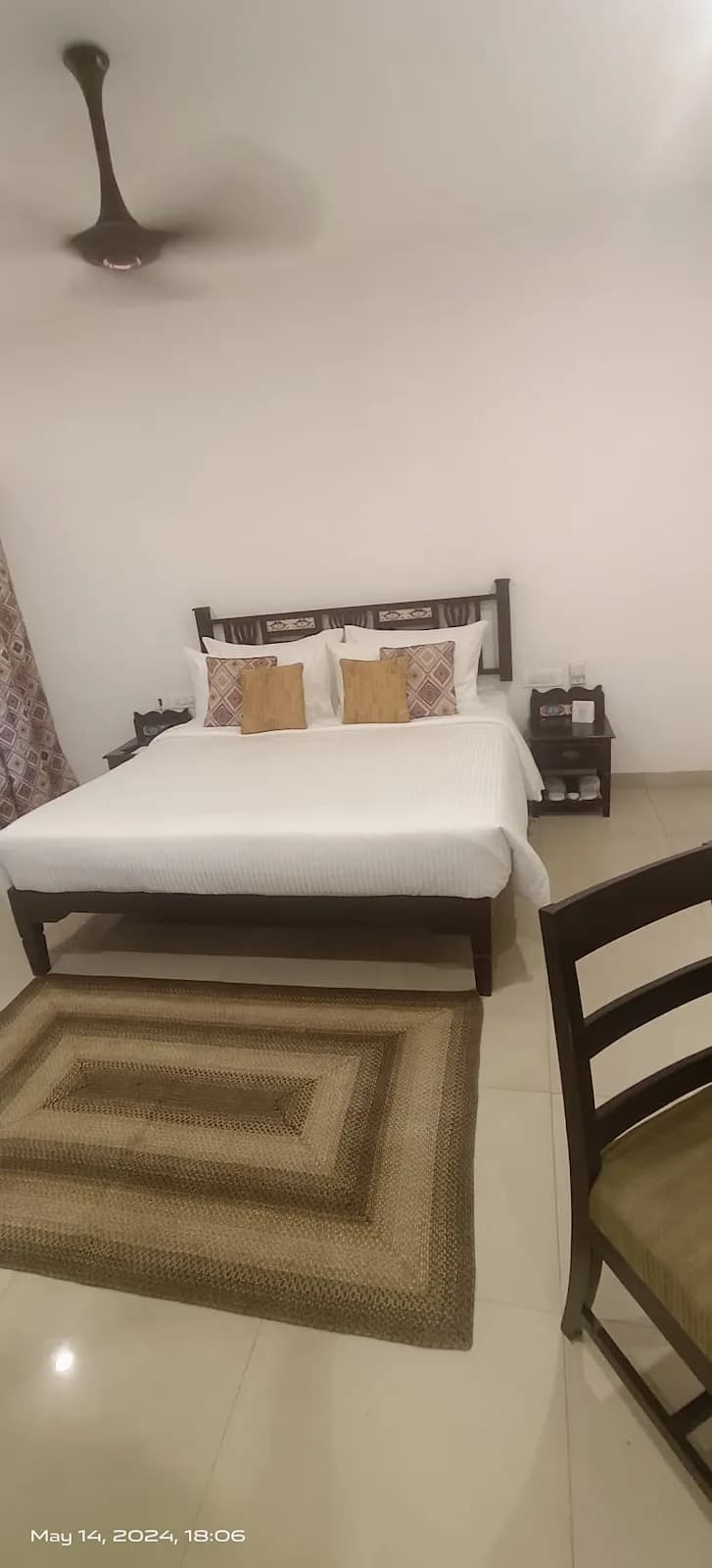
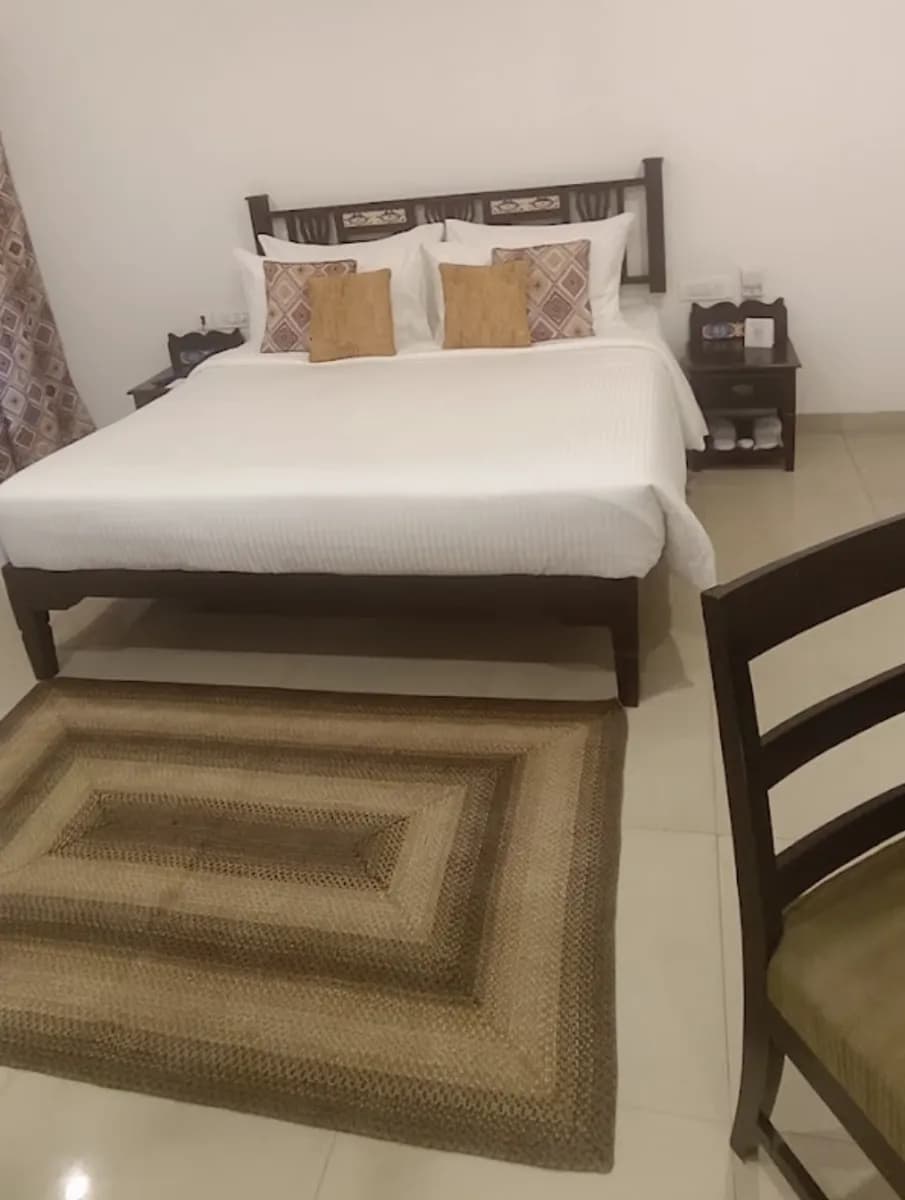
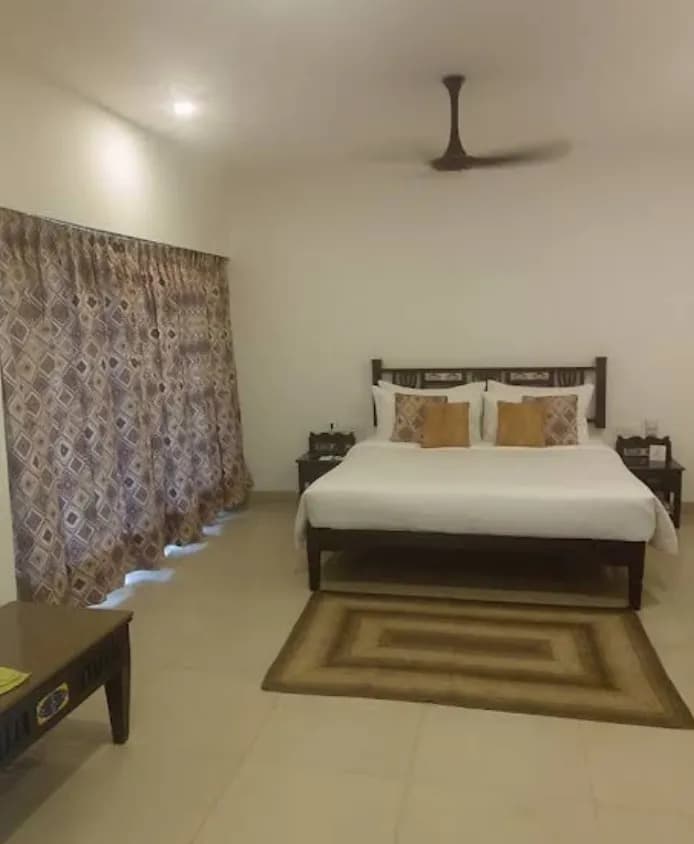
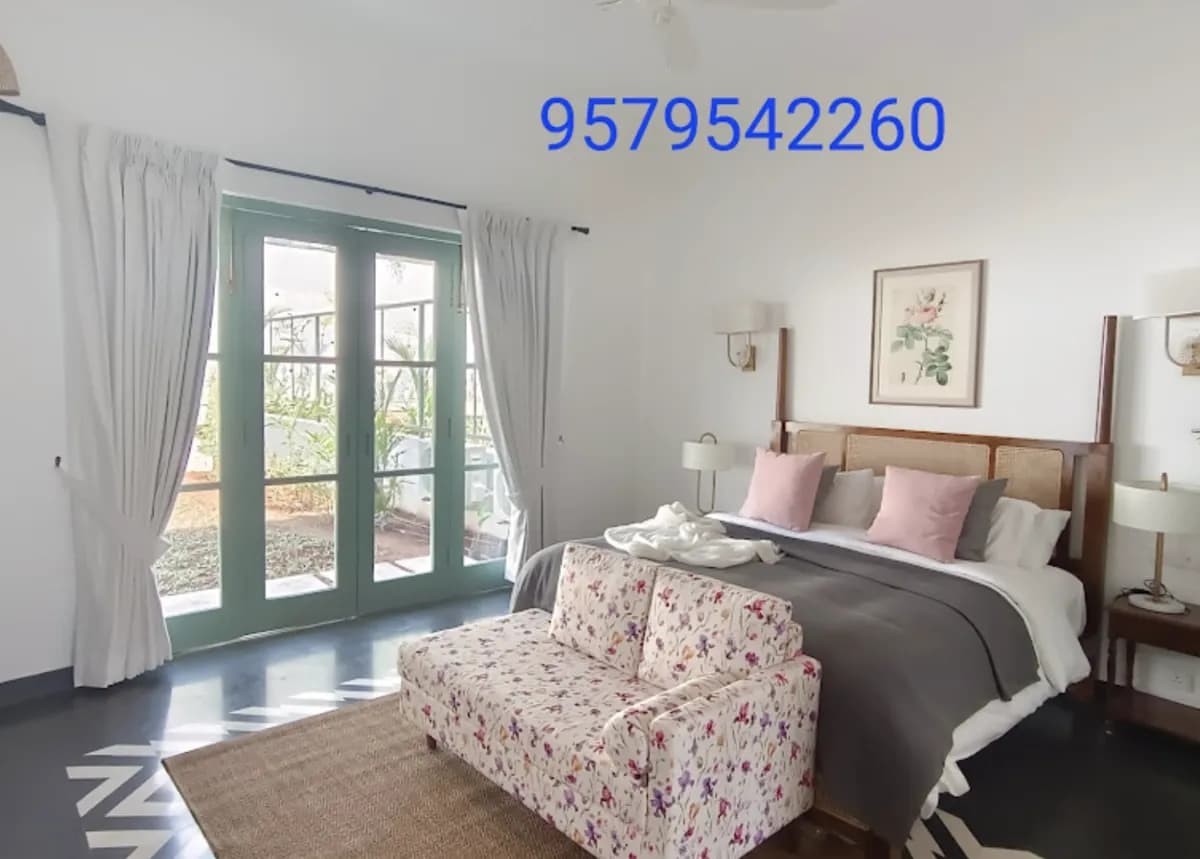
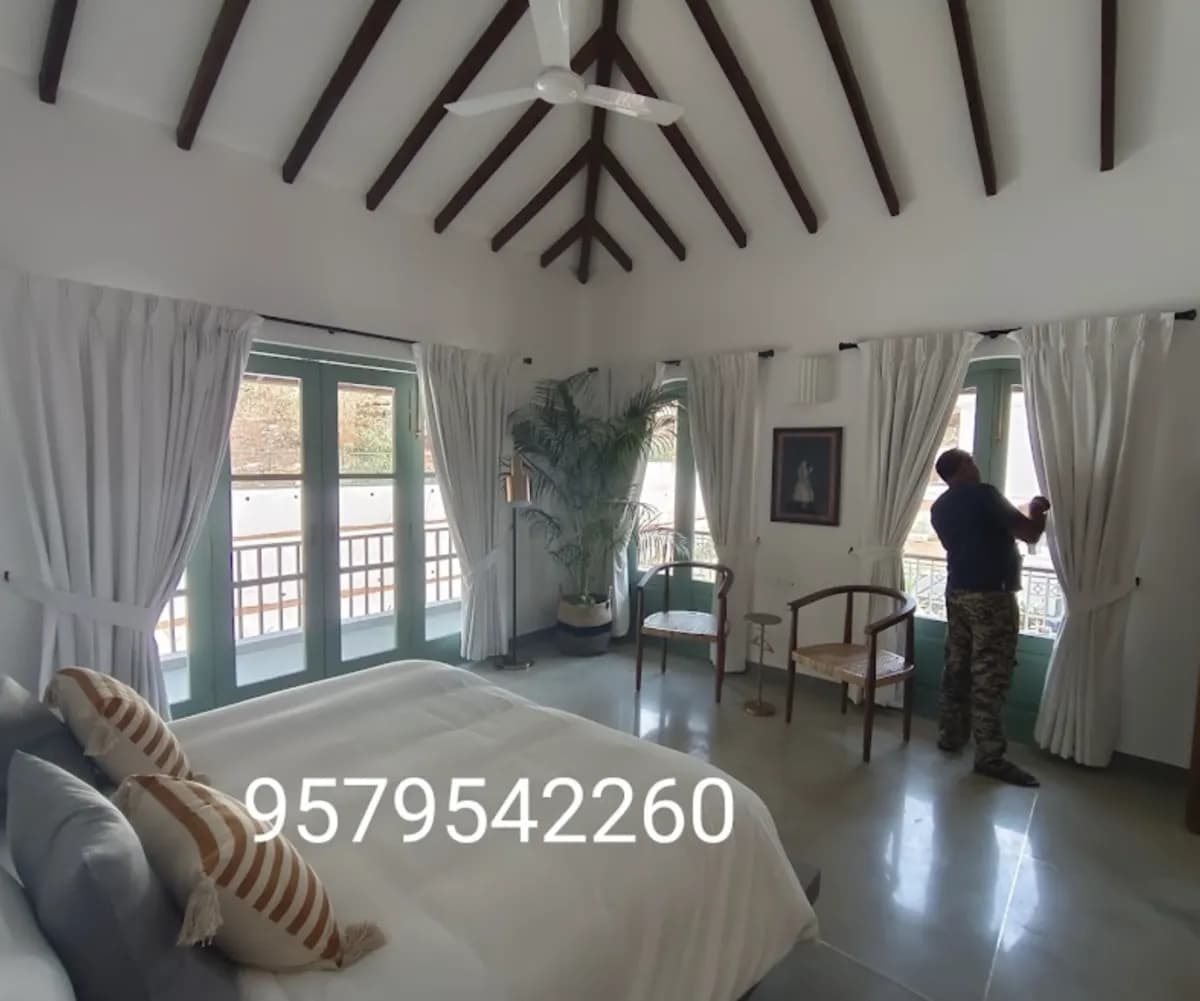
- Hotel bedrooms on the clifftop: patterned machine-made rugs beside the bed, washed between seasons and replaced singly when worn.
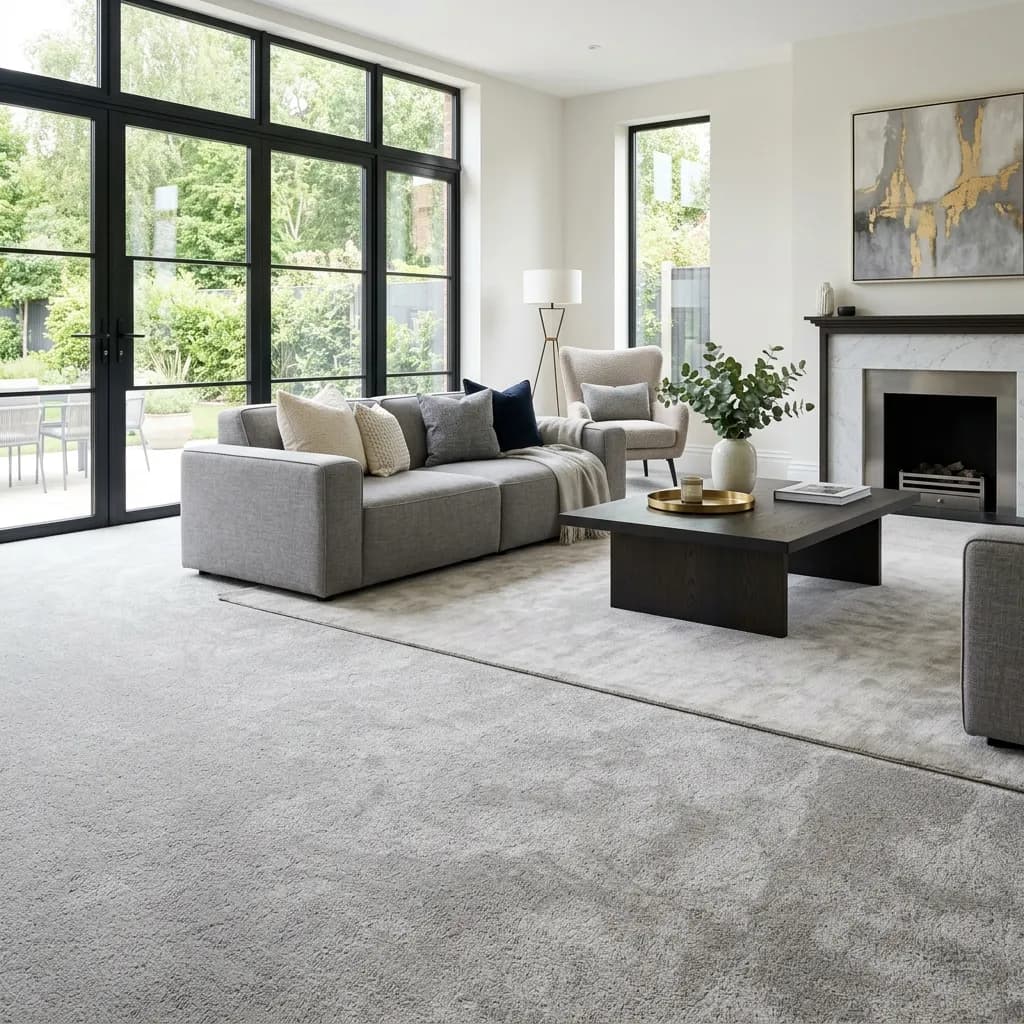
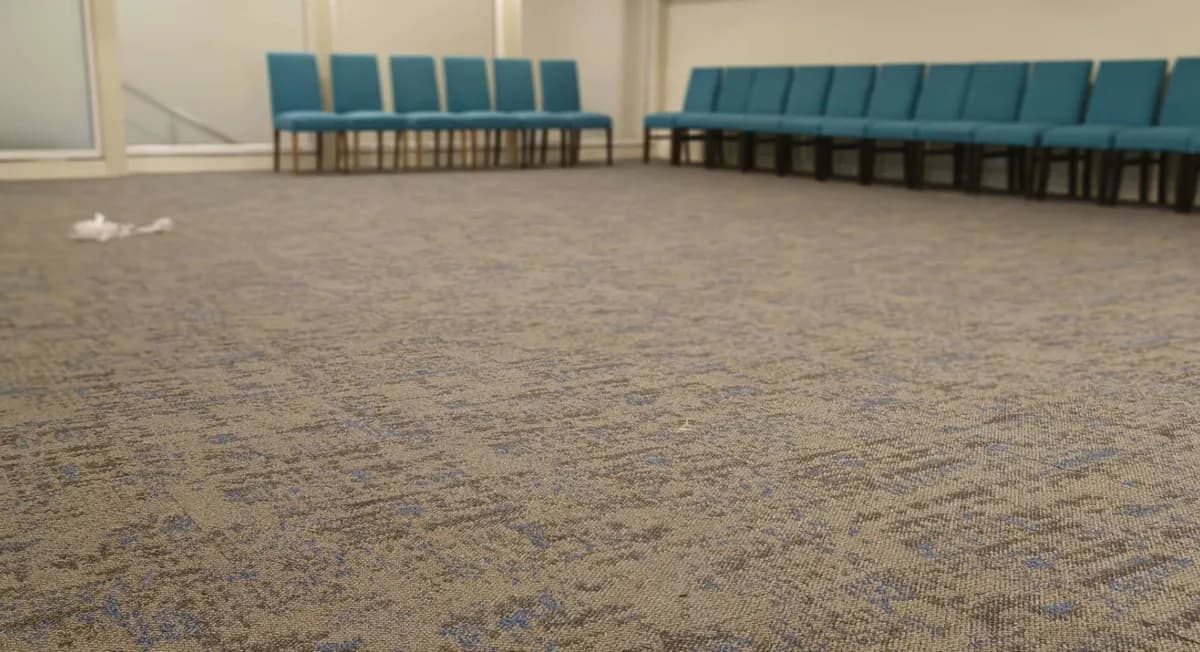
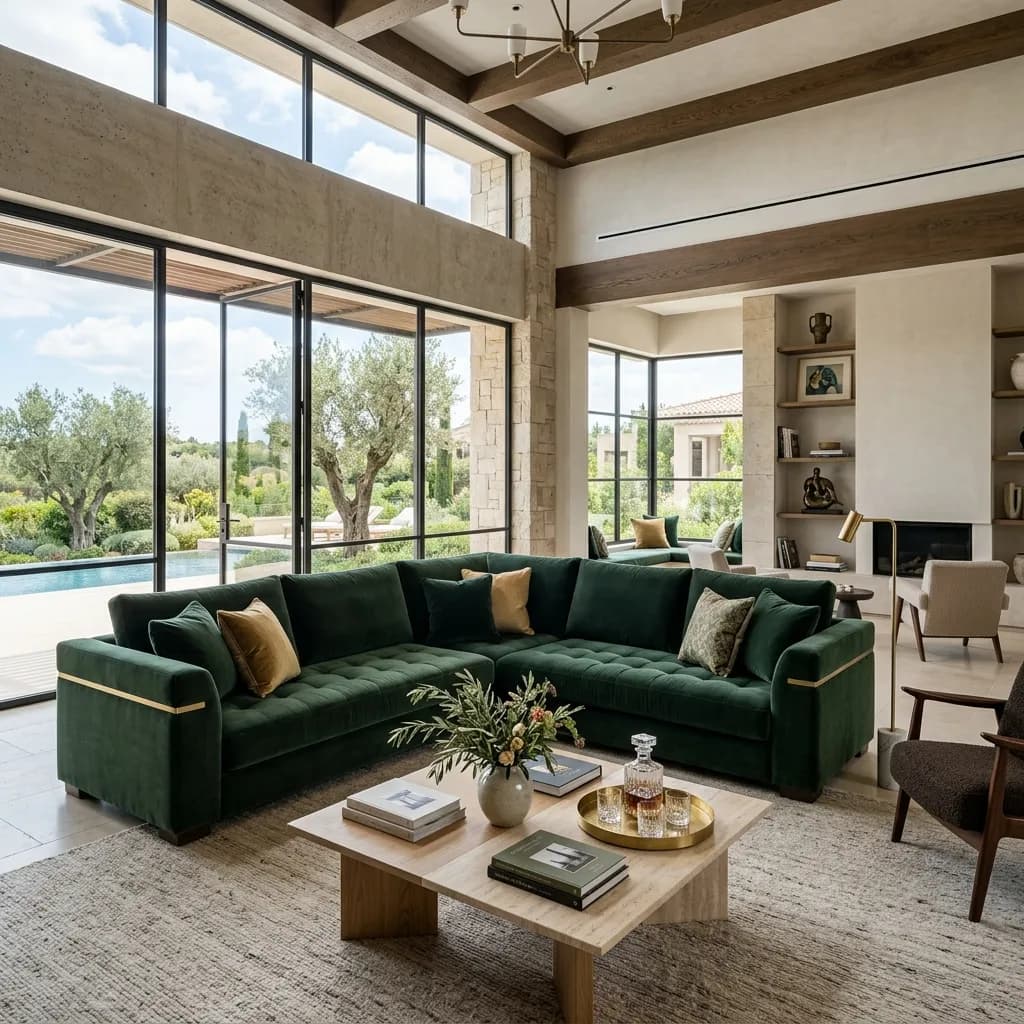
- Villa lounges with west-facing glass: a rug with a mixed, flecked colouring, so sun fading near the doors is not noticeable.
Vagator sits on red laterite cliffs north of Anjuna, below the ruins of Chapora Fort. Its beaches lie at the foot of the cliffs, and the plateau above has hotels, clubs, restaurants with sea views and villas.
Buildings on the plateau are placed for the view: boutique hotels, restaurants and villas with terraces facing west. Terraces and outdoor seating are central to how they are used.
The clifftop is one of the windiest places on the coast. Salt spray, strong sun and red dust all reach it, and unguided outdoor fabric does not last.
Sea-facing homes
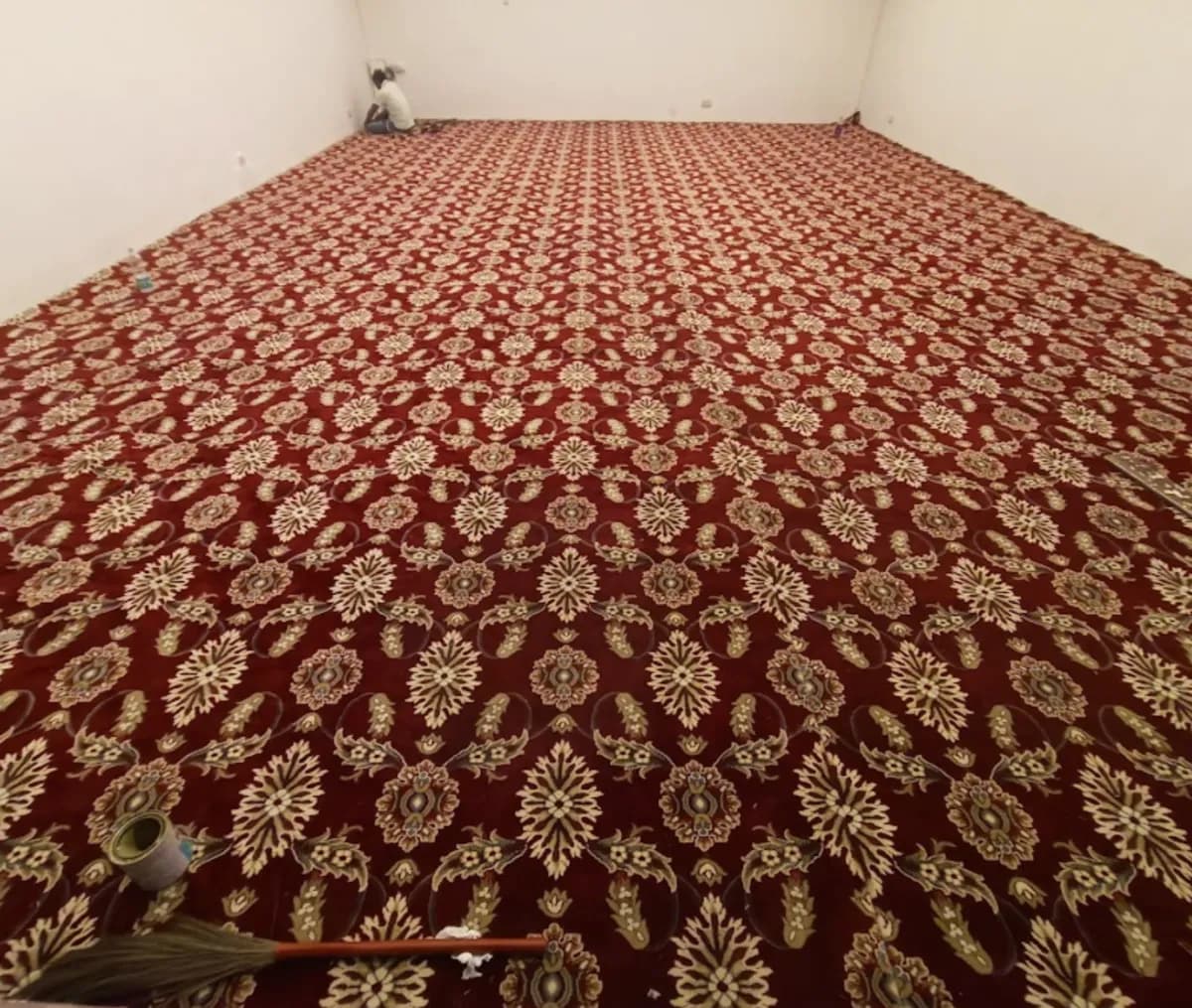
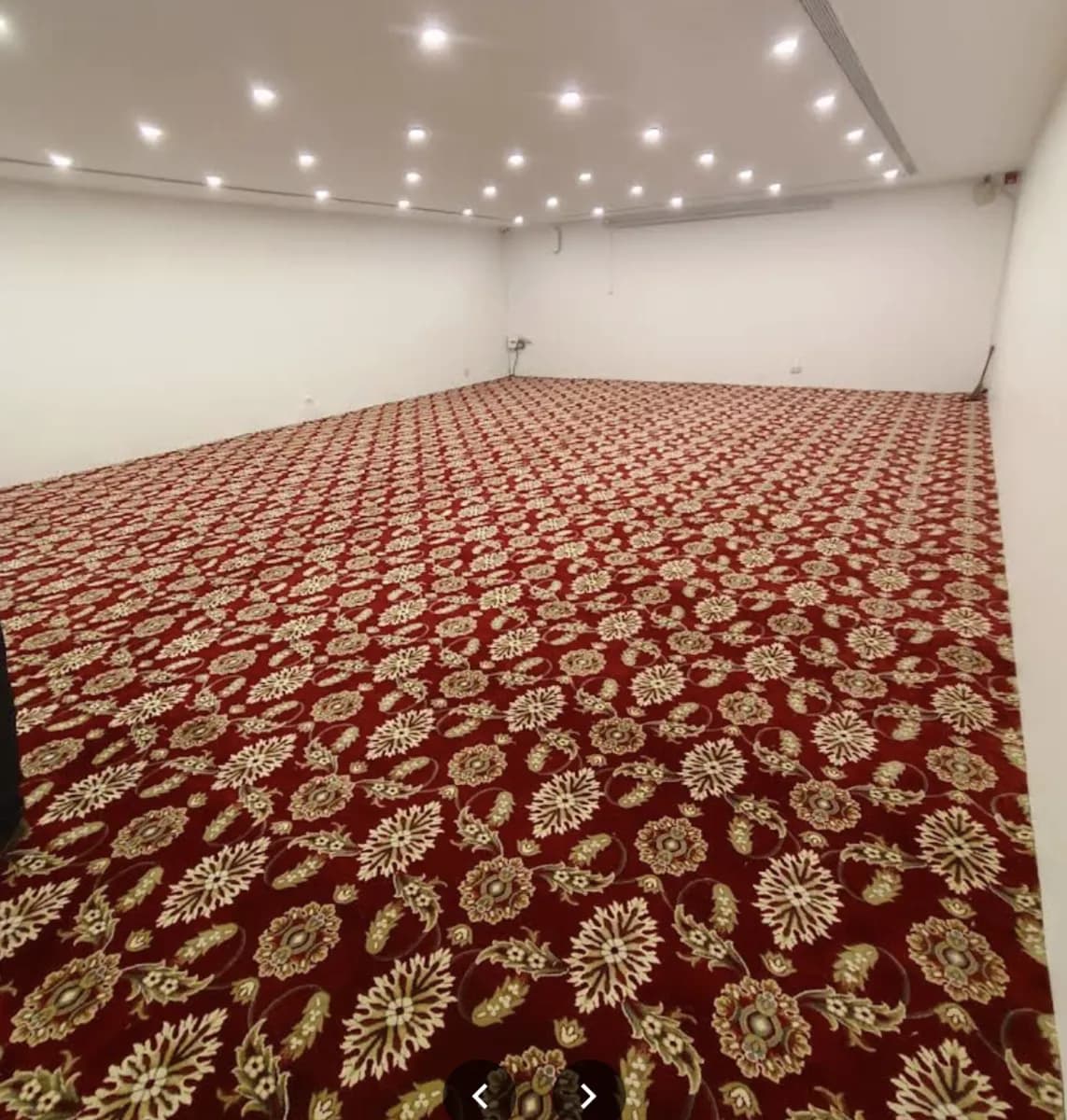
Wool and jute hold moisture near the sea and can smell. Synthetic rugs in polypropylene or nylon dry quickly and resist mildew, and can be taken outside to air. Wall-to-wall carpet suits only air-conditioned rooms.
Hilltop and plateau homes
Airy rooms on high ground dry quickly, which is good for natural-fibre rugs. Large open windows mean more sun on the floor, so choose colours that will not show fading along one edge.