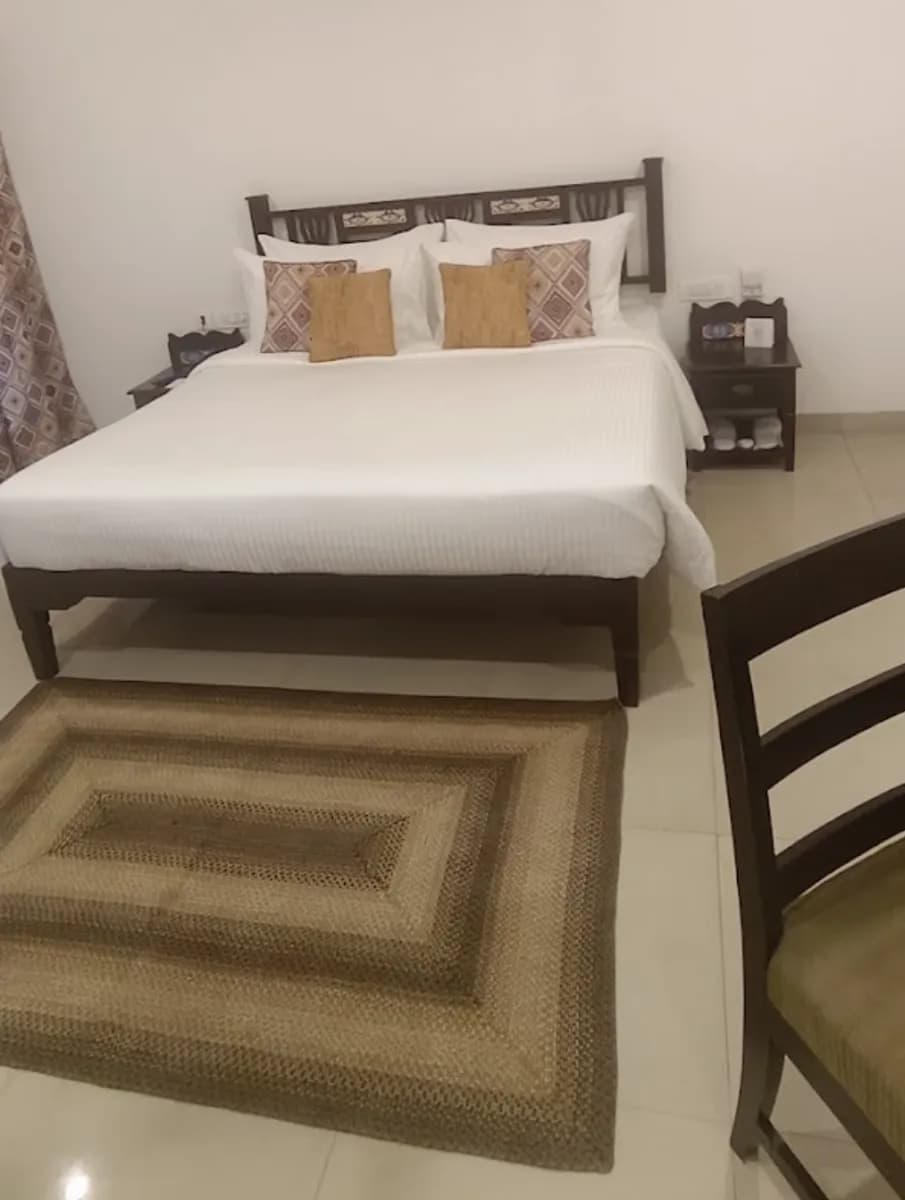
Old walls in Siolim hold damp, and a thick padded headboard pressed against one will hold it too. The remedy is simple: hang the board from the wall with a gap behind for air, or fix it to the bed and stand the bed a little forward. Covers that wipe, such as leatherette or a tight synthetic weave, stay fresher through the wet months than velvet. Where a house still has its carved rosewood or teak bed, keep it, and have a padded panel made to fit inside the frame. The villas are freer: large air-conditioned bedrooms can carry a full-wall headboard with lights and sockets, planned with the electrician.
- Bedrooms in Indo-Portuguese houses: an upholstered insert for the existing carved bed, leaving the timber exactly as it is.
- Guest rooms in restored houses: a bed-fixed headboard in wipeable fabric, so that nothing is drilled into old plaster.
- Master bedrooms of river villas: a wide panelled or wingback board with integrated reading lights, on a dry inner wall.
Siolim is a large village on the south bank of the Chapora river, where the bridge crosses to Pernem. It is known for its church of St Anthony, its Zagor festival and its fine old houses, many now restored as homes and guest houses, with new villas along the river and the fields.
Siolim has some of the best-preserved Indo-Portuguese houses in Bardez, with wide balcões, tall windows and internal courtyards, and a growing number of designer villas. Both kinds are popular as high-end stays.
The river and the fields make Siolim humid, with mist on winter mornings. Old walls hold damp, and mosquitoes are common near the water. Salt is slight.
Riverside and backwater homes
In a damp room, avoid thick padding pressed hard against an outside wall. A wall-hung headboard with a gap behind it, in a cover that can be wiped, stays fresh.
Old Goan houses
Old carved beds are worth keeping. An upholstered panel can be made to sit within the existing frame, or the cane and padding renewed, without altering the woodwork.



 sliding-nets