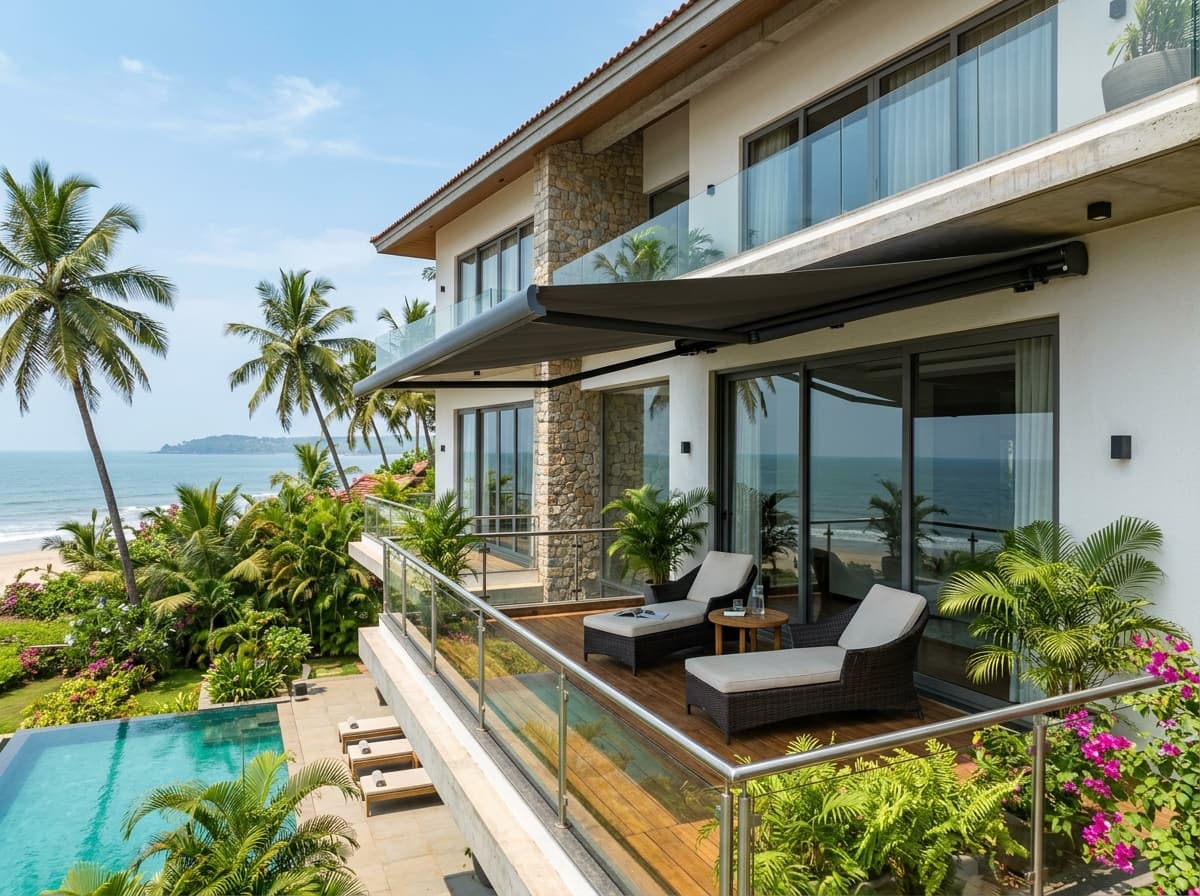
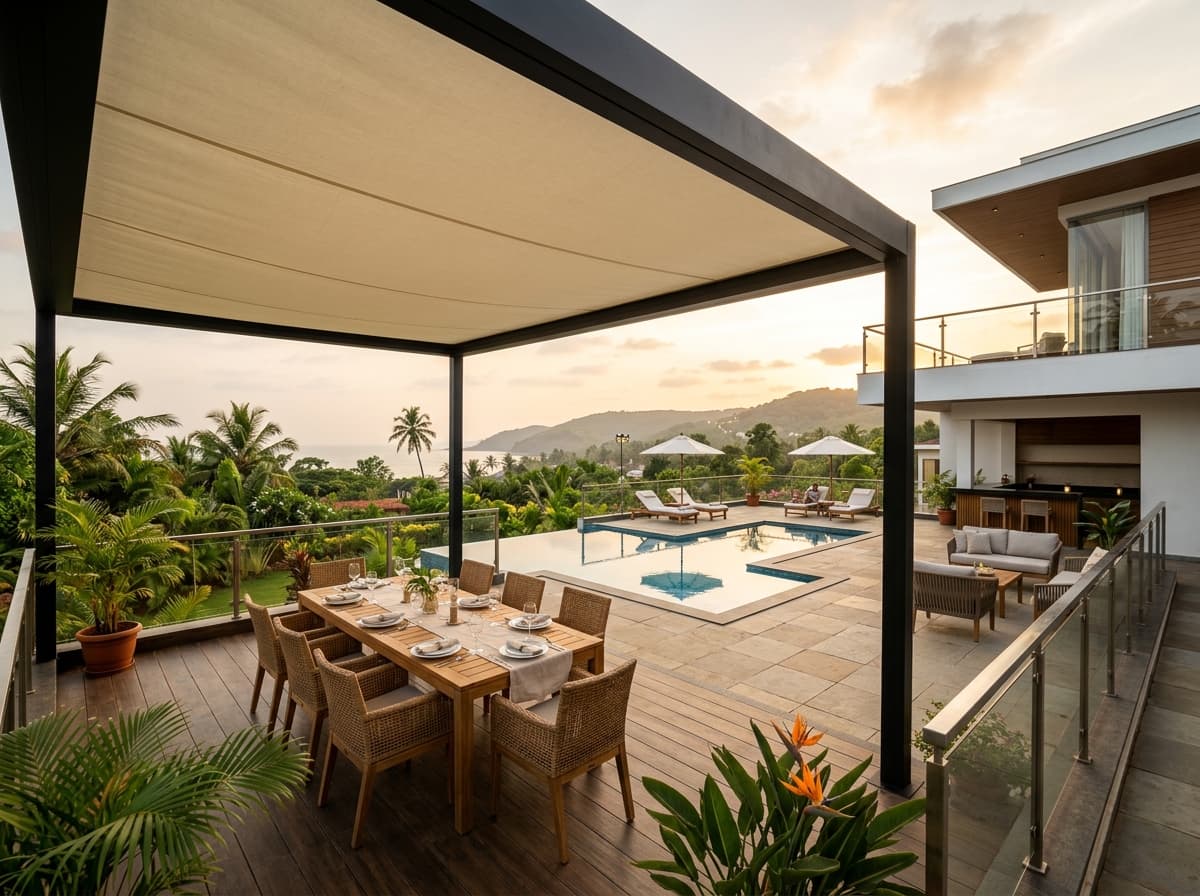
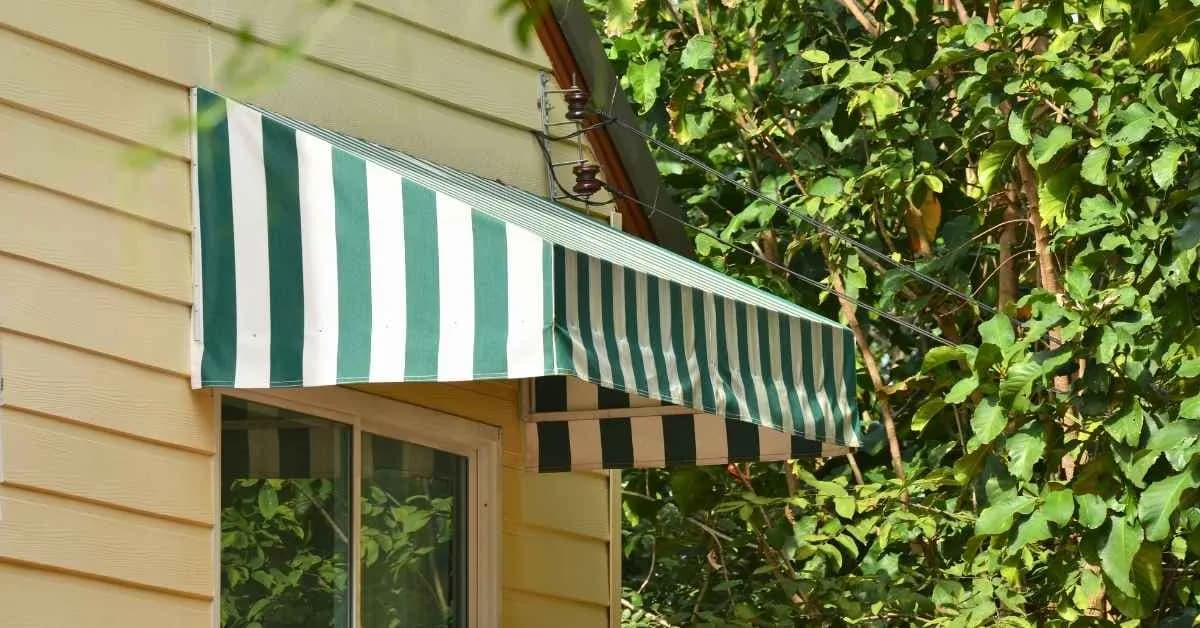
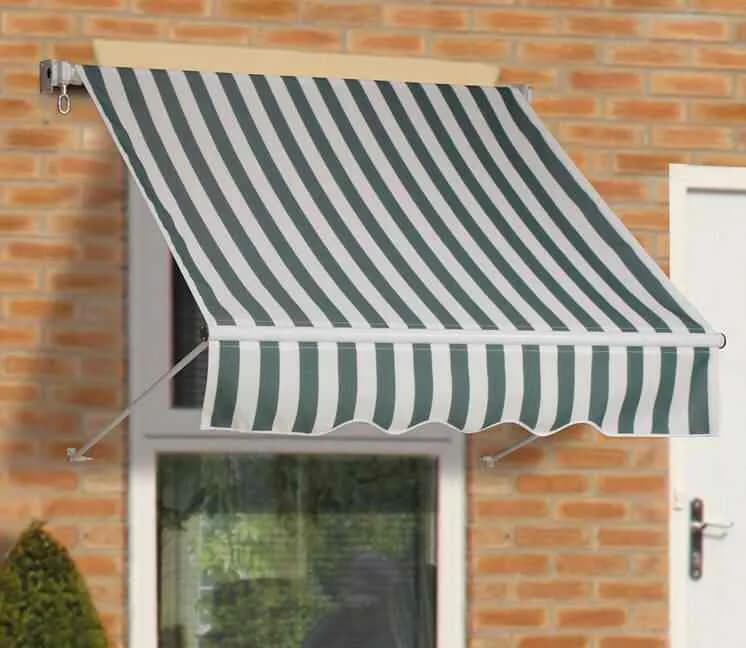
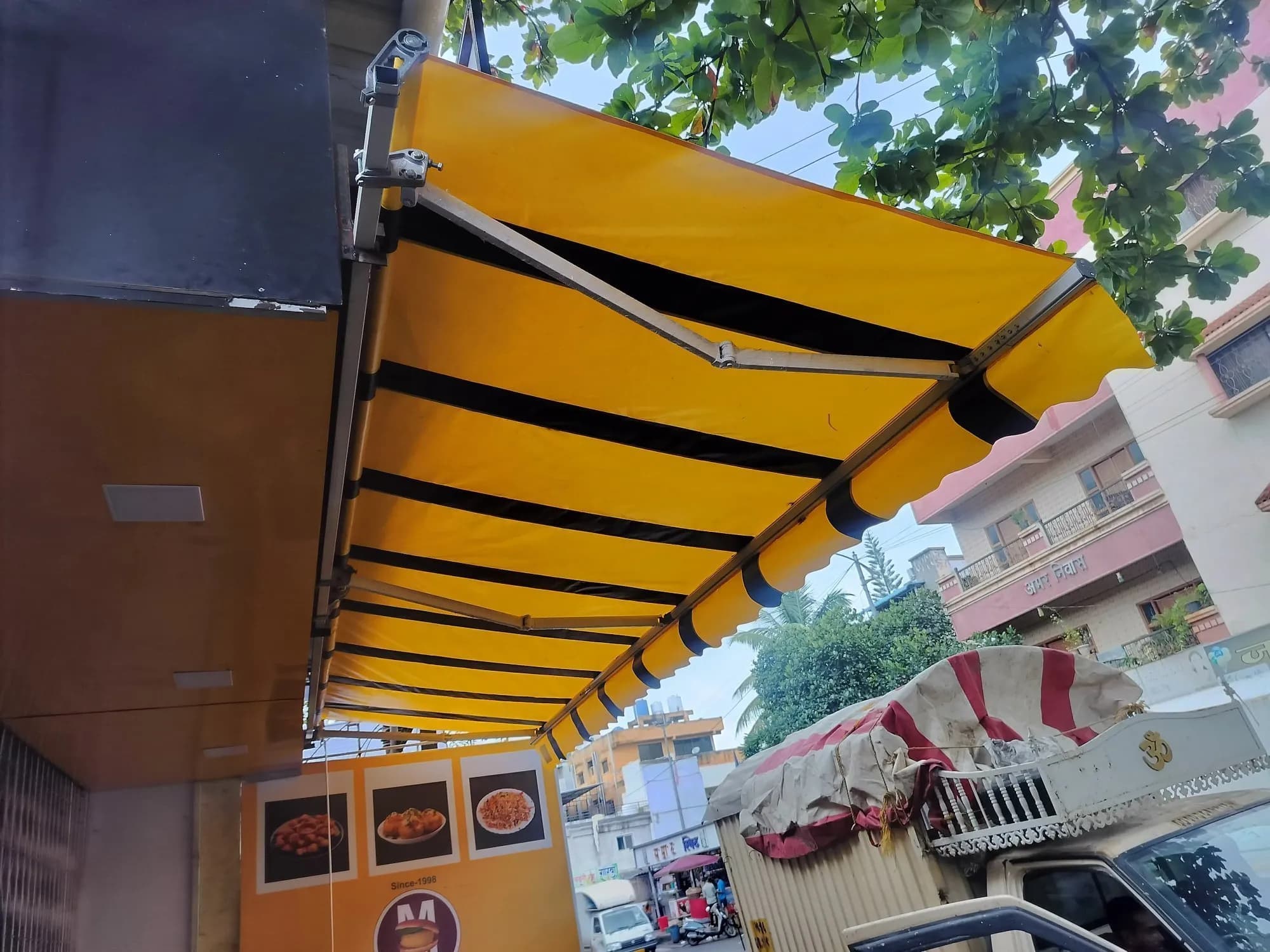
An awning in Siridao faces open water, and the estuary wind is its chief danger. Fold it away whenever the breeze strengthens and before leaving the house; a motorised one should carry a wind sensor. The frame should be aluminium with stainless bolts, as painted steel does not last here, and solution-dyed acrylic outlives polyester in salt and sun. Fixing needs thought in the old houses, whose laterite and lime walls cannot hold a standard anchor: the brackets belong on concrete, whether lintel or beam, or on steel plate fabricated to spread the load. The newer houses and villas on the slope have concrete to fix to, and terraces that look across the water with no shade of their own.
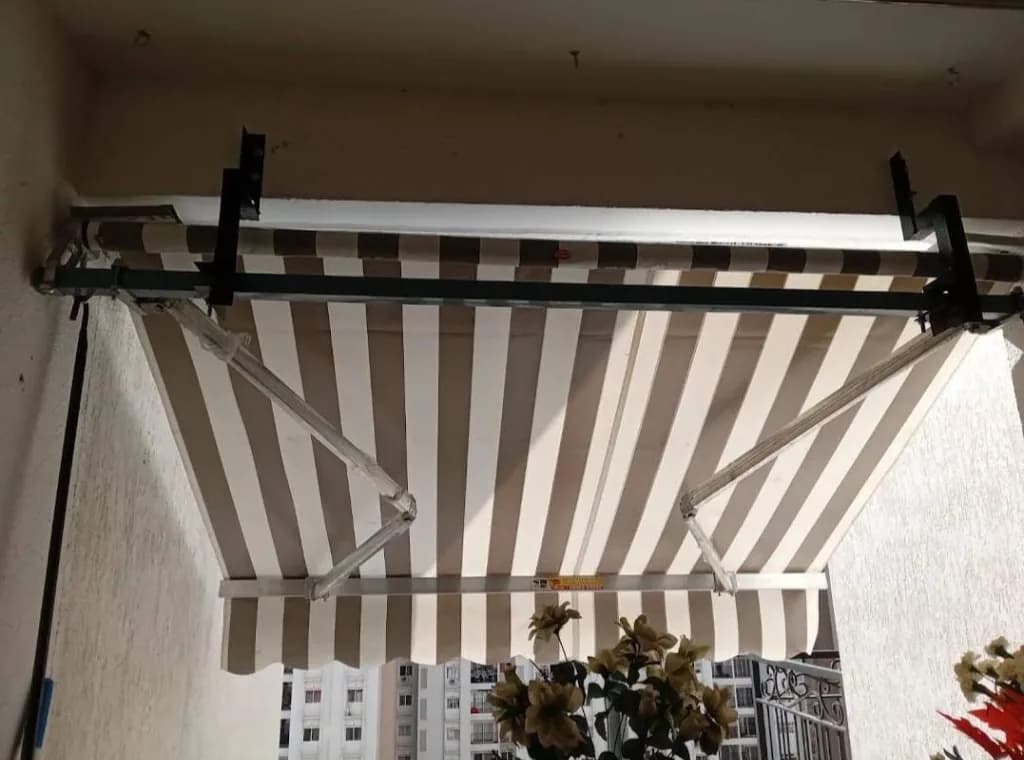
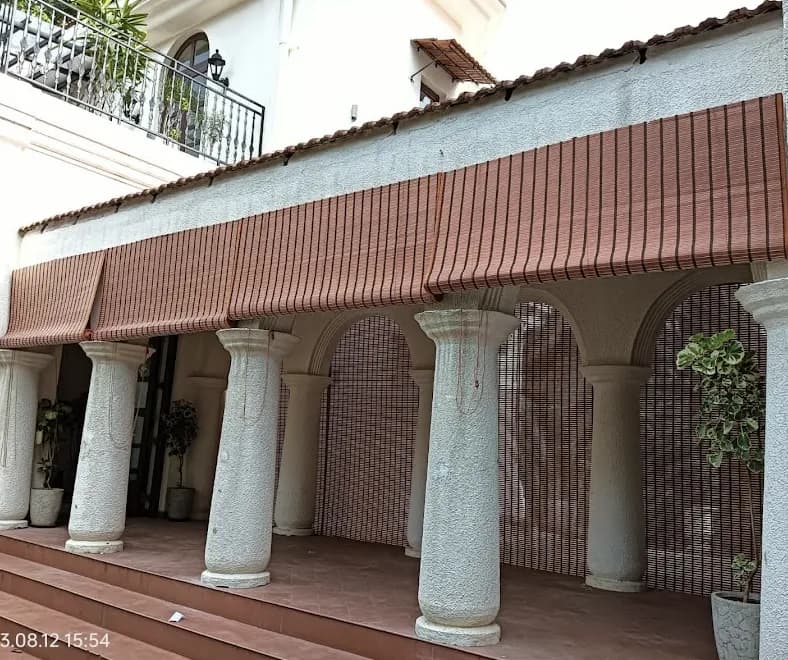
- Verandas of old village houses: a small manual awning on a steel bracket or lintel, in a colour close to the roof tiles.
- Terraces of villas on the slope: a motorised acrylic awning with wind sensor, and a hand crank for use in a power cut.
- Sit-outs right on the shore: a short-projection awning with stainless fixings, closed every night against gusts off the water.
Siridao is a small fishing village on the Zuari estuary, below the plateau of Bambolim. It has a pebbly beach, a chapel on the headland, and a feast in spring that draws people from across Goa.
Homes are traditional village houses of the fishing community, close together along the shore, with a few newer houses and villas on the slope behind.
The village faces the open estuary. Salt, humidity and wind off the water affect every house, and metal rusts quickly.
Sea-facing homes
An awning by the sea needs an aluminium frame with stainless fixings and solution-dyed acrylic fabric, which resists salt and fading. It should be retracted in strong wind; a wind sensor does this automatically on a motorised awning.
Old Goan houses
Old walls are laterite and lime, which will not hold an ordinary anchor. The awning is fixed to a beam, a concrete lintel or a steel bracket made for the wall, and chosen in a colour that suits the tiled roof and plaster.