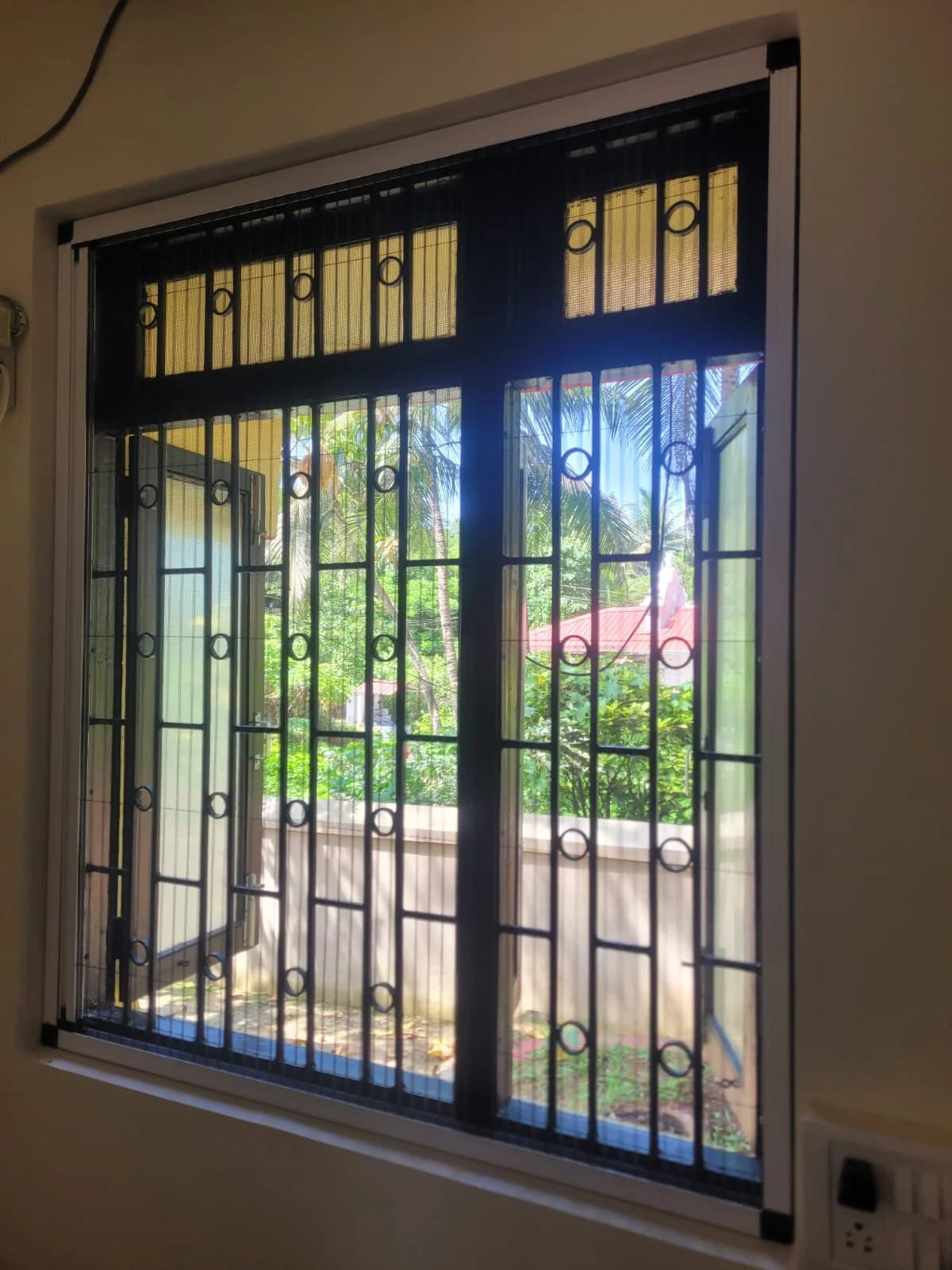
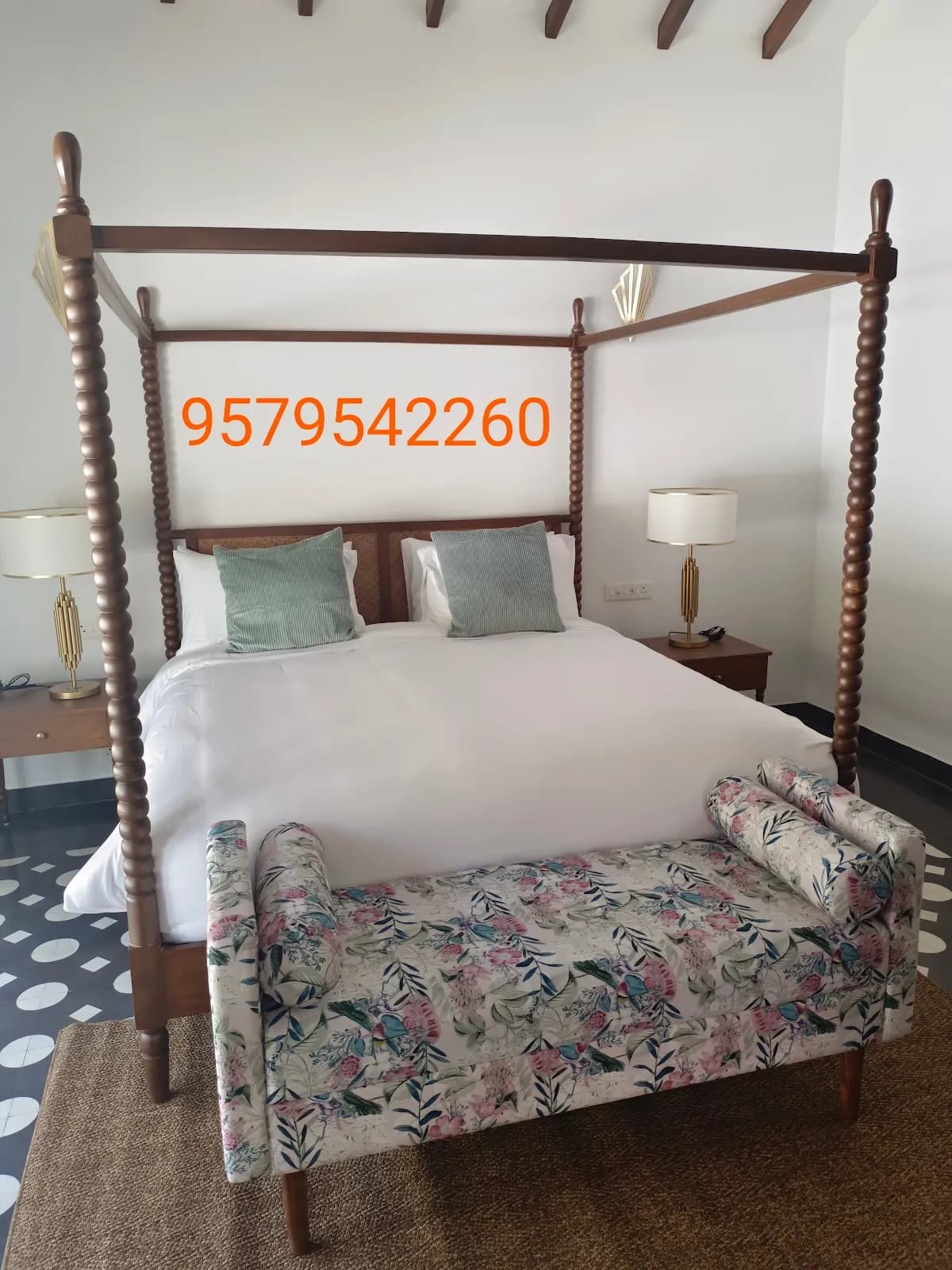
Dry inland air gives Guirim households a freer hand with headboard fabric than anyone on the coast has: linen blends, cotton weaves and velvet all behave well in a bedroom here. The limits are practical ones. A headboard is leaned on nightly, by oiled hair and by children with sticky hands, so in a family home a cover that can be vacuumed and sponged is worth more than a delicate one. Flats beside the highway collect dust even with windows shut, and deep buttoning gives it somewhere to lodge; flat panels or shallow channels are easier. In smaller bedrooms, fix the headboard to the wall and let a simple bed push up against it, saving depth.
- Compact bedrooms in the newer apartment buildings: a wall-fixed panelled headboard, slim in depth, with a plain bed set against it.
- Highway-facing bedrooms: flat or shallow-channelled panels in a tight weave, vacuumed with an upholstery brush when dust settles.
- Ground-floor bedrooms near the fields: a headboard hung slightly off the outer wall, since those walls are humid in the monsoon.
Guirim is a village on the highway between Porvorim and Mapusa. It has a large church and school on the hill, fields on the low ground, and a growing number of housing colonies and apartment buildings for people who work in Mapusa, Porvorim and Panjim.
Housing here is mainly family homes and mid-priced flats in newer buildings. People buy for everyday living, and look for durable, good-value furnishing.
Guirim is inland. Homes near the highway get traffic noise and dust; those on the low ground near the fields are humid in the monsoon.
Inland homes
Drier inland bedrooms suit fabric headboards in linen blends and velvets. Choose a fabric that can be vacuumed, as it gathers dust like any upholstery.
Apartments and town flats
In a small bedroom, a wall-mounted headboard takes less depth than a bed with its own. It can be made the width of the bed or run wider, with bedside shelves built in.




 carpets