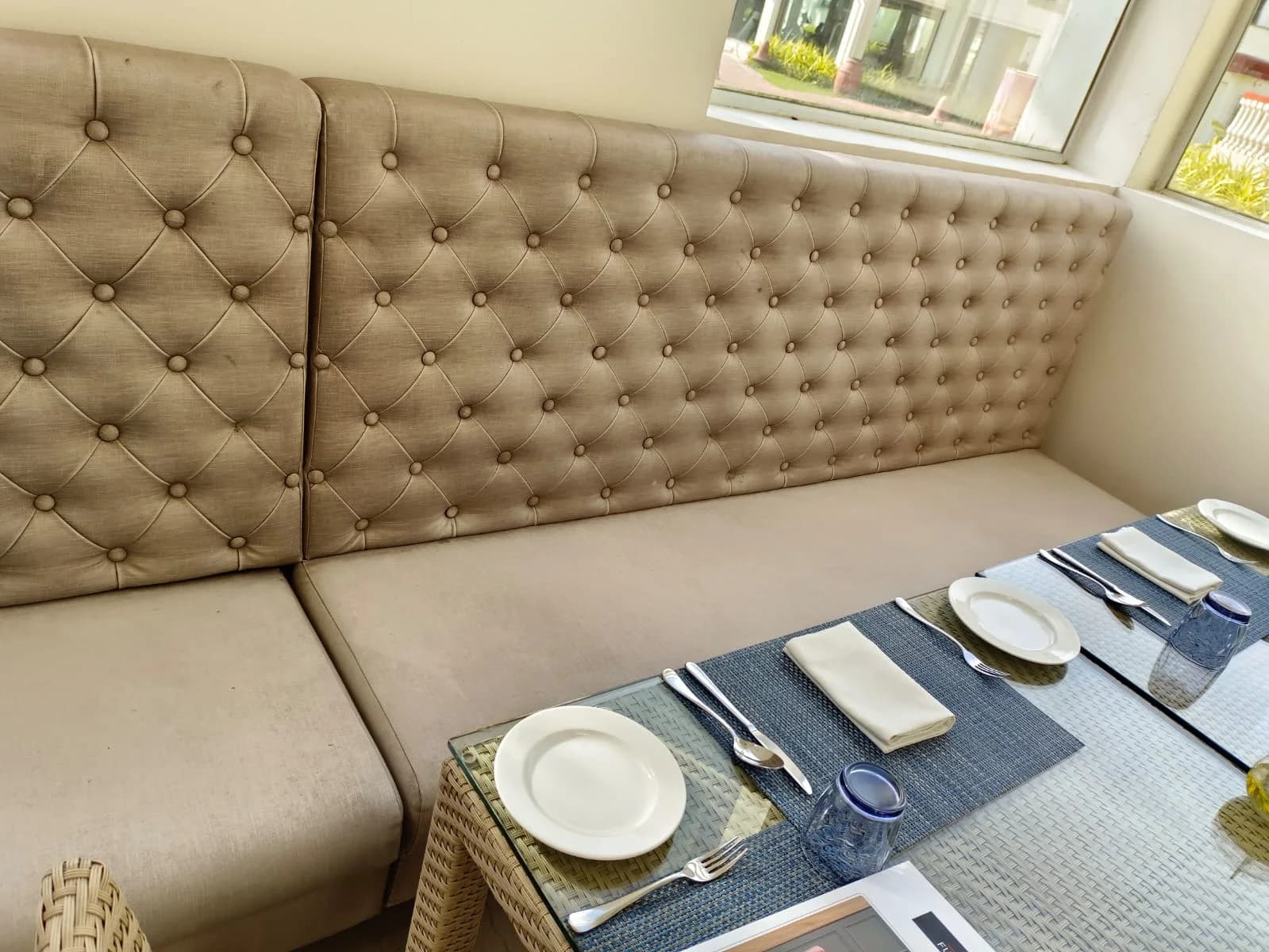
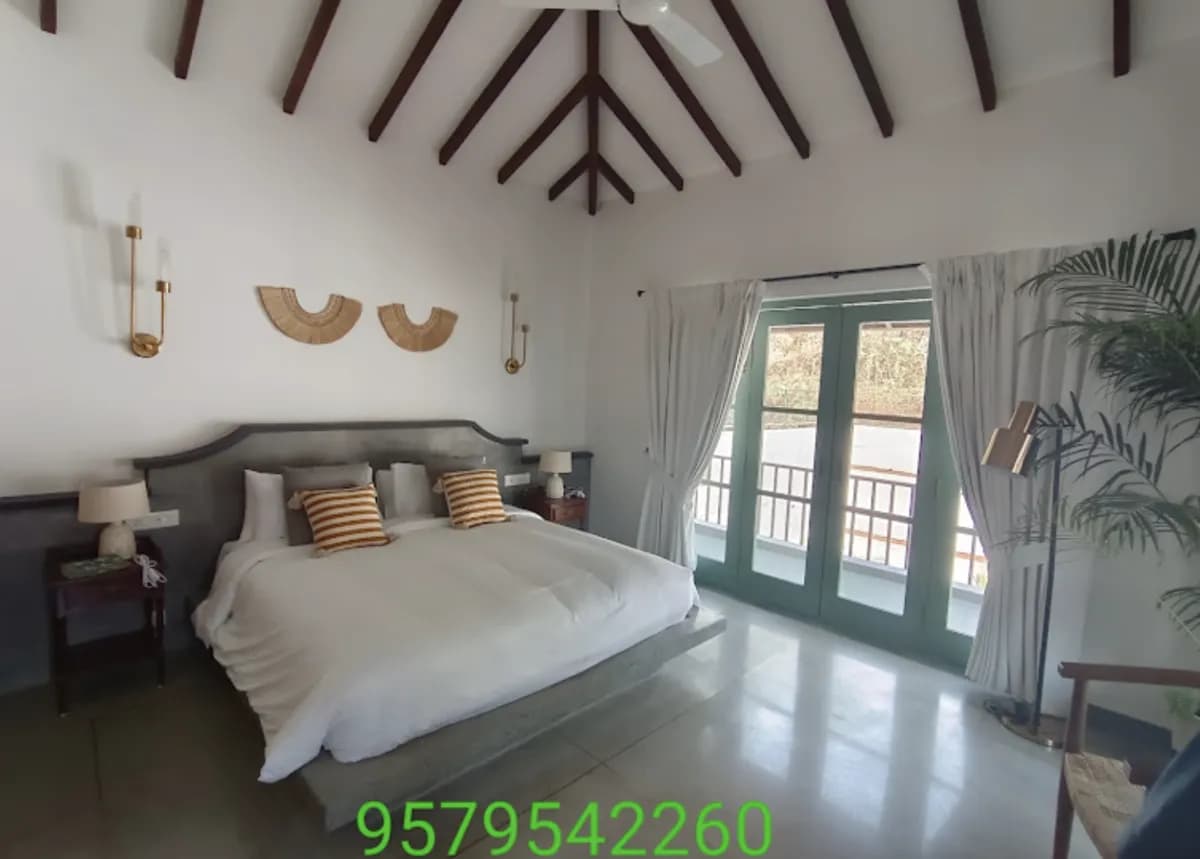
Whether a headboard in Vasco is fixed to the wall or to the bed should depend on how long you expect to stay. In port, naval and company quarters, where a posting lasts a few years, a headboard bolted to the bed frame goes with the bed and leaves no holes behind. Owners of flats can choose a wall-hung panel, which saves depth in a small bedroom. Either way the sea is close on three sides: keep the panel a little clear of an outer wall, have the backing board sealed front and back, and pick a synthetic weave or leatherette for the cover. A flat panelled face is easier to dust than deep tufting when the harbour is nearby.
- Bedrooms in transferable postings: a bed-fixed headboard in leatherette, in a standard bed size, which unbolts and travels with the furniture.
- Owner-occupied flats: a wall-mounted panelled headboard with a small gap behind it, extended past the mattress on each side for small shelves.
- Rooms on the harbour side: a smooth wipeable cover and no buttons, as soot and fine dust collect in every fold.
Vasco da Gama is the port city of Goa, at the tip of the Mormugao peninsula beside the Zuari estuary. It is home to the harbour, the railway terminus and a large community connected with the port, the navy and the airport at Dabolim. The town is laid out on a grid, with apartment blocks, company quarters and older houses.
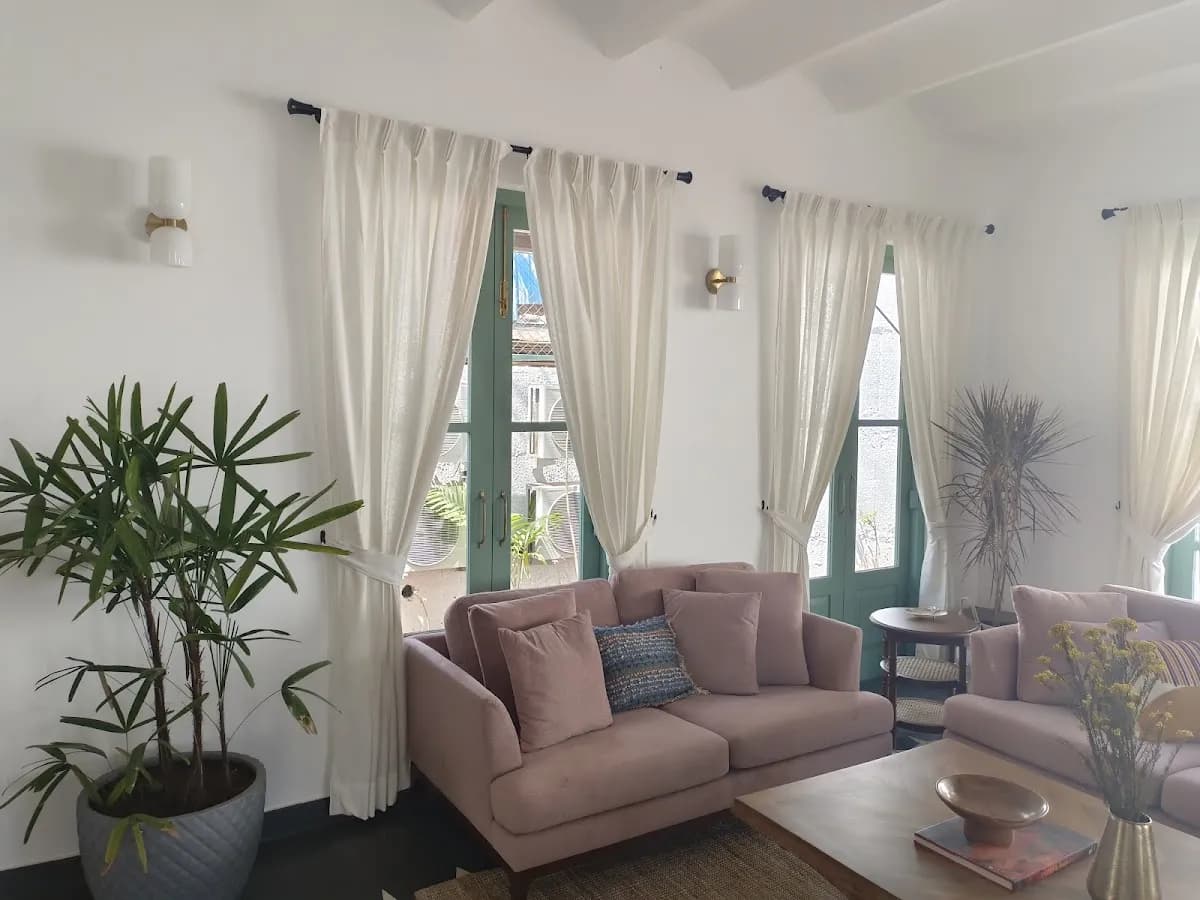
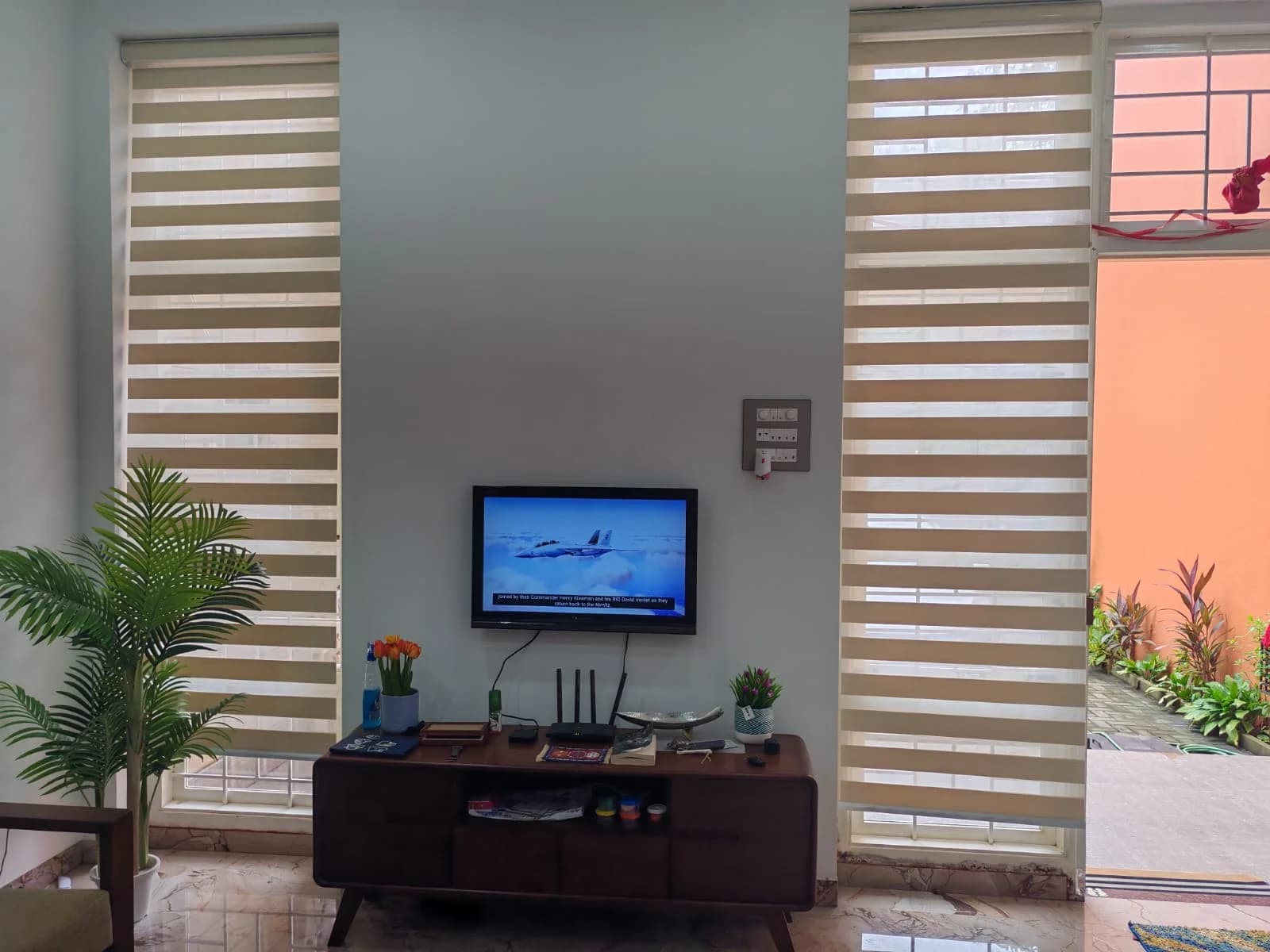
Much of Vasco lives in flats and in housing provided for port, naval and company staff, where people stay for a posting of a few years. That favours furnishing that can be taken down and moved: blinds, curtains on rods, and rugs, more than fixed work.
Vasco has sea on three sides. Salt air reaches most of the town, and near the harbour there is dust as well. Fixings and fittings should be aluminium or stainless steel, and fabrics should be washable.
 blinds