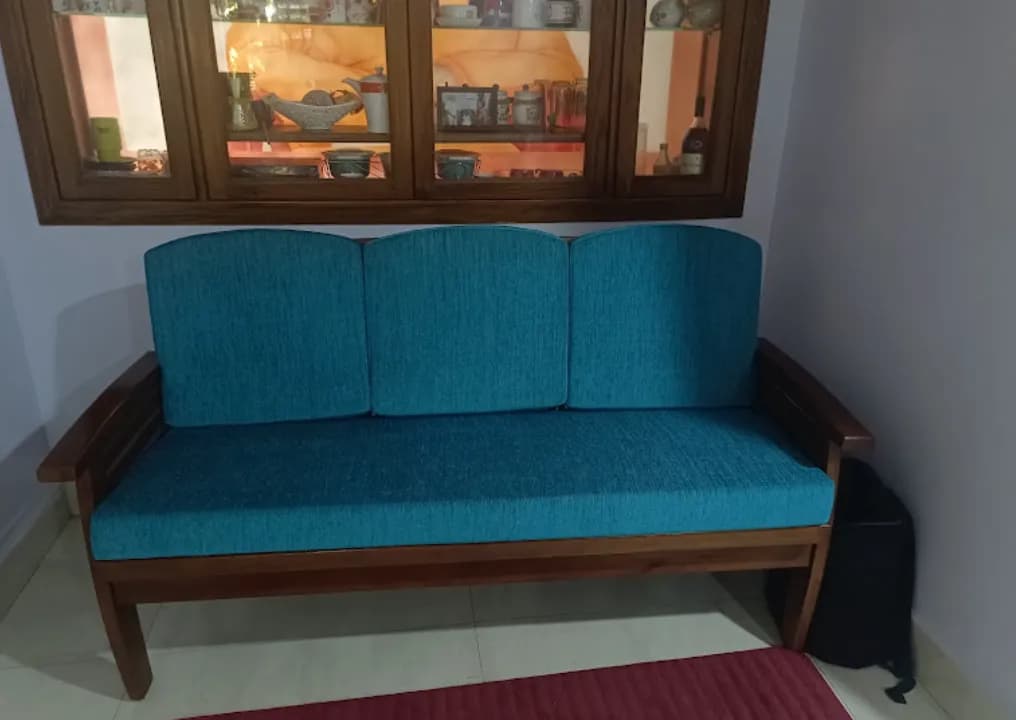
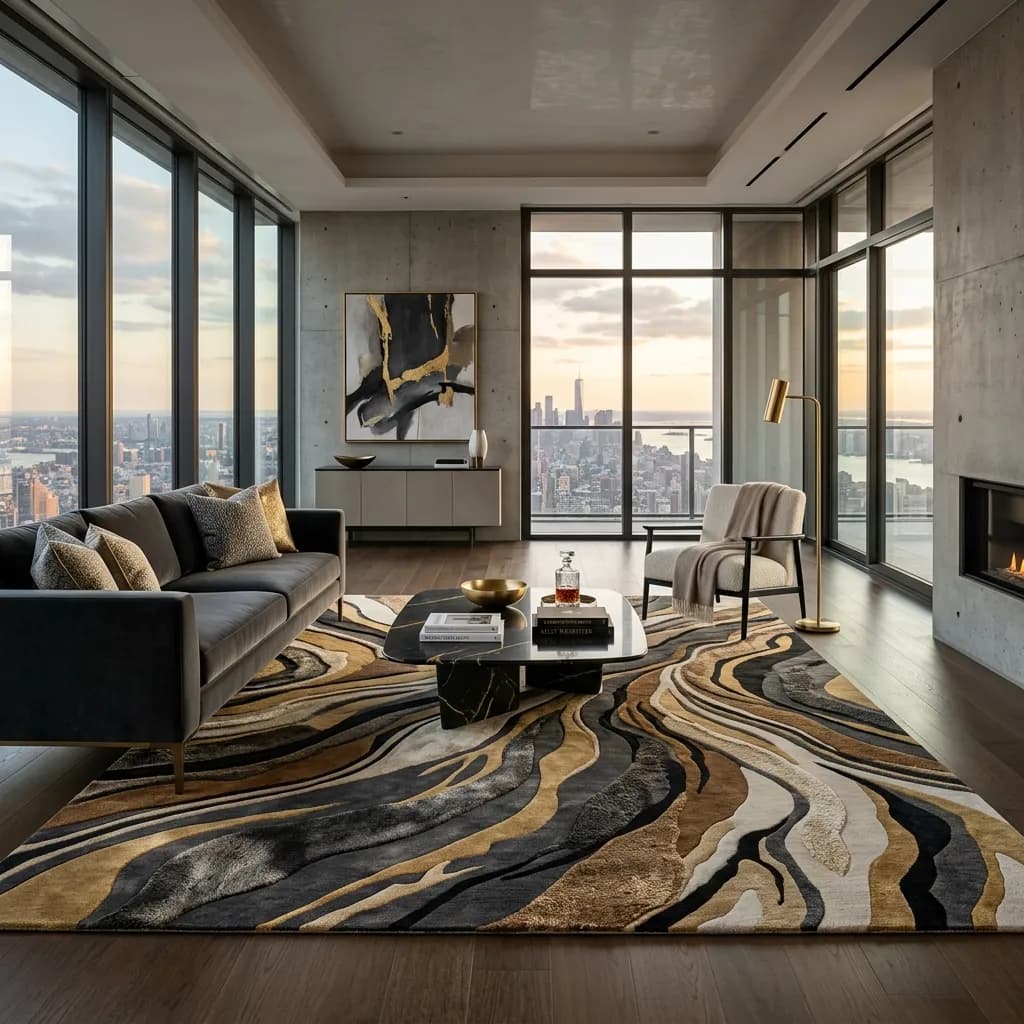
In Colva the headboard question splits by who sleeps in the bed. For holiday flats and guest rooms, where a different head rests there each week, leatherette or a closely woven performance fabric is the practical cover: sun cream, hair oil and sand wipe off, and a flat panelled design is simple to re-cover. For a family home in the village there is more freedom of style, but the air is still salt-laden and damp, so any headboard should stand a little off an outer wall with its backing board sealed front and back. Avoid natural linen and cotton velvet near the beach; they hold moisture. Villas can take a full-wall design with lights.
- Holiday flats furnished for letting: plain wall-fixed leatherette boards, the same in each room, easy for a caretaker to wipe.
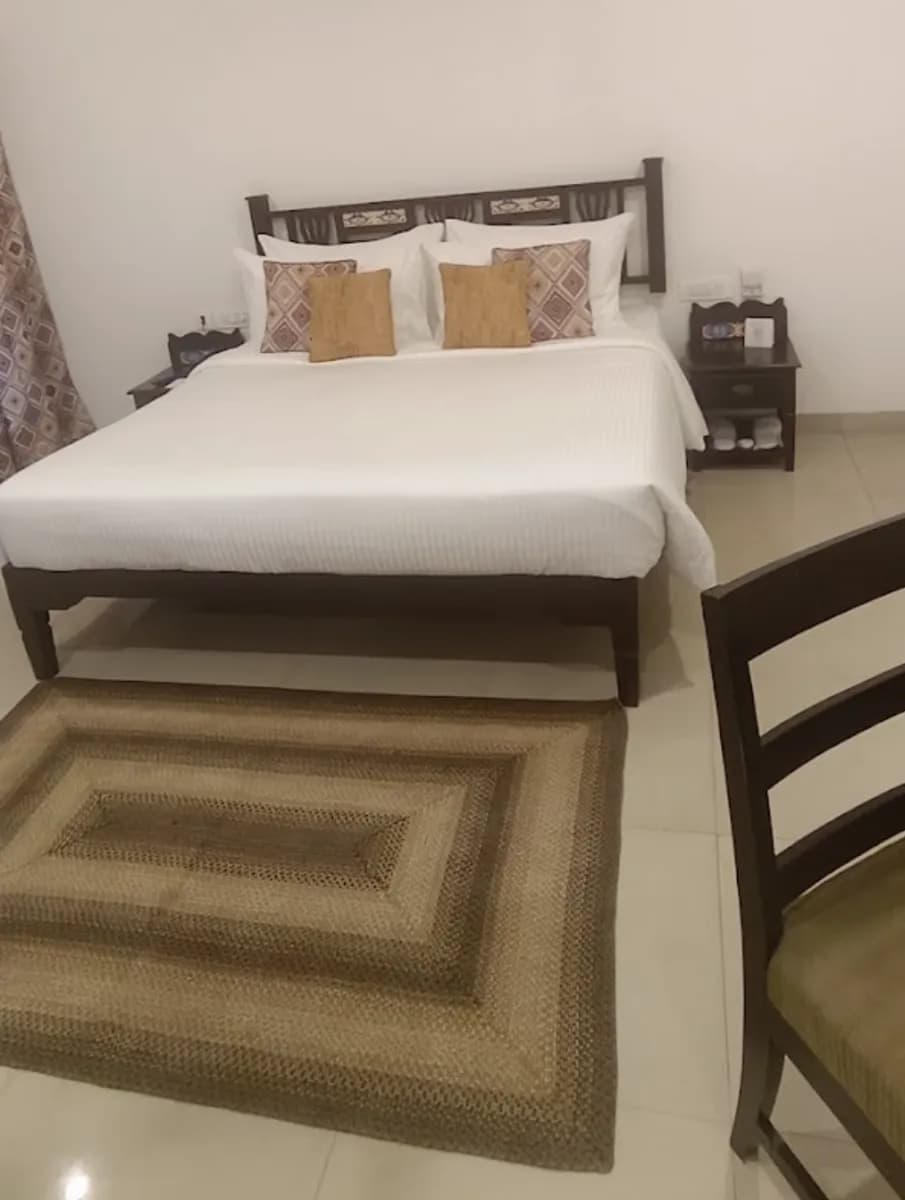
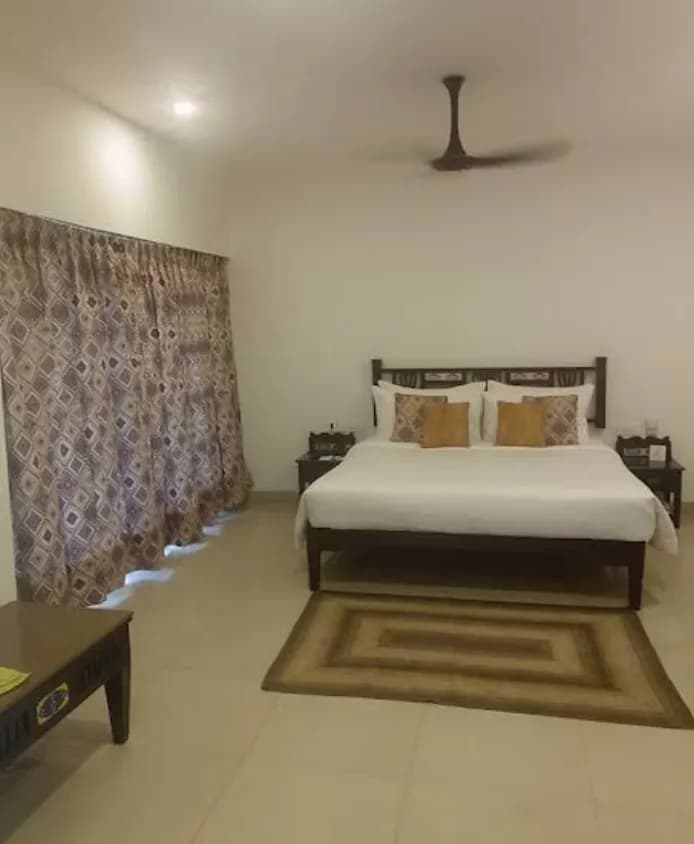
- Hotel rooms near the shore: panelled headboards in a tight synthetic weave, spaced off the wall so salt damp does not sit behind.
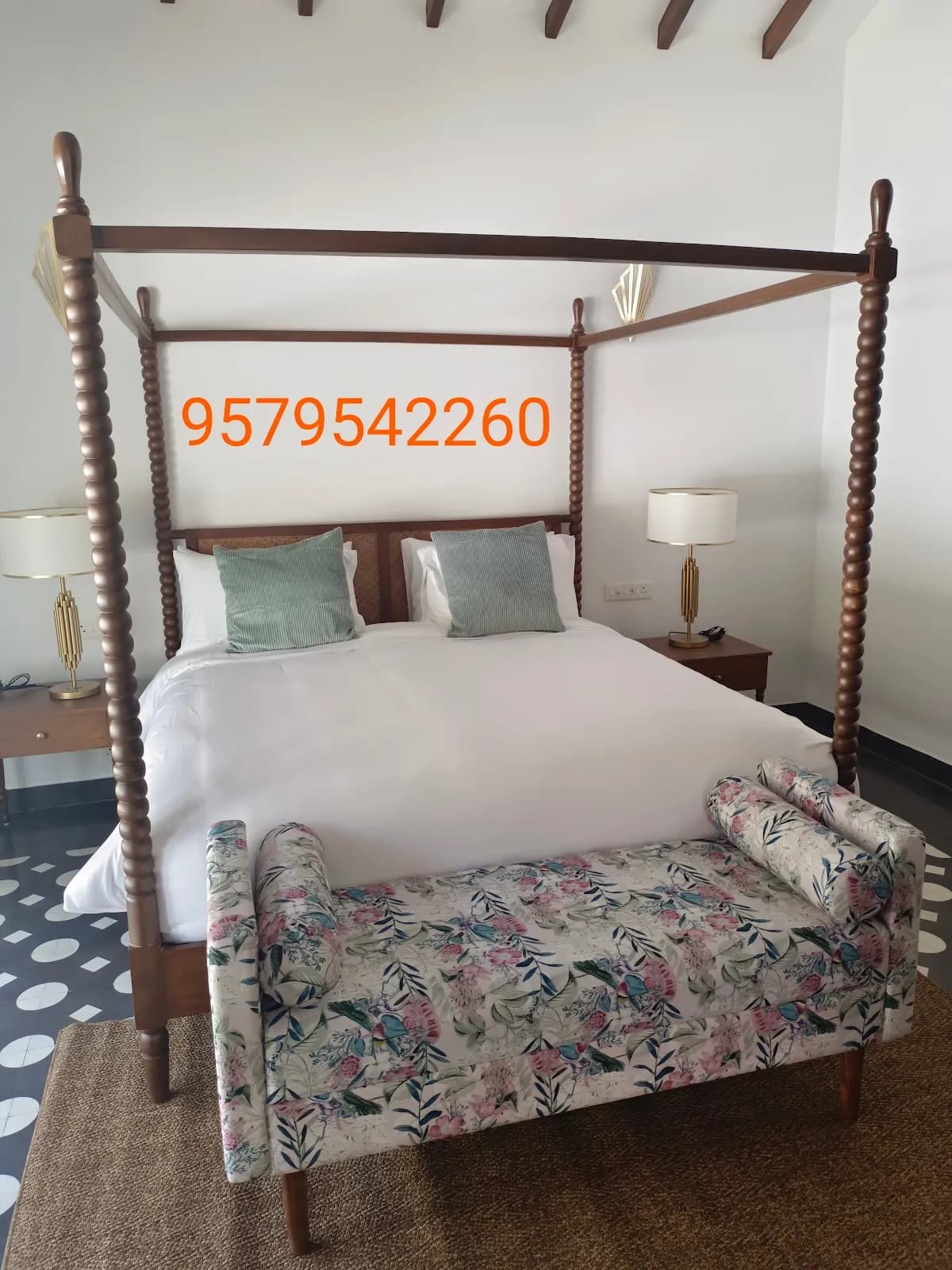
- Villa bedrooms with space to spare: a wide wingback or panelled design with sockets and lights worked into it.
Colva is the best-known beach of South Goa, six kilometres west of Margao at the end of the Colva road. The village behind the beach has the church of Our Lady of Mercy, family homes among coconut groves and paddy fields, and a strip of hotels, guest houses and restaurants near the shore.
Colva has three kinds of property: village houses set back from the beach, holiday apartments in gated complexes, and hotels and guest houses. Holiday flats are often owned by people who live elsewhere and are furnished for letting.
Within a kilometre of the beach, salt and humidity are constant, and sand finds its way indoors. Further inland, among the fields, the air is damp in the monsoon and mosquitoes are plentiful in the evening.
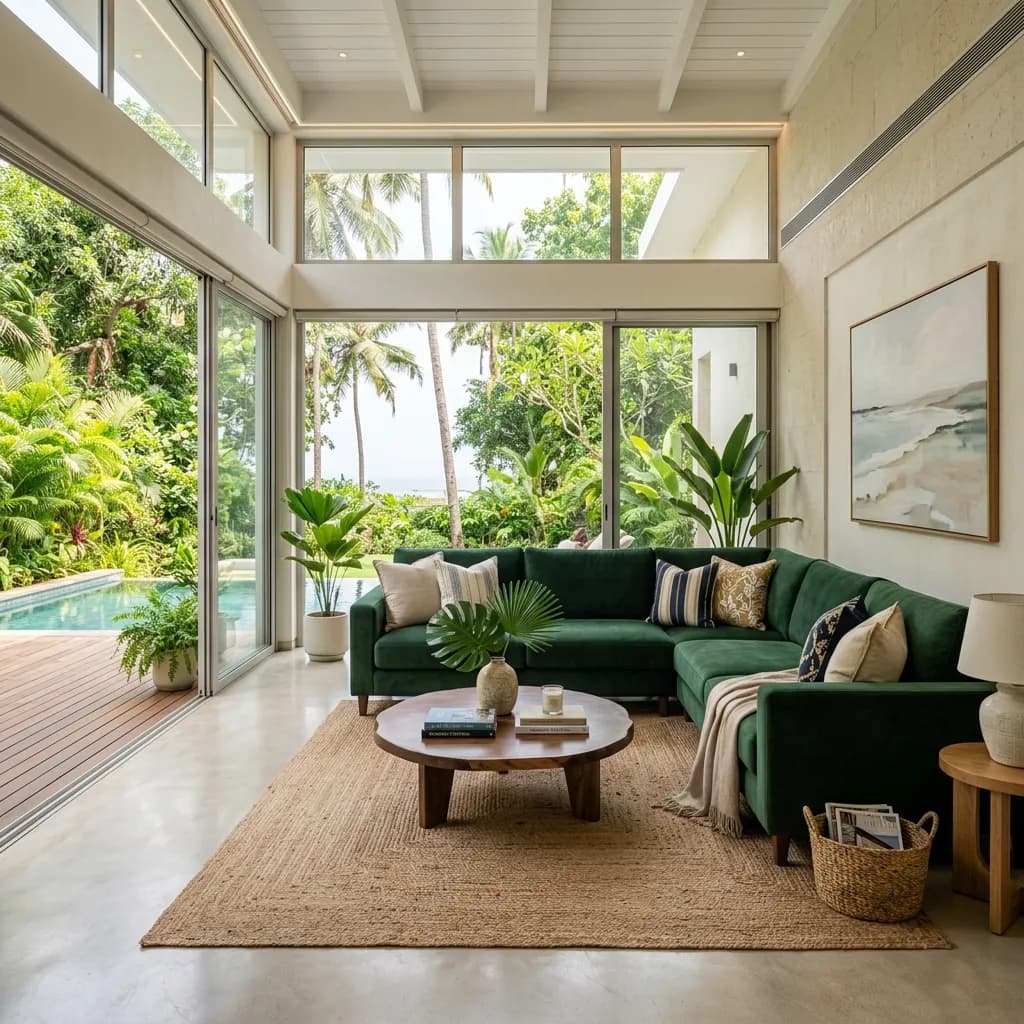
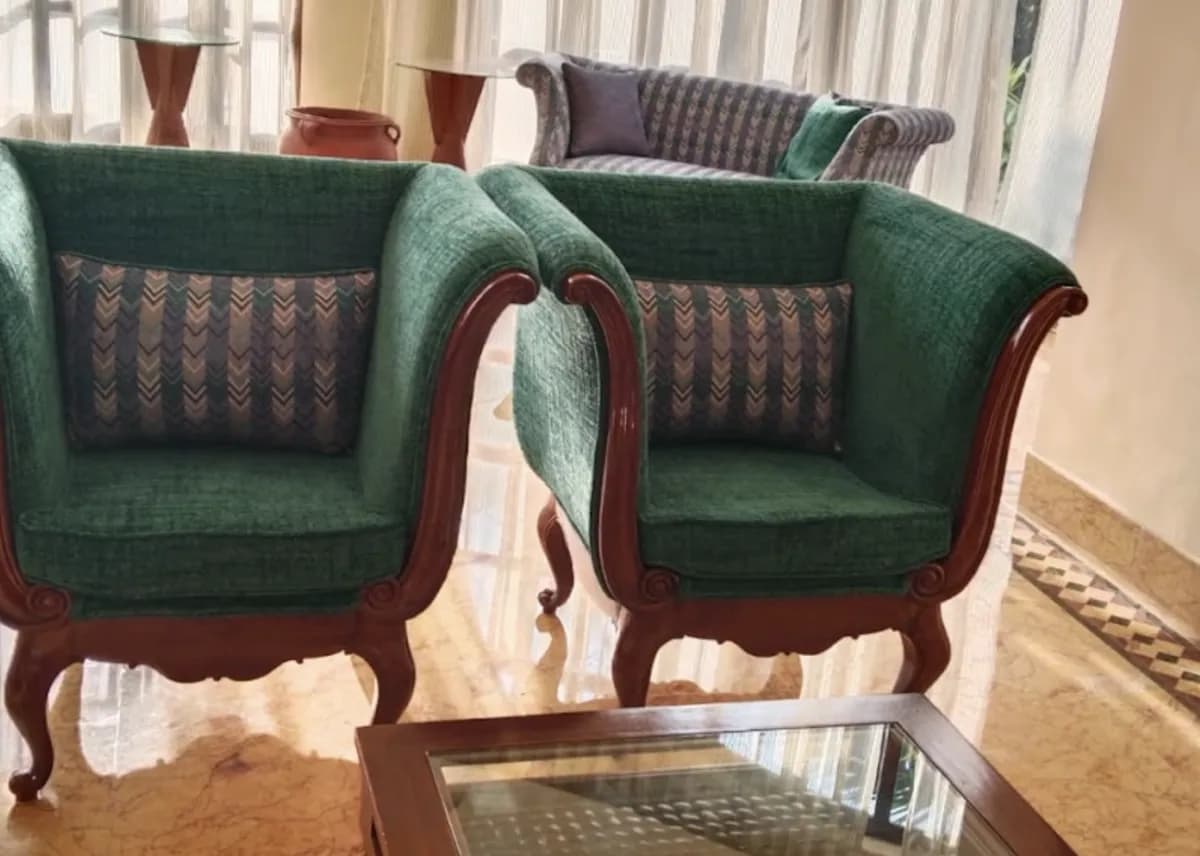
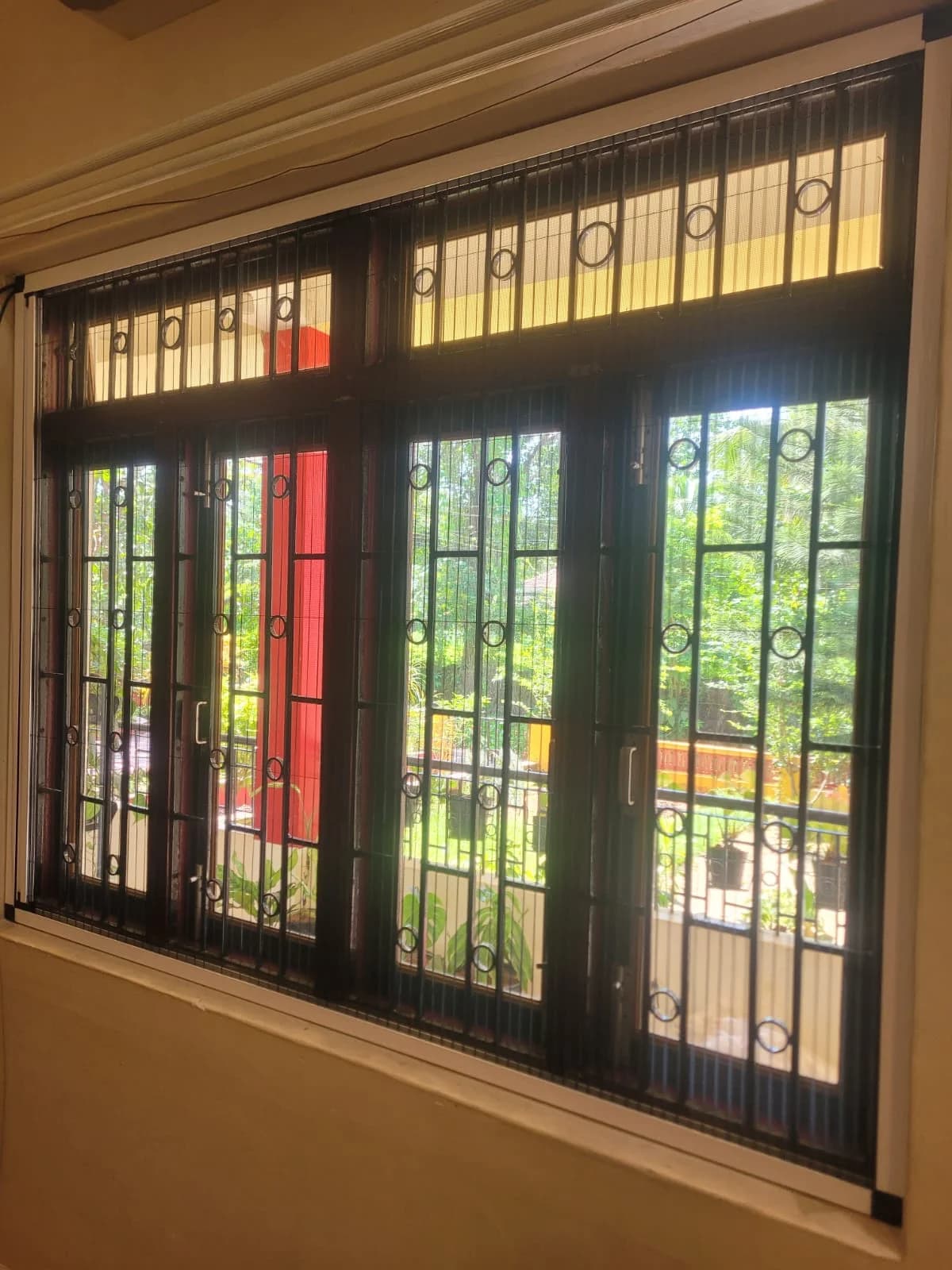 sliding-nets